
Beauty Unlocked
31 Urban Designs That Make Absolutely No Sense To Real People
Jun
Every city has at least one design choice that makes pedestrians stop, squint, and wonder whether the blueprint was approved during a very dramatic lunch break. A bench you cannot comfortably sit on. A bike lane that disappears into traffic like a magic trick. A crosswalk that technically exists but feels like a dare. These are the kinds of urban designs that make absolutely no sense to real peoplethe parents with strollers, workers catching the bus, wheelchair users, seniors, cyclists, delivery drivers, and anyone just trying to buy coffee without participating in an obstacle course.
Good urban design is not supposed to win a staring contest with the skyline. It is supposed to help people move, rest, gather, shop, wait, and live with dignity. The best streets are intuitive. You know where to walk, where to cross, where to sit, and where traffic is expected to slow down. Bad urban design does the opposite. It turns ordinary daily life into a confusing series of tiny negotiations: “Can I cross here?” “Is this sidewalk open?” “Why is the bus stop in full sun?” “Who placed a pole directly in the middle of the walking path?”
Below are 31 urban design mistakes that look official, expensive, and sometimes even “modern,” but fail the most important test: do they work for actual humans?
Why Bad Urban Design Feels So Personal
Urban design is personal because everyone uses it before they even think about it. A poorly placed curb ramp is not just a small construction flaw; it can decide whether someone in a wheelchair can cross the street safely. A missing bench is not just a minimalist design statement; it can make a transit trip exhausting for an older adult. A wide, fast road with a tiny crosswalk is not just “traffic engineering”; it is the difference between a comfortable neighborhood and a place where walking feels like auditioning for a survival show.
Great cities are not built only with glass towers and big plans. They are built with curb cuts, shade trees, legible signs, safe crossings, working lights, public bathrooms, reliable bus shelters, and sidewalks that do not randomly end like the city ran out of ideas.
31 Urban Designs That Make Absolutely No Sense
1. Sidewalks That Suddenly End
Nothing says “good luck, citizen” like a sidewalk that simply vanishes into grass, gravel, or a highway shoulder. Sidewalk continuity is basic walkability. When the path ends, people do not disappear; they walk in the road, cut across parking lots, or turn back.
2. Crosswalks Placed Far From Where People Actually Cross
Designers sometimes put crosswalks where they fit the drawing, not where humans naturally walk. Real people take the shortest reasonable route. If a crosswalk is too far away, many will cross where they need to, because errands and lunch breaks do not respect decorative geometry.
3. Bus Stops With No Shade, No Bench, and No Mercy
A pole in the ground is not a bus stop; it is a metal stick with responsibilities. In hot, rainy, or windy weather, riders need shade, seating, lighting, route information, and enough space to wait without blocking the sidewalk.
4. Bike Lanes That End at the Most Dangerous Point
Some bike lanes are calm and protected for three blocks, then vanish exactly where traffic becomes chaotic. That is like building a bridge halfway across a river and calling it “active transportation.” Cycling infrastructure should be connected, predictable, and protected where risk is highest.
5. Benches Designed to Be Uncomfortable
Hostile benches with awkward dividers, strange slopes, or tiny perches may be intended to prevent long stays, but they punish everyone. A city that refuses to let people sit should not be surprised when public life feels cold, rushed, and unfriendly.
6. Giant Intersections With Tiny Pedestrian Islands
Pedestrian islands can make crossings safer, but only when they are large enough to stand on comfortably. If the island feels like a postage stamp surrounded by SUVs, it is not a refuge; it is a nervous pause button.
7. Curb Ramps That Point Into Traffic
A curb ramp should guide people safely across the street. When it points diagonally into the intersection, wheelchair users, stroller pushers, and people with low vision are sent into an ambiguous zone where nobody is quite sure what is supposed to happen.
8. Street Trees Planted Where They Block the Walking Path
Shade trees are wonderful. Tree pits that swallow half the sidewalk are not. Green infrastructure should cool the street without forcing pedestrians into single-file formation like they are boarding a submarine.
9. Public Plazas With Nowhere to Sit
A plaza without seating is just a very confident floor. People need places to pause, chat, eat, wait, and people-watch. Public space succeeds when it invites ordinary behavior, not when it looks empty enough for an architectural magazine photo shoot.
10. Decorative Paving That Becomes Slippery
Fancy stone, polished surfaces, and dramatic paving patterns can look beautifuluntil rain arrives and everyone begins walking like cartoon penguins. Materials in public spaces must work in real weather, not just in renderings.
11. Signs That Are Too Small, Too High, or Too Late
Wayfinding should reduce confusion before people make a wrong turn. Signs hidden behind trees, mounted too high, written in tiny text, or placed after the decision point are not helpful. They are urban riddles with municipal branding.
12. Pedestrian Signals That Do Not Give Enough Time
Fast walkers may cross easily, but not everyone moves at the same pace. Seniors, children, wheelchair users, and people carrying groceries need signals that respect real human movement, not imaginary Olympic sidewalk speeds.
13. Parking Lots Between the Sidewalk and the Store
When pedestrians must cross a sea of parking to reach a front door, the design says cars are welcome and people are tolerated. Walkable places put entrances near sidewalks and make parking secondary, not the main event.
14. Stairs With No Ramp or Elevator Nearby
Stairs can be elegant, but when they are the only practical route, they exclude people. Inclusive design gives everyone a dignified path, not a hidden “accessibility route” that feels like entering through the service corridor.
15. Narrow Sidewalks on Busy Commercial Streets
A shopping street needs room for walking, storefront browsing, outdoor dining, signs, trees, and bus stops. A narrow sidewalk forces all of that into a human traffic jam where one person stopping to tie a shoe becomes a regional transportation crisis.
16. Crosswalk Buttons That Do Nothing Obvious
The mysterious pedestrian button is a classic. You press it. Nothing happens. You press it again, now with suspicion. Good design gives feedback, such as a light, sound, or clear signal phase, so people know the system noticed them.
17. Overbuilt Roads Through Neighborhoods
Wide lanes and high-speed designs may move vehicles quickly, but they can make neighborhoods loud, dangerous, and unpleasant. Streets are not just pipes for cars. They are public spaces with homes, shops, schools, and humans attached.
18. Underpasses That Feel Unsafe
Pedestrian underpasses can separate people from traffic, but if they are dark, isolated, poorly drained, or covered in blind corners, many people will avoid them. Safety is not just collision prevention; it is also whether people feel comfortable using the route.
19. Raised Planters That Block Visibility
Plants are good. Hiding pedestrians behind shrubbery at intersections is not. Landscaping should support safety by improving comfort and cooling, while preserving sight lines between drivers, cyclists, and walkers.
20. “Modern” Public Furniture Nobody Understands
Some public furniture looks like a bench, sculpture, table, and alien landing dock had a meeting and refused to compromise. If people cannot tell whether they are allowed to sit on it, the design has failed the public part of public space.
21. Bike Racks That Do Not Fit Bikes
A bike rack should support the frame and allow secure locking. Decorative spirals, tiny loops, and awkward shapes often look cute while functioning like metal spaghetti. Cyclists need practical parking, not public art with commitment issues.
22. Trash Cans Hidden Where Nobody Needs Them
Trash cans belong where trash is created: near food vendors, benches, transit stops, and busy corners. If bins are hard to find, litter becomes predictable. Blaming the public after hiding the bin is not a waste-management strategy.
23. Public Bathrooms That Are Missing From Busy Areas
A city can build a stadium, a plaza, and a luxury shopping district, then somehow forget that humans have bodies. Public restrooms are not glamorous, but they are essential infrastructure for families, workers, tourists, older adults, and people experiencing homelessness.
24. Outdoor Dining That Blocks the Entire Sidewalk
Outdoor dining can make streets lively, but it needs clear pedestrian access. When tables, signs, heaters, and planters swallow the sidewalk, the message becomes: enjoy the city, unless you are trying to pass through it.
25. Transit Stations With Confusing Transfers
A transfer should feel obvious. When riders must climb stairs, cross streets, follow unclear signs, and guess which platform is correct, the system wastes time and energy. Good transit design understands that riders are not treasure hunters.
26. Lighting That Illuminates Cars but Not People
Streetlights often focus on vehicle lanes while sidewalks remain dim. Pedestrians need lighting too, especially near crosswalks, bus stops, stairs, and parks. A well-lit road beside a dark sidewalk is not balanced safety; it is spotlighting the wrong actor.
27. Fences That Force Long Detours
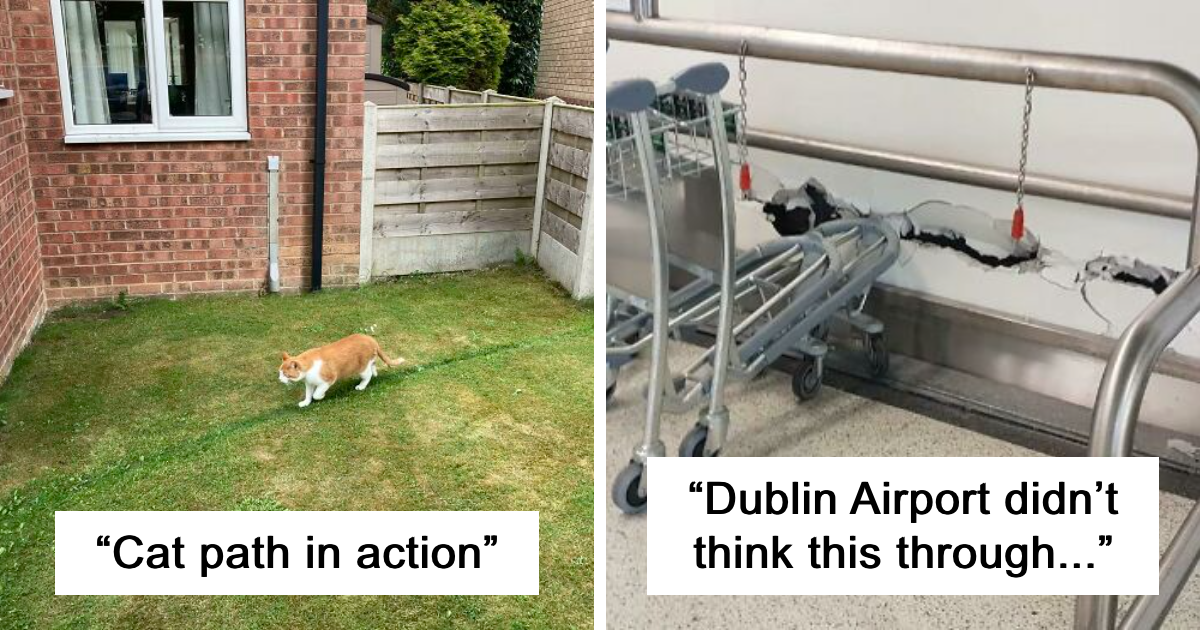
Fences can protect sensitive areas, but unnecessary barriers often turn a simple walk into a looping adventure. People naturally prefer direct routes. When official routes are absurdly long, informal desire paths appear, quietly voting against the design.
28. “No Loitering” Spaces That Also Offer Nothing to Do
Some public areas seem designed to keep people moving at all costs. No seating, no shade, no activities, no vendors, no play, no reason to stay. Then officials wonder why the space feels lifeless. Public space should host life, not repel it.
29. Storm Drains Exactly Where Bike Tires Go
Drainage matters, but grates placed in bike paths or designed with tire-catching slots are a hazard. Streets must manage water while also respecting the people using the curb lane.
30. School Zones Designed Like Highways
A school zone should make drivers slow down instinctively. Wide roads, long crossings, and fast turns near schools send the wrong message. Children should not need traffic-engineering expertise to walk to class.
31. Expensive “Signature” Projects That Ignore Daily Needs
Some cities love dramatic projects: sweeping plazas, glowing sculptures, grand entrances. Those can be great, but not if nearby sidewalks are broken, bus stops are bare, and crossings are terrifying. The smartest urban design starts with daily life, not the drone photo.
What These Bad Designs Have in Common
The worst urban designs usually make one of three mistakes. First, they prioritize vehicles over people. Second, they treat accessibility as an afterthought. Third, they confuse visual neatness with real usefulness. A space can look clean, expensive, and orderly while being deeply inconvenient for the people expected to use it.
Real people carry bags. Real people get tired. Real people travel with children. Real people use wheelchairs, walkers, canes, scooters, and bikes. Real people wait for buses in rain, heat, and darkness. Real people do not move through the city as tiny arrows on a planning diagram. They move with habits, bodies, emotions, schedules, and limits.
This is why small design details matter. A curb extension can shorten a crossing. A bench can make a long trip possible. A shade tree can turn a summer sidewalk from unbearable to pleasant. A protected bike lane can transform cycling from “only for the brave” into a normal transportation option. A clear sign can save a visitor from wandering in circles while pretending they meant to do that.
How Cities Can Design for Real People
Designing for real people begins with observation. Watch where people actually walk. Notice where they wait, where they hesitate, where they cross outside the crosswalk, where they drag strollers over curbs, and where they create dirt paths through grass. These are not random acts of rebellion. They are user feedback written in footsteps.
Cities should also test designs with the people most affected. A parent with a stroller will notice barriers that a desk review misses. A wheelchair user will immediately understand whether a ramp works. Bus riders know which stops need shade. Seniors know where benches are missing. Cyclists know where protection disappears. Local business owners know how deliveries, foot traffic, and parking really function.
Good urban design is not about making every street identical. It is about matching design to human use. A commercial corridor needs generous sidewalks, safe crossings, transit comfort, lighting, and places to sit. A residential street may need slower speeds, trees, short crossings, and safe school access. A downtown plaza needs flexible seating, shade, activities, and maintenance. A transit hub needs clear wayfinding, weather protection, accessibility, and enough space for crowds.
Experience: What It Feels Like to Navigate Nonsense Urban Design
Spend one afternoon moving through a badly designed area without a car, and the problem becomes painfully obvious. At first, the issues seem small. The sidewalk narrows beside a utility pole, so two people cannot pass comfortably. A few yards later, a driveway cuts across the walking path with no clear priority. Then the bus stop appears: no bench, no shelter, no shade, and just enough space to stand awkwardly beside traffic while pretending the passing dust is part of the local culture.
The experience gets worse at the intersection. The crosswalk is technically marked, but the lanes are wide and the turning cars are fast. The pedestrian signal gives you a countdown that feels less like a safety feature and more like a game show buzzer. You step off the curb, move quickly, and still reach the other side wondering why walking to a grocery store required emotional preparation.
Now imagine doing that while pushing a stroller, using a cane, carrying heavy bags, managing a child, or traveling after dark. Suddenly, “minor design flaw” becomes a daily barrier. The city may appear functional on paper, but the lived experience says otherwise. Bad design taxes people. It costs extra time, extra attention, extra energy, and sometimes extra danger.
One of the strangest things about poor urban design is how often people adapt to it silently. They memorize which curb ramp is usable. They avoid certain sidewalks. They choose longer routes to feel safer. They stand because there is nowhere to sit. They cross early because the official crossing is too far away. These adaptations become normal, but they should not be normal. A city should not require residents to develop secret survival maps for ordinary errands.
The funniest bad designs are the ones that look like someone tried very hard and still missed the point. A sleek bench that only supports half a human. A decorative plaza with zero shade at noon. A bike lane protected by paint alone, bravely defending cyclists through the power of optimism. A sign that says “Pedestrian Friendly District” beside a six-lane road with crossings spaced like rare astronomical events. You laugh because the alternative is writing a strongly worded letter to a traffic cone.
But humor aside, these designs shape daily life. They influence whether people walk, whether children can get around safely, whether older adults remain independent, whether transit feels dignified, and whether public space feels welcoming. The difference between a frustrating city and a lovable one is often not a giant project. It is hundreds of practical choices made with humility: put the bench where people wait, shade the sidewalk where people walk, protect the crossing where people cross, and never assume that a design is successful just because it looks clean from above.
The best urban design feels almost invisible because it works. You cross without fear. You find your way without confusion. You sit when tired. You roll without obstruction. You wait for transit without feeling abandoned. You arrive without needing a victory speech. That is the real goal: a city that does not make everyday life harder than it needs to be.
Conclusion
Urban designs that make no sense usually fail because they forget the simplest truth: cities are for people. Not just commuters in cars. Not just tourists taking photos. Not just planners reviewing maps. People of different ages, abilities, incomes, and routines all depend on the public realm. When sidewalks end, benches disappear, crossings stretch too far, and transit stops offer no comfort, the city quietly tells residents that their needs were not the priority.
Better design is possible. It does not always require futuristic technology or billion-dollar construction. Often, it begins with common sense: continuous sidewalks, shorter crossings, useful seating, shade, lighting, accessible ramps, protected bike lanes, clear signs, and public spaces that welcome people instead of managing them like a nuisance. A city that works for real people is safer, healthier, more social, and much easier to love.

