
Beauty Unlocked
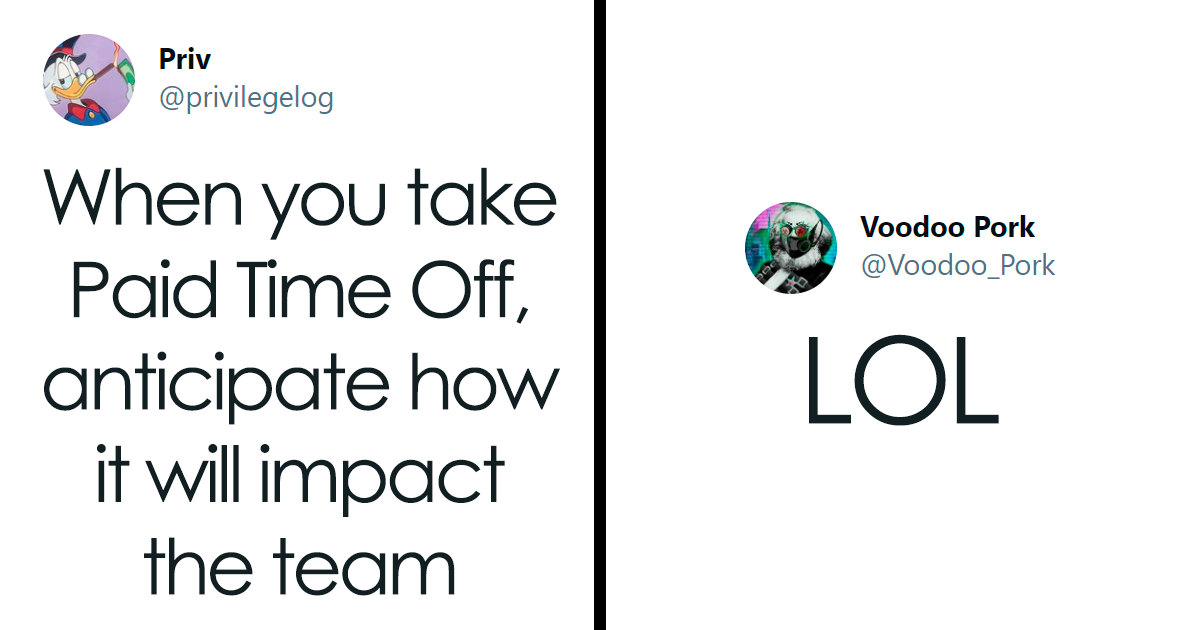
Person Encourages Young People To Not Take Paid Time Off – Gets A Reality Check
Jun
Editorial note: This original article is written for web publication and synthesizes current workplace research, labor guidance, HR reporting, and U.S. employee-benefits data without inserting source links into the copy.
A person online recently tried to hand young workers a shiny piece of career advice: do not take your paid time off. Save it. Skip it. Show dedication. Be the employee who is always available, always grinding, always one coffee away from becoming a haunted office chair.
The internet, thankfully, did what the internet occasionally does well: it delivered a reality check with the speed of a manager scheduling a “quick sync” at 4:58 p.m. People pointed out that paid time off is not a prize for laziness. It is part of compensation. It is built into employment agreements, benefit packages, recruiting pitches, and workplace wellness strategies. Telling young people not to use PTO is a little like telling them to refuse part of their paycheck because “real professionals enjoy character development.”
The debate hit a nerve because it sits at the intersection of three big workplace issues: hustle culture, burnout, and the changing expectations of younger employees. Gen Z and younger millennials entered the workforce watching older generations brag about exhaustion, miss family events, answer emails on vacation, and call it ambition. Many of them looked at that lifestyle and said, politely but firmly: “Hard pass.”
And they have a point. In the United States, paid vacation is not federally required for most workers, which makes the PTO someone does receive even more valuable. The Department of Labor explains that vacation, holiday, and sick pay are generally matters of agreement between employers and employees, not automatic federal guarantees. Meanwhile, Bureau of Labor Statistics data shows that paid vacation remains a major workplace benefit, but access varies widely by industry, wage level, and job type. In other words, if your employer gives you PTO, that is not decorative frosting on the benefits cake. It is part of the cake.
Why “Don’t Take PTO” Sounds Like Career Advice But Isn’t
At first glance, the advice may sound old-school and practical. Early in your career, you want to build trust. You want to learn fast, prove reliability, and avoid giving the impression that you are mentally already on a beach in Miami while your team is fighting spreadsheets in a windowless conference room.
But there is a difference between being dependable and being permanently available. Dependable means you meet deadlines, communicate clearly, and plan your absences responsibly. Permanently available means your employer has accidentally received a subscription to your entire life. Those are not the same product.
Young employees do need to learn workplace norms. They should understand how to request time off properly, avoid disappearing during critical deadlines, and coordinate coverage. But “use PTO professionally” is very different from “do not use PTO at all.” The first is career wisdom. The second is unpaid self-sabotage wearing a blazer.
PTO Is Compensation, Not a Personality Test
One of the strongest responses to the anti-PTO argument is simple: paid time off is part of total compensation. When a company says a role includes salary, health insurance, retirement benefits, and paid vacation, those benefits are part of the job’s value. Refusing to use them does not make someone more noble. It often just gives the employer more labor availability for the same cost.
Imagine accepting a job that pays $65,000 a year and then voluntarily giving back two weeks of salary because you want to seem “committed.” Most people would call that strange. Yet unused PTO can function in a similar way, especially under “use it or lose it” policies where vacation days disappear at the end of the year. If those hours vanish, the employee has effectively donated earned value back to the company. Very generous. Also very unnecessary.
Research from U.S. travel and workplace organizations has repeatedly shown that American workers leave huge amounts of vacation time unused. The reasons are familiar: fear of falling behind, guilt about burdening coworkers, concern about looking replaceable, and anxiety that time off might hurt advancement. These fears are not imaginary, but they are also not proof that skipping PTO is smart. They are proof that some workplace cultures need a tune-up, a mirror, and possibly a group nap.
The Burnout Problem Is Not Theoretical
Burnout is not just “being tired.” It is a chronic state of depletion that can affect motivation, concentration, emotional stability, job performance, and physical health. The American Psychological Association has continued to highlight mental health support, stress, and employee well-being as major workplace concerns. Gallup’s workplace research has also linked engagement, burnout, and management quality to productivity and retention.
Paid time off is not a magical cure-all. A week away will not fix a toxic boss, impossible workload, or company culture powered entirely by panic. But recovery time matters. People are not laptops. You cannot just plug them in overnight and expect them to run smoothly forever, especially if twenty-seven browser tabs are open and one of them is playing mysterious music.
Good PTO use gives employees time to rest, handle personal responsibilities, travel, visit family, recover from illness, attend appointments, or simply exist as humans outside the glow of Slack notifications. That last one is underrated. Sometimes the most productive thing a person can do is not produce anything for a few days.
Why Young Workers Are Rejecting Hustle Culture
Many younger workers are not allergic to hard work. That stereotype is lazy, and frankly, it needs PTO. Gen Z and younger millennials often care deeply about learning, career growth, financial stability, and meaningful work. Deloitte’s recent Gen Z and Millennial research shows that these generations are navigating financial stress, housing concerns, and major life delays while still placing strong value on work-life balance and career development.
What they are rejecting is the idea that suffering is a résumé skill. They watched people burn out during the pandemic. They saw remote work blur boundaries until the kitchen table became an office, cafeteria, meeting room, and emotional support zone. They saw layoffs happen even to loyal employees who had skipped vacations and answered emails at midnight. The lesson many took away was not “work less.” It was “do not confuse self-erasure with job security.”
This is why a post telling young people not to take paid time off gets such strong pushback. It sounds like advice from a world where loyalty guaranteed stability. But modern workers know that dedication does not always protect against restructuring, automation, budget cuts, or leadership changes. In that context, using earned benefits is not entitlement. It is rational.
The Reality Check: Rest Can Make People Better Workers
Managers often say they want employees who are focused, creative, resilient, and motivated. Then some workplace cultures quietly reward the opposite: exhaustion, presenteeism, and calendar martyrdom. That is a bad trade.
Time away can help employees return with better perspective. Problems that felt impossible on Friday may look solvable after sleep, sunlight, and one meal that was not eaten over a keyboard. A rested employee may communicate better, make fewer mistakes, and bring more patience to customers and coworkers. This does not mean every vacation produces a revolutionary business idea. Sometimes it just produces a person who no longer wants to scream into a printer. Still valuable.
Harvard Business Review and other workplace publications have discussed the business case for encouraging employees to use vacation. The logic is not sentimental. It is operational. Teams work better when knowledge is shared, backup systems exist, and one person is not treated as the sacred keeper of all passwords, vendor contacts, and printer rituals.
What Employers Should Learn From The Backlash
The backlash to anti-PTO messaging is a warning to employers: benefits are only as good as the culture around them. A company can offer generous vacation on paper, but if managers side-eye every request, employees will learn the real policy quickly. Nothing says “we care about wellness” like requiring three approvals, a blood oath, and a guilt seminar to take a Thursday off.
Managers Should Model Healthy PTO Use
If leaders never take vacation, employees may assume time off is risky. Managers set the emotional weather. When they plan PTO, disconnect, and return without apologizing for being human, they teach the team that rest is normal. When they send emails from a beach with the subject line “Not Urgent But,” they teach everyone that vacation is fake.
Companies Should Make Coverage Normal
PTO should not feel like a crisis. Smart teams cross-train, document processes, and build coverage plans. If one employee taking three days off causes total operational collapse, the problem is not the employee’s vacation. The problem is that the organization has been held together with vibes, heroics, and one overworked person named Jessica.
HR Should Track Usage, Not Just Offer Days
It is not enough to say employees have PTO. Companies should pay attention to whether people actually use it. Low usage may signal fear, understaffing, workload imbalance, or unclear expectations. SHRM and benefits experts often emphasize that unused vacation can reveal deeper cultural problems. In plain English: if nobody takes time off, something is weird.
What Young Workers Should Do Instead Of Skipping PTO
Young professionals do not need to become workplace rebels who vanish every other Friday with a dramatic “respect my boundaries” email. The goal is not chaos. The goal is responsible use of earned time.
First, learn the policy. Understand accrual rules, blackout periods, rollover limits, payout rules, and approval procedures. Second, plan ahead when possible. Give your manager enough notice, especially during busy seasons. Third, prepare your work before leaving. Share status updates, document urgent items, and identify who can handle questions while you are out.
Fourth, actually disconnect. PTO loses power when it becomes “working from a different location while pretending the palm tree in the background is rest.” If a true emergency comes up, that is one thing. But routine messages can usually wait. The inbox will survive. It may multiply like a gremlin, but it will survive.
When Taking PTO Feels Risky
Some workers hesitate to use PTO because they are in unstable jobs, understaffed teams, or workplaces where taking time off has unofficial consequences. That fear deserves respect. Not every employee has equal power, and not every workplace handles PTO fairly.
If taking time off feels risky, documentation helps. Make requests in writing. Keep records of approvals. Understand state laws and company policies around accrued vacation, especially in states where earned vacation may be treated as wages. If a manager discourages PTO while the company officially offers it, employees may need to ask HR for clarification in a calm, professional way.
It is also worth watching patterns. If a company advertises work-life balance but punishes people for using benefits, that is useful information. A workplace that treats normal rest as betrayal may not be a place to build a long-term career, unless your career goal is to become a cautionary tale with excellent email response times.
The Bigger Cultural Shift
The argument over PTO is really an argument over what professionalism means. For a long time, professionalism was often confused with endurance. The best worker was the one who stayed latest, answered fastest, and looked busiest. But modern work is forcing a better question: what if the best worker is the one who can perform sustainably?
That does not mean every job can offer unlimited flexibility. Healthcare, manufacturing, hospitality, retail, logistics, education, and public safety roles all have real scheduling constraints. But even in demanding industries, rest still matters. In fact, the more demanding the work, the more important recovery becomes.
The reality check is not that young people should take PTO recklessly. It is that telling them not to take it at all is outdated, unhealthy, and economically questionable. Paid time off exists because people need time away from work to remain whole, healthy, and effective. Using it wisely is not a red flag. It is a life skill.
Experiences Related To The PTO Reality Check
Many workers have lived through the exact lesson this debate exposes. Early in a career, it is easy to believe that never taking time off will make you look impressive. You want to be the reliable one. You want managers to know they can count on you. You say yes to extra shifts, answer messages after hours, and postpone vacation because “things are busy right now.” The funny thing about “busy right now” is that it often lasts approximately forever.
One common experience goes like this: a young employee saves PTO for months, partly out of fear and partly out of pride. They watch coworkers take long weekends and silently judge them. Then the employee hits a wall. Their work slows down, small mistakes increase, and their patience evaporates. Suddenly, every meeting feels twelve years long. The employee finally takes a few days off and realizes something shocking: the company continues operating. Emails are answered. Projects move. The sun rises. The office plant remains mildly neglected, but that was happening anyway.
Another familiar story involves the “indispensable” employee. This person knows every process, remembers every client preference, and can solve problems no one else understands. Because they feel essential, they avoid PTO. But instead of being rewarded with security, they become a bottleneck. Their absence becomes scary because the team has never built backup systems. When they finally take vacation, everyone discovers how much undocumented work they were carrying. The lesson is powerful: using PTO can expose weak systems that need fixing. Rest is not the problem; poor planning is.
There are also employees who use PTO and return with more clarity about their jobs. A short break can reveal whether someone is simply tired or truly unhappy. After several quiet mornings away from work, a person may realize they still like their role but need better boundaries. Or they may realize the job has been draining them for months and the vacation only made the contrast obvious. Either way, time off gives perspective that constant busyness hides.
Managers have their own reality checks. Some leaders quietly worry that employees taking PTO will reduce output. Then they test better coverage planning and discover the opposite: the team becomes more organized. Work is documented. Cross-training improves. Employees feel trusted. Morale rises because people no longer feel guilty for using a benefit they were promised. The manager learns that PTO is not a threat to productivity; unmanaged dependency is.
For young workers especially, the healthiest lesson is balance. Do not abuse PTO, but do not worship burnout either. Request time off respectfully. Prepare your responsibilities. Communicate clearly. Then go live your life. Visit your family. Take the trip. Sleep. Sit in a park and do absolutely nothing with the confidence of a golden retriever. Your career is important, but it is not improved by pretending you are a machine with dental insurance.
The person who encouraged young people not to take paid time off may have intended to promote ambition. But ambition without recovery becomes depletion. Professionalism without boundaries becomes resentment. A strong career is not built by avoiding rest; it is built by doing good work in a way that can last. That is the reality checkand it is one worth taking before burnout sends the calendar invite.
Conclusion
The advice to skip paid time off may sound disciplined, but it misunderstands modern work. PTO is not a weakness, a luxury, or a betrayal of ambition. It is part of compensation and a practical tool for maintaining health, focus, and long-term performance. Young workers are right to question hustle-culture advice that treats exhaustion as proof of value. The smarter path is to use paid time off responsibly: plan ahead, communicate clearly, prepare coverage, and actually rest.
Employers should also pay attention. If workers feel guilty using PTO, the company does not have a time-off policy; it has a workplace culture problem. The best organizations do not merely offer benefits. They make those benefits usable. A team that can survive one person’s vacation is stronger, healthier, and more sustainable than a team that depends on everyone pretending they never need a break.

