
Skincare
Top 10 Unusual Trees
Aug
Some trees provide shade. Others produce fruit, support wildlife, or politely decorate a suburban yard. Then there are trees that explode, bleed red resin, grow rainbow-colored bark, clone themselves into forests, and appear to have been designed by an overcaffeinated fantasy illustrator.
The world’s most unusual trees are not merely botanical oddities. Their strange forms often represent ingenious adaptations to drought, storms, poor soil, limited sunlight, or hungry animals. From the ancient Wollemi pine to the dangerously theatrical sandbox tree, these species demonstrate just how inventive evolution can be.
Here are 10 of the strangest trees on Earth, including their defining characteristics, native habitats, ecological roles, and the real science behind their wonderfully weird appearances.
1. Dragon’s Blood Tree
A living umbrella that produces red resin
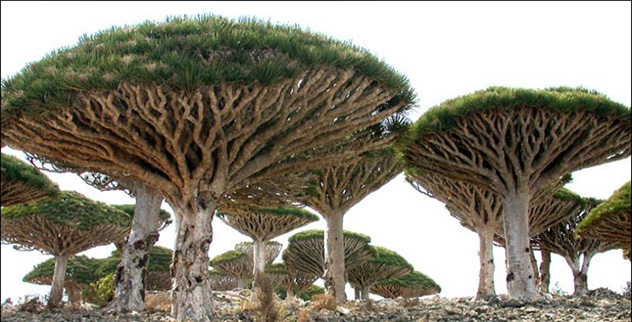
Native to Yemen’s isolated Socotra archipelago, the dragon’s blood tree (Dracaena cinnabari) looks like a giant umbrella turned inside out. Its stout branches repeatedly divide into two, eventually creating a dense, mushroom-shaped crown.
That architecture is more than a dramatic fashion choice. The tightly packed canopy captures moisture from fog and shades the ground, reducing evaporation in Socotra’s dry climate. Other plants can benefit from the cooler, moister conditions beneath mature trees.
The species gets its memorable name from the dark-red resin released when its bark is damaged. Known as “dragon’s blood,” this substance was historically traded as a dye, varnish, incense ingredient, and traditional remedy. It is resin, not actual blood, so vampire botanists can stand down.
Unfortunately, many dragon’s blood forests contain too few young trees. Grazing animals eat seedlings, while stronger cyclones, drought, habitat disturbance, and slow growth complicate natural regeneration. Protected nurseries and community conservation programs are helping raise a new generation of these extraordinary trees.
2. Baobab Tree
The upside-down giant with a water-storing trunk
With a swollen trunk and a sparse crown of crooked branches, a leafless baobab can resemble a tree planted roots-first into the sky. This appearance explains its popular nickname, the “upside-down tree.”
Baobabs belong to the genus Adansonia, which includes nine recognized species native to mainland Africa, Madagascar, and Australia. Their massive trunks contain moisture-rich tissue that helps the trees survive long dry seasons. Instead of wasting water on leaves throughout the year, they shed their foliage when conditions become harsh.
These unusual trees are ecological apartment buildings. Cavities in old trunks provide shelter for birds, bats, reptiles, insects, and small mammals. Their flowers support pollinators, while their nutritious fruit feeds wildlife and people. Communities have also used baobab bark fibers, leaves, seeds, and fruit in traditional foods and useful materials.
Some baobabs live for well over 1,000 years. However, determining their age can be complicated because the enormous trunk may consist of multiple fused stems and can become hollow over time. Counting ordinary tree rings is not always an option when the tree has essentially remodeled its interior into a studio apartment.
3. Rainbow Eucalyptus
A tree with naturally multicolored bark
The rainbow eucalyptus (Eucalyptus deglupta) looks as though someone attacked it with an industrial supply of paint. Its trunk may display streaks of green, blue, purple, gray, orange, and reddish brownall produced without a single paintbrush.
The colors develop as strips of older bark peel away. Newly exposed bark begins bright green and gradually changes color as it ages and reacts with the air. Because different sections shed at different times, several stages remain visible simultaneously, producing the famous rainbow pattern.
Native to tropical forests in the Philippines, Indonesia, and New Guinea, it is the only eucalyptus species whose natural range extends into the Northern Hemisphere. In its native habitat, it can grow more than 200 feet tall. Specimens grown elsewhere are often shorter, although “shorter” is doing a heroic amount of work in that sentence.
Rainbow eucalyptus needs warmth, moisture, sunlight, and plenty of room. It can grow rapidly, and its roots and mature size make it unsuitable for small yards. The species is also considered an invasive risk in some regions, so local planting guidance should always be checked.
4. Wollemi Pine
The dinosaur-era survivor rediscovered in 1994
The Wollemi pine (Wollemia nobilis) was unknown to modern science until 1994, when a park officer encountered a small population in a remote Australian canyon. The discovery was astonishing because related fossils indicated an ancient lineage stretching back to the age of dinosaurs.
Despite its common name, the Wollemi is not a true pine. It belongs to the Araucariaceae family, alongside ancient conifers such as kauri and monkey puzzle trees. It has flat foliage, multiple trunks, and distinctive knobby bark that has been comparedrather affectionatelyto bubbling chocolate cereal.
Only a tiny number of mature Wollemi pines remain in the wild. Their exact locations are kept secret to reduce trampling, illegal collection, and the accidental introduction of destructive plant pathogens. Wildfire and climate change create additional risks for such a concentrated population.
Botanical gardens now cultivate Wollemi pines as part of a global conservation strategy. Propagated specimens serve as living insurance policies, spreading the species beyond its vulnerable native groves while allowing visitors to meet a tree once considered extinct.
5. Great Basin Bristlecone Pine
The twisted tree that can live for thousands of years
Great Basin bristlecone pines (Pinus longaeva) grow in the high mountains of California, Nevada, and Utah, where freezing temperatures, fierce winds, rocky soil, and short growing seasons make ordinary landscaping ambitions seem laughably optimistic.
These harsh conditions contribute to their exceptional longevity. Slow growth produces dense, resinous wood that resists insects, fungi, and decay. Sparse vegetation also reduces competition and limits the amount of fuel available for wildfires. Some individual bristlecone pines have survived for more than 4,000 years, making them the oldest known non-clonal trees.
Their sculpted appearance comes partly from “sectoring.” Individual roots support particular sections of the tree. When one root dies, only the connected portion above it may die, while another narrow strip of living tissue continues growing. A tree can therefore look mostly dead while remaining stubbornly alive.
Scientists study bristlecone growth rings to reconstruct past climate conditions and refine historical timelines. In other words, these weather-beaten trees are also extremely old filing cabinets.
6. Pando, the One-Tree Forest
More than 40,000 trunks connected underground
At first glance, Pando appears to be an ordinary quaking aspen forest in Utah’s Fishlake National Forest. Underground, however, its tens of thousands of pale trunks are connected to a single clonal root system. Genetically, the grove is one enormous organism.
Pando covers approximately 106 acres and is estimated to weigh nearly 13 million pounds. Individual trunks live, die, and are replaced by new shoots emerging from the shared roots. This allows the organism to persist far longer than any one visible stem.
The fluttering leaves that give quaking aspens their name are attached by flattened stalks. Even a light breeze makes them tremble, causing the canopy to shimmer. Because Pando’s stems share the same genetic identity, groups of them often change color at similar times during fall.
Size does not make Pando invincible. Heavy browsing by deer and other animals can prevent young shoots from reaching maturity. Fencing and active management have helped regeneration in protected portions of the grove, illustrating that even one of Earth’s largest organisms may need a carefully placed fence.
7. Sandbox Tree
A spiny trunk with exploding fruit
The sandbox tree (Hura crepitans) seems determined to win every category in a dangerous-tree competition. Native to tropical parts of the Americas, it has a trunk covered with sharp, cone-shaped spines and produces irritating, toxic latex.
Its most spectacular feature is its seed dispersal system. The pumpkin-shaped fruit dries under tension and suddenly bursts apart, creating a sharp cracking sound. The explosion can propel flattened seeds at roughly 150 miles per hour, scattering them far from the parent tree.
This ballistic strategy reduces competition between seedlings and their parent. It also provides a helpful reminder that “standing underneath to get a better look” is not always the finest plan nature enthusiasts have produced.
The unusual name comes from an older use for its fruit. The hard capsules were sometimes cut in half and used as containers for the sand once sprinkled over wet ink. The tree is also called the dynamite tree, a name that requires considerably less historical explanation.
8. Cannonball Tree
Fragrant trunk flowers and heavy spherical fruit
The cannonball tree (Couroupita guianensis) is native to tropical South America. It produces large, woody, spherical fruit that resembles rusty cannonballs hanging from thick stems. The resemblance is charming until one remembers that gravity exists.
Its elaborate flowers grow from long stalks attached directly to the trunk, a botanical pattern called cauliflory. The pink, red, yellow, and white blossoms have an intense fragrance and a complicated arrangement of reproductive structures. They attract pollinators even though they do not offer the conventional nectar reward found in many flowers.
The fruit can take many months to mature. Once it falls and cracks open, its pulp develops a powerful odor while exposing numerous seeds that may be dispersed by animals. The tree can reach roughly 50 to 75 feet under favorable tropical conditions.
Cannonball trees have also acquired religious significance in parts of Asia, where they are planted near temples. However, the species is native to the Americas and has sometimes been confused with unrelated sacred trees from Asian traditions.
9. Banyan Tree
A single tree that builds its own forest
A banyan does not accept the conventional rule that a tree should have one trunk and stay politely in its assigned spot. Horizontal branches release aerial roots that descend toward the soil. After reaching the ground, those roots thicken into woody supports that resemble additional trunks.
This process lets a mature banyan spread across an enormous area. Its expanding framework creates shaded corridors, natural rooms, and gathering places beneath the canopy. From a distance, one old banyan may look like an entire grove.
The word “banyan” can refer to several figs with this growth habit, although it is closely associated with Ficus benghalensis. The trees have long served as community meeting places, market shelters, religious landmarks, and wildlife habitat across South Asia.
A banyan’s design solves a structural problem: long, heavy branches need support. Instead of trusting one central trunk with the whole operation, the tree installs additional columns as it expands. It is less a tree than a self-constructing botanical cathedral.
10. Strangler Fig
The tree that begins life above the ground
Many strangler figs begin as seeds dropped by birds into the branches of another tree. The seedling grows as an epiphyte high above the dim forest floor, where it can reach sunlight without first fighting through layers of vegetation.
The young fig sends aerial roots downward. Once those roots reach soil, growth accelerates, and a network of woody roots may surround the host’s trunk. Competition for light, water, and space can eventually kill the host. As the original tree decays, it may leave a hollow chamber inside the now self-supporting fig.
Despite the sinister name, this relationship is more complicated than a simple botanical murder story. Research suggests that the root framework of some strangler figs may stabilize host trees during severe storms. Their fruit also provides valuable food for birds, mammals, and other rainforest animals.
Florida’s native strangler fig, Ficus aurea, can grow about 60 feet tall with an equally impressive spread. Its aggressive roots make it magnificent in a tropical forest and somewhat less magnificent beside a driveway.
What Makes These Unusual Trees So Important?
Strange appearances often reveal practical survival strategies. A baobab’s thick trunk helps it endure seasonal drought. The dragon’s blood tree captures moisture with its umbrella-shaped canopy. A rainbow eucalyptus continually renews its bark, while Pando replaces aging trunks through one persistent root system.
These trees also support ecosystems larger than themselves. Figs feed animals when other fruit may be scarce. Baobabs supply shelter and food in dry landscapes. Aspen groves create habitat for wildlife, and ancient trees preserve environmental information in their growth rings.
Their rarity makes responsible conservation essential. Habitat loss, invasive animals, plant diseases, changing fire patterns, and climate pressures can threaten even species that have survived for millions of years. Unusual trees are not museum props placed outdoors for our amusement. They are active participants in complex living communities.
Experiencing the World’s Strangest Trees
Begin with botanical gardens
The easiest way to experience unusual trees is often through a reputable botanical garden or arboretum. Collections in warm parts of the United States may include rainbow eucalyptus, banyans, cannonball trees, baobabs, and strangler figs. Some institutions also grow propagated Wollemi pines as part of international conservation programs.
A garden visit provides more than a convenient photograph. Labels can clarify scientific names, native ranges, and conservation status, while trained staff can explain features that are easy to overlook. A rainbow eucalyptus, for example, becomes more interesting when you understand that its colors represent bark of different ages rather than decorative pigment.
Look slowly instead of merely looking
Unusual trees reward close observation. Walk around the specimen when permitted and examine how its structure changes from different angles. On a banyan, trace an aerial root from a branch to the ground. Near a strangler fig, look for the hollow center created by its unusual life cycle. Under a quaking aspen, listen to thousands of leaves moving in a light breeze.
Bring binoculars for viewing high flowers, fruit, bark patterns, and wildlife without disturbing the tree. A notebook can be surprisingly useful. Sketching the branching structure forces you to notice details that a quick phone photograph may miss.
Respect distance and local rules
Some extraordinary trees come with extraordinary hazards. Never handle the sap, spines, or fruit of a sandbox tree. Avoid standing beneath the heavy fruit of a cannonball tree, especially where warning signs or barriers have been installed. Do not climb exposed roots, carve bark, collect seeds, or remove fallen wood.
Wild locations may have stricter protections. The native groves of Wollemi pines are deliberately kept inaccessible because a visitor could introduce a lethal soil-borne pathogen on muddy footwear. Responsible travelers accept that sometimes the best conservation experience is seeing a propagated specimen and allowing the wild population to remain secret.
Plan for seasons, weather, and scale
A tree may look completely different from one month to another. Baobabs lose their leaves during the dry season, emphasizing their upside-down silhouette. Aspen leaves turn brilliant yellow in fall. Cannonball flowers and fruit may not appear simultaneously, while the color intensity of rainbow eucalyptus bark varies with growing conditions and maturity.
Research accessibility before traveling. Bristlecone pine groves grow at high elevations, where weather changes quickly and visitors may feel the effects of thin air. Pando is immense, but its significance can be missed if you expect one colossal trunk. The experience depends on recognizing that the surrounding “forest” is connected underground.
Turn wonder into conservation
The most meaningful encounter continues after the photograph. Visitors can support gardens that maintain conservation collections, follow biosecurity instructions, stay on established trails, and choose locally guided ecotourism where appropriate. Sharing accurate information also matters; exaggerated claims may attract clicks but can obscure the real biology.
The best lesson from these top 10 unusual trees is that nature rarely wastes a strange idea. Exploding fruit spreads seeds. Aerial roots support widening branches. Dense crowns capture scarce moisture. Ancient root systems produce new trunks after old ones die. What initially looks bizarre often becomes beautifully logical once its purpose is understood.
Conclusion: Trees are stranger than fiction
From Socotra’s red-resined dragon’s blood trees to Utah’s one-organism aspen forest, the world’s strangest trees challenge our assumptions about what a tree can be. Some behave like fountains, fortresses, apartment complexes, or extremely patient time travelers. One even carries botanical ammunition.
These species inspire curiosity, but their real value extends beyond novelty. They store carbon, protect soil, capture water, feed wildlife, preserve genetic history, and connect human communities with landscapes. Protecting unusual trees means preserving both irreplaceable ecosystems and some of evolution’s finest experiments.
SEO Metadata

