
Beauty Tools & Accessories
How Much Mold Exposure Is Harmful?
Jul
Finding mold in your home can trigger an impressive range of reactions, from mild annoyance to packing a suitcase before breakfast. The understandable question is: How much mold exposure is harmful?
Unfortunately, mold does not come with a tidy warning label saying, “Three hours is fine, but four hours requires medical attention.” There is no universal mold-spore count, exposure duration, or visible patch size that predicts when someone will become sick. Health effects depend on the amount of mold in the environment, how long and how often a person is exposed, whether spores are disturbed into the air, and the individual’s health and sensitivity. No health-based federal standard currently defines a “safe” indoor mold concentration.
A healthy adult may spend time in a mildly damp room without noticing anything. A person with asthma, a mold allergy, chronic lung disease, or a weakened immune system may react quickly in the same space. In practical terms, mold exposure becomes harmful when it produces symptoms, worsens an existing condition, involves a large or persistent moisture problem, or places a high-risk person in danger.
Why There Is No Simple Safe Limit for Mold Exposure
Mold spores naturally exist indoors and outdoors. Eliminating every spore from a house would be about as realistic as eliminating every speck of dust forever. The real problem begins when moisture allows mold to colonize drywall, wood, ceiling tiles, carpet, insulation, furniture, or other materials.
Unlike carbon monoxide or certain workplace chemicals, indoor mold does not have a single exposure limit that can be measured and compared with a recognized safety threshold. Mold samples may report spores per cubic meter or colony-forming units, but a brief air sample cannot reliably predict health risk. Mold levels also change with humidity, airflow, cleaning activity, weather, and even someone walking across a damp carpet. NIOSH therefore considers visual inspections and musty odors more useful than routine short-term air sampling in many buildings.
Four factors determine how harmful mold may be
1. Concentration: A large colony behind a wall or throughout a flooded basement can release more spores and fungal fragments than a few spots around a shower seal.
2. Duration: Spending ten minutes in a musty room is different from sleeping there eight hours every night for six months.
3. Activity: Mold exposure may rise sharply when contaminated drywall, carpet, wallpaper, or insulation is torn out. Disturbing moldy material can send particles into the air.
4. Personal susceptibility: Asthma, allergies, chronic obstructive pulmonary disease, immune suppression, age, and other health factors can dramatically change a person’s response.
How Quickly Can Mold Exposure Cause Symptoms?
Some people experience symptoms within minutes or hours. Others develop delayed reactions after repeated exposure. Many people have no obvious symptoms at all.
Immediate reactions are often related to allergy or irritation. A sensitive person might enter a moldy basement and soon begin sneezing, coughing, or rubbing itchy eyes. Delayed symptoms may become noticeable only after several days in a damp workplace, apartment, classroom, or hotel room.
Common symptoms associated with mold exposure include:
- Sneezing, nasal congestion, or a runny nose
- Red, burning, itchy, or watery eyes
- Scratchy throat or hoarseness
- Coughing or wheezing
- Chest tightness or shortness of breath
- Skin irritation or rash
- Worsening asthma symptoms
Mold can cause allergic and irritant effects even in people who do not have a diagnosed mold allergy. People with asthma or mold allergies may experience more intense reactions, including asthma attacks.
When Does Mold Exposure Become Dangerous?
A small amount of mold is not automatically a medical emergency. However, several situations deserve prompt attention.
Breathing problems are developing or getting worse
Wheezing, persistent coughing, chest tightness, or unusual shortness of breath can indicate that mold or another indoor pollutant is irritating the respiratory system. People with asthma should follow their prescribed asthma action plan and contact a healthcare professional if symptoms are not responding normally.
Symptoms improve away from the building
A useful clue is a repeated pattern. Perhaps your nose is blocked every morning at home but clears during the workday. Maybe coughing starts in one office and improves during weekends. This does not prove mold is responsible, but it suggests that something in the environment deserves investigation.
The exposure is frequent or prolonged
Sleeping, working, or studying daily in a visibly damp or moldy building creates more concern than briefly walking through one. Research on damp buildings has linked these environments with respiratory symptoms, allergic rhinitis, asthma development or worsening, eczema, respiratory infections, and hypersensitivity pneumonitis.
A high-risk person is exposed
Some people should avoid mold-damaged buildings, especially during cleanup. Higher-risk groups include:
- People with asthma or severe environmental allergies
- People with COPD or other chronic lung diseases
- People receiving chemotherapy
- Organ or stem-cell transplant recipients
- People taking medicines that suppress immune function
- Infants, young children, and some older adults
People with severely weakened immune systems can develop invasive fungal infections involving deep tissues or organs. These infections are uncommon in healthy people but can be serious in vulnerable patients.
Can One-Time Mold Exposure Make You Sick?
Yes, but the result varies widely. A one-time exposure may cause no symptoms, temporary irritation, an allergic reaction, or an asthma flare. Risk is higher when someone enters an enclosed, heavily contaminated area or performs demolition without protection.
For example, pulling moldy drywall from a flooded room may release a cloud of spores, dust, bacteria, fiberglass, and building-material particles. The problem is not merely that mold is present; the cleanup activity can multiply airborne exposure. This is why a dusty demolition project and a tiny spot on a bathroom tile should not be treated as equivalent events.
Seek urgent medical care for severe difficulty breathing, blue or gray lips, confusion, fainting, rapidly worsening wheezing, or chest pain. These symptoms should not be diagnosed at home as “just mold.”
Is Black Mold More Dangerous Than Other Mold?
The phrase black mold often refers to Stachybotrys chartarum, a greenish-black mold that can grow on wet cellulose-containing materials such as drywall, paper, and fiberboard. However, color does not reliably tell you how hazardous a mold is. Black, green, white, orange, and other molds can all indicate an unresolved moisture problem.
Some molds are capable of producing mycotoxins under certain environmental conditions, but describing the mold itself as universally “toxic” is misleading. Current public-health guidance recommends removing indoor mold and correcting the moisture source regardless of its species or color. You generally do not need to identify the exact mold before taking action.
How Much Visible Mold Is Too Much?
From a health perspective, any recurring indoor mold growth is worth addressing. From a cleanup perspective, the size and cause of the problem help determine whether professional assistance is appropriate.
EPA guidance states that a moldy area smaller than about 10 square feetroughly a three-foot-by-three-foot patchcan often be handled by the homeowner, provided the water source is clean, the person cleaning is healthy, and appropriate precautions are used. Larger areas, contaminated water, extensive flooding, suspected HVAC contamination, hidden wall damage, or repeated regrowth may require a trained remediation professional.
Ten square feet is a cleanup guideline, not a medical safety line. A smaller patch can still trigger symptoms in a highly allergic person. A larger patch does not guarantee that everyone nearby will become ill. Think of size as one piece of the risk puzzle, not the entire jigsaw box.
Should You Test Your Home for Mold?
If you can see mold or smell a persistent musty odor, testing usually does not answer the most important question. You already know there is a moisture problem that needs correction.
Routine consumer mold tests can produce confusing results because mold spores are normally present in air and dust. A test may detect a species without showing where it is growing, how long it has been present, or whether it caused a person’s symptoms. A negative short-term sample can also miss a problem that varies throughout the day.
Professional investigation may still be useful when the source is hidden, a building has complicated water damage, legal documentation is necessary, or remediation work needs verification. In ordinary homes, however, finding the leak, locating damp materials, fixing the moisture, and removing damaged material are usually more valuable than collecting a dramatic-looking petri dish.
How to Reduce Harmful Mold Exposure
Fix moisture before focusing on cosmetics
Painting over mold is the home-maintenance equivalent of placing a decorative rug over a puddle. It may hide the evidence briefly, but the problem continues underneath.
Repair roof leaks, plumbing leaks, appliance leaks, foundation seepage, and condensation problems. Dry wet building materials within 24 to 48 hours whenever possible. Mold is far less interested in your paint color than it is in your humidity level.
Control indoor humidity
EPA guidance generally recommends keeping indoor relative humidity between 30% and 60%, while many indoor-air specialists aim to keep it below 50% when practical. Use bathroom and kitchen exhaust fans, vent clothes dryers outdoors, improve airflow, operate air conditioning appropriately, and use a dehumidifier in damp areas.
Clean hard surfaces and remove damaged porous materials
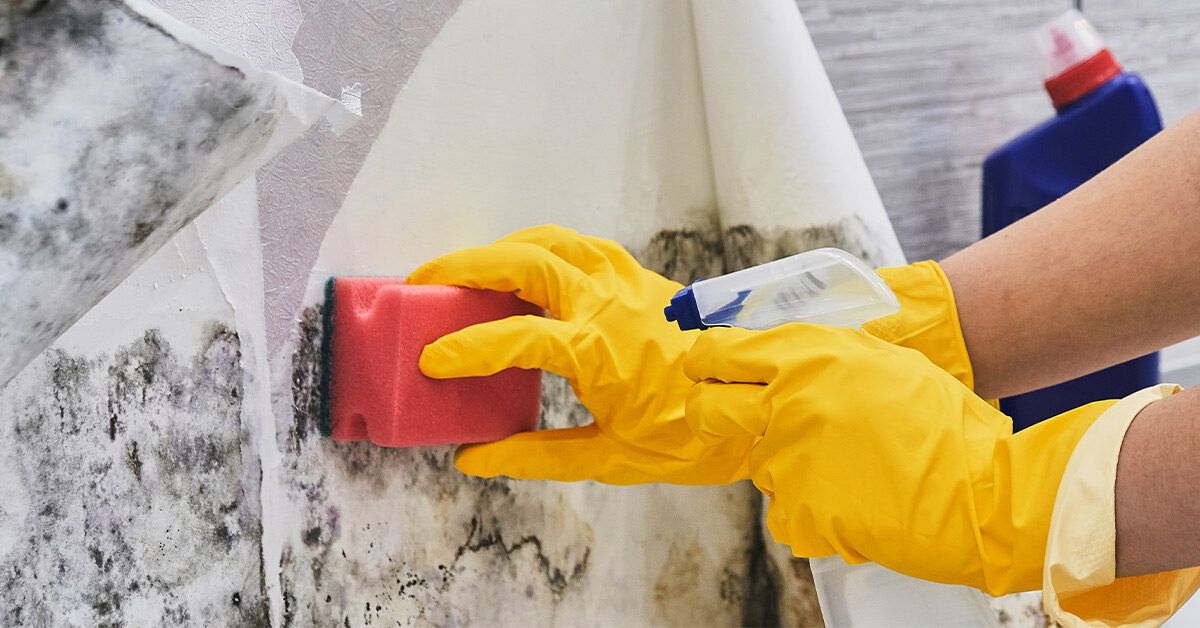
Small amounts of mold on nonporous surfaces can often be scrubbed with detergent and water, then dried completely. Porous materials such as moldy drywall, ceiling tiles, insulation, carpet padding, and heavily contaminated upholstery may need to be discarded because fungal growth can penetrate spaces that surface cleaning cannot reach.
Use protective equipment
During cleanup, wear gloves, eye protection, and a properly fitted N95 respirator. Do not sand, scrape, or dry-brush mold without containment because those actions can spread particles. Keep children, pets, and medically vulnerable people away from the work area.
Never mix bleach with ammonia or other cleaners. Dangerous gases are much more immediately hazardous than the stain you were trying to remove.
When to Contact a Doctor
Consider speaking with a healthcare professional when symptoms are persistent, recurrent, severe, or clearly associated with a damp building. Medical evaluation is particularly important when:
- Asthma symptoms become more frequent or difficult to control
- Coughing or wheezing continues after leaving the environment
- You develop fever, chills, or significant shortness of breath
- You have chronic lung disease or a weakened immune system
- A child develops ongoing respiratory symptoms
- Symptoms interfere with sleep, school, work, or normal activities
An allergist may use a medical history, examination, skin-prick testing, or specific IgE blood testing to evaluate a possible mold allergy. A clinician should also consider other explanations, including viral illness, pollen, dust mites, pet allergens, chemicals, smoke, bacterial contamination, or unrelated respiratory disease.
Experience-Based Examples: What Mold Exposure Often Looks Like in Real Life
The following examples are realistic composites designed to illustrate common experiences. They are not personal medical diagnoses or accounts of specific patients.
Experience 1: The bathroom patch that keeps returning
A homeowner notices several dark spots above the shower. She wipes them away with cleaner, but they return every few weeks. Nobody in the household feels sick, so the mold seems harmless.
The important clue is not the color of the spots. It is the repeated regrowth. The bathroom fan vents poorly, showers regularly coat the walls with condensation, and the room remains humid for hours. Cleaning removes visible growth but does not change the environment supporting it.
The practical solution is to improve ventilation, run the exhaust fan during and after bathing, dry wet surfaces, and check whether moisture has reached the ceiling cavity. The exposure may never have caused noticeable symptoms, but ignoring the moisture could allow a small surface problem to become a larger hidden one.
Experience 2: The apartment where symptoms appear every morning
A renter begins waking with congestion, itchy eyes, and a dry cough. The symptoms improve after arriving at work. On weekends, when more time is spent at home, they last longer.
After moving furniture, the renter finds mold behind a dresser placed against a cold exterior wall. Condensation had formed where air could not circulate. The pattern of symptoms does not prove mold caused the illness, but it provides useful information for both the landlord and the renter’s clinician.
The renter photographs the damage, reports it in writing, moves away from the affected room temporarily, and requests correction of the moisture source rather than accepting a quick coat of paint. Symptoms improve after professional removal and humidity control. The lesson is that timing and location can be more informative than a home test kit.
Experience 3: The weekend cleanup that triggers wheezing
A healthy-looking basement develops mold after a water-heater leak. A family member with mild asthma decides to remove damp carpet and drywall without a respirator. Within an hour, he is coughing and wheezing.
The reaction is not necessarily proof of poisoning. Pulling apart contaminated materials can aerosolize mold spores, dust, fibers, and other irritants. His asthma makes his airways more reactive than those of the relatives helping beside him.
Cleanup stops, the person follows his asthma action plan, and professional help is arranged. In this situation, the harmful exposure was shaped by both the contaminated environment and the activity that disturbed it.
Experience 4: The mysterious office cough
Several employees complain about throat irritation and coughing in one section of an office. Portable mold tests give inconsistent results, leading to a spirited debate in which everyone suddenly becomes an amateur microbiologist.
A building inspection eventually finds a slow roof leak, stained ceiling tiles, damp insulation, and inadequate ventilation. The building manager repairs the roof, replaces damaged material, and monitors the area for moisture. Complaints gradually decline.
The experience demonstrates why moisture investigation is often more useful than chasing a perfect spore number. Damp buildings may contain mold, bacteria, dust mites, degraded building materials, and irritating chemicals at the same time. Correcting the building problem is more practical than trying to assign every sneeze to one organism.
Experience 5: A high-risk patient avoids cleanup
After a pipe bursts, a person receiving immune-suppressing treatment considers helping relatives clean the damaged room. The visible mold area is not enormous, but the person’s medical status changes the risk calculation.
Rather than entering the work area, the patient stays elsewhere while trained workers remove wet materials. This may seem overly cautious to healthy family members, but high-risk individuals face concerns that extend beyond temporary allergy symptoms. Personal vulnerability can matter more than the number of square feet involved.
Conclusion
So, how much mold exposure is harmful? There is no single number that applies to everyone. A brief, low-level exposure may cause no symptoms in one person and trigger an asthma attack in another. Risk rises with heavier contamination, repeated or prolonged exposure, disturbance of moldy materials, and underlying health conditions.
Do not wait for a laboratory report to tell you that visible mold, persistent musty odors, water stains, or recurring dampness deserve action. Fix the moisture source, remove contaminated materials safely, protect vulnerable household members, and seek medical advice when respiratory or allergic symptoms persist. Mold may be part of nature, but it does not need a permanent lease in your bedroom.
Medical note: This article provides general educational information and does not replace evaluation, diagnosis, or treatment by a qualified healthcare professional.
Research note: The article synthesizes current information from U.S. public-health, environmental, occupational-safety, allergy, and respiratory-health resources, including CDC, NIOSH, EPA, NIEHS, OSHA, AAAAI, FEMA, and the American Lung Association.

