
Makeup
Bleep This: A Brief History of Profanity on Television
Jun
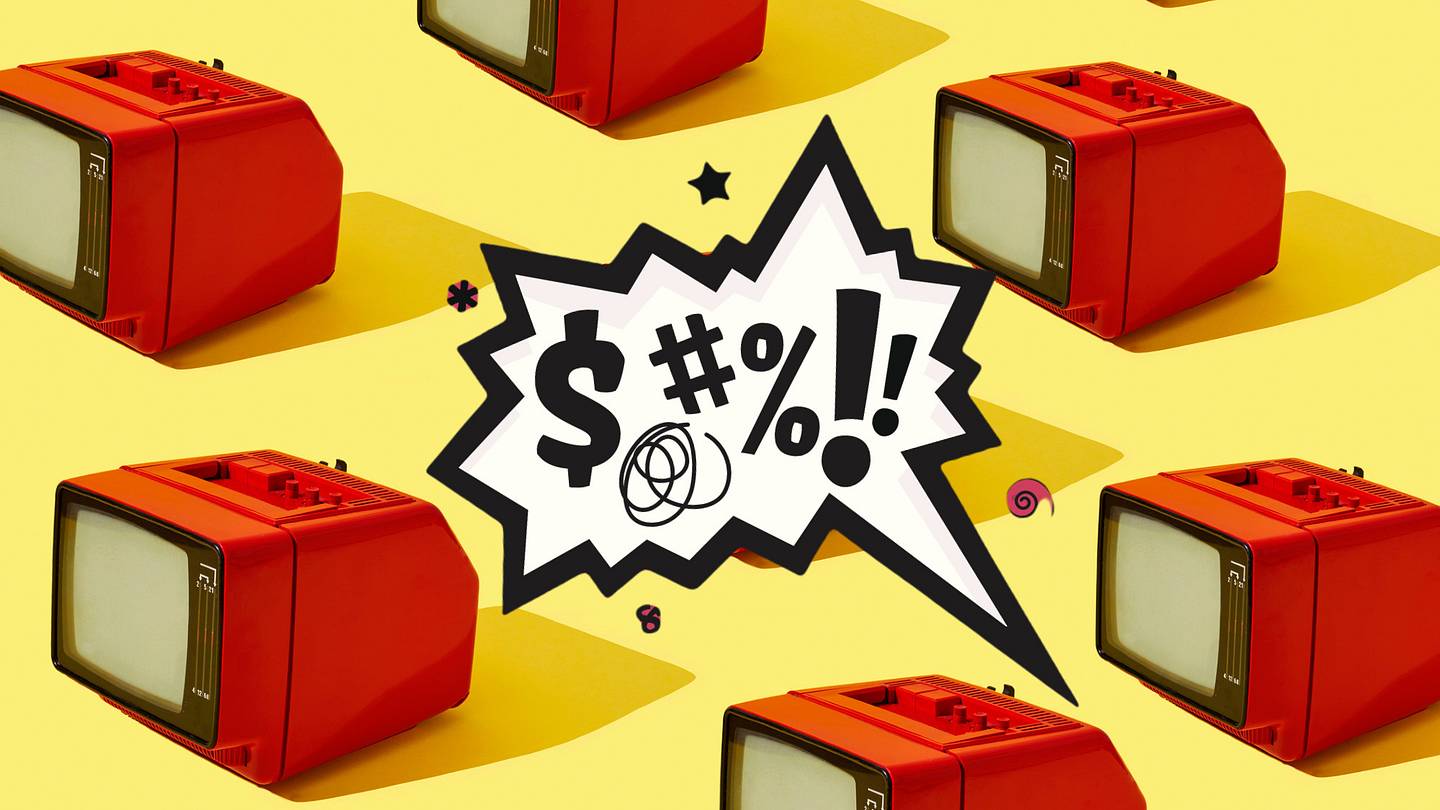
Television has always had a complicated relationship with profanity. It wants to sound like real life, but it also wants advertisers, regulators, affiliates, parents, and that one viewer in Ohio with a complaint form already half-filled out to stay calm. The result is one of the strangest traditions in American entertainment: the beep. That tiny electronic squeal has done more dramatic work than some supporting actors. It has covered anger, panic, comedy, shock, embarrassment, and occasionally a chef yelling at undercooked risotto.
The history of profanity on television is really the history of American culture learning what it can say out loud. In the early decades of TV, language was polished until it squeaked. By the 1970s, sitcoms and dramas began testing the edges of “acceptable.” By the 1990s and 2000s, cable and premium channels turned raw language into a badge of authenticity. Today, streaming platforms can drop adult language with far fewer regulatory headaches, while broadcast networks still tiptoe through a minefield of rules, time slots, and public expectations.
So how did television go from “golly” to “viewer discretion advised”? Let’s bleeping discuss it.
The Early TV Era: When Everyone Sounded Suspiciously Polite
In the 1950s and early 1960s, American television was built around living-room respectability. Broadcast TV entered the home as a guest, and guests were expected to wipe their feet, smile at Mom, and avoid language that might make Grandma drop her tea. Sponsors had enormous influence. Networks were cautious. Programs were designed for broad family viewing because there were only a few major channels, and everybody from children to grandparents might be watching the same show at the same time.
This did not mean early television had no edge. Comedians used innuendo, sarcasm, double meanings, and body language to sneak adult humor past the gatekeepers. Writers became masters of implication. A raised eyebrow could do the work of an entire paragraph. The punchline often lived in what was not said.
But profanity itself was largely off the menu. The unspoken rule was simple: if a word could cause a sponsor to panic, a network executive to sweat, or a local station manager to unplug the transmitter and move to the woods, it probably stayed out of the script.
Broadcast Rules: Why TV Profanity Was Never Just About Taste
To understand profanity on television, you have to understand the special legal status of broadcast TV. In the United States, the Federal Communications Commission regulates broadcast television and radio because they use public airwaves. Cable and streaming services do not operate under the same indecency rules, which is why the same word might be muted on a network drama, shouted freely on HBO, and casually tossed around on a streaming series before the opening credits finish.
The FCC distinguishes between obscene, indecent, and profane material. Obscene material is not protected and cannot be broadcast at any time. Indecent or profane material is treated differently: on broadcast TV and radio, it is generally restricted during hours when children are likely to be in the audience, especially between 6 a.m. and 10 p.m.
That “safe harbor” concept helped shape decades of programming decisions. Late-night television could be more daring. Prime-time network programming had to be careful. Live events became especially risky because one celebrity, athlete, award winner, or excited person holding a microphone could create a regulatory headache faster than a producer could shout, “Cut to commercial!”
The Carlin Case: Seven Words, One Landmark Decision
No history of profanity on television and broadcasting can ignore George Carlin’s famous “Seven Dirty Words” routine. The routine itself aired on radio, not television, but its impact shaped broadcast standards across media. In 1973, a New York radio station aired Carlin’s monologue in the afternoon. A listener complained after hearing it while driving with his young child. The FCC responded, and the dispute eventually reached the U.S. Supreme Court.
In 1978, the Supreme Court decided FCC v. Pacifica Foundation, a landmark case that upheld the FCC’s authority to regulate indecent broadcast material. The Court emphasized the uniquely pervasive nature of broadcasting and the possibility that children could be exposed to content without warning. In plain English: because radio and broadcast television came straight into the home and could be easily accessed by kids, the government had more room to regulate them than it did books, films, or live performances.
The Pacifica decision did not ban all adult language from broadcasting forever. But it gave regulators, networks, and standards departments a powerful reason to treat profanity as more than a matter of style. Suddenly, a curse word was not just a creative choice. It could be a legal event.
The Beep Becomes a Character
Once profanity became both a cultural issue and a regulatory issue, the beep became television’s favorite escape hatch. Technically, it was censorship. Artistically, it became comedy.
A well-timed bleep can be funnier than the actual word. It lets the audience imagine the worst while keeping the broadcaster technically clean. Reality TV later turned this into an art form. A cast member storms out, a producer asks the wrong question, and suddenly the audio track sounds like a microwave having a nervous breakdown. The bleep creates rhythm. It builds suspense. It says, “Something wild happened here, but legal would prefer we not spell it out.”
Game shows, talk shows, late-night programs, awards ceremonies, and live news all learned to fear the unscripted mouth. Delay systems became essential. Broadcasts began using short time buffers so producers could mute problem words before they reached viewers. The bleep was no longer just a sound. It was a safety net.
The 1970s and 1980s: Realism Pushes Against Politeness
As American culture changed, television language slowly changed with it. The 1970s brought sitcoms and dramas that dealt with politics, race, class, war, divorce, gender roles, and social conflict more openly than earlier shows had. Programs like All in the Family did not need heavy profanity to feel shocking; their subject matter and blunt dialogue already pushed the limits of what mainstream TV could do.
Still, network television remained careful. Mild profanity and insults became more common, but the harshest words stayed rare or absent. Writers found creative substitutes. Characters snapped, grumbled, muttered, and invented TV-safe versions of things real people would say much less politely.
The 1980s kept the balancing act alive. Broadcast dramas wanted grit. Sitcoms wanted attitude. Late-night comedians wanted freedom. But prime-time language still had to pass through standards and practices departments, those invisible guardians of advertiser comfort and affiliate sanity.
The 1990s: NYPD Blue and the Prime-Time Push
The 1990s marked a major turning point. Network dramas began chasing realism more aggressively, partly because cable was raising audience expectations. NYPD Blue, which premiered in 1993, became famous for its rougher language, adult themes, and willingness to make prime-time broadcast television feel less sanitized.
Compared with premium cable, NYPD Blue may look tame now. But at the time, it felt like network TV had loosened its tie, kicked open a precinct door, and started talking like someone who had seen a long day. The show’s language was carefully controlled, counted, and negotiated, but it still helped move the boundary. It proved viewers would accept tougher dialogue if it served character and setting.
Other shows followed with their own versions of realism. Medical dramas, police procedurals, legal shows, and workplace comedies all tested how much language could fit into mainstream television without triggering backlash. The answer was usually: more than before, but not as much as writers wanted.
The V-Chip and TV Ratings: Profanity Gets a Label
In the late 1990s, the conversation shifted from “Can TV say that?” to “Can parents block that?” The TV Parental Guidelines launched in 1997, and content descriptors were added to help viewers identify shows containing violence, sexual content, suggestive dialogue, or coarse language. The “L” label became shorthand for language that might not be suitable for younger audiences.
The V-chip, required in newer television sets, gave parents a tool to block programs based on ratings. This did not end arguments over profanity. It simply moved part of the responsibility from networks to households. Instead of one national standard for every living room, the system encouraged families to make their own viewing decisions.
Of course, anyone who has ever tried to program a parental-control menu knows that “empowerment” can sometimes feel like assembling furniture with instructions translated by a confused robot. Still, the ratings system changed how television talked about profanity. Adult language became a category, a warning, and a marketing signal.
Cable Changes the Volume
Cable television changed everything because it was not bound by the same FCC indecency restrictions as broadcast TV. Basic cable still had advertisers and brand concerns, so it did not become a free-for-all overnight. But cable had more room to experiment, especially in late-night slots and adult-focused programming.
Comedy Central’s South Park, which debuted in 1997, used vulgarity as part of its rebellious identity. The show’s profanity was not just decoration; it was a satirical weapon. It mocked authority, hypocrisy, celebrity culture, politics, religion, and the absurdity of outrage itself. Sometimes the language was the joke. Sometimes the panic about the language was the joke.
Basic cable dramas and comedies gradually widened the acceptable range of adult dialogue. Networks like FX, AMC, and Comedy Central learned that strong language could signal creative boldness. Even when certain words remained limited, the overall tone became sharper, darker, and more adult.
HBO, The Sopranos, and the Prestige Profanity Era
Premium cable took the next leap. HBO did not depend on traditional advertising in the same way broadcast networks did, and it was not governed by FCC broadcast indecency rules. That freedom helped create the prestige TV boom.
The Sopranos, which premiered in 1999, made adult language feel inseparable from character. Tony Soprano and his world could not speak like cheerful sitcom neighbors. The profanity reflected power, fear, loyalty, insecurity, and emotional damage. It was ugly, funny, musical, and revealing. The language helped viewers believe in the world.
Then came Deadwood, one of television’s great experiments in profane poetry. Its dialogue was famously dense, theatrical, and filthy, but not random. The language gave the frontier town a brutal rhythm. Characters used profanity as armor, negotiation, insult, class marker, and survival tool. It was not merely “adult language.” It was world-building.
Premium cable showed that profanity could be more than shock value. Used well, it could reveal character, social hierarchy, emotional pressure, and historical atmosphere. Used poorly, of course, it could still sound like a teenager discovered a forbidden word and decided to build a personality around it.
Fleeting Expletives: When One Word Becomes a Supreme Court Problem
Live television created a special problem: what should happen when a forbidden word slips out once? For years, regulators treated repeated or deliberately shocking language differently from accidental or “fleeting” expletives. But the FCC later became more aggressive about even brief unscripted profanity, especially after high-profile awards-show incidents in the early 2000s.
This led to FCC v. Fox Television Stations, a major legal battle over fleeting expletives. In 2009, the Supreme Court addressed whether the FCC’s policy shift was arbitrary. In 2012, the Court again considered disputes involving Fox and ABC, ultimately finding that broadcasters had not received fair notice under the standards applied to them at the time. The decision avoided a sweeping First Amendment ruling, leaving the larger debate unresolved.
The practical lesson for broadcasters was clear: live microphones are tiny chaos machines. The legal lesson was more complicated: profanity rules must be clear enough that networks know what will get them punished. The cultural lesson was funniest of all: America can turn one surprise word at an awards show into years of litigation.
Streaming: The Age of the Unbleeped Universe
Streaming platforms changed the profanity conversation again. Netflix, Hulu, Amazon Prime Video, Max, Apple TV+, Peacock, and others do not follow the same broadcast indecency framework. They still use ratings, advisories, parental controls, and internal standards, but they have much more flexibility.
As a result, modern viewers often experience a split-screen language culture. A broadcast sitcom may dance around strong profanity with clever substitutions. A streaming drama may use adult language casually, realistically, or excessively. A documentary may include raw speech because editing it out would distort the truth. A stand-up special may treat profanity as part of the performer’s voice.
Streaming also changed viewer expectations. Audiences now choose shows on demand, often with visible ratings and descriptions. The old argument that a viewer might accidentally stumble into adult content still exists, but it is less persuasive in a world of profiles, passwords, content warnings, and parental controls. Television is no longer one pipe flowing into every household at once. It is a buffet, and some dishes come with a warning label and a lot of sauce.
Why Profanity on TV Still Matters
It is tempting to say profanity no longer matters because modern audiences have heard everything. That is not true. Language still has power. Certain words can express rage, intimacy, pain, comedy, class, realism, or disrespect. Some words are merely rude; others carry histories of harm and should be handled with extreme care or avoided entirely. The issue is not simply whether television can say something. The better question is whether the word earns its place.
Great television uses profanity with purpose. It reveals something. It sharpens a moment. It makes a character feel real. Weak writing uses profanity as seasoning poured over a dish that was already burned. More adult language does not automatically mean more adult storytelling.
The best shows understand the difference between shock and truth. A single muted word can be hilarious. A single unmuted word can be devastating. Silence can be stronger than both. The history of profanity on television is not a march from repression to freedom. It is a long negotiation between realism, comedy, regulation, commerce, technology, and taste.
Experiences and Reflections: What the Bleep Taught Viewers
Anyone who grew up watching American television has probably experienced profanity in stages. First, there was the mysterious beep. As a kid, you might not have known what word disappeared, but you knew something forbidden had just flown through the room wearing a trench coat. The adults might laugh. The show might pause for effect. The bleep became a tiny doorway into grown-up language.
Then came the realization that different channels lived by different rules. A movie on a broadcast network might sound oddly scrubbed, with dubbed lines that did not match the actor’s mouth. A basic cable rerun might keep more attitude but still dodge the harshest words. A premium cable episode, meanwhile, could sound like the writers had fired the hall monitor. This taught viewers an accidental media-literacy lesson: television is not one thing. It is a collection of platforms, business models, rules, and audience promises.
Profanity also became part of shared viewing memory. Families remember awkward moments when a character said something just a little too spicy for the room. Friends remember laughing harder at the beep than at the line itself. Fans remember when a drama finally used strong language at the perfect emotional moment, and it landed because the show had not wasted that power earlier.
For writers, profanity is a useful but dangerous tool. It can make dialogue sound natural, especially in settings involving crime, medicine, war, politics, kitchens, police work, or high-pressure jobs. But overuse can flatten characters. If everyone curses with the same rhythm, nobody has a distinct voice. The most memorable TV dialogue often comes from contrast: the character who never swears until one terrible day, the polite person whose sudden outburst changes the room, the comic figure whose censored rant is funnier because viewers fill in the blanks.
For viewers, the experience is personal. Some people find strong language honest. Others find it lazy or unpleasant. Many are fine with it in a serious drama but annoyed by it in a casual sitcom. Context matters. Timing matters. Audience expectations matter. A word that feels natural in The Sopranos might feel ridiculous in a cozy family comedy. A beep that works in reality TV might destroy the mood of a historical drama.
What makes the topic fascinating is that profanity on television is never only about profanity. It is about who controls the remote, who pays for the show, who complains, who regulates, who writes, who performs, and who gets to define “normal” speech. The bleep is funny because it exposes the whole machine. It reminds us that television is both art and appliance, both storytelling and business, both free expression and negotiated permission.
In the end, the most important lesson is simple: language evolves, but purpose still matters. Television can be cleaner than real life, rougher than real life, or weirdly stuck between the two. The best shows choose their words carefully, whether those words are spoken, muted, implied, or replaced by the world’s most dramatic little beep.
Conclusion: From Bleeps to Binge-Watching
The history of profanity on television is a history of changing boundaries. Early TV protected the living room with politeness. The FCC and the courts shaped what broadcasters could risk. The Pacifica case gave indecency regulation a legal foundation. The V-chip and TV ratings shifted some control to parents. Network dramas pushed toward realism. Cable and premium channels expanded the language of adult storytelling. Streaming turned the old broadcast rulebook into just one chapter in a much bigger media story.
But the bleep survives. It survives because it is useful, funny, and strangely expressive. It is television’s wink at the audience, a reminder that someone said something too hot for the format. In a media world full of unfiltered speech, the bleep still has comic timing. It is the sound of censorship, yes, but also the sound of imagination doing a little extra work.
Profanity on TV has come a long way, but the real question has not changed: does the language serve the story? When it does, it can make a scene feel alive. When it does not, it is just noise with attitude. And when all else fails, there is always the beeptiny, ridiculous, and somehow still undefeated.

