
Skincare
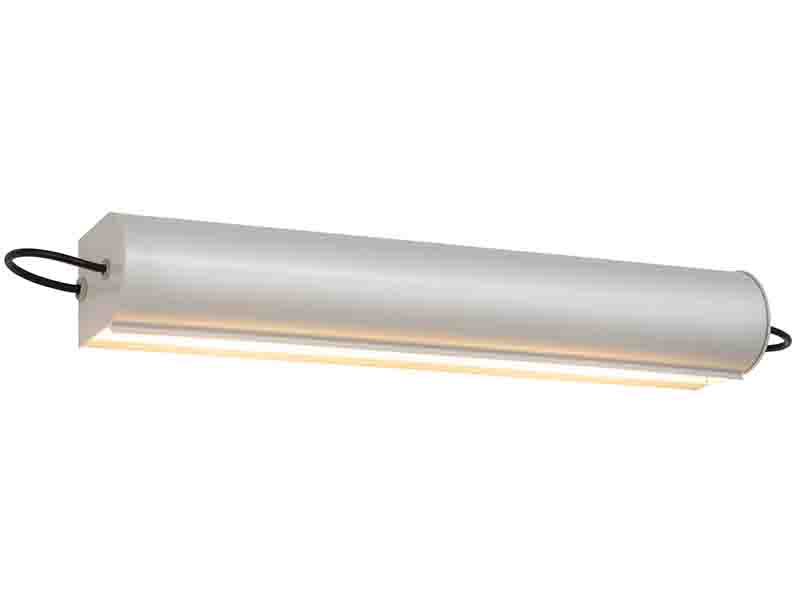
Applique Cylindrique Wall Sconce
Aug
The Applique Cylindrique Wall Sconce proves that a light fixture does not need crystal drops, a dramatic arm, or a shade shaped like a tropical bird to command attention. Its formula is almost suspiciously simple: a compact wall plate, a metal cylinder, a concealed bulb, and a shade that turns with a touch. Yet that simplicity is exactly why this Charlotte Perriand design still looks intelligent and fresh nearly a century after it was conceived.
Produced today by Nemo Lighting, the Applique Cylindrique is part architectural tool and part collectible design object. It directs light without shouting, introduces color without becoming sugary, and takes up very little visual space. It is the well-dressed guest at a party who says three excellent things and never traps anyone beside the snack table.
What Is the Applique Cylindrique Wall Sconce?
The Applique Cylindrique is an adjustable aluminum wall light created by French architect and designer Charlotte Perriand. The design dates to the early 1930s, when Perriand developed it for Le Vieux Matelot, her mountain chalet in Saint-Nicolas-de-Véroce, France. Nemo Lighting now produces the authorized modern edition.
The French name is wonderfully literal: “applique” refers to a wall-mounted light, while “cylindrique” describes the cylindrical form. The curved metal screen is not merely decorative. It pivots so the user can alter the direction and character of the beam. Turn it toward the wall for a soft reflected glow, rotate it downward for more focused illumination, or stop between the two for a gentle wall wash.
A Small Gesture With a Big Effect
Perriand paid close attention to the relationship between objects and human movement. Here, the hand does more than operate a switch; it shapes the light. The moving shade makes the fixture responsive rather than static, which is why it feels more like practical architecture than a decorative box hiding a bulb.
Charlotte Perriand’s Modernism in Miniature
Charlotte Perriand was one of the defining figures of twentieth-century modern design. Her work often combined industrial materials, efficient construction, confident color, and close observation of everyday life. She collaborated with Le Corbusier and Pierre Jeanneret, designed furniture and interiors, and helped make modernism more flexible and humane.
The Applique Cylindrique captures that thinking on a small scale. Every visible element has a purpose. The metal body shields the lamp, reduces direct glare, reflects illumination toward a chosen surface, and creates a strong graphic line on the wall. Its beauty comes from proportion, movement, and usefulness rather than ornament added afterward.
Key Design Features
Pivoting Cylindrical Shade
The signature feature is the adjustable curved screen. Instead of broadcasting light in every direction, it allows the output to be aimed. Depending on placement and bulb choice, the fixture can provide indirect ambient light, accent light, or localized task illumination.
Painted Aluminum Construction
The aluminum body supports the clean rolled shape without appearing heavy. U.S. configurations are commonly offered in pastel blue, anthracite gray, and whitewash. Pastel blue creates a playful modernist accent; anthracite looks graphic and architectural; whitewash blends into pale walls while allowing shadows to define the form.
Petite and Longue Sizes
The Petite version is approximately 6.3 inches wide, 3 inches high, and 4.1 inches deep. It uses one E12 candelabra-base lamp and commonly includes an onboard switch. The Longue version is about 18.9 inches wide with a similar height and depth and uses two E12 lamps. Its wider span produces a broader wall-washing effect and gives it enough presence for artwork, cabinetry, or a long hallway wall.
Indirect, Adjustable Light
Because the bulb sits behind the metal screen, the viewer mainly sees reflected illumination rather than a bare point source. This reduces visual glare and looks particularly attractive on plaster, limewash, brick, wood paneling, and other surfaces that come alive under grazing light.
Petite vs. Longue: Which Size Is Right?
| Feature | Petite | Longue |
|---|---|---|
| Approximate width | 6.3 inches | 18.9 inches |
| Bulb configuration | One E12 bulb | Two E12 bulbs |
| Ideal role | Bedside, reading nook, compact accent | Artwork, sideboard, corridor, broad wall wash |
| Visual character | Precise and jewel-like | Architectural and horizontal |
Choose the Petite when the lamp should behave like a punctuation mark. It works beside a bed, above a narrow console, near a reading chair, or between framed pieces. Choose the Longue when the wall itself is part of the composition. Its extended body visually balances larger furniture and spreads light over a wider area.
Before ordering, outline the dimensions on the wall with painter’s tape. A Petite fixture can look lonely above a six-foot credenza, while the Longue may overpower a tiny bedside niche. This low-tech test has prevented many high-end regrets, which is an elegant way of saying: measure first.
Best Places to Use the Applique Cylindrique
Bedroom
A pair of Petite sconces can free nightstands from bulky lamps. Aim them downward for reading or toward the wall for softer evening light. The directional beam is useful when one person wants to read and the other would prefer not to sleep under stadium lighting.
Living Room
Install one above a low cabinet, beside artwork, or near an armchair. It works best in a layered lighting plan with ceiling, table, and floor lights. The Applique Cylindrique adds depth; it is not expected to illuminate the entire room single-handedly.
Hallway or Dining Area
The shallow profile suits circulation spaces where a bulky fixture would feel intrusive. Several Petite models can establish rhythm along a corridor, while a Longue sconce above a sideboard creates warm indirect light without competing with a dining pendant.
Home Office
Use the adjustable wall light above shelving, a pinboard, or a small desk. Pair it with a dedicated task lamp for detailed work so the room has comfortable layers rather than one bright hotspot surrounded by mysterious darkness.
Choosing the Right E12 Bulb
The bulb is generally purchased separately, which lets you control brightness, color temperature, dimming behavior, and color quality. It also turns “buy a bulb” into a small investigation involving lumens, Kelvin, and a hardware-store aisle with far too many nearly identical boxes.
Color Temperature and Color Rendering
For bedrooms, living rooms, and dining spaces, a 2700K LED usually creates a warm, relaxed effect. A 3000K bulb feels slightly cleaner while remaining comfortable in modern interiors. Look for a CRI of 90 or higher when the sconce will illuminate art, wood, textiles, food, or faces.
Dimming and Physical Fit
For the Longue model, select dimmable E12 LED bulbs and verify compatibility with the wall control. Mismatched LEDs and dimmers can flicker, buzz, or shut off abruptly. The Petite model’s onboard switch may affect control options, so check the exact specification before planning a dimmer. Follow the rated lamp limits and choose a compact bulb that fits behind the rotating screen without touching it.
Installation and Placement Tips
The U.S. version is designed for hardwired installation and is commonly supplied with a cover plate for a standard junction box. Because the work involves line voltage, grounding, secure wall attachment, and local codes, professional installation is the safest approach unless the installer is qualified to perform electrical work.
Test the Beam, Not Just the Height
No single mounting height suits every use. A bedside reading light, hallway accent, and artwork sconce all require different positioning. Mock up the fixture and observe where the beam lands from the actual seated or standing position before final wiring.
Allow Room for Adjustment
Leave enough clearance for fingers to rotate the shade. Avoid crowding it against shelves, trim, mirrors, or frames. For repeated installations, align the fixtures with stable architectural references rather than assuming the floor or ceiling is perfectly level.
Keep It in Dry Interior Locations
The IP20 specification indicates no protection from water exposure. Treat the Applique Cylindrique as an indoor, dry-location fixture unless the exact purchased model carries additional approval. An attractive wall light does not automatically belong beside a shower just because it looks excellent near a folded towel.
How to Style the Available Finishes
Pastel blue is the most expressive option. It pairs beautifully with warm white walls, pale oak, chrome, natural linen, and small red accents. Anthracite gray emphasizes the silhouette and suits concrete, walnut, stone, blackened metal, and richly colored walls. Whitewash is quieter; on a pale wall, the curved profile is defined mainly by shadow, making it a strong choice for galleries, soft minimalist bedrooms, and Scandinavian-inspired rooms.
The fixture can be mounted as a solitary accent, in a symmetrical pair, or in a repeated sequence. Keep nearby objects disciplined. Because the lamp already contributes geometry, movement, and a stripe of light, it rarely needs help from a crowd of tiny decorations.
Advantages and Drawbacks
Why It Works
- The rotating shade changes beam direction and atmosphere.
- The shallow form fits small rooms and narrow hallways.
- Replaceable E12 bulbs provide control over light quality.
- The design functions as both illumination and wall sculpture.
- Its documented modernist authorship gives it lasting design significance.
What to Consider
- It is accent or localized lighting, not a full-room light source.
- The bulb is normally not included.
- Petite and Longue versions have different control considerations.
- Hardwired installation requires junction-box planning.
- IP20 makes the standard fixture inappropriate for exposed wet areas.
- Its premium value comes from design, construction, and authorshipnot maximum lumens per dollar.
Care and Maintenance
Turn off the power and let the bulb and metal parts cool. Dust the exterior and inner reflector with a clean, dry microfiber cloth. Avoid abrasive pads, metal polish, solvents, and aggressive household cleaners that could alter the painted finish. When replacing the bulb, use a compatible shape and rating; elegant French modernism should not require wrestling an oversized lamp behind the shade.
Living With the Applique Cylindrique: A Practical Experience Guide
The first thing you may notice after installation is not the fixture but the wall around it. When the shade turns inward, the light spreads across paint, plaster, brick, or wood and reveals texture that may have disappeared under a central ceiling light. A plain wall gains depth. Small imperfections may also become visible, so the sconce can double as a sophisticated reminder that the drywall patch was not sanded quite as perfectly as everyone agreed to pretend.
In daily use, the rotating screen is more valuable than it appears in photographs. A fixed sconce produces one effect; this one can change roles. In a bedroom, it may point downward during reading and rotate toward the wall for a softer glow before sleep. In a living room, it can highlight a framed print during a gathering and turn away from the art when a calmer atmosphere is preferred. The adjustment is immediate, tactile, and pleasantly low-tech.
The Petite version feels most satisfying when it has a specific assignment. Beside a bed, near a favorite chair, or above a compact console, its scale looks deliberate. Installed randomly on a large empty wall, it can seem lonely. The Longue version is easier to read as an architectural feature. Above a sideboard or along a hallway, it creates a horizontal band that organizes the surface even when the lamp is off.
Bulb choice becomes part of the ownership experience. A warm, high-CRI LED generally flatters the painted metal and nearby materials. A bulb that is too bright can create a hard stripe, while one that is too dim may turn the fixture into expensive wall jewelry. Begin with moderate output and judge it after dark. Lighting is experienced in a room, not on the side of a cardboard package.
The fixture can also change how nearby furniture is used. A bedside table remains free for books and water. A hallway console no longer needs a lamp and cord. A reading chair can sit closer to the wall because the light occupies no floor space. These are modest improvements, but good interiors are often collections of modest improvements that make daily life easier.
There is a small learning curve. Guests may not realize the shade moves, and enthusiastic fingers may rotate it farther than necessary. A quick demonstration prevents confusion and protects the finish. The onboard switch on the Petite is convenient when the fixture is within reach but less useful if mounted high. That detail should influence placement before wiring begins, not after the electrician has folded the ladder.
Over time, the strongest impression is that the Applique Cylindrique does not behave like trend-driven decor. Its color can be playful, but its geometry remains disciplined. Its history is significant, yet the object is not museum-stiff. It earns attention through use: a touch on the shade, a changing beam, a patch of light on a wall, and extra breathing room on a table. It is not simply an old lamp reproduced for nostalgia; it is a good idea that still performs.
Final Verdict
The Applique Cylindrique Wall Sconce is an excellent choice for homeowners, designers, and collectors who value adjustable light, compact architecture, and authentic modernist design. The Petite is precise and intimate; the Longue is broader and more structural. Pastel blue supplies personality, anthracite adds graphic contrast, and whitewash brings subtle calm.
This is not the fixture for someone seeking the cheapest possible way to make a room bright. It is for someone who wants light to be adjustable, physical, and beautifully integrated into the wall. Charlotte Perriand’s cylinder may be modest, but it knows exactly what it is doingand unlike many decorative objects, it remains useful after the compliments are over.

