
Beauty Tools & Accessories
Personal Capital Versus Vanguard Personal Advisor Services Comparison
Jun
Choosing between Personal Capital and Vanguard Personal Advisor Services is a little like choosing between a highly customized chef’s tasting menu and a famously affordable, well-balanced meal plan. Both can help you invest, plan for retirement, and stop treating your portfolio like a mysterious drawer full of old cables. But they serve different types of investors, charge very different fees, and take noticeably different approaches to financial advice.
One important update first: Personal Capital is now part of Empower. Many people still search for “Personal Capital versus Vanguard Personal Advisor Services,” but the paid advisory service is generally discussed today as Empower Personal Strategy, while the free tracking tools live under the Empower Personal Dashboard brand. For readability, this article uses “Personal Capital” and “Empower” together where helpful.
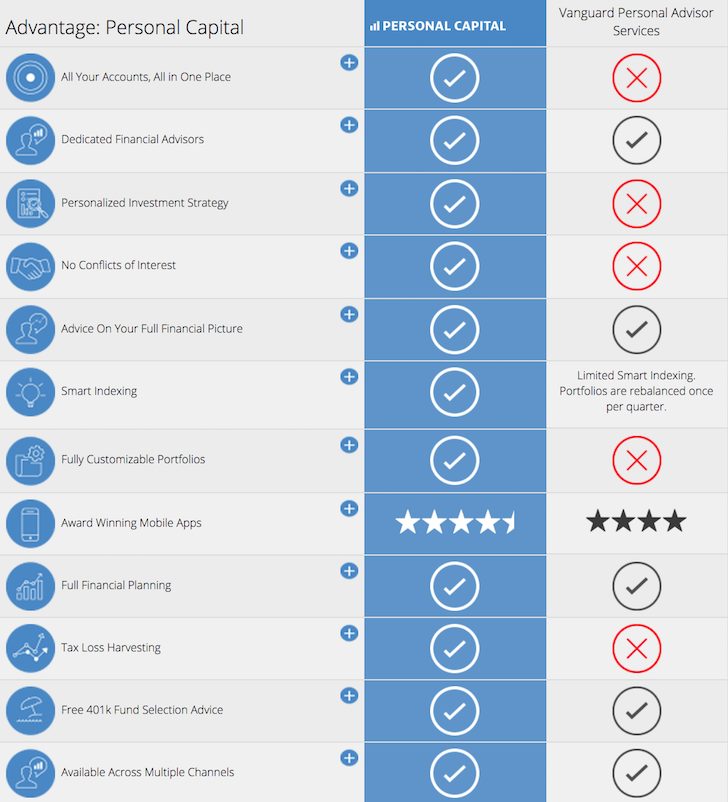
The short answer is simple: Vanguard Personal Advisor Services is usually better for cost-conscious investors who want a human-guided, mostly index-based investment plan. Personal Capital, now Empower Personal Strategy, may be better for investors who want a broader financial dashboard, more portfolio customization, tax-focused strategies, and access to dedicated advisors at lower asset levels than Vanguard’s dedicated-advisor tier.
Personal Capital vs Vanguard: Quick Comparison
| Feature | Personal Capital / Empower Personal Strategy | Vanguard Personal Advisor Services |
|---|---|---|
| Best for | Investors wanting a holistic dashboard, customized portfolios, tax optimization, and advisor access | Investors wanting low-cost human advice with Vanguard’s index-focused investment style |
| Minimum investment | Generally starts at $100,000 for Personal Strategy | Generally starts at $50,000 for Personal Advisor |
| Typical advisory fee | Starts around 0.89% annually for lower advisory tiers | Approximately 0.30% to 0.31% annually for a standard all-index portfolio |
| Dedicated advisor access | Available at higher service levels, commonly beginning around $250,000 | Typically available through Personal Advisor Select at $500,000+ |
| Investment approach | Customized portfolios using ETFs, individual securities at some levels, and tax strategies | Primarily Vanguard funds and ETFs, with index-based and some active or ESG options |
| Free tools | Strong free net worth, cash flow, budgeting, retirement, and investment tracking dashboard | Vanguard offers planning tools, but not the same all-account dashboard experience |
What Is Personal Capital?
Personal Capital began as a digital wealth management platform known for its excellent free financial dashboard. After its acquisition by Empower, the service became part of Empower Personal Wealth. The old Personal Capital name still gets plenty of search traffic because, frankly, financial rebrands stick in people’s minds about as well as New Year’s budgeting resolutions.
The free Empower Personal Dashboard remains one of the platform’s biggest attractions. Users can connect bank accounts, credit cards, retirement accounts, brokerage accounts, loans, mortgages, and other financial accounts to see a full net worth picture in one place. That makes it useful even for people who never become paying advisory clients.
The paid advisory side, Empower Personal Strategy, combines technology with human financial advisors. It is not a pure robo-advisor. It is closer to a hybrid wealth management service: algorithms help with portfolio monitoring, allocation, and rebalancing, while human advisors help with planning, tax strategy, retirement goals, and behavioral coaching.
What Is Vanguard Personal Advisor Services?
Vanguard Personal Advisor Services is Vanguard’s hybrid advice offering for investors who want professional guidance without paying the traditional 1% financial advisor fee. The service blends automated portfolio management with access to human advisors. Vanguard is best known for low-cost index investing, and that philosophy shows up clearly in this advisory program.
Vanguard Personal Advisor has a lower entry point than Empower Personal Strategy. It generally requires $50,000 in eligible assets, compared with Empower’s $100,000 starting point. However, investors with less than $500,000 usually work with a team of advisors rather than one dedicated advisor. Vanguard Personal Advisor Select, the dedicated-advisor tier, generally begins at $500,000.
For many investors, Vanguard’s biggest advantage is price. A standard all-index Personal Advisor portfolio typically costs about 0.30% to 0.31% per year in advisory fees, before considering underlying fund expenses. That is dramatically lower than Empower’s starting advisory fee. Over decades, that difference can compound into a very real pile of moneythe kind of pile that looks small in percentage terms but large when translated into vacations, college tuition, or “finally replacing the dishwasher that sounds like a helicopter.”
Fees: Vanguard Wins on Cost
Fees are the clearest difference in this comparison. Empower Personal Strategy generally starts around 0.89% annually for accounts from $100,000 up to $999,999. At higher Private Client levels, the fee schedule becomes tiered and can decline for larger balances, with lower rates applying to additional assets above certain thresholds.
Vanguard Personal Advisor Services is much less expensive for most investors. Its standard all-index advisory fee is roughly 0.30% to 0.31% annually. Vanguard Personal Advisor Select and higher wealth tiers also advertise fees at or below about $30 per $10,000 invested, though actual costs may vary depending on holdings and service type.
Example: $250,000 Portfolio
On a $250,000 portfolio, a 0.89% advisory fee equals about $2,225 per year. A 0.30% advisory fee equals about $750 per year. That is a difference of roughly $1,475 annually before considering underlying fund expenses, portfolio choices, taxes, or planning value. If you are paying more, you should be getting something meaningful in return: better planning, more customization, tax help, advisor access, or a smoother investing experience.
This does not automatically mean Vanguard is always better. A fee is not “bad” if the service helps you make better decisions, avoid panic selling, optimize taxes, or create a better retirement withdrawal plan. But cost matters. Every dollar paid in fees is a dollar that does not remain invested, and compounding is not known for giving refunds.
Investment Strategy: Customization vs Simplicity
Empower Personal Strategy leans more toward customization. Depending on account level, the service may include ETF portfolios, individual securities, tax-loss harvesting, asset location, tax-efficient portfolio construction, and personalized financial planning. Empower also emphasizes its Smart Weighting approach, which aims to diversify beyond simple market-cap weighting.
Vanguard’s investment style is more straightforward. It generally builds portfolios around Vanguard mutual funds and ETFs, especially low-cost index funds. This can be a major advantage for investors who believe in broad diversification, low expenses, and long-term discipline. Vanguard does offer different portfolio options, including active and ESG choices, but the overall experience is more constrained than Empower’s.
That simplicity is not a flaw. For many investors, fewer moving parts means fewer chances to tinker, overreact, or accidentally transform a retirement account into a hobby project. Vanguard’s approach works especially well for people who want a professionally maintained version of a classic diversified portfolio.
Financial Planning: Both Offer Human Help, but the Style Differs
Both services offer access to human advisors, but the advisor relationship differs by asset level. Empower generally provides access to financial advisors at the $100,000 level, with more dedicated service at higher balances. At around $250,000 and above, investors may receive more direct advisor support and more robust planning features. At $1 million and above, Empower’s Private Client offering adds deeper planning services, including legacy planning, estate-oriented conversations, and more advanced wealth management support.
Vanguard Personal Advisor gives clients access to advisors, many of whom hold CFP credentials or other professional designations. However, under $500,000, clients usually work with an advisor team rather than a single dedicated advisor. At $500,000 and above, Vanguard Personal Advisor Select typically provides a dedicated Certified Financial Planner professional.
If you want a dedicated advisor sooner, Empower may have the edge. If you are comfortable with a team-based advisor model and prioritize low fees, Vanguard becomes very appealing.
Tax Strategy: Empower Has the More Prominent Pitch
Tax strategy is one of Empower’s stronger selling points. The platform highlights tax-efficient portfolio construction, asset location, and tax-loss harvesting. It also integrates tax planning themes into the broader dashboard experience. For high-income investors with taxable brokerage accounts, this can be valuable.
Vanguard also offers tax-aware planning, including guidance around withdrawals, Roth conversions, retirement income, and account placement. Its higher advice tiers may include more sophisticated tax-efficient retirement strategies. However, Vanguard’s overall brand identity is still more about low-cost investing and disciplined planning than high-touch tax customization.
The best choice depends heavily on your account type. If most of your money is in tax-advantaged accounts like 401(k)s and IRAs, tax-loss harvesting may not matter much. If you have a large taxable brokerage account, concentrated stock positions, or complex retirement income needs, tax planning deserves more attention.
Technology and Dashboard Experience
Personal Capital built its reputation on technology. The Empower Personal Dashboard remains one of the best-known free tools for seeing your entire financial life in one place. It can track net worth, cash flow, spending, investments, retirement projections, and fees across multiple institutions. That external-account visibility is a major benefit if your financial life is scattered across banks, brokerages, employer plans, old retirement accounts, and that one savings account you opened for a bonus and then forgot about.
Vanguard’s technology is functional, but it is not the same kind of all-in-one financial command center. Vanguard works best when your assets are already at Vanguard or you are willing to move them there. That can be a strength if you value simplicity, but a limitation if you want one dashboard to monitor everything.
Who Should Choose Personal Capital?
Personal Capital, now Empower Personal Strategy, may be the better fit if you want more than basic portfolio management. It is especially attractive for investors who value a full financial dashboard, want customized portfolio construction, have taxable accounts that may benefit from tax strategies, or want dedicated advisor access before reaching Vanguard’s $500,000 Select threshold.
It may also appeal to investors who want help coordinating multiple goals: retirement, college planning, equity compensation, real estate, cash flow, tax planning, and estate-related conversations. If your financial life has more tabs open than your browser, Empower’s broader planning approach may feel useful.
The downside is cost. Investors should be comfortable paying a premium advisory fee and should periodically ask whether the planning, tax strategy, and advisor relationship justify the difference.
Who Should Choose Vanguard Personal Advisor Services?
Vanguard Personal Advisor Services is likely better for investors who want low-cost professional guidance, prefer index-oriented portfolios, and are comfortable using Vanguard funds and ETFs. It is a strong fit for people who want a sensible long-term plan but do not need highly customized investment sleeves or an elaborate dashboard.
It is also a compelling choice for retirement savers who already use Vanguard and want help with asset allocation, rebalancing, Social Security timing, retirement income, and withdrawal strategies. The fee advantage is hard to ignore. For many households, paying around 0.30% for human-supported investment advice is a practical middle ground between doing everything alone and hiring a traditional full-service advisor.
The trade-off is flexibility. Vanguard may require assets to be held at Vanguard, and portfolios are typically built using Vanguard’s own investment lineup. That is fine for many investors, but not ideal for those who want broader outside-account management or more customized security selection.
Bottom Line: Which Is Better?
In a straight fee comparison, Vanguard Personal Advisor Services wins. Its lower advisory fee can save investors meaningful money over time. For cost-conscious, long-term investors who believe in diversified index funds, Vanguard is difficult to beat.
In a technology, dashboard, and customization comparison, Personal Capital has the advantage. Empower Personal Strategy offers a more holistic view of your financial life and may provide more personalized tax and planning support, especially for investors with larger or more complex portfolios.
The best answer is not “Personal Capital is better” or “Vanguard is better.” The best answer is: choose Vanguard if you want low-cost guidance built around a simple, disciplined investment philosophy. Choose Personal Capital if you are willing to pay more for deeper dashboard tools, more customization, and a broader planning experience.
Experience-Based Perspective: What It Feels Like to Compare These Services
When investors compare Personal Capital versus Vanguard Personal Advisor Services, the real decision often becomes emotional before it becomes mathematical. On paper, the fee difference looks obvious. Vanguard is cheaper, and cheaper is good. End of article, cue the confetti. But real financial decisions rarely happen on paper alone. They happen while someone is wondering whether they can retire in eight years, help a child with college, sell company stock, buy a second home, or stop waking up at 2 a.m. thinking about market volatility.
The Personal Capital experience feels more like opening a financial cockpit. You see accounts from different institutions, spending patterns, net worth changes, portfolio allocation, retirement projections, and investment fees in one place. For people who have never seen their full financial picture clearly, that alone can be powerful. It turns vague money anxiety into visible numbers. Sometimes the numbers are comforting; sometimes they are rude. Either way, they are useful.
That dashboard-first experience can also make advisory conversations more practical. Instead of discussing one IRA in isolation, the advisor can look at a broader financial map. That can help when decisions involve taxable accounts, employer plans, cash flow, and multiple goals. The experience is especially helpful for households where money is spread across old 401(k)s, brokerage accounts, savings accounts, credit cards, and loans. It is less “Where did all my money go?” and more “Ah, there it is, hiding in six different places.”
Vanguard feels different. The experience is calmer, simpler, and more investment-philosophy driven. Vanguard is built for people who appreciate low costs, broad diversification, and long-term patience. It is not trying to dazzle you with every possible dashboard widget. Its appeal is that it helps investors stay grounded. If Empower feels like a cockpit, Vanguard feels like a sturdy train: maybe not flashy, but it knows where the tracks are.
For hands-on investors, Vanguard’s lower fee can feel empowering because it leaves more money invested. For investors who mostly need reassurance, annual check-ins, and portfolio maintenance, that may be more than enough. In fact, many people do not need a highly customized portfolio. They need a reasonable plan, a reminder not to panic, and someone to help them avoid making expensive emotional decisions during market storms.
The deciding question is whether you need complexity managed or simplicity maintained. If your finances are straightforward, Vanguard may offer the better value. If you have taxable investments, multiple income sources, planning questions, or a strong desire to see everything in one dashboard, Personal Capital may feel worth the higher cost. The key is to match the service to your actual life, not to the fantasy version of your life where you color-code spreadsheets every Sunday and read fund prospectuses for fun.
Before enrolling in either service, review the current fee schedule, ask exactly who your advisor will be, confirm whether you get a dedicated advisor or advisor team, and understand what assets must be transferred. Also ask how tax-loss harvesting, rebalancing, retirement income planning, and outside accounts are handled. A good advisory relationship should make your financial life clearer, not simply add another monthly login and a fresh layer of jargon.
Note: This article is for educational and editorial purposes only. Advisory fees, minimums, service names, and investment options can change, so readers should verify current details directly with each provider before making financial decisions.

