
Makeup
“You’re 60, You Shouldn’t Wear That”: 76 Y.O. Woman Claps Back at Her Criticsand Her Response Is Inspiring
Jun
Some internet comments arrive with insight. Others arrive wearing muddy shoes, tracking judgment across the carpet, and demanding to speak to the manager of somebody else’s wardrobe.
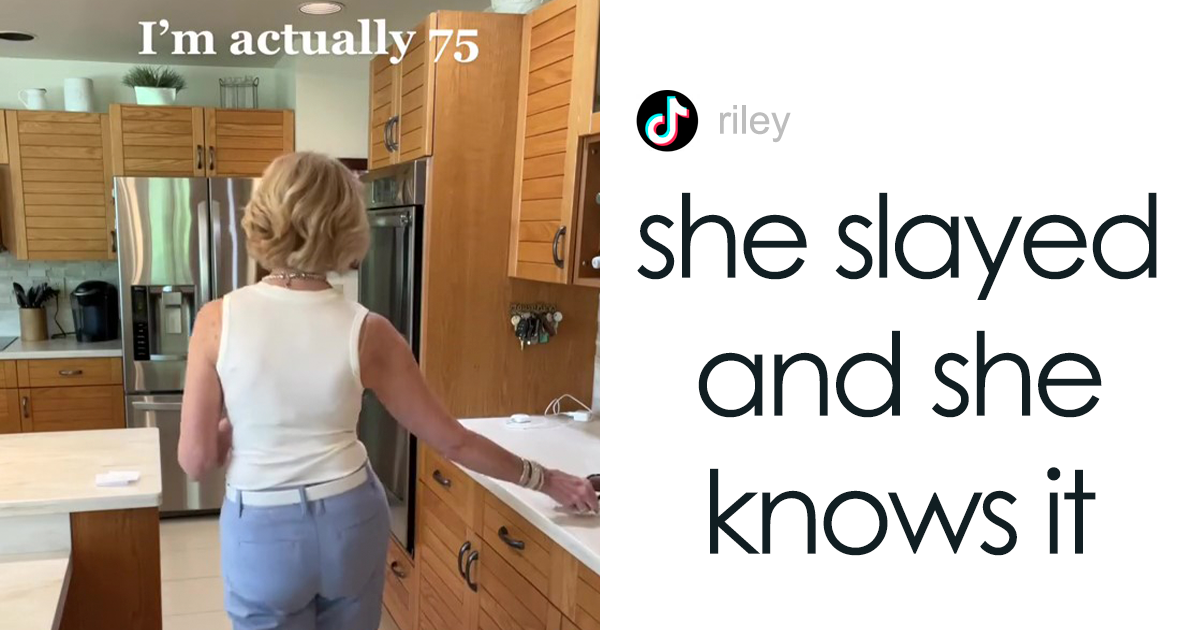
When a critic declared that Candace Leslie Cima was 60 and “shouldn’t wear that,” the fashion and lifestyle creator did not launch a 47-part argument. She simply corrected the record: “I am actually 75.” Then she modeled her sleeveless outfit with the calm confidence of a woman who had better things to do than apply for permission to show her arms.
The video became a viral hit, drawing millions of views and turning a rude remark into a larger conversation about ageism, body confidence, and fashion after 60. Cima was 75 when she filmed the response and 76 when the story spread widely in 2023. Her official website now identifies her as 79, and she continues sharing style, fitness, and mindset content for women over 60.
Her message was not complicated: aging is normal, clothing is personal, and wrinkles are not a public emergency.
The Comeback That Made the Internet Cheer
The viral clip worked because it was brief, funny, and devastatingly efficient. The critic thought “You’re 60” was a finishing move. Cima treated it like a minor factual error.
Dressed in a polished sleeveless top, light-colored pants, sandals, and oversized sunglasses, she walked toward the camera, removed the glasses, and delivered the correction. No shouting. No defensive essay. Just a runway turn in a kitchen and the unmistakable energy of, “Thank you for your concern; it has been placed directly in the recycling bin.”
Reports at the time said the video attracted approximately 7.4 million views. Many viewers praised her appearance, but some of the most meaningful responses came from younger women who said she made aging seem less frightening.
That reaction matters. Cima was not merely showing an outfit. She was showing a possible futureone involving curiosity, humor, confidence, and a closet that had not been sentenced to permanent beige.
How Life in My 70s Began
Cima started exploring social media in her early 70s after noticing how few creators her age were visible in fashion and lifestyle spaces. Magazine covers had long offered instructions for looking good in one’s 20s, 30s, and 40s, then seemed to act as though women vanished into a tasteful puff of cardigan lint.
She saw a gap and filled it.
Through her Life in My 70s platform, Cima began sharing classic outfits, styling ideas, exercise routines, reflections on aging, and encouragement for women who felt ignored by mainstream media. Her aesthetic often favors clean lines, simple silhouettes, polished basics, and clothes that look wearable rather than assembled for a runway on Mars.
More important than any particular brand or hemline is the philosophy underneath: reinventing yourself as you age does not mean abandoning who you are. It means learning what works for the person you are now.
Why “Dress Your Age” Is Usually a Badly Disguised Insult
At first glance, “dress your age” sounds like practical advice. Sometimes it is. A preschooler should probably not attend finger-painting day in a dry-clean-only silk gown. A person of any age should also consider safety, weather, workplace rules, and the nature of an event.
But that is rarely what critics mean when they direct the phrase at older women.
They usually mean: become less visible.
The hidden rule says older women should cover their arms, soften their colors, lower their heels, shorten their hair, loosen their clothing, and avoid appearing too confident, sensual, playful, fashionable, or alive. The goal is not appropriateness. It is disappearance with accessories.
Ageism and Sexism Make an Annoying Little Team
Older men are frequently described as distinguished, rugged, experienced, or silver-haired. Older women are more likely to be judged for wrinkles, gray hair, body shape, makeup, and clothing choices.
The same culture that tells women to “age naturally” may punish them for looking old while also mocking them for trying to look young. It is a game with contradictory rules and no winning score.
AARP research has found that many women over 50 feel pressure to wear clothing considered appropriate for their age. Other findings show that older women frequently feel underrepresented or inaccurately portrayed in media and advertising. In other words, women are told exactly how to look at an age the fashion industry often fails to show.
That absence has consequences. When the most visible images of aging are medical advertisements, retirement clichés, or miracle-cream “before” photos, ordinary signs of age begin to look like defects instead of biology.
Aging Bodies Are Still Bodies, Not Apologies
Cima has written and spoken about criticism aimed at her sleeveless clothing. The objection is usually not the garment itself. It is the visible evidence of age: looser skin, veins, texture, wrinkles, or spots.
Her response is refreshingly sensible. Wrinkled skin is appropriate for an older person because it is what skin often does after decades of living. Asking someone to hide her arms because they look 76 is as logical as asking an oak tree to conceal its rings.
Bodies change. Muscle mass, skin elasticity, fat distribution, posture, mobility, and comfort can all shift over time. None of these changes cancels a person’s right to enjoy color, shape, fabric, or personal presentation.
Clothes do not have birthdays. A red dress does not ask for identification. A sleeveless blouse does not burst into flames when worn by someone collecting Social Security. Denim has never checked a birth certificate.
Why Her Response Resonated Beyond Fashion
The popularity of Cima’s comeback cannot be explained by a nice outfit alone. It touched a wider frustration with age-based expectations.
The American Psychological Association has reported that ageism is extremely common among older adults. The National Institute on Aging also warns that age discrimination and negative stereotypes are associated with poorer physical and mental health, reduced quality of life, and other harmful outcomes.
A dismissive fashion comment may look small, but it belongs to a larger pattern that frames older people as less capable, less relevant, and less entitled to self-expression.
Cima’s video interrupted that pattern. She did not ask to be considered attractive “for her age.” She did not promise to imitate a 25-year-old. She simply appeared as herself and refused to treat her age as a disqualification.
That distinction is powerful. Age-positive fashion is not about pretending time has stopped. It is about rejecting the idea that time removes personhood.
The Fashion Industry Still Has Homework
Fashion sells imagination, but for decades its imagination has often stopped somewhere around age 30. Runways, campaigns, and editorial spreads have historically favored very young models even though older consumers spend substantial amounts on clothing, beauty products, travel, home goods, and luxury items.
There has been progress. More mature models, creators, actors, and public figures now appear in advertising and on social platforms. Yet representation remains inconsistent, and older women are often presented as astonishing exceptions: remarkable because they wear leather, heroic because they have long hair, or revolutionary because they own a swimsuit.
The goal should not be to create a new requirement that every older woman dress boldly. Quiet style is still style. Some people love neutral colors, loose linen, short hair, and sensible shoes. Wonderful.
The point is choice.
Freedom does not mean everyone must wear the sleeveless top. It means nobody is assigned a sleeve length by decade.
What Age-Appropriate Style Should Actually Mean
There is a useful version of age-aware dressing, but it has nothing to do with shame. It involves adapting clothes to the life and body you have now.
Fit Comes Before the Number on the Tag
Bodies change, and clothing sizes are inconsistent enough to qualify as abstract art. Choose the size that sits comfortably, moves well, and creates the silhouette you want. Nobody at brunch can see the tag unless the situation has gone terribly wrong.
Comfort Is Information, Not Defeat
A lower heel, softer waistband, breathable fabric, or supportive bra is not surrender. Comfort can make someone stand taller, stay longer, and enjoy an occasion instead of silently negotiating with a zipper.
Context Matters More Than Age
The relevant questions are simple: Where are you going? What will you be doing? What is the dress code? What weather are you facing? Age is rarely the most useful variable.
Personal Style Should Still Feel Personal
Classic, romantic, minimalist, sporty, dramatic, artistic, glamorous, and bohemian styles do not expire. They may evolve, but they do not need to be replaced by the generic category “older lady.”
Joy Deserves a Vote
A garment that makes you smile has already achieved something. Not every purchase must visually subtract ten years, disguise a body part, or flatter according to rules invented by someone selling shapewear.
Social Media Gives Ageism a Microphoneand a Rebuttal
Social platforms can be brutal. They allow strangers to inspect a woman’s upper arms from three time zones away and compose a moral argument about them before breakfast.
Yet the same platforms can challenge stereotypes faster than traditional media. Cima found an audience precisely because older women wanted to see themselves represented and younger viewers wanted alternatives to the gloomy stories they had absorbed about aging.
Her followers do more than compliment outfits. They exchange styling ideas, discuss confidence, talk about exercise and wellness, and encourage one another to remain visible. That community turns fashion content into something larger: a public rehearsal for aging without shame.
The best response to narrow representation is not one perfect role model. It is abundanceolder women with different bodies, budgets, cultures, abilities, tastes, and lives, all shown as full human beings rather than lessons in “aging gracefully.”
What Critics Could Try Instead
Before typing “You shouldn’t wear that,” a person might ask three questions:
- Is the outfit harming anyone?
- Was my opinion requested?
- Would I say this face-to-face while holding a casserole at a family gathering?
If the answers are no, no, and absolutely not, the comment can remain an inside thought.
Good style advice is collaborative. It considers the wearer’s goals, comfort, setting, and preferences. Unsolicited body criticism is not advice. It is an attempt to transfer discomfort from the observer to the observed.
Cima declined the delivery.
The Bigger Lesson: Confidence Is Not a Youth Product
Confidence is frequently marketed as something people earn by correcting themselveslosing weight, hiding age, buying the right serum, or dressing to avoid criticism. Cima models a different kind: confidence built through acceptance.
Acceptance is not the same as giving up. She has discussed exercise, posture, health, personal growth, and intentional living. She makes choices and puts in effort. But that effort is not organized around apologizing for existing in an older body.
That is why her response feels inspiring rather than merely defiant. It offers a practical philosophy:
- Care for yourself without declaring war on yourself.
- Adapt without disappearing.
- Change without assuming every change is decline.
- Wear the outfit because you genuinely like the outfit.
Conclusion: The Only Expiration Date Is on the Sunscreen
Candace Leslie Cima’s viral comeback succeeded because it exposed the absurdity of the original criticism. The commenter tried to use age as a boundary. Cima used it as a punchlineand then kept walking.
Her story is about more than fashion after 60. It is about who gets to remain visible, expressive, experimental, and joyful. It reminds older women that they do not owe the world concealment. It reminds younger people that aging can include style, strength, reinvention, and fun. It reminds everyone that a wrinkle is evidence of time, not a violation of a dress code.
“You’re too old for that” is rarely a fact. More often, it is somebody else’s fear dressed up as a rule.
Fortunately, rules can be restyled.
Related Experiences: When “Dress Your Age” Appears in Everyday Life
The Wedding Guest and the Sleeveless Dress
Imagine a 64-year-old woman preparing for her niece’s summer wedding. She finds a navy midi dress that fits beautifully, feels cool in the heat, and makes her want to dance. Then a relative suggests adding a jacket because her upper arms are “not what they used to be.”
That single comment can shrink an entire evening. Suddenly, the woman is not thinking about the ceremony or the people she loves. She is auditing her skin under bathroom lighting.
A better outcome begins when she remembers that the wedding invitation requested her presence, not digitally airbrushed triceps. She wears the dress, brings a light wrap for the air conditioning, and dances until the DJ makes a questionable decision involving “Sweet Caroline.” Her arms remain entirely ordinary. The celebration survives.
The Red Lipstick After Retirement
A newly retired teacher decides to wear bright red lipstick again after years of choosing quiet shades for work. A friend jokes that the color is “a little much” at her age.
But “a little much” may be exactly what retirement needs. The lipstick is not an attempt to become younger. It reconnects her with a bolder part of herself that had been waiting behind staff meetings and sensible cardigans. She catches her reflection, smiles, and realizes personal style can be a form of memory.
The Swimsuit at the Community Pool
A woman in her 70s joins a water aerobics class but spends weeks searching for a swimsuit that hides her stomach, thighs, chest, back, and apparently her entire legal identity. Eventually, she buys one that supports her well and allows comfortable movement.
At the pool, she notices something revolutionary: everyone else is busy trying not to slip near the ladder. Nobody has formed a committee to evaluate her knees. The first class is awkward; the fifth is fun. Her swimsuit becomes less of a statement and more of a tool that lets her exercise, socialize, and cool off.
The Office Outfit at 62
A 62-year-old manager likes wearing modern sneakers with tailored pants. A colleague describes the look as “young,” intending it as praise but implying that contemporary style belongs to another generation.
She reframes the outfit in practical terms. The sneakers are polished, comfortable, and appropriate for a day spent moving between meetings. The tailored pants keep the combination professional. The look reflects her taste and her jobnot a failed attempt to impersonate an intern.
Her experience shows why age-based labels are often useless. Clothes can be formal, casual, safe, impractical, flattering, uncomfortable, workplace-appropriate, or completely wrong for the weather. “Too young” frequently tells us more about the observer than the outfit.
The Grandmother-Granddaughter Closet Exchange
A grandmother and granddaughter spend an afternoon trading accessories. The younger woman borrows a vintage scarf; the older woman tries a structured denim jacket. Neither becomes the other. Instead, each discovers a new way to wear something familiar.
This is what intergenerational style can look like when judgment leaves the room. Fashion becomes conversation rather than enforcement. The granddaughter learns that older women are not frozen in the decade when they turned 40. The grandmother learns she can experiment without submitting a written explanation.
Experiences like these rarely go viral, but they carry the same lesson as Cima’s video. Confidence grows through small acts of permission: leaving the jacket at home, applying the bright lipstick, entering the pool, wearing the sneakers, or trying the denim jacket.
The goal is not to become fearless overnight. It is to notice whose voice is making the rulesand decide whether that voice deserves closet space.

