
Beauty Unlocked
‘Yellowstone’ Fans, ‘1923’ Just Made a Surprise Announcement Ahead of Season 2
Jul
If you could hear a distant rumble coming from the direction of Montana, no, that was not a cattle stampede. It was Yellowstone fans collectively losing their minds when 1923 dropped a surprise update ahead of season 2. And honestly? Fair. Taylor Sheridan’s Dutton universe has trained viewers to expect dramatic land wars, emotional damage, and at least one scene where someone stares into the distance like they personally invented suffering. So when the franchise made a fresh move before the next chapter arrived, fans paid attention.
The surprise was bigger than a routine promo push. Before season 2 premiered, 1923 season 1 was slated for a special linear airing on Paramount Network, giving the series a new path to viewers beyond Paramount+. Not long after, the franchise doubled down with official season 2 rollout details, teaser footage, and a firm premiere date. For longtime fans of the Dutton family saga, that combo felt less like a tiny update and more like Paramount ringing the dinner bell and saying, “Cowboys, your trauma is ready.”
What the Surprise Announcement Actually Meant
At the center of the buzz was a smart and unusual move: 1923 season 1, which had largely lived as a Paramount+ title, was set to air on Paramount Network beginning in December 2024. That mattered because it widened the show’s reach at exactly the right time. Some viewers had heard of 1923 but had not made the jump to streaming. Others had meant to watch it, then got distracted by life, work, laundry, football, or all four at once. Putting season 1 on linear TV turned the series into an event again.
Then came the second half of the hype machine: Paramount confirmed that season 2 would premiere on February 23, 2025, and backed the announcement with teaser footage showing a much darker, icier, more desperate chapter ahead. So the “surprise announcement” was not just one thing. It was a coordinated one-two punch: bring new and returning fans back into the fold, then hit them with the promise of a bigger, meaner season 2.
That rollout was especially effective because Yellowstone itself had just reached the end of its flagship run in late 2024. Fans were still processing that ending, still attached to the Dutton name, and still looking for the next emotional frontier. 1923 stepped into that moment perfectly.
Why This Hit So Hard for Yellowstone Fans
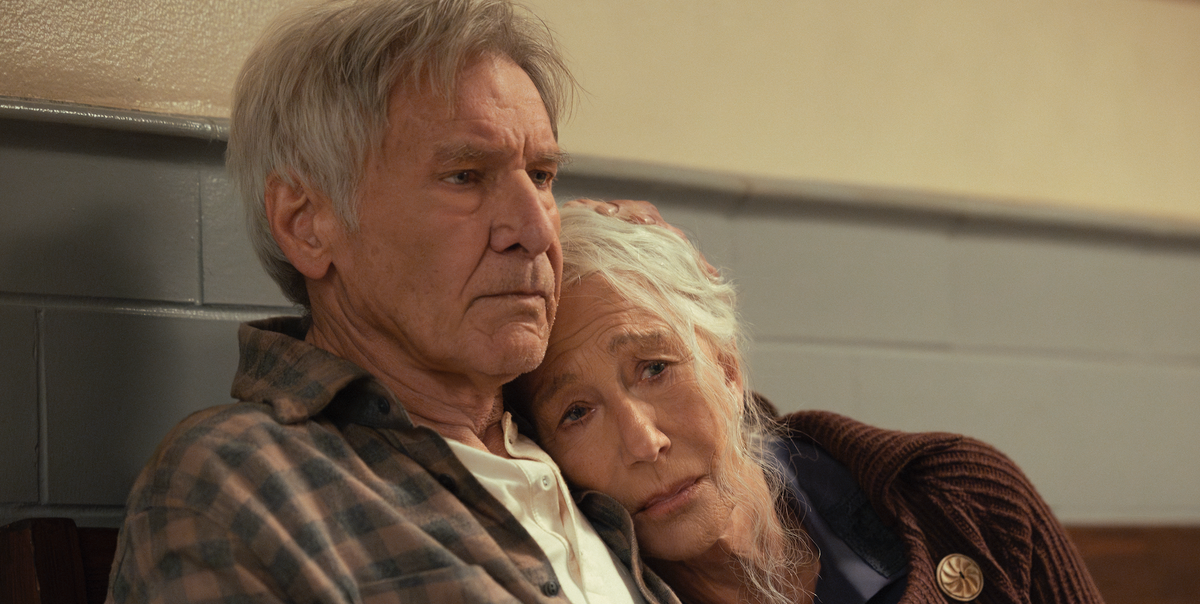
Not every spinoff lands with the same weight, but 1923 has always played in the big leagues. For one thing, it came with Harrison Ford and Helen Mirren, which is about as subtle as showing up to a backyard cookout in a private jet. Their presence instantly gave the series gravitas. Jacob and Cara Dutton are not just historical placeholders in the franchise timeline. They feel like fully formed people carrying the physical and emotional burden of protecting land, family, and legacy.
But star power alone is not why fans connected. 1923 also taps into the deepest themes that made Yellowstone such a phenomenon in the first place: ownership, inheritance, survival, and the idea that keeping a ranch in America is apparently one of the most emotionally hazardous jobs ever invented. Add in the series’ period setting, brutal weather, political tension, cultural conflict, and a love story that seems determined to make viewers stare at the ceiling after each episode, and you get a show that feels both familiar and distinct.
So when fans learned that Paramount was widening access to season 1 and finally locking in season 2 details, it did not feel like filler. It felt like the next major chapter of the Dutton myth was officially moving again after a very long pause.
The Long Wait Made the Announcement Even Bigger
Part of the reason the season 2 news created such an outsized reaction is simple: people had been waiting a long time. 1923 was renewed early, but the gap between seasons stretched far longer than many viewers expected. Industry strikes slowed development across Hollywood, and the show’s return began to feel like one of those promises you believe in theory but stop penciling into your calendar.
That delay had two effects. First, it built anticipation. Second, it gave the fan community plenty of time to speculate about where the story was headed. Would Spencer make it home in time? How much worse could things get for the family? Could Alex and Spencer catch a break for five consecutive minutes? Was Donald Whitfield going to get even more sinister? These questions simmered for months, so when Paramount finally formalized the season 2 launch, the response was immediate.
In entertainment, timing matters. A long silence can kill momentum. But when a franchise has a loyal audience and a strong identity, a long silence can also create a pressure cooker. 1923 walked back into that pressure cooker and basically said, “Good news, we brought firewood.”
What the Season 2 Teasers Promised
A Harsher War for the Ranch
The early footage for season 2 made one thing very clear: nobody was coming back for a peaceful little reunion tour. The ranch remained under threat, the weather looked savage, and the Duttons appeared locked into a fight that was getting more dangerous by the minute. If season 1 was about setting the chessboard, season 2 looked ready to start flipping pieces.
The imagery leaned hard into snow, isolation, and siege-like tension. That visual shift mattered because 1923 has always understood that nature in this universe is not just scenery. It is competition. It is punishment. It is sometimes the meanest cast member in the ensemble.
Spencer and Alex Still Had the Internet Stressing Out
Another major reason fans stayed invested was the Spencer-and-Alex factor. Brandon Sklenar and Julia Schlaepfer gave the franchise one of its most emotionally loaded relationships, and the season 1 finale left viewers with plenty of reason to worry. The season 2 marketing made clear that both characters still had impossible roads ahead of them, separately and together.
That romance gave 1923 an extra layer of urgency. Yes, the series is about land and bloodline and power. But it is also about whether two people can survive the kind of distance, violence, and bad timing that would make most couples give up and buy separate houses in quieter zip codes.
More Storylines, More Pressure
Season 2 was never going to be just about one reunion. The returning ensemble pointed to a broader, messier, more dangerous canvas. Cara and Jacob still had to hold the family together. Teonna Rainwater’s story continued to carry enormous emotional and historical weight. Whitfield still loomed as a symbol of greed wrapped in wealth and manners. And season 2 also added new faces, including Jennifer Carpenter as Mamie Fossett, giving the series more muscle just as the stakes escalated.
Why Paramount’s Strategy Was Smarter Than It Looked
On the surface, airing season 1 on Paramount Network before season 2 looked like a simple promotional decision. In reality, it was a sharp franchise play. Paramount understood that 1923 was not merely another streaming title; it was part of a larger cultural ecosystem built around Yellowstone. By moving season 1 onto a more traditional TV platform, the company effectively reopened the gate for viewers who might have missed the show the first time around.
That matters because franchises thrive on accessibility. If people feel they are already behind, they may not bother catching up. But if you put the story back in front of them in a familiar place, you reduce the friction. Suddenly, jumping into season 2 feels doable. It becomes an event, not homework.
The strategy also helped keep the Dutton brand hot after the end of the flagship series. Instead of letting the fandom scatter, Paramount redirected attention toward the prequel with a rollout that felt deliberate, visible, and conversation-friendly. In other words, this was not just marketing. It was ranch management.
What Makes 1923 Different From Other Yellowstone Stories
The best thing about 1923 is that it does not feel like a copy of Yellowstone wearing a vintage hat. It shares the franchise DNA, but the tone is different. The violence feels more elemental. The hardships are less polished. The world is wider, colder, and in many ways crueler. The characters are not navigating modern power structures with helicopters and corporate lawyers; they are facing the raw mechanics of survival in a changing America.
That historical setting gives the show more room to examine how the Dutton legacy was formed long before it became an empire under siege in the present day. It also deepens the franchise’s recurring obsession with land. In Yellowstone, land is contested through development deals, boardroom strategy, and modern politics. In 1923, the same battle exists, but the terms are rougher, more direct, and often more lethal.
And then there is the emotional style of the show. 1923 can be sweeping and romantic one moment, then absolutely merciless the next. It has a tendency to hand viewers a beautiful scene and then emotionally mug them in broad daylight. Fans noticed. Fans remembered. Fans came back.
So, Was the Surprise Announcement a Big Deal?
Absolutely. It was a big deal because it did three things at once. It reminded casual viewers that 1923 existed and was worth their time. It rewarded committed fans with concrete season 2 news after a long wait. And it positioned the series as the next essential stop in the post-Yellowstone world.
For a franchise built on inheritance, that was fitting. The end of one Dutton era created a vacuum, and 1923 used this announcement to step squarely into it. The message was not subtle: the story is still alive, the ranch is still in danger, and your stress levels are about to become somebody else’s entertainment again.
That is why the announcement hit such a nerve. It was not just news. It was momentum. It was the franchise reminding viewers that while one chapter may close, another is always waiting with a rifle, a blizzard, and a family argument.
Fan Experience: Why This Announcement Felt Personal to the Audience
One reason this particular 1923 update landed so strongly is that the fandom does not experience these shows in a casual, half-interested way. People do not merely “watch” the Dutton saga. They live with it for months. They discuss it at work, text about it during trailers, argue over family trees, and treat each new promo like it might contain a coded message from the ranch gates. By the time the surprise announcement arrived, fans were not starting from zero. They were already emotionally invested, slightly exhausted, and completely ready to overanalyze everything from a line of dialogue to the angle of a cowboy hat.
That is part of what makes the Yellowstone universe different from a lot of other TV franchises. It has become comfort viewing and stress viewing at the same time. Fans return for the landscapes, the family drama, and the larger-than-life characters, but they also return for the ritual. Watching a Dutton show feels like stepping into a familiar world where the stakes are always high and the emotions are never served in tiny portions. So when 1923 suddenly expanded its reach and firmed up its season 2 rollout, it felt personal. It felt like being invited back into a world viewers had been missing.
There is also something uniquely satisfying about seeing a prequel earn that level of devotion. Prequels can sometimes feel like homework assignments dressed up as prestige TV, all backstory and no pulse. 1923 avoided that trap because it gave audiences characters they genuinely cared about. Fans were not watching just to learn how the ranch survived. They were watching because they wanted Cara to keep holding the line, Jacob to keep fighting, Spencer to get home, Alex to catch a break, and Teonna to find justice in a world that had denied it to her at every turn.
That emotional attachment transformed the announcement from ordinary publicity into something closer to a collective exhale. It reassured fans that the long wait had an endpoint. It created a fresh entry point for newcomers. And it reignited the online conversation in the exact way strong fandoms always do: with excitement, panic, theories, jokes, and a lot of comments that basically translated to, “Please don’t hurt my favorite character, but also I know you absolutely will.”
In that sense, the experience around this announcement says a lot about modern TV fandom. Viewers are not just consuming episodes. They are tracking release strategies, reading casting news, reacting to teaser frames, and building community around anticipation itself. 1923 tapped into that beautifully. The announcement gave fans something to do besides wait. It let them revisit season 1, pull others into the fold, and prepare emotionally for the storm coming in season 2. For a franchise built on legacy, loyalty, and land, that kind of audience bond is worth more than gold. Or cattle. Or whatever the Duttons are fighting over this week.
Conclusion
In the end, the surprise announcement ahead of 1923 season 2 was not just a fun little scheduling note for die-hard fans. It was a franchise-level signal that the Dutton story still had serious power, serious audience pull, and plenty of unfinished business. By putting season 1 in front of a broader TV audience and then following it with official season 2 details and new footage, Paramount turned anticipation into momentum.
And for Yellowstone fans, that was exactly the point. One door had closed, but the ranch gates were still wide open. 1923 did not just remind viewers that the Dutton legacy was alive. It reminded them why they cared in the first place.

