
Makeup
Wm. Farmer & Sons Restaurant: A Labor of Love in Hudson, NY
Jul
Some restaurants are designed to impress you for two hours. Wm. Farmer & Sons Restaurant feels as though it was built to welcome you into an ongoing family storypreferably with a carefully stirred cocktail in one hand and something involving bacon jam in the other.
Located near the Hudson River at 20 South Front Street in Hudson, New York, this restaurant, barroom, and boutique inn occupies a restored 19th-century property within walking distance of the Amtrak station and Warren Street. Its appeal goes beyond convenient geography. Wm. Farmer & Sons combines Hudson Valley ingredients, Southern and Midwestern food traditions, historic architecture, serious cocktail craftsmanship, and hospitality that aims to feel personal rather than polished within an inch of its life.
The result is one of those rare places where dinner can become a weekend, a quick drink can become three courses, and checking into a room upstairs suddenly seems like an extremely responsible decision.
From Weekend Visitors to Hudson Restaurateurs
The story of Wm. Farmer & Sons begins with owners Kristan Keck and William “Kirby” Farmer, a husband-and-wife team who initially visited the Hudson Valley on weekends. Like many travelers before them, they discovered that Hudson has a habit of turning casual admirers into real-estate browsers.
In 2013, with their son Wyeth on the way, the couple purchased a historic Front Street building dating to the 1830s. The property was already functioning as a boardinghouse, although its restaurant space stood vacant. After operating the guesthouse for two seasons, they closed the property for an extensive renovation and reopened Wm. Farmer & Sons Boarding and Barroom in 2015. The work was not a quick coat of paint followed by an enthusiastic ribbon cutting. It was a two-year effort to turn an aging property into a restaurant, cocktail bar, and deeply personal place to stay.
A Name Rooted in Family
The abbreviated “Wm.” is not a branding trick invented during a meeting involving mood boards and artisanal sparkling water. The name comes from a Farmer family naming tradition and honors William Joseph Farmer, Kirby’s father, whose support helped make the business possible.
The “Sons” recognizes three generations of William Farmers: William Joseph, William Kirby, and young William Wyeth. Because three Williams at one dinner table could produce the verbal equivalent of airport traffic control, each goes by his middle name. The restaurant’s identity is therefore not simply family-themed. It is literally written in the family tree.
A Historic Restaurant That Does Not Feel Trapped in the Past
Hudson is filled with buildings that have already lived several lives. Wm. Farmer & Sons embraces that history without turning the dining room into a museum where guests are afraid to move a chair.
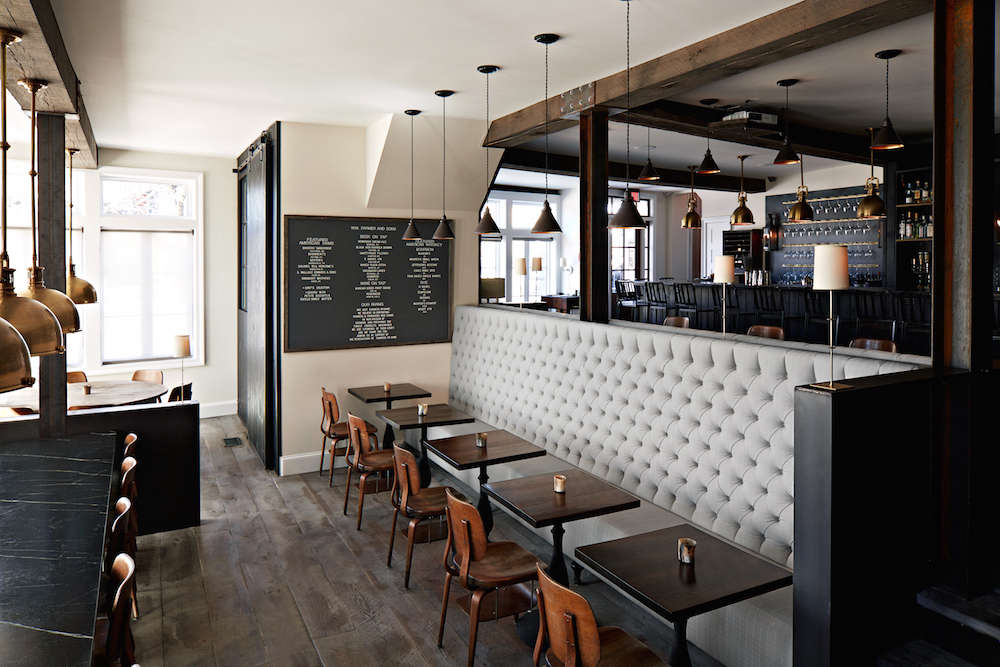
Architecture and design firm SchappacherWhite helped transform the historic structures while retaining elements such as exposed brick, old flooring, heavy joists, and weathered surfaces. Patinated metal, dark paneling, brass fixtures, aged leather, generous windows, and substantial wood tables introduce a more contemporary industrial character. The balance is clever: polished, but never shiny; rustic, but not decorated with random farm tools purchased in bulk.
Designers worked with the existing character of the property rather than scrubbing it away. Historic details mingle with blackened steel, moody neutral colors, vintage furniture, nautical references, and warm lighting. Outside, working gas lamps reinforce the sense that the building belongs to another era. Inside, the coppery barroom makes a persuasive argument for staying late.
Every Detail Helps Tell the Story
Family photographs, Americana, antiques, and room names drawn from relatives and local trades give the property a narrative quality. The design does not shout for attention. Instead, it rewards anyone who looks beyond the plate long enough to notice an old beam, a worn tabletop, a framed photograph, or a chair with a history more interesting than most résumés.
This restraint is a major reason the restaurant still feels intimate despite its reputation. Guests are not entering a themed dining concept. They are entering a place shaped gradually by family memories, architectural discoveries, local craftspeople, and the practical demands of feeding people well.
The Food: Hudson Valley Ingredients Meet Appalachian Memory
Chef Kirby Farmer grew up in the western North Carolina mountains, where he learned food traditions from his father. Gardening, canning, preserving, curing country ham, and gathering around a generously set family table were part of ordinary life. Farmer later attended the Culinary Institute of America, connecting those inherited traditions with professional technique.
At Wm. Farmer & Sons Restaurant, that background appears in food that is regionally grounded without being geographically obedient. The menu may nod toward Appalachia, the Midwest, France, Italy, Korea, coastal New England, or the American barroom, sometimes during the same meal. What keeps it coherent is a preference for seasonal ingredients, bold flavor, careful sourcing, and dishes that feel satisfying rather than merely photogenic.
Seasonal, Local, and Happily Unafraid of Butter
The restaurant emphasizes ingredients from Hudson Valley farms and producers. Because the menu follows the season, specific preparations change, but the culinary personality remains recognizable. Vegetables are treated as actual food rather than colorful apologies beside a steak. Preserves, pickles, cured meats, sauces, fresh herbs, cultured dairy, and regional produce supply acidity, richness, texture, and depth.
A recent dinner menu illustrated that range with grilled bread accompanied by miso butter and sorrel salt, house-baked focaccia, East Coast oysters, burrata with pistachio pesto and pickled ramps, fritto misto, smoked trout tostadas, pork belly popcorn, and steak tartare sharpened with gochujang and pickled daikon.
Larger plates have included lasagne layered with roasted tomato and local spinach, a Maine mussel pot with pancetta, roasted ocean trout, heritage pork, dry-aged steak, and Abigail’s fried chicken served with whipped rosemary potatoes and popcorn gravy. Then there is the Bone Marrow Bar Burger, a recurring favorite built around grass-fed beef, butter-braised onions, and hand-cut fries. It is not a dainty burger. It is a burger with tenure.
Comfort Food With Better Posture
The menu’s strength is its ability to make familiar food feel special without making it unrecognizable. Fried chicken remains fried chicken. A burger still requires both hands. Charcuterie is presented as something to share rather than an entrance examination in European geography.
Yet familiar dishes arrive with enough precision and surprise to justify the restaurant’s upscale positioning. Bacon jam adds smoky sweetness. Giardiniera brings crunch and acid. Ramps and sorrel place the meal in a season. Gochujang or miso can deepen an otherwise traditional preparation without turning dinner into a collection of culinary plot twists.
This is farm-to-table dining with a sense of humor and a healthy respect for appetite. Nobody appears to be pretending that three decorative peas constitute an entrée.
Dietary Considerations
The restaurant’s published menu notes that most offerings are gluten-free, with gluten-free modifications available for certain marked dishes. It also asks guests to avoid requesting extensive substitutions. Anyone with allergies or strict dietary needs should contact the restaurant before visiting, since ingredients and preparations can change with the season.
A Cocktail Program With an Important Legacy
The bar at Wm. Farmer & Sons is not an accessory installed to keep diners occupied while their table is prepared. It is a destination in its own right.
During the restaurant’s development, Kirby Farmer and Kristan Keck worked with the late Sasha Petraske, the influential bartender behind New York City’s Milk & Honey. Petraske contributed to the bar’s design, helped develop drinks, and conducted extensive staff training. Accounts from the opening period describe him working amid construction dust, testing recipes and teaching the precise fundamentals of balanced cocktails.
That influence is visible in a cocktail list that favors disciplined recipes, fresh citrus, proper dilution, thoughtful ice, and historical references. Contemporary menus have featured drinks such as the Knickerbocker, Old Maid, Tommy’s Margarita, Cosmonaut, Lion’s Tail, and a house Old-Fashioned built with bourbon, walnut bitters, sassafras, and blackstrap molasses.
The drinks can be inventive, but they are not novelty acts wearing tiny hats. The emphasis remains on balance. Even the ice receives unusual attention: the restaurant’s commitment to clear, carefully produced ice helped inspire a local specialty ice business founded by a former head bartender.
More Than a Hudson Restaurant
Wm. Farmer & Sons operates as both a restaurant and a boutique inn, allowing its approach to hospitality to continue beyond dessert. The property includes individually designed rooms and suites distributed among the main inn, the Merchant House, and annex-style accommodations.
Guest rooms combine historic character with modern conveniences. Depending on the space, visitors may encounter exposed brick, antique furniture, claw-foot tubs, fireplaces, four-poster beds, kitchen facilities, or apartment-style layouts. The rooms do not follow a standardized hotel formula, which means choosing one can feel less like selecting a mattress category and more like being assigned a particularly stylish relative’s guest room.
Private Gatherings and Community Events
The property also hosts private dinners, cocktail receptions, wedding-related gatherings, celebrations, and corporate events. Spaces such as the Marion, Merchant House, and Pavilion accommodate gatherings of different sizes, extending the family-table philosophy into special occasions.
Seasonal programming has included outdoor movie nights in partnership with a local cinema organization, complete with popcorn, candy, food, and drinks. Such events reveal another side of the business: Wm. Farmer & Sons is not only serving visitors to Hudson but participating in the city’s creative community.
Why the Location Matters
Hudson’s compact downtown rewards travelers who prefer walking to coordinating a weekend around parking. Wm. Farmer & Sons sits near the Amtrak station, the waterfront, and the shops, galleries, bookstores, cafés, and antique dealers lining Warren Street.
That position makes the restaurant a convenient first or final stop. Travelers can arrive by train, walk to the property, check into a room, and reach much of downtown without a car. Dinner downstairs then eliminates the evening’s most difficult logistical question: who is going to volunteer to drive after the second cocktail?
The restaurant also reflects the larger character of Hudson. The city combines working-class history, preserved architecture, creative businesses, excellent farms, ambitious restaurants, and a steady flow of urban weekenders. Wm. Farmer & Sons succeeds because it belongs to that environment rather than merely borrowing its address.
Planning a Visit to Wm. Farmer & Sons
The restaurant is best suited to date nights, leisurely dinners, celebratory meals, cocktail-focused evenings, and Hudson weekend getaways. Prices reflect its upscale ingredients, labor-intensive preparations, and destination setting, so this is generally not the place for an emergency bargain dinner after spending the entire travel budget on an antique lamp.
Reservations are wise, particularly on Fridays, Saturdays, holidays, and peak fall weekends. Bar seating may be attractive for solo diners or couples who want to focus on cocktails, but availability varies. The restaurant usually serves dinner on selected weekdays and weekends, with recurring specials such as burger, martini, oyster, or moules-frites nights appearing at different times.
Menus, prices, opening days, happy hours, and seasonal events change, so guests should verify current information directly before traveling.
What an Evening at Wm. Farmer & Sons Can Feel Like
A realistic Wm. Farmer & Sons experience begins before the first bite. You walk down South Front Street as daylight starts slipping behind the river. Hudson’s train station is close enough that you may hear an arrival in the distance. The building’s pale brick exterior looks handsome but not theatrical, and the gas lanterns throw warm light around the entrance.
Inside, the room feels immediately darker, warmer, and more intimate. Exposed brick and wood soften the industrial details. Brass and copper catch the light. The bar glows like it knows several excellent secrets. Nothing matches in the corporate sense, yet everything seems to belong.
You may begin with a cocktail at the bar while waiting for the table. A bartender measures, shakes, stirs, and garnishes with the calm concentration of someone defusing a very delicious device. The drink arrives properly chilled and balanced. It tastes sophisticated without requiring a lecture before consumption.
Settling Into Dinner
Once seated, sharing is the sensible strategy. Start with warm bread and one or two accompanimentsperhaps whipped ricotta, apple butter, pimento cheese, or bacon jam. The bread may disappear faster than expected. This is not a failure of discipline. Warm bread is a known professional.
Add oysters, charcuterie, vegetables, or a starter that combines a familiar ingredient with an unexpected accent. The menu invites conversation because dishes contain recognizable ideas presented from a slightly different angle. Someone at the table will inevitably say, “I would never have ordered that,” immediately before taking a second helping.
For the main course, a couple might divide fried chicken and a vegetable-forward dish, while another table commits to the burger and hand-cut fries. A larger group can explore fish, pork, steak, mussels, and seasonal plates. Portions and prices encourage a thoughtful order rather than a competitive attempt to sample the entire kitchen.
Service at its best fits the room: knowledgeable, friendly, and present without hovering like a well-dressed weather system. Staff can explain ingredients or cocktails, but the atmosphere remains conversational rather than ceremonial.
The Advantage of Staying Upstairs
After dinner, hotel guests experience one of the property’s greatest luxuries: no commute. Instead of negotiating directions or calling a car, they walk upstairs or across the property to a room filled with old wood, vintage details, substantial bedding, and the occasional claw-foot tub or fireplace.
That transition changes the rhythm of the evening. There is time for another drink, dessert, or a slow final conversation because nobody is watching the clock. The restaurant becomes part of the stay rather than an isolated reservation.
The next morning, Hudson waits outside. Guests can walk toward the river, browse Warren Street, visit galleries, hunt for antiques, or locate coffee before making any decisions that require verbs more demanding than “stroll.” The restaurant’s proximity to the station also means departure day need not become a luggage-based endurance sport.
Why the Experience Stays With You
The most memorable part of Wm. Farmer & Sons may not be a specific plate or cocktail. Menus change, favorite dishes vanish with the season, and somebody will always mourn a drink that left the list three years ago.
What remains is the feeling that the various pieces share one intention. The old building, local produce, family photographs, preserved food traditions, careful drinks, guest rooms, and community gatherings all point toward the same idea: hospitality should feel generous, specific, and human.
That coherence is difficult to manufacture. A restaurant can purchase beautiful chairs, hire a talented chef, and install flattering lights. It cannot easily purchase a convincing history or the sense that its owners have invested years of their family life in every room. At Wm. Farmer & Sons, the labor of love is not simply part of the origin story. It is the main ingredient.
Conclusion
Wm. Farmer & Sons Restaurant stands out in Hudson because it offers more than an attractive dining room and an accomplished menu. It connects generations of family tradition with the agricultural richness of the Hudson Valley, the culinary memories of western North Carolina, the rigor of classic cocktail culture, and the character of an 1830s building.
Its food is comforting but inventive, its bar program has genuine historical significance, and its boutique accommodations make it possible to turn dinner into a complete Hudson getaway. The experience is upscale without becoming stiff and personal without becoming precious.
In a city filled with stylish places to eat and stay, Wm. Farmer & Sons feels unusually complete. Come for the burger, oysters, seasonal vegetables, or precisely mixed cocktails. Stay for the architecture, the hospitality, and possibly the nightbecause after dinner, those stairs leading to a comfortable room can look wonderfully persuasive.

