
Beauty Tools & Accessories
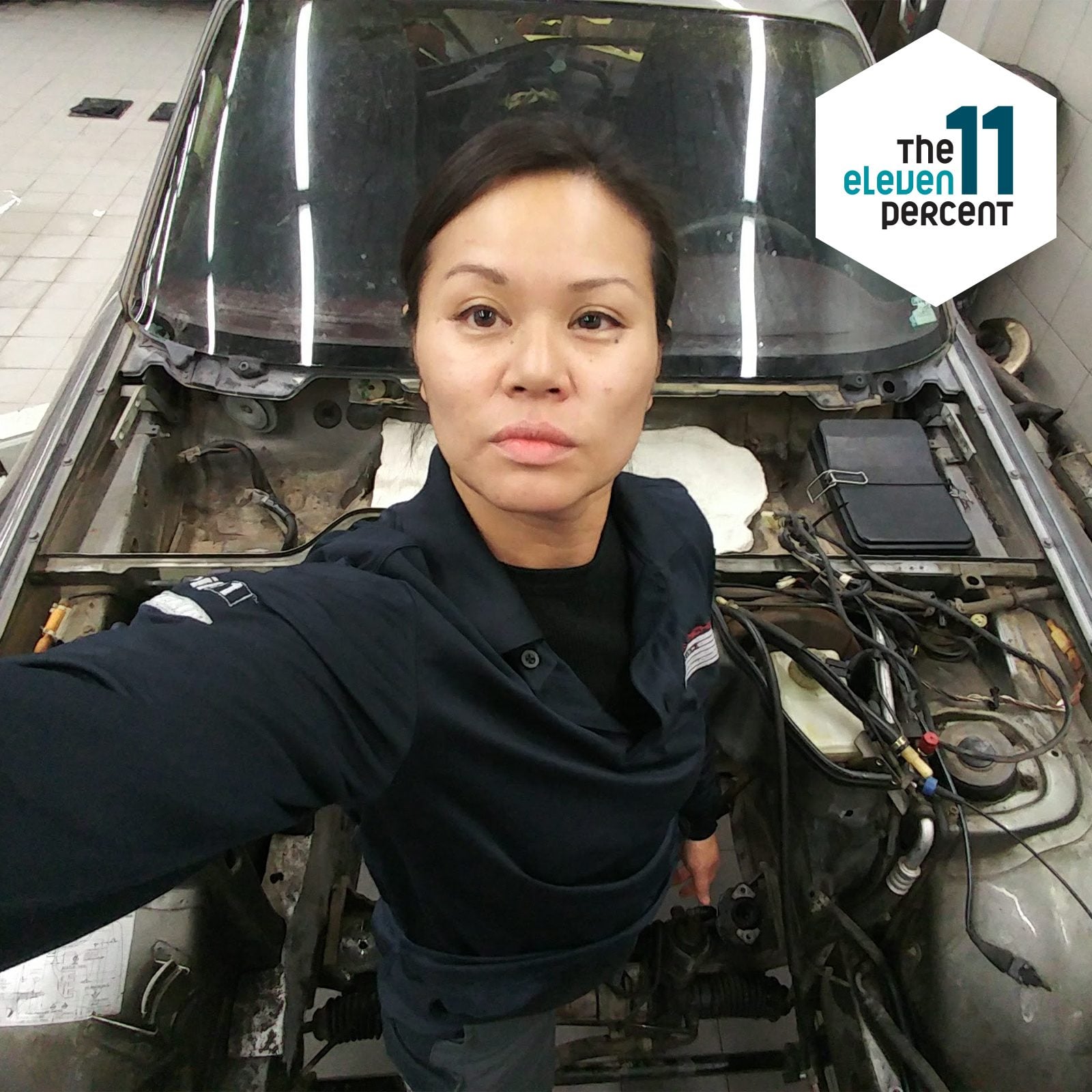
The Eleven Percent: Meet Nhu Nguyen, Auto Technician and Restorer
Aug
Some people spend their entire careers trying to figure out what they really want to do. Nhu Nguyen eventually found the answer underneath a car.
Long before she became known for restoring classic Porsches, Nguyen was a teenager fascinated by cars and street racing. Yet her route into the automotive trade was anything but a straight highway. She explored other careers, trained as a pastry chef, worked outside the automotive world, and eventually reached the conclusion that the machines she had tried to leave behind were exactly where she belonged.
That decision led her back to school as an adult, into an apprenticeship, through increasingly demanding Porsche technical training, and ultimately to a historic achievement: becoming the first woman to earn Porsche Classic technician certification. Along the way, she became a specialist in classic and air-cooled Porsches, helped restore an award-winning 1987 Porsche 944 Turbo, and built a reputation for combining serious mechanical knowledge with infectious enthusiasm for old cars.
Her career offers more than a feel-good story about breaking barriers. It is also a useful look at what becoming a great automotive technician actually requires: curiosity, patience, diagnostic discipline, continuous education, humility and, on certain days, an unusually high tolerance for bolts that apparently have personal grudges.
Who Is Nhu Nguyen?
Nhu Nguyen is an automotive service technician and classic-car restorer best known for her work with Porsche vehicles. She spent important stages of her career at Porsche Centre Oakville and later Pfaff Tuning in the Toronto area, developing particular expertise in older Porsche models and air-cooled cars.
Her credentials eventually included Silver-level Porsche technician certification and Porsche Classic certification. Multiple automotive organizations and interviews have identified her as the first woman in the world to earn the Porsche Classic designation.
That milestone matters because classic-car work is not simply modern automotive repair with older paint. Vintage vehicles bring their own collection of mysteries. Replacement parts can be scarce. Electrical systems may have been modified by several previous owners. Fasteners have had decades to become emotionally attached to the car. Documentation may be incomplete, and a technician often has to decide whether to repair an original component, rebuild it, replace it or preserve it exactly as it is.
Nguyen built her reputation in precisely that environment.
From Street Racing to a Completely Different Career
Nguyen’s interest in cars began well before she considered automotive repair a realistic profession. As a teenager, she was attracted to performance cars and street-racing culture. She liked machines, enjoyed working with her hands and naturally gravitated toward figuring out how things worked.
But liking cars and choosing automotive service as a career were two different things.
Instead of moving immediately into a repair shop, Nguyen pursued other paths, including pastry work. Baking and automotive restoration might seem separated by several interstate highways, but they actually share useful habits: precision, sequencing, patience and knowing that skipping one apparently insignificant step can create a spectacularly disappointing result later.
Eventually, Nguyen found herself wanting something more satisfying than the career track she was following. The attraction of hands-on work had never disappeared. Rather than treating that realization as a missed opportunity, she did something more difficult: she started over.
Starting Over in Her 30s
Going back to trade school as an adult meant joining classrooms where many students were considerably younger. Nguyen has described studying automotive technology in her 30s alongside students fresh out of high school.
For anyone considering a midlife career change, that detail may be more important than the eventual Porsche certification. Starting again can be psychologically uncomfortable. You trade familiarity for questions, professional status for beginner status and predictable income for an uncertain future.
Nguyen did it anyway.
She entered the trade, became an apprentice and began building the practical knowledge that cannot be acquired by simply memorizing a repair manual. Automotive technicians learn by seeing thousands of variations of the same fundamental problems: strange noises, intermittent electrical faults, leaks, worn parts, previous repairs and customer descriptions such as, “It only makes the sound on Tuesdays.”
Learning the Trade the Hands-On Way
Formal automotive education gave Nguyen a foundation, but apprenticeships and shop experience turned that knowledge into a profession.
This combination remains important for technicians today. Automotive technology programs teach electrical principles, braking systems, steering, suspension, engine performance, diagnostics and service procedures. Real repair bays add the variables that textbooks cannot fully reproduce: corrosion, damaged fasteners, aging wiring, previous modifications and the occasional component apparently designed by an engineer who never expected a human hand to reach it.
Nguyen also received support from the Porsche Club of America Upper Canada Region during her early professional development. In 2016, she was among automotive students presented with a scholarship, and recipients used scholarship funds to help purchase professional tools.
That detail highlights an often-overlooked reality of automotive careers: technicians frequently invest substantially in their own equipment. A professional toolbox grows over years as a mechanic adds specialized sockets, diagnostic equipment, torque tools, measuring equipment and those strangely specific tools that may be useless 364 days a year and absolutely priceless on day 365.
Why Porsche Became the Perfect Fit
As Nguyen advanced, Porsche became more than the brand on the hood of the cars she serviced. Its engineering philosophy matched the kind of mechanical work she enjoyed.
Classic Porsche models reward an understanding of mechanical systems rather than blind parts replacement. Air-cooled engines, older fuel systems, analog controls and decades-old electrical circuits require a technician to understand why a component behaves the way it does.
That makes troubleshooting an exercise in logic.
A great classic-car technician does not begin by firing the parts cannon and hoping the problem disappears beneath a pile of invoices. Instead, the technician establishes a baseline, tests systems, isolates faults and verifies the repair.
Nguyen’s progression through Porsche training reflected that deeper level of specialization. She became a Silver Certified Porsche Technician before earning the Porsche Classic credential, a designation associated with expertise in maintaining and restoring older models.
Becoming the First Woman Porsche Classic-Certified Technician
Nguyen’s Porsche Classic certification made her a pioneer, but focusing only on the “first woman” label can accidentally hide the more important part: she earned an advanced technical credential in a demanding specialty.
Classic restoration requires broad expertise. Mechanical ability is only part of the job. A technician may need to diagnose analog electrical systems, evaluate engine condition, understand historical specifications, locate obsolete components and determine which imperfections are authentic and which are simply problems.
Restoration also demands restraint.
With a valuable classic, “replace everything” is rarely the smartest philosophy. Original components can contribute significantly to a vehicle’s historical character. The goal is often to preserve as much authentic material as practical while returning mechanical systems to safe, reliable operation.
That philosophy became particularly visible in one of Nguyen’s best-known projects.
The 1987 Porsche 944 Turbo Restoration
Porsche Centre Oakville entered a 1987 Porsche 944 Turbo in Canada’s inaugural Porsche Classic Restoration Challenge, with Nguyen performing much of the hands-on technical work alongside the dealership’s restoration team.
The car was an interesting restoration candidate because it was already relatively complete and mechanically healthy. That sounds convenient, but it introduced a different problem: deciding what actually needed restoration.
Diagnose First, Disassemble Second
The team began with a detailed inspection. Compression and leak-down testing indicated that the engine was healthy, as was the transmission. Instead of tearing down working components merely because restoration photographs look impressive when every piece of a car is spread across twenty tables, the technicians concentrated on genuine deficiencies.
Among the major issues were the steering rack, deteriorating electrical wiring and suspension components requiring attention. Aging wires were broken or crumbling in places, illustrating one of the great truths about classic automobiles: sometimes the engine is fine and the tiny wire hidden behind something expensive is the real villain.
The work required cleaning, repairing, replacing and refinishing components while preserving the character of the original vehicle.
The project ultimately brought Nguyen additional recognition, including a Porsche Passion Award associated with the 944 Turbo restoration.
For aspiring restorers, the project is a valuable case study because it demonstrates that craftsmanship is not measured by how many parts are removed. Good restoration begins with assessment. The technician needs to know what is wrong, what is original, what can be saved and where intervention genuinely improves the vehicle.
What Nhu Nguyen’s Career Says About Women in Automotive
The title “The Eleven Percent” belongs to a broader series highlighting women in traditionally male-dominated skilled professions. In automotive repair specifically, however, the representation of women is substantially lower than 11 percent.
Recent U.S. labor data shows women still make up only a small fraction of automotive service technicians and mechanics. That matters because the industry simultaneously needs new talent.
The U.S. Bureau of Labor Statistics projects roughly 70,000 openings for automotive service technicians and mechanics each year on average through the next decade, driven substantially by workers leaving the occupation or retiring. Broader technician-workforce research also points to serious supply gaps across automotive and other technical service industries.
Recruiting from only one traditional demographic therefore makes little economic sense. Shops need capable people. Women represent an enormous pool of potential technicians, diagnostic specialists, collision professionals, restorers and shop owners who historically have not been encouraged toward these careers at the same rate as men.
Nguyen’s career helps make the option visible.
Representation does not mean every young woman who sees a Porsche engine should immediately purchase a rolling toolbox. It simply means she should be able to consider the trade without being told, explicitly or implicitly, that automotive repair belongs to someone else.
Automotive Technicians Are Becoming Technology Specialists
The stereotypical image of a mechanic carrying one wrench and diagnosing cars by listening thoughtfully to the hood is increasingly outdated.
Modern automotive service involves computer diagnostics, electronic control systems, network communications, advanced driver-assistance systems, high-voltage technology and increasingly sophisticated calibration procedures.
Even classic-car specialists need strong electrical knowledge because aging wiring and decades of modifications are common restoration problems.
Professional development is therefore continuous. Organizations such as ASE emphasize industry-recognized certification and ongoing technical training, while federal regulations require specific credentials for certain procedures. In the United States, for example, technicians who service motor-vehicle air-conditioning systems for compensation must meet EPA Section 609 training and certification requirements.
The broader lesson is simple: becoming an auto technician is not the end of education. It is the beginning of a career spent learning.
The Skills That Make a Great Classic-Car Restorer
Mechanical Curiosity
Restorers need to genuinely enjoy discovering why something failed. That curiosity turns frustrating problems into puzzles rather than punishments.
Diagnostic Discipline
Testing before replacing parts saves time, money and original components. Nguyen’s 944 Turbo project is a perfect example: compression and leak-down tests helped establish that major drivetrain components were healthy before unnecessary work began.
Patience
Classic cars rarely respect deadlines. A seized fastener, unavailable seal or undocumented modification can convert a one-hour task into a week of investigation.
Historical Awareness
A restoration technician must understand not only how a vehicle operates, but how it was originally built. The technically easiest solution is not always historically appropriate.
Communication
Owners of collectible cars often care deeply about originality, preservation and provenance. Technicians must clearly explain trade-offs between authenticity, reliability, cost and safety.
Humility
Old cars are excellent teachers because they regularly remind experienced technicians that somebody, somewhere, has already invented a repair stranger than anything they thought possible.
A Career Built Around Passion, Not a Perfect Timeline
One of the strongest elements of Nguyen’s story is that she did not enter automotive repair through the supposedly ideal route.
She did not need to decide at 17 exactly what she would do for the next 50 years. She experimented, changed directions and returned to an interest that had been present since adolescence.
That is useful perspective for anyone considering skilled trades later in life.
Being older than classmates is not a technical disadvantage. Previous careers can contribute valuable habits including customer service, organization, professionalism, discipline and communication. Maturity can also make students more intentional about learning because they understand precisely why they have chosen to be there.
Nguyen’s path suggests that a career change should be evaluated by where it can lead, not simply by how awkward the first few months might feel.
From Canada to California: The Story Keeps Moving
Nguyen’s professional story did not stop with the profile that first introduced many readers to her.
By 2026, automotive interviews described her as having moved from Canada to California, where she continued working in an independent environment centered heavily on classic, air-cooled Porsches.
The move fits the larger pattern of her career remarkably well. Instead of treating a prestigious certification as a finish line, she has continued pursuing the part of automotive service she enjoys most: keeping old machines alive.
She has also used social media and interviews to show the technical side of restoration to a broader audience. Her public work includes images and discussions involving engine internals, restoration projects, Porsche culture and the day-to-day reality of working as a technician.
That visibility matters. A polished classic Porsche may attract thousands of admirers at a show, but relatively few people see the hundreds of technical decisions required to make that car function correctly. Showing the work gives craftsmanship a face.
Practical Experiences and Lessons Inspired by Nhu Nguyen’s Journey
The most useful way to extend Nguyen’s story is not to pretend everyone should copy her exact career. Instead, her experience highlights several realities that repeatedly appear in automotive training and restoration shops.
Experience 1: Being the Beginner Again Is Uncomfortable but Temporary
Adult career changers often hesitate because starting over feels like throwing away previous experience. In practice, the first months are usually the hardest because every process is unfamiliar at once: terminology, tools, shop routines, diagnostic procedures and workplace culture.
That feeling changes surprisingly quickly when learning is consistent. The first brake job may require constant checking. The twentieth feels routine. Electrical diagrams initially resemble subway maps created during an earthquake; eventually, following circuits becomes methodical.
Nguyen’s decision to return to school later than many classmates demonstrates that competence is accumulated, not assigned by age. A 30-something beginner who practices carefully can eventually become the person everyone else asks for help.
Experience 2: Tools Matter, but Technique Matters More
New technicians can become obsessed with filling a toolbox immediately. Professional tools are important, and Nguyen’s early scholarship support helped with that investment, but buying equipment is not the same as building skill.
A $400 torque wrench cannot compensate for misunderstanding the procedure. An expensive scan tool will happily provide data to someone who has no idea what the data means.
Experienced technicians gradually learn which tools save time, which specialty tools are essential and which shiny purchases mostly make the toolbox drawer heavier. Building a collection alongside actual experience is usually smarter than trying to purchase an entire career on day one.
Experience 3: Restoration Rewards People Who Can Stop
One of the hardest lessons in classic-car restoration is knowing when not to replace something.
Owners naturally want perfection, but over-restoration can erase originality. A vintage component with minor cosmetic wear may be more valuable historically than a flawless modern replacement. The technician must separate mechanical defects from honest aging.
The 944 Turbo project illustrated this principle beautifully. Because the engine tested well, the team concentrated attention elsewhere. That decision sounds obvious after the fact, but restoration projects frequently expand because disassembly reveals endless opportunities to “improve” things.
Skill includes knowing when the wrench should remain in the drawer.
Experience 4: Diagnosis Beats Guessing
Real repair work frequently rewards the least dramatic approach. A car may arrive with terrible running symptoms, yet the root cause can be a connector, vacuum leak, corroded ground or damaged wire.
The temptation is to jump immediately toward the most expensive explanation. Professionals instead establish evidence.
Check the complaint. Inspect the system. Measure what can be measured. Compare results with specifications. Change one variable at a time and verify the final repair.
This method is especially important on classics because indiscriminate parts replacement can destroy rare original components while failing to solve the problem.
Experience 5: Shop Culture Can Shape a Career
Technical talent grows faster when people are allowed to ask questions, make supervised mistakes and learn from experienced colleagues.
That is particularly important for people entering a workplace where very few coworkers look like them. Being the only woman in a repair bay can create additional pressure to prove competence immediately, even though every apprenticemale or femaleneeds time to learn.
Healthy shops judge technicians by preparation, workmanship, reliability and willingness to improve. They do not confuse asking a question with weakness.
For employers facing technician shortages, creating that environment is not merely a diversity initiative. It is a retention strategy.
Experience 6: Passion Is Valuable When It Becomes Discipline
“Follow your passion” can sound suspiciously like advice printed on a decorative coffee mug. Nguyen’s career shows the more practical version.
Passion gets someone through the door. Discipline gets the certification.
Loving Porsche does not teach electrical diagnosis. Admiring a 911 does not rebuild its mechanical systems. Those skills come from studying, repeating procedures, making mistakes, seeking feedback and doing unglamorous work correctly.
The most sustainable careers combine both sides. Enthusiasm supplies the reason to keep learning; professional discipline makes the enthusiasm useful.
What Aspiring Auto Technicians Can Learn From Nhu Nguyen
For someone considering an automotive career, Nguyen’s journey offers a practical checklist without pretending there is one perfect route into the industry.
- Start learning even if you did not grow up rebuilding engines.
- Consider an accredited automotive technology program or structured apprenticeship.
- Seek employers that provide mentorship and opportunities to perform increasingly complex work.
- Build diagnostic skills instead of relying on parts replacement.
- Invest in tools gradually and intelligently.
- Pursue recognized certifications that match your specialty.
- Keep training as vehicle technology evolves.
- Do not assume being older, female or unconventional makes you unsuitable for the trade.
Most importantly, choose a specialty capable of keeping you curious. Automotive careers can branch into diagnostics, performance, restoration, collision repair, dealership service, motorsports, EV systems, fabrication and many other disciplines.
Conclusion: More Than a Trailblazer With a Wrench
Nhu Nguyen’s achievement as the first woman to earn Porsche Classic technician certification deserves attention. But her career becomes more interesting when the headline is removed.
Underneath it is the story of someone who changed careers, accepted beginner status, learned a demanding trade, developed specialized expertise and eventually built a professional life around work she genuinely enjoys.
She also represents an opportunity for the automotive industry. U.S. shops need technicians, while women remain dramatically underrepresented in repair bays. Inviting more people into the profession is not about lowering standards. It means giving more talented people the opportunity to meet them.
And restoration desperately needs those people. Classic cars cannot maintain themselves, no matter how aggressively their owners polish them on Sunday mornings.
Every vintage Porsche that remains alive depends on technicians capable of understanding yesterday’s engineering while applying today’s knowledge. Nguyen has made that combination her craft.
Her career is proof that the route to meaningful work does not need to be straight, early or conventional. Sometimes you try another career. Sometimes you go back to school in your 30s. Sometimes you crawl underneath an old Porsche and finally realize you have arrived exactly where you were supposed to be.
Editorial note: This article is an independently written profile synthesized from publicly available interviews, automotive-industry records, technician-training resources and labor-market data. Career details have been updated where newer public information was available rather than presenting the original profile period as Nguyen’s current employment status.

