
Beauty Tools & Accessories
The Best Space Gifts for 2025 – Gifts for Astronomy Lovers
Jul
Shopping for an astronomy lover should be easy. After all, the universe contains approximately everything. Yet the moment you start searching, you face a galaxy of telescopes, star projectors, meteorite fragments, astronaut mugs, and suspicious gadgets promising “professional 900x magnification” for the price of lunch.
The best space gifts for 2025 are not necessarily the flashiest products. They are the ones that match the recipient’s experience, interests, observing location, and willingness to stand outside at midnight while insisting that a faint gray smudge is definitely another galaxy.
This guide includes practical astronomy gifts for beginners, serious stargazers, children, collectors, and people who simply want their bedroom ceiling to look like deep space. From binoculars and beginner telescopes to NASA-inspired building sets and unforgettable observatory visits, these ideas can help you find a gift that will be used long after the wrapping paper has entered Earth’s recycling orbit.
How We Chose the Best Space Gifts for 2025
A good astronomy gift should create curiosity rather than frustration. For observing equipment, that means favoring stable mounts, useful optics, simple controls, and realistic performance over dramatic marketing claims. Portability also matters because the finest telescope in the world is not very useful when its owner needs a forklift and three engineering degrees to move it outside.
We also considered gifts that serve different types of space fans. Some people want to observe Saturn. Others want to photograph a nebula, build a rocket model, read about black holes, or drink coffee from a mug that reveals planets when heated. All are valid approaches to exploring the cosmos.
15 Best Gifts for Astronomy Lovers
1. A Quality Pair of Stargazing Binoculars
Binoculars are among the best space gifts for beginners because they are intuitive, portable, and useful for more than astronomy. A traditional 7×35, 8×42, or 10×50 pair can reveal lunar craters, bright star clusters, the moons of Jupiter, and the hazy glow of the Andromeda Galaxy under sufficiently dark skies.
For most beginners, 10×50 binoculars provide an appealing balance of magnification and light-gathering power. Avoid extremely powerful handheld models unless the recipient also has a tripod. High magnification makes every tiny hand movement look like an earthquake on Jupiter.
2. A Beginner-Friendly Dobsonian Telescope
For someone ready to move beyond binoculars, a tabletop or full-size Dobsonian telescope is a superb choice. These reflecting telescopes are popular because their mounts are stable, their controls are simple, and much of the purchase price goes toward the optics rather than complicated electronics.
A tabletop reflector is suitable for an apartment, a child, or anyone with limited storage. A larger 6-inch or 8-inch Dobsonian can deliver impressive views of the Moon, planets, star clusters, nebulae, and brighter galaxies. Before buying, check the telescope’s assembled size and weight. “Light bucket” is affectionate astronomy slang, but the bucket still has to fit in somebody’s car.
3. A Smartphone-Guided Telescope
A smartphone-guided model such as a Celestron StarSense Explorer can reduce one of the hardest parts of beginner astronomy: finding objects. Compatible models use a phone and sky-recognition technology to show the user where the telescope is pointing and guide it toward visible targets.
This approach preserves the hands-on experience of moving a telescope while adding digital assistance. It is an excellent gift for someone who wants real optical views but would prefer not to spend the first six evenings wondering whether every bright star is Polaris.
4. A Smart Telescope for Easy Astrophotography
Smart telescopes combine optics, cameras, automated alignment, and image processing. Products from companies such as Vaonis and Unistellar are designed to locate celestial objects and build increasingly detailed images as they collect light.
Compact systems such as Vaonis Hestia use a smartphone as part of the observing setup, while more advanced all-in-one smart telescopes can automatically track and photograph galaxies, nebulae, and star clusters. These are premium astronomy gifts, but they can be transformative for recipients interested in astrophotography without the usual collection of cables, adapters, counterweights, and mysterious error messages.
5. A Subscription to an Astronomy App
A powerful astronomy app turns a phone or tablet into a portable planetarium. Stellarium Mobile offers realistic sky simulations and extensive object catalogs, while SkySafari provides observing tools, event information, object databases, and telescope-control features in its advanced versions.
This is one of the most affordable gifts for astronomy lovers and works especially well as part of a bundle. Pair the app with binoculars, a planisphere, or a red flashlight to create a complete beginner stargazing kit.
6. A Planisphere or Printed Star Atlas
Digital tools are convenient, but a printed sky map never runs out of battery or interrupts an observing session with a notification about discounted shoes. A planisphere, also called a star wheel, displays the constellations visible for a selected date and time.
More experienced observers may appreciate a detailed star atlas for planning telescope sessions. Choose an edition designed for the recipient’s hemisphere and latitude. A laminated or moisture-resistant chart is particularly useful because dew has no respect for beautiful printing.
7. A Red Astronomy Flashlight or Headlamp
Dark-adapted eyes can detect faint celestial details, but ordinary white light quickly destroys that sensitivity. A dimmable red flashlight or headlamp lets an observer read charts, adjust equipment, and find dropped lens caps without resetting their night vision.
Look for a model that activates in red mode without flashing bright white light first. A low minimum brightness is more valuable than a mode powerful enough to signal spacecraft. This small, practical accessory belongs in nearly every astronomy kit.
8. An Adjustable Observing Chair
An observing chair may not look as exciting as a telescope, but experienced astronomers understand its value immediately. Sitting at the correct height makes it easier to hold the eye steadily at the eyepiece, notice subtle details, and observe comfortably for longer periods.
This is a thoughtful gift for someone who already owns substantial equipment. Add warm gloves, a thermos, or an insulated blanket, and you have created the unofficial luxury package of backyard astronomy.
9. A Safe Solar-Viewing Kit
The Sun is a fascinating target, but solar equipment must be selected carefully. Safe gift options include solar viewers from reputable suppliers recognized by the American Astronomical Society or a properly manufactured solar filter designed for the exact telescope model being used.
Never look directly at the Sun without appropriate protection. Regular sunglasses are not sufficient, and eclipse glasses must never be used to look through unfiltered binoculars or telescopes. Magnified sunlight can cause immediate, permanent eye injury. A telescope filter must be secured over the front, Sun-facing end of the instrument.
With correct equipment and supervision, the recipient may be able to follow sunspots and other changes on our nearest star. Safety is the part of this gift that should never be improvised.
10. An Illustrated Astronomy Book
Books remain excellent astronomy gifts because they can provide context that equipment alone cannot. A beginner may enjoy an illustrated guide to constellations and naked-eye objects. A more advanced reader might prefer a book about cosmology, planetary science, astrophotography, or the history of human spaceflight.
For younger readers, choose a title with strong illustrations, manageable explanations, and hands-on activities. For adults, coffee-table collections featuring images from Hubble or the James Webb Space Telescope can be both scientifically engaging and visually spectacular.
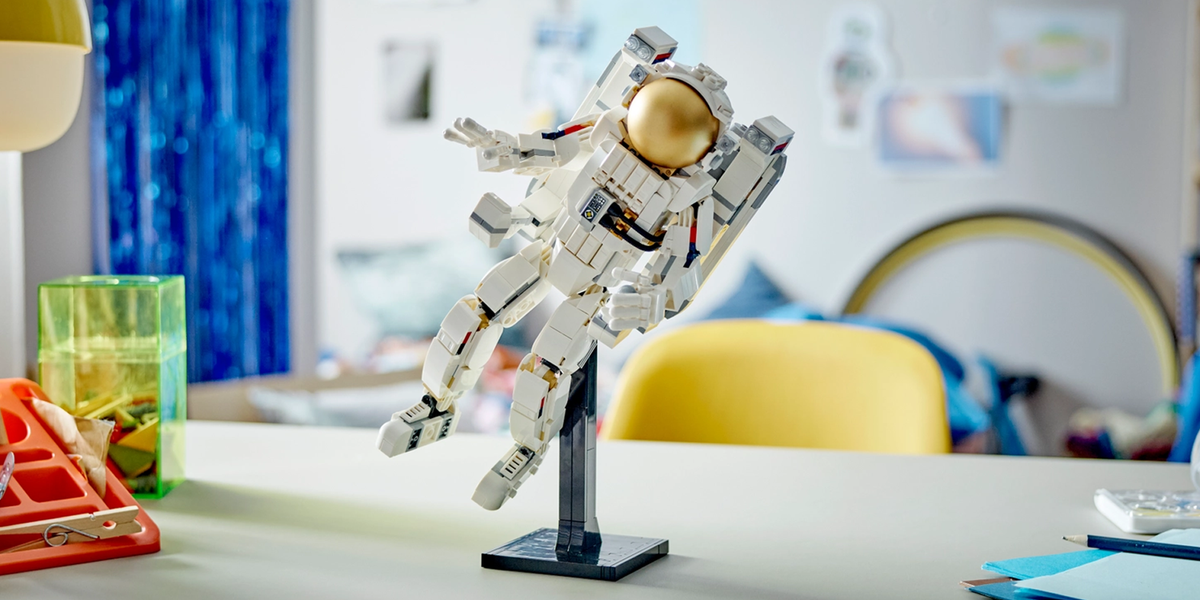
11. A NASA-Inspired LEGO Set or Model Kit
Spacecraft building sets offer the satisfying experience of assembling a mission one component at a time, usually without congressional hearings or launch delays. LEGO has released detailed NASA-inspired display models, including the Artemis Space Launch System, while traditional model-kit companies offer rockets, lunar modules, rovers, and famous spacecraft.
Check the recommended age, piece count, finished dimensions, and difficulty level. Younger children may prefer a play-oriented rocket set, while adult collectors often enjoy complex display models that quietly occupy more shelf space than originally negotiated.
12. A Home Planetarium or Star Projector
A home planetarium can transform a bedroom, office, or living room into a miniature night-sky theater. The best models use interchangeable optical discs or detailed projections rather than displaying only a cloud of colorful dots.
This gift is ideal for children, casual space fans, apartment dwellers, and anyone living under heavy light pollution. It cannot replace a dark sky, but it can create a relaxing atmosphere and encourage users to learn recognizable constellations.
13. A Framed NASA Space Image
NASA provides a vast collection of extraordinary images from Hubble, Webb, planetary missions, and Earth-observing spacecraft. A professionally printed and framed image of a favorite nebula, galaxy, planet, or mission can become meaningful home or office decor.
For a personalized angle, use NASA’s Hubble birthday tool to discover what the telescope observed on the recipient’s birthday. Choose a high-resolution file and a print medium suited to the image. Metal and acrylic prints can emphasize brilliant colors, while archival paper produces a more traditional gallery appearance.
14. An Authentic Meteorite Specimen
A meteorite fragment may be the only gift on this list that has genuinely traveled through space without paying a baggage fee. Small iron or stony meteorite specimens can make fascinating desk displays and conversation pieces.
Buy from an established dealer who identifies the meteorite’s classification and documented find or fall location. Be cautious with vague listings that offer no provenance. The phrase “possibly from space” is doing far too much work.
15. A Planetarium, Observatory, or Star-Party Experience
Not every great space gift needs to fit in a box. Tickets to a planetarium show, an observatory tour, a science museum, or a public star party can create a memorable introduction to astronomy. Many local clubs also host observing nights where visitors can compare different telescopes before buying one.
For a larger present, plan an overnight trip to a recognized dark-sky location. Include transportation, lodging, warm clothing, and a flexible backup plan in case clouds decide to attend. The sky never signs a performance contract.
Best Space Gifts by Recipient
For Complete Beginners
Start with binoculars, a simple astronomy book, a planisphere, and a red flashlight. This combination teaches the sky gradually and requires almost no setup. A tabletop Dobsonian or smartphone-guided telescope is the logical next step.
For Experienced Amateur Astronomers
Experienced observers usually have strong equipment preferences, so avoid purchasing an expensive telescope without checking what they already own. Safer options include premium eyepieces requested by name, filters, an observing chair, dew-control equipment, a power supply, an astronomy app, or a trip to a dark-sky site.
For Children and Teenagers
Choose gifts that provide a satisfying result quickly. Binoculars, illustrated books, building sets, projectors, Moon maps, and simple telescopes are good options. Avoid flimsy department-store telescopes covered in unrealistic magnification claims. A stable instrument showing a sharp Moon at modest power is far more inspiring than a wobbly telescope promising to inspect an alien’s mailbox.
For Space Collectors
Consider mission patches, spacecraft models, framed imagery, reputable meteorite specimens, vintage-style posters, or books documenting historic missions. Confirm whether the recipient prefers scientific accuracy, official reproductions, or playful space-themed decor before committing to a seven-foot inflatable astronaut.
Space Gift Ideas by Budget
Under $30
Affordable options include star charts, red flashlights, Moon maps, astronomy books, mission patches, app subscriptions, mugs, notebooks, and reputable solar viewers. A carefully assembled group of small accessories can feel more personal than one generic product.
From $30 to $150
This range includes quality binoculars, home planetariums, detailed building sets, meteorite specimens, framed prints, model kits, and introductory astronomy experiences. It is also a practical budget for accessories that improve an existing telescope.
From $150 to $500
Many capable beginner telescopes fall within this range, including tabletop reflectors and selected smartphone-guided models. Research stability, aperture, portability, included eyepieces, and manufacturer support rather than shopping by advertised magnification.
Premium Gifts Above $500
Larger Dobsonian telescopes, advanced computerized instruments, smart telescopes, premium binoculars, and dedicated astrophotography equipment can cost considerably more. At this level, involve the recipient unless you know the exact model desired. Surprises are charming; incompatible optical systems are less charming.
Common Mistakes When Buying Astronomy Gifts
The most common mistake is selecting a telescope based on magnification. Useful performance depends more on optical quality, aperture, atmospheric conditions, and mount stability. Extremely high magnification often produces a dim, blurry view.
Another error is overlooking portability. Ask where the equipment will be stored, how it will reach the observing site, and whether the recipient can carry it safely. A smaller telescope used every clear week is better than a giant instrument that becomes an expensive coat rack.
Finally, avoid presenting advanced equipment without learning support. Include a beginner guide, app, observing list, or information about a nearby astronomy club. Knowing what to look for is often the difference between an inspiring first night and 45 minutes of staring at an unidentified tree branch.
Conclusion
The best space gifts for 2025 encourage the recipient to look more closely, ask better questions, and spend meaningful time exploring the universe. For beginners, binoculars, books, charts, and simple telescopes provide an accessible starting point. Technology-minded observers may prefer smartphone-guided instruments, astronomy apps, or automated smart telescopes. Collectors and casual fans can enjoy spacecraft models, framed NASA images, meteorites, and home planetariums.
Match the present to the person rather than buying the most dramatic item on the page. Astronomy rewards patience and curiosity, so a modest gift that gets used under real stars can be more valuable than an impressive box that never leaves the closet.
Real-World Experiences With Space Gifts
Giving astronomy equipment is especially rewarding because the gift often creates a specific memory. One of the most reliable first experiences begins with the Moon. A beginner may expect a smooth white circle, then suddenly discover mountain shadows, crater walls, and bright rays spreading across the surface. The reaction is usually immediate: a quiet “wow,” followed by an urgent request that everyone nearby take a turn.
Binoculars can generate the same excitement with less preparation. During a clear autumn evening, a pair of 10×50 binoculars can turn the Pleiades from a tiny patch of stars into a glittering group. Sweep through the Milky Way from a dark location and fields that appear nearly empty to the unaided eye become crowded with light. Because binoculars are quick to share, they work particularly well at family gatherings and camping trips.
A telescope creates a different kind of experience. The first attempt may involve aligning the finder, adjusting the focus, and learning that touching the tripod causes the image to dance. That small struggle is part of the process. When Saturn finally slides into view and its rings become unmistakable, the effort suddenly feels worthwhile. People who have seen thousands of photographs are often surprised by the emotional impact of seeing the planet directly with their own eyes.
Smart telescopes offer a more social form of observing. Instead of waiting in line at an eyepiece, several people can watch an image develop on a phone or tablet as additional light is collected. A faint nebula gradually gains structure, and a galaxy begins to reveal a bright center and extended shape. This makes smart systems useful at parties, schools, and urban locations where traditional visual observing can be challenging.
Experience gifts can be even more memorable. At a public star party, a beginner can look through several instruments in one evening and learn why astronomers choose different designs. One telescope may provide a wide view of a star cluster, another may produce a crisp image of Jupiter, and a larger instrument may reveal a distant galaxy that looks like a tiny cloud. Club members are usually delighted to explain their equipment, occasionally with enough enthusiasm to describe every screw manufactured since 1987.
Dark-sky trips add another dimension. The most striking moment may occur before any telescope is unpacked. After arriving away from city lights and allowing the eyes to adapt, the Milky Way can appear as a textured band stretching across the sky. Familiar constellations become harder to recognize because so many additional stars are visible. A red flashlight, warm jacket, reclining chair, and hot drink become unexpectedly important parts of the experience.
Even indoor space gifts can create lasting connections. Building a spacecraft model encourages someone to understand how its components fit together. A framed nebula image may lead to questions about star formation. An illustrated book can inspire a child to identify Orion from the backyard. A planetarium projector might turn bedtime into a nightly constellation lesson.
The most successful gifts invite participation. Add a handwritten observing challenge, such as finding the Moon’s terminator, Jupiter’s four bright moons, the Orion Nebula, or the Andromeda Galaxy. Schedule an evening to use the gift together. Astronomy becomes much more meaningful when the recipient is not merely given an object but welcomed into an experience.
Note: Recommendations were developed from astronomy education guidance, official product information, observing resources, dark-sky practices, and solar-safety materials published by NASA, the NASA Night Sky Network, Sky & Telescope, Celestron, Vaonis, Unistellar, Stellarium, SkySafari, DarkSky International, LEGO, the American Astronomical Society, and other established science and consumer publications. Product availability and app compatibility may change. Beginner equipment guidance supports binoculars and simple, stable telescopes, while solar observation requires purpose-built protection from reputable suppliers.

