
Makeup
The Ancient Romans’ Concrete Recipe Could Help Us Beat Back Rising Seas
Jul
Sea levels are rising, storms are getting moodier, and a lot of today’s coastal infrastructure has the emotional durability of a soggy cardboard box.
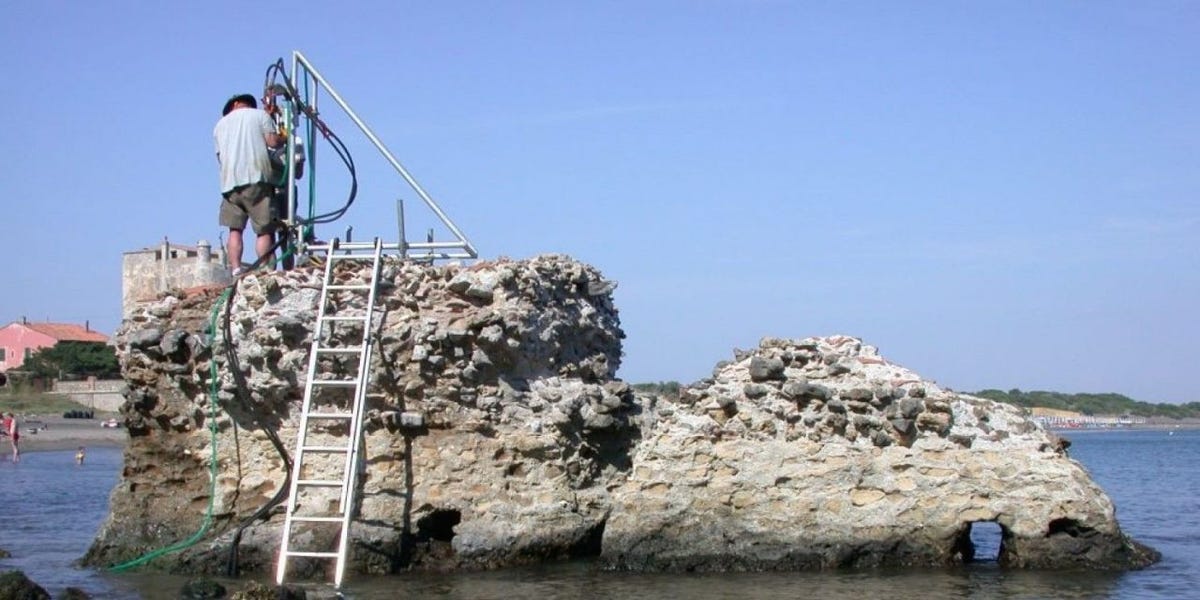
Meanwhile, the ancient Romans built harbor walls, piers, and breakwaters that have been flirting with seawater for nearly 2,000 yearsand are still standing.
That’s not just a fun historical flex. It’s a materials-science plot twist with real consequences for how we protect coastlines in the 21st century.
The idea isn’t to cosplay as a Roman engineer (no toga required). It’s to steal the best parts of their concrete “recipe”especially the parts that
get stronger in harsh marine conditionsand combine them with modern low-carbon cement strategies and smarter shoreline design.
If we do it right, we can build coastal defenses that last longer, need fewer repairs, and put a smaller dent in the climate.
In other words: concrete that fights back.
Why Rising Seas Are Exposing a Concrete Problem
Coastal communities aren’t just dealing with “water near the beach.” They’re dealing with higher baseline sea levels, more frequent nuisance flooding,
and storm surge riding in on a taller ocean. In the U.S., federal science agencies project major increases in coastal flooding risk as sea level rises
meaning more stress on seawalls, piers, ports, tide gates, pump stations, and the foundations of everything we insist on building right next to the ocean.
Here’s the awkward part: modern concrete is strong in compression, but marine environments are basically its worst roommate. Saltwater pushes chlorides
into concrete, and if steel reinforcement is present, those chlorides can trigger corrosion. Rust expands, cracking the concrete from the inside like a
slow-motion breakup. Add wet-dry cycles, waves, sulfates, and abrasion from sand and debris, and some structures degrade far earlier than their designers hoped.
So we need coastal materials that are (1) more durable in saltwater and (2) less carbon-intensive to produce. That’s where the Romans swagger back onto the stage.
What Roman “Marine Concrete” Was Actually Made Of
Roman concrete wasn’t a single standardized product. It varied by location and purpose. But the famous marine versionused in harbors and underwater
structuresrelied on a few recurring ingredients:
- Volcanic ash (pozzolana): a reactive, silica- and alumina-rich material that can form cement-like binders when combined with lime and water.
- Lime (often quicklime): calcium oxide that reacts vigorously with water, creating heat and calcium-rich compounds that help bind everything together.
- Volcanic rock/aggregate: chunks of local stone that provide bulk and structure.
- Seawater exposure: not an “oops,” but part of what made the system chemically evolve over time.
Pozzolana: The Original “Supplementary Cementitious Material”
Modern concrete often relies on Portland cement clinker as the primary binder. Roman concrete leaned heavily on pozzolanic reactions instead.
Pozzolans don’t necessarily act like cement by themselves, but when mixed with lime and water, they form durable binding phases over time.
If that sounds a lot like today’s push toward blended cements and supplementary cementitious materials (SCMs), that’s because it is.
The Romans were doing “lower-clinker concrete” before it was trendy.
The Two Superpowers That Make Roman Concrete So Interesting
1) Self-Healing: “Lime Clasts” That Patch Cracks Like Tiny Plumbers
For a long time, people noticed odd white chunks in Roman mortar and assumed they were sloppy mixingancient quality control having a bad day.
Modern research flipped that assumption. Those chunks, often called lime clasts, can act as a built-in repair kit.
The key is how they were made. Evidence from ancient construction sites and lab work suggests Romans sometimes used a hot-mixing method:
they mixed dry quicklime with volcanic ash and other ingredients, then added water later. The quicklime-water reaction releases heat, creating highly
reactive lime fragments trapped inside the concrete. Later, when microcracks form, water can dissolve calcium-rich material from those clasts and
redeposit it into crackshelping seal pathways that would otherwise let damage spread.
Think of it as concrete that keeps a first-aid kit in its glove compartment. It won’t fix everything, but it can slow deterioration and extend service life
exactly what coastal infrastructure needs.
2) Seawater-Driven Mineral Growth: When the Ocean Accidentally Helps
Modern reinforced concrete generally isn’t designed to keep reacting for centuries after it hardens. Roman marine concrete is different.
As seawater moves through it, chemical reactions can occur between seawater, volcanic ash, and lime-based components. Over long periods, those
reactions can form rare, durable mineralsoften described in research coverage as including aluminous tobermorite and phillipsite.
In plain English: seawater can trigger slow mineral formation that fills spaces and reinforces the cement matrix, making the structure more cohesive over time.
It’s the opposite of what we expect. Usually seawater is the villain. Here, it’s a grumpy side character who unexpectedly joins the hero team.
So… Can We Copy Roman Concrete to Build Better Seawalls?
Yes and no. We can’t simply duplicate Roman concrete everywhere, because the original materials were local and geologic. The famous pozzolana near Naples
is special. But we can copy the underlying strategy:
- Use reactive mineral blends (natural pozzolans, calcined clays, slag, fly ash where available) to reduce reliance on high-emission clinker.
- Design for durability in marine chemistry, including binders and aggregates that don’t just “tolerate” seawater but resist or adapt to it.
- Consider self-healing mechanismswhether via lime-rich inclusions, engineered microcapsules, or other modern approaches inspired by Roman behavior.
The Modern Roman Toolkit: What It Might Look Like in Practice
-
Lower-carbon binders: Blended cements, portland-limestone cement, and mixes with higher SCM content can cut embodied carbon while maintaining performance,
especially when paired with performance-based specifications instead of one-size-fits-all recipes. -
SCM reality check: Some SCMs (like fly ash) face supply constraints as the energy system changes, so long-term solutions increasingly point toward
natural pozzolans and calcined claysmaterials that can be scaled without depending on coal combustion. -
Marine reinforcement choices: Roman harbor concrete didn’t depend on steel rebar. Modern seawalls often do. If we want “Roman-ish” chemistry in
marine concrete, we may also need corrosion-resistant reinforcement (stainless, coated rebar, FRP) or designs that reduce steel exposure. -
Smarter mix design and curing: Modern testing can tune particle sizes, curing conditions, permeability targets, and durability metrics in a way
Romans could only dream aboutbecause they didn’t have to pass today’s building codes or explain anything to an insurance company.
Beating Back Rising Seas Takes More Than Concrete
Even the best concrete won’t “solve” sea level rise. But better materials can buy time and reduce failure riskespecially when paired with smarter coastal strategy.
In many locations, planners are blending structural protection (seawalls, revetments, surge barriers) with nature-based approaches (wetland restoration,
living shorelines, dunes, and “horizontal levees”). The point is to reduce wave energy, create adaptable buffers, and avoid forcing the ocean to fight a rigid wall
24/7.
A Roman-inspired concrete could be most valuable in the places where we truly need hard infrastructureports, wastewater plants, transit tunnels, flood gates,
bridge approacheswhile nature-based features handle day-to-day wave and tide dynamics. The best coastal defense often looks like a system, not a single object.
The Climate Angle: Longer-Lasting Concrete Can Also Be Lower-Carbon
Concrete is everywhere, and cement production is a major source of global carbon dioxide emissions. Cutting the carbon footprint of concrete means:
reducing clinker content, improving efficiency, switching fuels, developing alternative chemistries, and in some cases deploying carbon capture.
But one of the most underrated levers is durability.
If a seawall needs major repairs every few decades, the climate pays repeatedly: more cement, more transport, more demolition waste, more reconstruction.
A structure that lasts much longerwithout constant patchingcan reduce lifecycle emissions even if the upfront mix is only moderately improved.
Roman concrete’s “longevity mindset” fits perfectly with modern embodied-carbon thinking: build less often, rebuild less urgently, and stop treating infrastructure
like disposable packaging.
The “Don’t Get Too Excited Yet” Section
Roman-inspired concrete is promising, but there are real caveats:
- Roman concrete wasn’t one recipe. It was a family of materials adapted to local geology and construction goals.
- Modern coastal structures have different demands. Many require steel reinforcement, precise strength targets, rapid construction schedules, and standardized approvals.
- We need long-term validation. A lab sample healing a crack is exciting; a full-scale marine structure performing for decades is the real test.
- Coastal impacts matter. Seawalls can worsen beach loss and alter shoreline dynamics, so materials upgrades should go hand-in-hand with responsible coastal planning.
The good news is that we now have the tools Romans didn’t: advanced microscopy, durability testing, computational mix design, and climate-risk modeling.
The challenge is aligning science, standards, and procurement so the “best concrete” is the one that actually gets built.
Bottom Line: Roman Concrete Won’t Save UsBut Roman Thinking Might
The ancient Romans didn’t invent a magical substance that makes the ocean retreat out of respect. What they did build was a material system that
responds well to its environment, repairs itself, and can thrive in seawater instead of falling apart in it.
In an era of rising seas, that’s a powerful concept: coastal infrastructure that’s tougher, more adaptable, and less carbon-intensive over its full lifespan.
Combine Roman-inspired chemistry with modern low-carbon binders, smarter reinforcement strategies, and coastal designs that work with nature, and we can
build defenses that last long enough to matterwithout cooking the planet to do it.
Experiences Related to Roman-Inspired Concrete and Rising Seas (Extended)
If you want to understand why Roman-inspired concrete has engineers and climate planners paying attention, it helps to zoom in on the experiences that keep repeating
across coastlineswhether you’re looking at an ancient harbor ruin or a modern seawall inspection report. These moments are less about romantic history and more about
the very practical question: “Will this structure still be doing its job after the next few decades of saltwater, storms, and higher tides?”
1) The “Hairline Crack” That Isn’t Hairline for Long
Anyone who has walked a working waterfront has seen it: a thin crack near the splash zone that looks harmless until you notice rust staining or spalling nearby.
In reinforced concrete, tiny pathways can become express lanes for chlorides. Maintenance teams often end up chasing symptomspatching, sealing, coatingwhile the
underlying chemistry keeps pushing damage forward. Roman-inspired self-healing flips that emotional script. The experience shifts from “every crack is a future invoice”
to “some cracks can be chemically managed,” especially if the binder system is designed to deposit sealing material inside the fracture network.
2) The Surprise of a Material That “Keeps Evolving”
Modern concrete is typically designed to hydrate, gain strength, and then mostly behave itself. Roman marine concrete is famous precisely because it didn’t stop
changing. Researchers studying ancient samples describe mineral growth that can reinforce the matrix over time as seawater interacts with volcanic components.
The lived experience hereseen in lab descriptions and field interpretationsis the shock of realizing that “exposure” isn’t always just damage. In certain chemistries,
seawater can become part of a slow strengthening process. That idea alone changes how people think about designing for marine durability.
3) The Practical Headache: “Great IdeaNow Get It Approved”
Contractors, engineers, and public agencies live in the world of specifications, standards, and risk. Even if a Roman-inspired binder looks brilliant on paper, the
experience of deploying it is often a negotiation with codes, procurement rules, and conservative durability requirements. People who work on public infrastructure
don’t get rewarded for creativity; they get rewarded for preventing failure. That’s why performance-based standards, validated test data, and pilot projects matter.
The real-world path usually looks like: small demonstration, monitored performance, updated guidance, and only then larger adoption.
4) The Coastal Reality Check: Walls Alone Don’t “Win”
In places facing chronic flooding, residents often want a single decisive objecta wall, a barrier, a gatethat promises safety. But coastal scientists and planners
repeatedly return to a more complicated lived experience: shorelines are dynamic systems. Hard structures can protect assets, but they can also intensify erosion or
shift problems down the coast. That’s why many modern projects mix hard protection with dunes, wetlands, sediment management, and living shorelines. In that context,
Roman-inspired concrete isn’t “the solution.” It’s a way to make the unavoidable hard pieces last longer and fail less dramatically while the broader shoreline does
more of the daily work.
5) The Quiet Win: Maintenance Budgets That Don’t Explode
The most persuasive experience in infrastructure is boring in the best way: fewer emergency repairs. Coastal agencies often manage aging assets with limited budgets,
and repeated concrete rehabilitation cycles are expensive, disruptive, and carbon-intensive. A material that resists seawater degradationor seals microcracks before
they become structural problemsturns into a financial and operational relief valve. It’s not glamorous, but it’s transformative: fewer closures, fewer repairs,
and more predictable long-term performance. That’s the kind of “victory” that actually helps communities adapt to rising seas.
Put all of these experiences together and you get the real promise of Roman-inspired concrete: not a miracle material, but a better relationship between chemistry,
seawater, and time. If the ocean is going to keep rising, we need infrastructure that can live in that future without constantly falling apartand without demanding
a massive carbon bill every time we rebuild.
SEO Tags

