
Beauty Tools & Accessories
South Korean Sharpshooter At Paris Olympics Becomes Overnight Sensation
Jun
Every Olympic Games produces a few expected heroes: the defending champion, the teenage prodigy, the superstar swimmer with shoulders built like a refrigerator door. Then, once in a while, the internet looks away from the medal table, spots someone standing perfectly still, wearing futuristic shooting glasses, and collectively says, “Excuse me, who is that?”
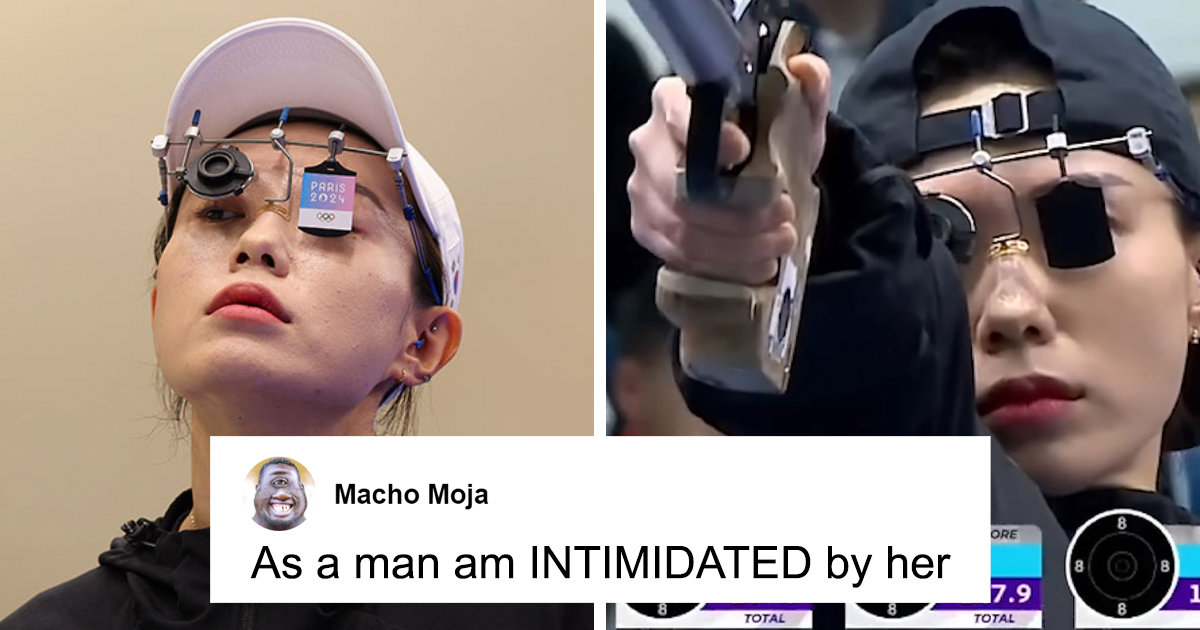
At the Paris 2024 Olympics, that person was South Korean sharpshooter Kim Ye-ji. She did not sprint, flip, scream, or do a victory dance that could become a TikTok challenge by lunchtime. She stood at the shooting range with icy calm, a composed stare, and a look so cinematic that social media immediately cast her in about 47 imaginary action movies. The only thing missing was a slow-motion hallway scene and a soundtrack with suspiciously intense violins.
Kim Ye-ji became an overnight sensation after winning silver in the women’s 10-meter air pistol event, where South Korea delivered a remarkable one-two finish. Her teammate Oh Ye-jin won gold and set an Olympic record, while Kim took silver with a score that also surpassed the previous Olympic record. But Kim’s viral fame was not only about the medal. It was about the whole package: precision, posture, personality, and the kind of calm confidence that makes a person look as if they have already read the script and know exactly how the movie ends.
Who Is Kim Ye-ji?
Kim Ye-ji is a South Korean pistol shooter who entered the Paris Olympics as an elite athlete, not as a social media character waiting to happen. Born in 1992, she had already built a competitive résumé before the world suddenly discovered her cool factor. In 2024, she gained serious attention in shooting circles after standout performances on the international circuit, including a world-record performance in the women’s 25-meter pistol event at the ISSF World Cup in Baku.
That older competition clip later resurfaced during the Paris Games, and it did what Olympic highlights often do in the age of X, Instagram, TikTok, and “wait, send me that link.” The clip spread fast. Kim appeared almost impossibly relaxed while competing, wearing a backward cap and specialized shooting glasses, then reacting to a world-class result with the emotional volume of someone checking whether the microwave popcorn still has 14 seconds left.
For casual viewers, it was a surprise. For shooting fans, it was less shocking. Olympic pistol shooting rewards the exact qualities Kim displayed: breath control, muscle discipline, emotional steadiness, and the ability to execute under pressure without turning into a human maraca. In a sport where tiny movements can decide medals, calm is not a personality accessory. It is a weapon.
The Paris Olympics Moment That Put Her On The Map
The women’s 10-meter air pistol final at the Chateauroux Shooting Centre was already a major moment for South Korea. Oh Ye-jin, only 19 years old, won gold with a score of 243.2, setting an Olympic record. Kim Ye-ji followed with silver at 241.3. India’s Manu Bhaker earned bronze, making the podium one of the most talked-about shooting results of the Games.
The South Korean one-two finish was impressive for several reasons. First, both Oh and Kim beat the previous Olympic record. Second, the two were not portrayed as icy rivals locked in dramatic tension. Instead, Kim spoke warmly about Oh, describing her like a younger sibling and expressing pride in their shared success. That detail mattered. Olympic stories often get packaged as battles, but this one had a refreshing ingredient: mutual respect without fake drama. Somewhere, a sports documentary producer quietly put down the thunder sound effects.
Kim’s silver medal also helped bring attention to Olympic shooting, a sport that does not always dominate American sports conversation. It lacks the obvious speed of track, the splash of swimming, or the airborne chaos of gymnastics. But when audiences saw Kim’s stillness, they suddenly understood the drama. The tension in shooting is internal. It happens in the breath, the trigger finger, the heartbeat, and the millimeters between good and great.
Why Did Kim Ye-ji Go Viral?
1. Her Style Looked Straight Out Of A Sci-Fi Thriller
Kim’s competition look became a major part of her online fame. Her shooting glasses, cap, athletic gear, and composed stance gave viewers a futuristic impression. People compared her to an action star, a video game character, a secret agent, and the sort of person who calmly walks away from an explosion without checking whether the explosion has finished exploding.
Of course, the gear was practical. Shooting glasses help athletes manage vision, focus, and precision. What looked like costume design to the internet was performance equipment. But that is part of what made the moment so irresistible. Kim was not trying to be cool in the usual celebrity way. She was simply using the tools of her sport, and the tools happened to make her look like she had been sent from the year 2140 to win a medal and silently judge our posture.
2. Her Calm Was Almost Comically Powerful
Many viral sports moments involve visible emotion: tears, roars, fist pumps, chest bumps, or someone falling to the ground as if gravity has personally offended them. Kim’s appeal worked in the opposite direction. Her face barely changed. Her energy was quiet. Her confidence seemed stored in a secret battery pack.
That restraint gave the internet room to project. Some saw elegance. Some saw menace. Some saw “main character energy.” Others saw a lesson in focus. The jokes were funny, but the admiration underneath them was real. In a world addicted to overreaction, Kim’s underreaction felt fresh.
3. Elon Musk Added Fuel To The Fire
Kim’s fame grew even faster after Elon Musk praised her online and suggested she should be cast in an action movie because no acting would be required. Whether one follows tech billionaires, Olympic shooting, or neither, the comment pushed her name into even broader public conversation.
Kim later thanked Musk for helping make her famous, though the deeper truth is that her own performance created the spark. Musk did not invent the cool; he merely pointed at it with a very large internet flashlight.
4. The Story Was Easy To Share
Great viral stories are often simple to explain. “South Korean Olympic shooter wins silver while looking like an action hero” is instantly understandable. It requires no complicated background, no long rulebook, and no 12-part thread beginning with “Actually, in this sport…” The image did the work. The medal gave it substance. The personality made it stick.
The Athletic Reality Behind The Internet Aura
It would be easy to reduce Kim Ye-ji to a meme, but doing so would miss the best part of the story. The reason her image resonated was because it was attached to real excellence. Olympic pistol shooting is brutally demanding. Athletes must train their bodies to remain steady and their minds to remain uncluttered while competing on the biggest stage in sports.
In the 10-meter air pistol event, competitors fire at a target from 10 meters away using an air pistol. That may sound simple until one remembers that the scoring rings are tiny, the pressure is enormous, and the athlete cannot solve a shaky hand by asking the target to be more understanding. Precision is everything. A fraction of movement can change a score. A moment of panic can undo years of preparation.
Kim’s stillness was not accidental. It was the visible result of training, repetition, and mental conditioning. She looked calm because elite shooters practice calm the way sprinters practice starts and swimmers practice turns. Breathing, grip, stance, sight alignment, trigger control, and recovery all matter. The final performance may look quiet from the outside, but inside, it is a high-speed conversation between body and brain.
Kim Ye-ji And Oh Ye-jin: A South Korean One-Two Finish
One of the strongest parts of the Paris story was the relationship between Kim Ye-ji and Oh Ye-jin. Oh, the younger teammate, won gold. Kim, the older and more experienced athlete, won silver. In many sports narratives, that setup would be framed as heartbreak for the veteran. But Kim’s reaction gave the story a warmer shape.
She expressed happiness for Oh and pride in South Korea’s achievement. That response gave fans another reason to admire her. It showed that her cool demeanor was not coldness. She could be fierce in competition and generous in defeat, which is a rare combination and, frankly, much harder than looking good in specialized eyewear.
The pair’s success also highlighted South Korea’s strength in precision sports. South Korean athletes have long been formidable in events that demand technical discipline, including archery and shooting. At Paris 2024, the country’s shooting team helped remind the world that Olympic dominance does not always arrive with noise. Sometimes it arrives one controlled breath at a time.
The Internet Turned A Shooter Into A Style Icon
Fashion writers and pop culture commentators quickly noticed Kim. Her look was described as futuristic, cinematic, and effortlessly stylish. But the word “effortless” deserves a tiny warning label. Olympic effortlessness usually requires absurd amounts of effort. The cool image came from equipment, preparation, and competition habits, not a stylist yelling, “More mysterious, please!” from behind the camera.
Still, the style conversation mattered because it brought new audiences to the sport. People who had never searched for Olympic shooting results suddenly knew Kim’s name. Some learned about the 10-meter air pistol event. Others discovered the 25-meter pistol. A few may even have learned that shooting glasses are not steampunk sunglasses for people who take brunch extremely seriously.
This is how Olympic visibility often works now. A single image can become the doorway into an entire sport. Kim’s viral rise did not trivialize shooting; it made people curious. That curiosity is valuable, especially for sports that only receive mainstream attention every four years.
What Her Viral Fame Says About Modern Olympic Stardom
Olympic fame used to depend heavily on television coverage, medal counts, and carefully edited highlight packages. Those still matter, but social media has changed the rules. Today, an athlete can become globally known because of a five-second clip, a striking photo, or a moment that feels different from everything else on the feed.
Kim Ye-ji’s rise shows that modern audiences are not only looking for victory. They are looking for character. They want athletes who feel distinct, memorable, and human. Kim’s calm made her stand out in a crowded Olympic environment. Her silver medal gave the moment credibility. Her humility afterward gave it heart.
There is also a broader lesson for sports organizations. Shooting is not always easy to market to casual viewers, but personalities like Kim Ye-ji and Turkey’s Yusuf Dikec helped change that during Paris 2024. Dikec went viral for his stripped-down, casual shooting style, while Kim went viral for the opposite: futuristic gear and cinematic intensity. Together, they turned shooting into one of the surprise social media stories of the Games.
The Pressure Behind Overnight Fame
Overnight fame sounds glamorous until one remembers that “overnight” gives a person approximately zero business days to adjust. Kim’s sudden popularity brought admiration, jokes, interviews, and international attention. It also brought pressure. After the Olympics, she reportedly dealt with exhaustion and the heavy demands that came with her new visibility.
That part of the story deserves care. Viral fame can flatten athletes into images. One day, a person is a competitor with a training schedule, family, team, and private life. The next day, the world has assigned them a nickname, a movie genre, and a meme format. Compliments may be positive, but the volume can still be overwhelming.
Kim’s story is fun, but it is also a reminder that athletes are not content machines. They are people whose best moments may become public property faster than they can process them. Fans can celebrate the aura while remembering the human being inside it.
Why Kim Ye-ji’s Story Still Matters
Kim Ye-ji’s Olympic moment mattered because it connected excellence with personality. She was not famous merely because she looked cool. She looked cool while performing at an elite level under Olympic pressure. That distinction is everything.
Her story also expanded the idea of what a breakout Olympic star can look like. She was not a heavily promoted global celebrity before Paris. She did not need a loud personal brand. She did not manufacture a viral pose. She showed up, competed, won silver, supported her teammate, and accidentally became the internet’s favorite sharpshooter.
In an era when so much online fame feels engineered, Kim’s rise felt refreshingly organic. The internet saw something authentic: composure under pressure. And because the internet is still the internet, it immediately added fan edits, action movie comparisons, and enough “aura” comments to power a small village.
Experience: What Kim Ye-ji’s Viral Moment Teaches Fans, Athletes, And Creators
Kim Ye-ji’s sudden rise offers more than a great Olympic anecdote. It provides a useful experience-based lesson for anyone who performs under pressure, builds a personal brand, or simply wants to understand why some public moments catch fire. The first lesson is that excellence has its own magnetism. People may initially click because something looks stylish, funny, or unusual, but they stay when there is substance underneath. Kim’s stance, gear, and expression caught attention. Her Olympic silver medal and world-class skill made the attention meaningful.
The second lesson is that calm can be more memorable than noise. In everyday life, many people try to prove confidence by speaking louder, moving faster, or adding extra drama. Kim did the opposite. She showed that confidence can be quiet. A steady presence can be more powerful than a loud announcement. That applies far beyond Olympic shooting. In job interviews, business presentations, creative work, exams, and difficult conversations, the person who stays composed often earns the room’s trust.
The third lesson is that authenticity travels. Kim did not appear to be performing for the camera. She was performing for the target. That difference is exactly why the moment worked. Audiences are good at sensing when something feels forced. Her coolness came from concentration, not from chasing attention. For creators and public figures, that is a valuable reminder: do the thing well first. Let the image follow the substance, not the other way around.
The fourth lesson is that the internet can change a life quickly, but attention needs boundaries. Going viral can bring opportunities, but it can also bring pressure, misunderstanding, and emotional fatigue. Kim’s post-Olympic attention showed both sides of modern visibility. The applause was loud, but loud applause is still loud. Athletes, creators, and professionals who suddenly receive public attention need support systems, rest, and permission to remain human.
The final lesson is perhaps the most useful: preparation creates the moment that looks effortless. Kim’s viral image lasted seconds; the training behind it took years. That is the part worth remembering when we admire any overnight sensation. The world may discover someone overnight, but the person rarely becomes excellent overnight. Behind the calm face is repetition. Behind the “aura” is discipline. Behind the meme is a competitor who learned how to breathe, aim, and deliver when everything counted.
Conclusion
Kim Ye-ji’s Paris Olympics story had everything the internet loves: skill, mystery, style, humor, and a touch of action-movie energy. But beneath the viral reaction was a serious athletic achievement. She won silver in the women’s 10-meter air pistol, helped South Korea claim a brilliant one-two finish, and introduced millions of casual viewers to the quiet intensity of Olympic shooting.
Her rise also proved that Olympic stardom does not always come from the loudest celebration or the biggest pre-Games marketing campaign. Sometimes it comes from a single athlete standing still, breathing carefully, and showing the world what focus looks like when it has excellent eyewear.
Note: This article is written for web publication and is based on publicly reported Olympic results, international shooting records, and mainstream coverage of Kim Ye-ji’s Paris 2024 viral moment.

