
Hair Care
Some Perspective on Junk Bonds
Aug
The phrase junk bonds sounds like Wall Street dragged a respectable investment behind a garage and slapped on a clearance sticker. The reality is less dramatic. Junk bonds, more politely called high-yield bonds or non-investment-grade debt, are corporate bonds issued by borrowers with lower credit ratings. They pay more interest because investors demand compensation for accepting more uncertainty.
That extra income can be attractive, but a large coupon is not a free dessert. It is compensation for default risk, weaker liquidity, economic sensitivity, and other unpleasant possibilities. The useful perspective is neither “junk bonds are dangerous” nor “high yield means high opportunity.” It is this: a junk bond is attractive only when its yield adequately pays for its risks.
What Are Junk Bonds, Really?
A bond is a loan. An investor lends money to a company, and the company promises interest payments plus repayment of principal at maturity. High-yield bonds generally carry ratings of Ba1 or lower from Moody’s, or BB+ or lower from S&P and Fitch. Ratings are opinions about relative creditworthiness, not guarantees.
“Junk” Describes Credit Quality, Not Necessarily the Company
Some issuers are struggling. Others are growing companies with heavy debt, businesses in cyclical industries, or formerly investment-grade companies that were downgraded. Those downgraded issues are often called fallen angels. A viable business can still have speculative-grade debt.
The category is broad. A BB-rated bond from a cash-generating company and a CCC-rated bond from a borrower running out of money may share the same label, but they do not share the same risk. One may be a weathered house; the other may have smoke coming from the basement.
Why Do Junk Bonds Pay Higher Yields?
Investors can buy U.S. Treasury securities with minimal credit risk, so a lower-rated corporation must offer something extra. That compensation appears in the credit spread: the yield difference between a corporate bond and a comparable Treasury.
Suppose a Treasury yields 5% and a high-yield bond yields 8%. The spread is 3 percentage points, or 300 basis points. It compensates investors for expected defaults, losses after default, rating changes, illiquidity, and uncertainty.
Coupon Is Not the Same as Yield
The coupon is the contractual interest rate. Yield depends on the price paid. An 8% coupon bond may yield more than 8% below face value or less than 8% above it. For callable bonds, yield to worst can be more informative because it considers permitted early-repayment scenarios. It still assumes the issuer does not defaultan assumption worth circling in red ink.
Why Investors Buy High-Yield Bonds
Higher Income
High-yield bonds generally offer more income than Treasuries and investment-grade corporate bonds. For investors able to tolerate volatility and credit losses, that income may improve long-term returns.
A Middle Ground Between Stocks and Traditional Bonds
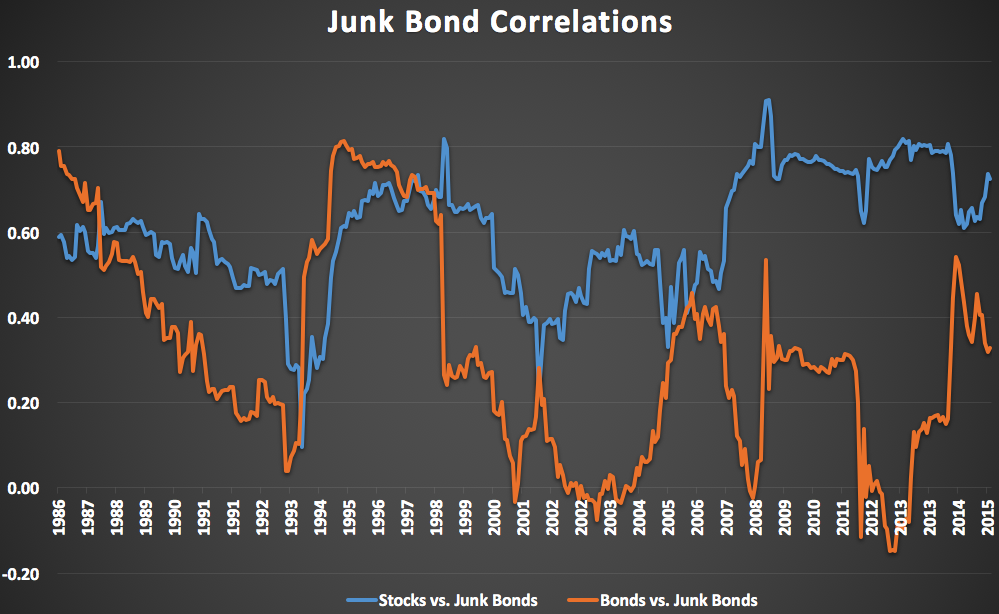
They combine features of both. Like bonds, they provide contractual payments and a maturity date. Like stocks, their prices respond to earnings, leverage, industry conditions, and investor confidence. Bondholders usually rank ahead of shareholders during a restructuring, but their upside is capped compared with equity.
Diversification and Mispricing
A diversified allocation can add a return source different from government bonds. Yet high yield is not reliably defensive: during severe risk-off periods, it can fall with stocks. Broad selloffs can also create opportunities when market prices become more pessimistic than a company’s cash flow or recovery prospects justify. The difficulty is that every distressed bond looks cheap shortly before it gets cheaper.
The Major Risks Behind the Attractive Yield
Default and Recovery Risk
An issuer may miss interest, fail to repay principal, or restructure its debt. Investors do not always recover zero; they may receive cash, new debt, equity, or claims on assets. Even so, recovery can be slow and uncertain. Historical rating studies show a strong relationship between lower ratings and higher default frequencies.
Downgrade and Economic Risk
A bond can fall before any missed payment. Expected downgrades, weaker earnings, or refinancing concerns may cause investors to demand a wider spread. High-yield issuers often have greater leverage and less financial flexibility, so recessions can hurt them just as credit becomes harder to obtain. This makes high-yield debt more sensitive to the economic outlook and investor sentiment than high-quality bonds.
Liquidity Risk
Many corporate bonds trade infrequently. During market stress, bid-ask spreads can expand and displayed prices may be estimates rather than executable offers. Investors forced to sell quickly may receive less than expected. The stress of March 2020 showed how heavy redemptions and reduced dealer capacity can sharply constrain corporate-bond liquidity.
Call, Reinvestment, and Interest-Rate Risk
Many high-yield bonds are callable. If rates decline or the issuer’s credit improves, the company may refinance and repay the bond early, leaving the investor to reinvest at lower yields. Meanwhile, the investor still owns the downside when conditions worsen. Interest rates also matter: longer-duration bonds generally experience larger price moves when yields change.
Concentration and Structural Risk
High-yield portfolios may become concentrated in industries such as energy, media, telecommunications, or health care. Investors should also examine whether debt is secured, senior unsecured, subordinated, or issued by a holding company. Two bonds from the same corporate family can have very different recovery prospects.
How Junk Bonds Behave Through the Credit Cycle
High-yield bonds tend to perform well when growth is stable, profits are healthy, defaults are contained, and investors are comfortable taking risk. Coupon income may be joined by price gains as spreads narrow.
Trouble often begins before a recession is official. Investors anticipate weaker cash flow and refinancing problems, so spreads widen. Lower-quality bonds may fall first, new issuance may slow, and forced selling can push prices below estimates of fundamental value.
Eventually, wider spreads may create stronger future return potentialbut only when defaults and recoveries do not consume the apparent bargain. This is the high-yield paradox: calm markets often offer less compensation, while frightening markets may offer better long-term entry points. Timing the turn is difficult, so disciplined allocation usually beats heroic prediction. Credit-spread conditions are also watched as signals of broader financial and economic stress.
How to Evaluate a Junk Bond
Start With the Spread
Compare the yield with a similar-maturity Treasury. A 7% yield looks generous when Treasuries yield 3%, but less impressive when they yield 5.5%. The spread better isolates compensation for corporate risk.
Study Cash Flow and the Maturity Schedule
Ask whether operating cash flow covers interest and whether the company can repay or refinance upcoming debt. A borrower may look comfortable today but face a large maturity wall in two years. Debt rarely causes trouble when issued; it causes trouble when repayment arrives.
Check Leverage, Seniority, and Covenants
Review debt relative to earnings or cash flow, free cash flow, and interest coverage. Then examine the bond’s position in the capital structure and its investor protections. A slightly lower yield with stronger documentation may beat a larger yield attached to a contract full of trapdoors.
Understand the Reason for the Rating
Is the issuer below investment grade because of acquisition debt, a cyclical business, declining revenue, weak governance, or an immediate liquidity crisis? The label matters less than the cause.
Individual Bonds Versus Funds and ETFs
Individual bonds allow control over issuer, maturity, seniority, and purchase price. They also require deep research and broad diversification. One default can severely damage a small portfolio.
Mutual funds and ETFs offer diversified exposure and professional or rules-based management, but they charge expenses and do not mature like an individual bond. Investors should examine credit quality, duration, sector weights, drawdowns, and strategy. For many individuals, a diversified fund is more practical, though “income” in a fund’s name does not prevent price declines.
Who Should Consider High-Yield Bonds?
High-yield bonds may suit investors seeking income who have a diversified portfolio, a multi-year horizon, and the ability to tolerate meaningful volatility. They are generally a poor match for emergency savings, near-term spending, or money that must preserve a specific value on a specific date. High yield is a credit allocation, not a substitute for cash.
Experience-Based Perspective: A Composite Investor Journey
Consider a composite investor named Daniel. He is not a real client or a disguised recommendation; he is a collection of common mistakes and better habits. Daniel first notices junk bonds when a fund advertises a yield well above investment-grade bonds. He sees the word “bond,” assumes stability, and focuses almost entirely on monthly income. The yield looks like a salary increase requiring no awkward meeting with a manager.
Daniel invests a large amount at once. For several months, distributions arrive, price movements remain small, and his decision feels obvious. Then economic worries rise. Credit spreads widen, the fund’s price drops, and headlines discuss defaults. Daniel is confused: Treasury yields have declined, so why is his bond fund losing money?
His first lesson is that not all bond risk is interest-rate risk. The fund owns debt from leveraged companies. When investors worry about corporate cash flow and refinancing, they demand wider spreads. Those spreads reduce bond prices even when government bonds are rallying.
His second lesson comes from the distribution yield. Daniel initially treats the advertised percentage as a guaranteed return. After reviewing total return, he sees that income can be offset by price declines, defaults, fees, and portfolio changes. A 7% distribution does not create a 7% profit if the share price falls 9%. Arithmetic remains annoyingly immune to marketing.
Instead of selling everything during the decline, Daniel reviews the purpose of the investment. He confirms that the money is not needed soon, reduces the position to a size he can tolerate, and compares the fund with his stocks. He discovers substantial overlap in economic risk. Both holdings depend on healthy corporate profits, so high yield was not providing as much defense as he imagined.
Daniel adopts a more disciplined structure. He keeps cash and short-term high-quality bonds for near-term needs. He treats junk bonds as a limited risk allocation rather than the foundation of fixed income. He favors diversified exposure, watches the share of very low-rated debt, reviews duration, and pays attention to credit spreads instead of chasing the largest quoted yield.
He also learns that volatility can create opportunity. When spreads widen without a matching collapse in fundamentals, future return potential may improve. But he stops pretending he can identify the exact bottom. He adds gradually, rebalances within a predetermined range, and accepts that some defaults are part of the asset class rather than proof that the entire strategy has failed.
The biggest change is psychological. Daniel no longer asks, “Which fund pays the most?” He asks, “What risks am I being paid to take, and how much of those risks do I already own?” That question produces fewer exciting screenshots, but better decisions. High-yield investing becomes less about collecting a large coupon and more about managing credit exposure, liquidity, duration, and behavior.
This composite experience illustrates a broad truth: successful junk-bond investing often depends less on finding a magical security than on avoiding predictable errors. Do not confuse income with total return. Do not confuse the bond label with capital preservation. Do not buy a credit-sensitive asset with money needed next year. And do not assume a high yield is generous until you understand why the market is offering it.
Conclusion: Keep the Yield in Perspective
Junk bonds are neither financial trash nor effortless income machines. They are loans to companies with greater-than-average credit risk. A thoughtful investor evaluates the spread over Treasuries, the issuer’s cash flow and leverage, the maturity schedule, seniority, covenants, liquidity, and the role of the allocation within the broader portfolio.
The best perspective is simple: yield is compensation, not a gift. When compensation is generous relative to realistic losses, high-yield bonds can be useful. When spreads are thin, underwriting is weak, or an investor needs stability, the impressive coupon may be less attractive than it appears.
Note: This educational article synthesizes information from U.S. regulators, Federal Reserve resources, rating agencies, market organizations, and major fixed-income research providers. It is general information, not individualized investment, tax, or legal advice.

