
Hair Care
Road Trip Snacks: The Best Healthy Snacks on the Go
Jul
A long drive should deliver scenic overlooks, questionable roadside attractions, and spirited debates about who controls the playlist. It should not leave everyone tired, thirsty, and surrounded by enough candy wrappers to upholster the back seat.
The best road trip snacks are convenient, satisfying, easy to portion, and sturdy enough to survive several hours in a moving vehicle. Ideally, they also provide a useful combination of protein, fiber-rich carbohydrates, healthy fats, and fluids. That balance can help keep hunger under control while reducing the temptation to make every gas station stop an accidental buffet.
This guide covers healthy snacks for road trips, cooler-friendly choices, shelf-stable foods, family options, label-reading tips, and practical packing strategies. There is room for fun food, too. A successful travel menu does not require pretending that celery is a chocolate chip cookie.
What Makes a Good Road Trip Snack?
A snack can be portable without being particularly helpful. A giant frosted pastry is portable. So is a family-size bag of neon-orange chips. The difference is whether the food provides lasting satisfaction or simply creates a short burst of excitement followed by another round of hunger.
Combine carbohydrates with protein or healthy fat
Carbohydrates provide accessible energy, while protein and fat generally add staying power. A piece of fruit may be refreshing on its own, but pairing it with nuts, cheese, yogurt, hummus, or nut butter can make the snack more substantial.
Simple combinations include an apple with peanut butter, whole-grain crackers with cheese, grapes with almonds, or carrots with hummus. Think of it as building a tiny meal instead of eating a random object discovered at the bottom of a tote bag.
Include fiber-rich foods
Fruits, vegetables, beans, nuts, seeds, popcorn, and whole grains contribute dietary fiber. Fiber-rich foods tend to require more chewing and can make a snack feel more satisfying. They also provide nutrients that highly refined snack foods may lack.
Whole fruit is usually a more filling choice than fruit-flavored candy or a sweetened fruit drink. Similarly, plain popcorn or whole-grain crackers can offer more nutritional value than heavily seasoned chips, especially when paired with protein.
Choose foods that are easy to handle
Road food should not require a steak knife, a ceramic plate, or the reflexes of a professional juggler. Select items that can be eaten in manageable portions, preferably while the vehicle is safely parked. Avoid foods that drip, crumble excessively, stain upholstery, or roll beneath the brake pedal.
Pre-portioned containers, resealable bags, small jars, and divided snack boxes make healthy road trip snacks easier to distribute. They also reduce the possibility of one passenger quietly finishing the entire trail mix supply before the first rest stop.
The Best Shelf-Stable Healthy Road Trip Snacks
Shelf-stable foods are the foundation of a practical road trip snack bag. They do not require ice, can be packed the night before, and remain useful when the nearest restaurant appears to be 80 miles away.
1. Unsalted or lightly salted nuts
Almonds, walnuts, pistachios, peanuts, cashews, and mixed nuts provide protein, fiber, and unsaturated fats. They are compact, durable, and easy to find at grocery stores and convenience stores.
Because nuts are calorie-dense, portion them into small containers rather than passing around a large package. A small handful is often enough to complement fruit or whole-grain crackers. Travelers with nut allergies can substitute roasted chickpeas, pumpkin seeds, sunflower seeds, or another safe alternative.
2. Homemade trail mix
A balanced trail mix can combine unsalted nuts, seeds, unsweetened dried fruit, and a whole-grain cereal. A small amount of dark chocolate can make the mixture more appealing without turning it into a bag of candy wearing hiking boots.
Keep dried fruit portions moderate because its natural sugar and calories are concentrated after water is removed. Choose varieties without added sugar when available.
3. Fresh whole fruit
Apples, bananas, oranges, pears, plums, and firm peaches travel well with minimal preparation. Apples and oranges are especially useful because they resist bruising better than delicate berries.
Wash fruit before departure and place it somewhere accessible. Fruit buried underneath three suitcases and an inflatable kayak is technically packed, but not especially useful.
4. Air-popped popcorn
Popcorn is a whole-grain snack with plenty of volume and crunch. Choose plain or lightly seasoned versions that are relatively low in sodium and saturated fat. Portion it into individual bags so it does not migrate into every corner of the vehicle.
5. Roasted chickpeas or broad beans
Roasted legumes deliver crunch along with plant-based protein and fiber. They are a helpful alternative to potato chips, although flavored products can contain substantial sodium. Compare labels before choosing a package.
6. Whole-grain crackers
Look for crackers that list a whole grain near the beginning of the ingredient list. Pair them with tuna pouches, shelf-stable hummus cups, nut butter, or cheese stored in a cooler.
7. Nut or seed butter packets
Single-serving packets of peanut, almond, sunflower seed, or mixed-seed butter work with bananas, apples, whole-grain bread, and crackers. Check the ingredient list for products with minimal added sugar and sodium.
8. Lower-sugar snack bars
Snack bars can be useful emergency food, but their nutritional profiles vary dramatically. Some are essentially candy bars with pictures of mountains on the wrapper.
Compare serving sizes, fiber, protein, saturated fat, sodium, and added sugars. Favor products made with recognizable ingredients such as oats, nuts, seeds, and dried fruit. A bar does not need to be perfect; it simply needs to support the rest of your travel plan.
9. Tuna or salmon pouches
Single-serving fish pouches provide protein and can be paired with whole-grain crackers. Choose lower-sodium varieties when possible, pack a fork, and open them during a stop rather than inside a tightly sealed car. Your passengers will appreciate this act of diplomacy.
10. Unsweetened applesauce pouches
Applesauce is convenient for children and adults who want something soft and easy to digest. Select unsweetened products and confirm that the packaging is appropriate for the traveler’s age and abilities.
Healthy Road Trip Snacks for the Cooler
A well-packed cooler dramatically expands your choices. It allows you to bring dairy products, dips, cut produce, eggs, sandwiches, and other perishable foods that would not be safe sitting in a warm vehicle.
Greek yogurt with fruit
Plain or lower-sugar Greek yogurt supplies protein and pairs well with berries, sliced fruit, nuts, or a small amount of granola. Pack individual containers and spoons, or assemble small jars before leaving.
Vegetables with hummus
Baby carrots, snap peas, mini cucumbers, bell pepper strips, broccoli florets, and celery are crisp, colorful, and easy to portion. Hummus adds plant-based protein and a creamy texture. Individual dip cups help prevent the communal hummus container from becoming a traffic jam.
Cheese with fruit or whole grains
String cheese, cheese cubes, and individually wrapped portions work well with apples, grapes, pears, or whole-grain crackers. Choose portions that fit your overall eating needs rather than treating the cheese section like a competitive event.
Hard-boiled eggs
Hard-boiled eggs provide protein in a compact package. Peel them at home, store them in a tightly sealed container, and keep them properly chilled. Eat them during a rest stop to minimize crumbs, odors, and complicated driving maneuvers.
Mini sandwiches and wraps
Prepare small sandwiches using whole-grain bread or tortillas. Filling options include nut or seed butter with banana, hummus with vegetables, chicken with avocado, or turkey with spinach and mustard.
Keep meat, cheese, eggs, and other perishable fillings cold. Smaller sandwiches are easier to portion and less likely to collapse into a lap during an unexpected turn.
Cottage cheese cups
Cottage cheese can be paired with berries, peaches, cherry tomatoes, or whole-grain crackers. Individual containers simplify serving and reduce food-safety concerns caused by repeatedly opening a large tub.
Chilled grapes or berries
Washed grapes and berries can be refreshing during warm-weather travel. Whole grapes are a choking hazard for young children, so cut them lengthwise into age-appropriate pieces before packing.
How to Pack Road Trip Food Safely
Healthy ingredients are not helpful if they spend the afternoon warming beside a sunny window. Perishable foods should be kept at 40°F or below in a cooler with sufficient ice or frozen gel packs.
Start with food that is already cold. Place frequently used items near the top so the cooler does not remain open while someone conducts an archaeological excavation for one cheese stick. Keeping beverages in a separate cooler can also help, since the drink cooler is usually opened more often.
Perishable food should generally not remain unrefrigerated for more than two hours. When the outside temperature is above 90°F, that limit falls to one hour. When food has been warm for too long and its safety is uncertain, throw it away. Food poisoning is not the kind of spontaneous detour anyone wants.
Pack hand sanitizer, wipes, paper towels, utensils, napkins, trash bags, and resealable containers. Wash produce and prepare ingredients at home using clean hands, utensils, and surfaces.
How to Choose Healthier Snacks at a Gas Station
Even the most organized traveler may run out of food, forget the cooler, or discover that another passenger ate tomorrow’s supplies today. Fortunately, many gas stations now carry reasonable snack options.
Start by checking refrigerated cases and produce displays. Depending on the location, you may find bananas, apples, hard-boiled eggs, yogurt, cheese sticks, hummus cups, vegetable packs, or ready-made salads.
Elsewhere in the store, look for unsalted nuts, plain popcorn, tuna pouches, oatmeal cups, whole-grain crackers, jerky, roasted chickpeas, and lower-sugar snack bars. Jerky can be high in sodium, so compare products and consider pairing a modest serving with fruit and water.
Use the Nutrition Facts label
First, confirm the serving size. A package that appears to be one snack may contain two or more servings. Then compare products for dietary fiber, protein, added sugars, saturated fat, and sodium.
As a general label-reading guide, 5% of the Daily Value or less per serving is considered low, while 20% or more is considered high. Depending on your needs, seek more fiber and less sodium, saturated fat, and added sugar.
Do not allow health-related packaging language to make the decision for you. Words such as “natural,” “energy,” or “protein” do not automatically make a product nutritionally balanced. The label is less poetic, but considerably more informative.
Water Is Part of the Snack Plan
Hydration matters during travel, even when the main physical activity involves adjusting the air conditioner. Dehydration can contribute to headaches, fatigue, mood changes, constipation, and difficulty concentrating.
Make water the default beverage and keep it within easy reach. Unsweetened sparkling water, plain milk, and unsweetened tea can provide variety. For flavor, add lemon, lime, cucumber, or berries to a reusable bottle before leaving.
Soda, sweetened coffee, energy drinks, sports drinks, and large fruit drinks can add substantial sugar without providing much satisfaction. Sports drinks are generally unnecessary for ordinary driving. They are designed more for prolonged, vigorous activity with significant sweating than for sitting through construction traffic.
Plan responsible restroom stops rather than intentionally avoiding fluids. Driving while uncomfortable, tired, or dehydrated is not an achievement worthy of a souvenir magnet.
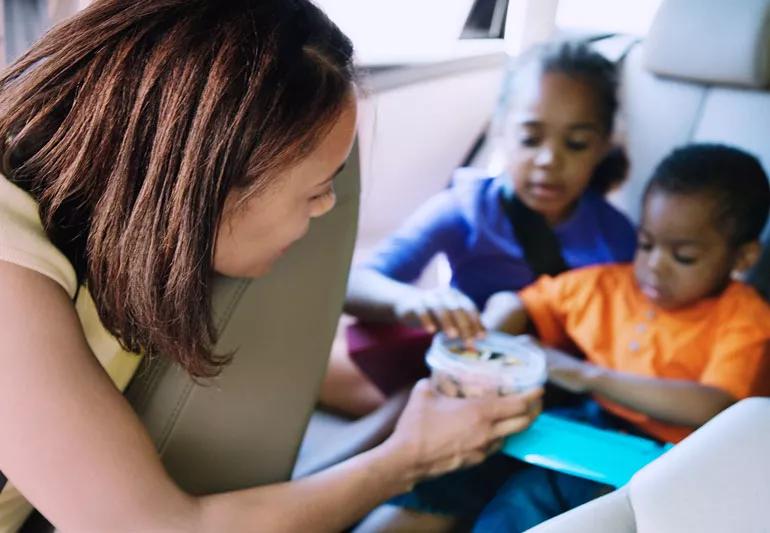
Healthy Road Trip Snacks for Kids
Children often do better with small, familiar foods served at predictable intervals. Pack several options instead of depending on one “perfect” snack that may suddenly become unacceptable after crossing a state line.
Useful choices include applesauce, banana pieces, soft fruit, whole-grain crackers, lower-sugar cereal, yogurt, cheese, mini sandwiches, hummus, and age-appropriate vegetables. Snack boxes with separate compartments can make ordinary ingredients feel more interesting.
Consider choking risks carefully. Whole nuts, popcorn, whole grapes, hard raw vegetable chunks, thick spoonfuls of nut butter, and certain other foods may be unsafe for young children. Modify textures and sizes based on the child’s age and guidance from a pediatric healthcare professional.
Food should ideally be eaten while the vehicle is stopped, particularly for younger children. An adult should supervise, and children should remain properly secured according to applicable car-seat and seat-belt guidance.
A Simple Road Trip Snack Packing List
For a full day of driving, a flexible snack kit might include the following:
- One or two pieces of whole fruit per traveler
- Portioned nuts, seeds, or roasted chickpeas
- Whole-grain crackers or plain popcorn
- Vegetable sticks with hummus
- Greek yogurt, cheese, or hard-boiled eggs in a cooler
- Mini sandwiches or wraps for longer stretches
- A small enjoyable extra, such as dark chocolate
- Plenty of water
- Napkins, wipes, utensils, and trash bags
Adjust quantities for the number of travelers, trip length, dietary restrictions, weather, and planned meal stops. Anyone managing diabetes, kidney disease, food allergies, digestive disorders, or another health condition may need individualized choices from a registered dietitian or healthcare professional.
Road Trip Snack Experiences: Lessons Learned One Crumb at a Time
The difference between a pleasant road trip and a mobile snack emergency usually becomes clear during the first long stretch without services. On one memorable drive, the snack plan consisted of two bananas, a giant package of crackers, and optimism. The bananas ripened at approximately the speed of light, the crackers became seat confetti, and optimism proved to contain very little protein.
That experience taught me to divide road trip food into three categories: immediate snacks, later snacks, and emergency snacks. Immediate snacks sit in a small bag near the passengers. Later snacks remain sealed until the planned midpoint. Emergency snacks are shelf-stable items reserved for traffic delays, missed exits, closed restaurants, or the discovery that a “short scenic route” was described by someone with a highly creative relationship to distance.
Pre-portioning also makes a larger difference than expected. Passing around a full container of trail mix sounds friendly, but it removes any natural stopping point. After 30 minutes, the chocolate pieces have mysteriously disappeared, one person has eaten most of the cashews, and the remaining bag contains seven raisins and a cloud of almond dust. Individual portions preserve variety and prevent snack negotiations from becoming a branch of international diplomacy.
Another useful lesson is to separate crunchy foods from genuinely filling foods. Popcorn, pretzels, and crackers can satisfy the desire to munch, but they may not hold hunger for long when eaten alone. Pairing them with cheese, hummus, yogurt, nuts, eggs, or another protein source creates a more complete snack. An apple with peanut butter has repeatedly outperformed a sleeve of cookies during long afternoon drives, particularly when dinner is still hours away.
The cooler deserves more respect than it usually receives. Packing it properly turns a limited snack bag into a traveling refrigerator. The most effective arrangement places frozen packs around cold food, stores delicate produce in rigid containers, and keeps the day’s first items at the top. A small thermometer removes the guesswork. A separate beverage cooler prevents the food cooler from being opened every time someone wants water.
Mess management matters, too. Foods that seem reasonable in a kitchen can become absurd inside a moving vehicle. Overfilled wraps unravel. Juicy peaches drip. Powdered snack coatings transfer onto fingers, phones, seat belts, and apparently the entire dashboard. The best options can be opened with one hand, eaten in a few bites, and closed again without requiring an upholstery-cleaning tutorial.
Healthy travel eating works best when it is flexible rather than strict. Packing nutritious food does not mean refusing every local specialty encountered along the route. It means arriving at the interesting restaurant pleasantly hungry instead of desperately hungry. When travelers are not running on candy and irritation, they can enjoy a regional meal, split a dessert, or stop for ice cream without feeling that the day has become nutritionally chaotic.
Finally, the best snack system is the one the passengers will actually eat. A bag full of admirable but unpopular foods will remain untouched while everyone purchases chips at the next stop. Ask travelers what they enjoy, offer a mixture of sweet and savory choices, and include at least one fun item. A little planning should make the trip easier, not turn the back seat into a nutrition seminar with cup holders.
Conclusion
The best healthy road trip snacks combine nutrition with real-world convenience. Build snacks from fruit, vegetables, whole grains, protein, and healthy fats. Portion them before departure, keep perishable foods cold, compare packaged-food labels, and make water the standard drink.
Most importantly, pack food that fits the people taking the trip. A thoughtful mix of dependable staples and enjoyable treats can prevent energy crashes, reduce expensive impulse purchases, and keep everyone in a better mood. It may not stop passengers from arguing over the playlist, but nutrition can only solve so much.

