
Makeup
Pergo Elements LeGrand
Aug
Shopping for laminate flooring can feel suspiciously like shopping for a mattress: every product has several technologies, a dramatic name, and a promise that it will change your life. Pergo Elements LeGrand, sometimes listed as Pergo Elements Preferred LeGrand, cuts through some of that confusion by combining a substantial plank, realistic wood texture, attached padding, waterproof protection, and a wide range of neutral-to-dramatic colors.
LeGrand is not real hardwood, although it is designed to produce a convincing wood-floor appearance. It is a premium laminated wood product built around a dense fiberboard core and protected by a durable wear layer. The collection was created for homeowners who want the visual warmth of wood without spending their weekends worrying about pet claws, spilled drinks, muddy shoes, or that one family member who treats the kitchen sink like a small water park.
This guide examines the construction, waterproof performance, design options, installation requirements, maintenance, advantages, limitations, and real-world ownership experience associated with Pergo Elements LeGrand.
Product identity and collection details verified through Pergo’s Elements overview and official product index.
What Is Pergo Elements LeGrand?
Pergo Elements LeGrand is a thick, wide-plank laminate flooring collection within the broader Pergo Elements family. It has also been marketed under the Elements Preferred tier. The collection focuses on substantial construction, realistic surface detailing, waterproof protection, antimicrobial properties, and simplified floating-floor installation.
The LeGrand name covers multiple colors rather than one specific finish. Depending on inventory and retailer availability, recognized LeGrand colors have included:
- Bunglehouse
- Guilded
- Artisan Tan
- Bedrock
- Lantern
- Solstice
- Crescent
- Palisade
- Whirlwind
- Forged Steel
- Midnight Raven
The color range stretches from airy beige and warm golden tones to cool gray and nearly black finishes. That variety gives LeGrand a broader design personality than collections that offer twelve slightly different versions of “medium brown.”
Typical Pergo Elements LeGrand Specifications
| Feature | Typical Specification |
|---|---|
| Flooring type | Laminate or laminated wood flooring |
| Core construction | High-density fiberboard-based laminate plank |
| Plank width | Approximately 7.5 inches |
| Plank length | Approximately 54.25 to 54.34 inches |
| Plank thickness | 12 millimeters plus a 2-millimeter attached pad |
| Total nominal thickness | Approximately 14 millimeters |
| Coverage per carton | Approximately 16.9 square feet |
| Installation method | Floating installation with a click-lock system |
| Surface | Embossed-in-register wood texture |
| Underlayment | Premium attached foam pad |
| Water protection | WetProtect technology on qualifying LeGrand products |
| Surface protection | CleanProtect antimicrobial properties |
Specifications can differ slightly among production runs, colors, and retail listings. The carton label and current product documents should always win an argument against an old product page on the internet.
Dimensions, construction and performance details synthesized from established U.S. flooring retailers and product listings.
Why the 14-Millimeter Construction Matters
LeGrand is frequently described as a 14-millimeter product, but that measurement normally includes a 12-millimeter laminate plank and a 2-millimeter attached pad. That is still a substantial build for residential laminate.
A thicker plank does not automatically make flooring indestructible. It can, however, contribute to a more solid sensation underfoot, improve joint stability, and make minor subfloor imperfections less noticeable than they might be beneath a thinner bargain-grade plank.
The attached pad also provides cushioning, thermal separation, and some sound reduction. It will not make a second-floor room silent, especially if someone upstairs walks like a determined rhinoceros, but it can reduce the sharp, hollow clicking commonly associated with inexpensive laminate.
Do You Need Additional Underlayment?
Because LeGrand already includes an attached pad, a second soft underlayment should not be added unless the current Pergo installation instructions specifically permit it. Too much cushioning can allow excessive plank movement, stress the locking joints, and create a floor that feels oddly springy.
A required moisture barrier is a different matter. For installation over concrete, Pergo generally calls for an appropriate polyethylene vapor barrier even when the planks already have attached padding. Padding controls sound and comfort; a vapor barrier controls moisture traveling upward from the slab. They are roommates, not twins.
How Realistic Does Pergo Elements LeGrand Look?
One of LeGrand’s stronger visual features is its embossed-in-register surface. In this type of construction, the physical texture is coordinated with the printed wood image. A printed knot can feel like a knot, while a grain line is supported by a corresponding groove or ridge.
This is more convincing than random embossing, where the texture and printed pattern seem to have met for the first time after the floor left the factory.
The longer planks also help create a more open visual flow. Fewer end joints appear across the room, which can make a modest living area look wider and less visually busy. Pressed bevels and detailed plank edges further separate one board from another, supporting a more authentic hardwood-style installation.
Choosing the Right LeGrand Color
Lighter shades such as Lantern or Crescent can brighten smaller rooms and complement Scandinavian, coastal, minimalist, and transitional interiors. Warm tones such as Guilded or Artisan Tan pair naturally with cream cabinets, leather furniture, warm white walls, and traditional wood accents.
Gray shades such as Whirlwind and Forged Steel create a cooler, contemporary appearance. They can work beautifully with black fixtures and white cabinetry, although an entirely gray room may begin to resemble the lobby of a fashionable accounting firm.
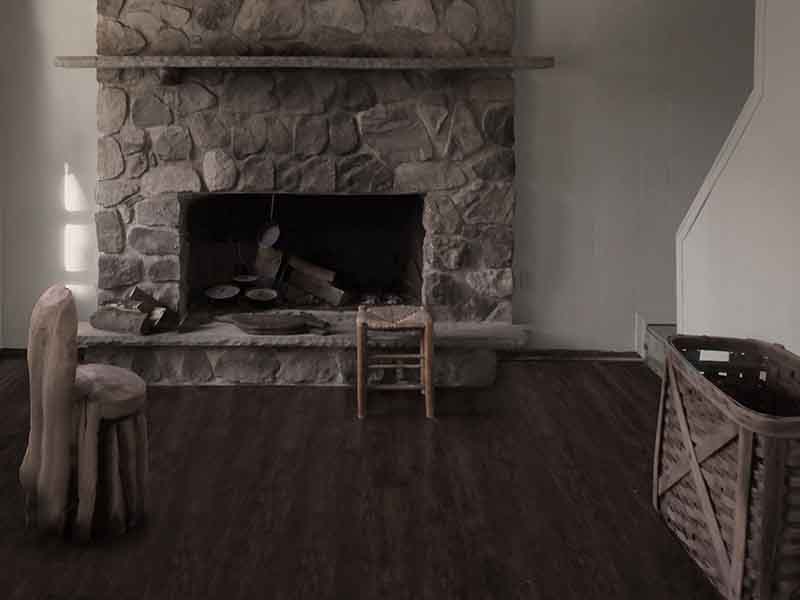
Midnight Raven is the dramatic option. Dark flooring can make pale furniture and colorful rugs stand out, but it also tends to reveal dust, crumbs, and light-colored pet hair more quickly. Beautiful? Absolutely. Forgiving? Not especially.
Always examine a full-size sample in morning light, afternoon light, and artificial lighting. Computer displays can shift undertones significantly, and one retailer’s “warm beige” may become your living room’s “unexpectedly pink” after installation.
Is Pergo Elements LeGrand Really Waterproof?
LeGrand products featuring WetProtect are designed as waterproof laminate systems. The technology combines a tight locking system, protected edges, and installation details intended to prevent household spills from reaching the subfloor. Product listings also describe qualifying LeGrand floors as suitable for wet cleaning and manufacturer-approved steam mopping.
That distinction is important because ordinary laminate is commonly only water-resistant. Traditional laminate may tolerate a quickly wiped spill but can swell if water sits in the joints or reaches the fiberboard core.
Waterproof does not mean that every water-related event is covered under every circumstance. A waterproof surface is not a substitute for repairing a leaking dishwasher, stopping a plumbing failure, or drying water trapped beneath the flooring. Standing water around room edges, unsealed penetrations, improperly installed transitions, or moisture rising through concrete can still create problems.
Can You Steam Mop LeGrand?
General laminate-care advice often warns against steam mops because heat and moisture can enter plank seams. LeGrand is different when the exact product documentation specifically identifies it as steam-cleanable. In that case, follow Pergo’s instructions rather than applying a universal rule written for ordinary laminate.
Use an approved machine, keep it moving, avoid repeatedly steaming one spot, and do not leave visible water behind. A manufacturer-approved steam-cleanable floor still does not need to be pressure-washed like a driveway.
Waterproof and steam-cleaning claims are product-specific; general laminate guidance advises avoiding steam unless the manufacturer expressly approves it.
Scratch, Stain, Pet, and Everyday Wear Resistance
Pergo markets the Elements family for active households, emphasizing stain resistance, pet scratch protection, and durability. LeGrand’s wear surface is intended to handle the type of daily abuse found in family rooms, kitchens, hallways, bedrooms, and home offices.
It should perform well against normal pet traffic, rolling toys, dropped snacks, and chairs used responsibly. However, no laminate floor is completely scratch-proof. Sand, gravel, damaged furniture glides, metal chair legs, and heavy appliances dragged across the floor can defeat even a strong wear layer.
Entry mats and felt furniture pads remain inexpensive insurance. Pet nails should be kept reasonably trimmed, and office chairs should sit on a laminate-safe mat or use soft casters. These precautions are not glamorous, but neither is a crescent-shaped scratch directly in front of the sofa.
What CleanProtect Does
CleanProtect provides antimicrobial properties built into the floor finish. This protection is intended to inhibit the growth of certain microorganisms on the treated surface.
It does not replace regular cleaning, handwashing, or ordinary household hygiene. Think of it as an additional surface feature rather than a tiny invisible cleaning crew that reports for duty after everyone goes to bed.
Where Can Pergo Elements LeGrand Be Installed?
When installed according to its product-specific instructions, LeGrand can be considered for many interior residential spaces, including:
- Living rooms
- Dining rooms
- Bedrooms
- Hallways
- Home offices
- Finished basements
- Kitchens
- Mudrooms
- Selected bathroom applications
Wet-area installations may require sealing around the perimeter, pipes, doorways, toilets, tubs, or other openings. Instructions can vary by product generation, so installers should use the guide supplied with the actual flooring rather than relying on a generic video.
Pergo flooring requires a solid, clean, dry, and sufficiently flat subfloor. It is not intended to solve structural movement, severe slab moisture, rotting plywood, or an uneven floor that resembles a gentle mountain range.
Pergo Elements LeGrand Installation
LeGrand uses a floating click-lock installation. The planks connect to one another but are not normally nailed or glued directly to the subfloor. This approach makes the collection accessible to experienced do-it-yourself homeowners, although careful preparation is more important than speed.
1. Inspect and Measure the Room
Calculate the square footage and add extra material for cuts, defects, pattern selection, and future repairs. A basic rectangular room may need around 8% to 10% extra. Rooms with diagonal layouts, many doorways, unusual angles, or complicated closets may require more.
Open several cartons during installation and mix planks from different boxes. This distributes pattern and shade variation naturally instead of creating one suspiciously uniform patch in the corner.
2. Prepare the Subfloor
Remove debris, repair loose areas, address protruding fasteners, and verify that the surface meets Pergo’s flatness requirements. High spots may need grinding or sanding, while low areas may need an approved patching compound.
Concrete should be tested for moisture. Pergo’s installation guidance describes specific concrete moisture limits and generally requires a 6-mil polyethylene moisture barrier over concrete, with seams overlapped and taped according to the instructions.
3. Plan the Layout
Measure the room width to avoid finishing with an extremely narrow final row. Adjust the width of the first row when necessary. Planks are commonly installed parallel to the longest wall or toward the primary light source, but room shape and sightlines matter more than folklore.
4. Preserve Expansion Space
Floating laminate expands and contracts with environmental changes. Maintain the specified perimeter gap around walls, cabinets, pipes, columns, and other fixed objects. Do not fasten trim through the flooring, because the floor must remain able to move beneath it.
5. Lock and Stagger the Planks
Connect the planks using the required angle and sequence. Use a manufacturer-compatible tapping block and pull bar where needed. End joints should be staggered according to the installation guide to improve visual balance and joint stability.
6. Finish Wet Areas Correctly
Waterproof performance depends on completing every required sealing step. Missing sealant around a doorway or pipe can turn an expensive waterproof system into a mostly waterproof system, which is a little like owning a mostly waterproof umbrella.
Installation recommendations are based on Pergo’s U.S. DIY guidance and standard laminate-installation practices from major flooring resources.
Cleaning and Maintaining Pergo LeGrand
Routine maintenance is straightforward. Sweep with a soft broom, use a microfiber dust mop, or vacuum with the hard-floor setting. Remove gritty debris before it is repeatedly walked across the finish.
Clean spills promptly, even on waterproof flooring. Use a laminate-safe cleaner and a slightly damp microfiber pad for general cleaning. Avoid abrasive powders, steel wool, wax, oil soap, and products that leave a heavy polish or oily film.
When steam cleaning is allowed by the specific LeGrand documentation, use the machine exactly as directed. Owners should not assume that approval for one Pergo collection automatically applies to every Pergo laminate ever manufactured.
Simple Maintenance Checklist
- Vacuum or dry-mop high-traffic areas regularly.
- Wipe spills and pet accidents promptly.
- Place mats at exterior entrances.
- Add felt pads beneath furniture.
- Lift heavy furniture instead of dragging it.
- Use a protective mat beneath rolling desk chairs.
- Maintain stable indoor temperature and humidity.
- Keep spare planks for future repairs.
Maintenance guidance incorporates product-specific steam approval alongside conservative laminate-care advice from major U.S. home-improvement and floor-care resources.
Advantages of Pergo Elements LeGrand
- Substantial construction: The 12-millimeter plank and attached 2-millimeter pad create a more solid feel than many thin entry-level laminates.
- Realistic wood appearance: Embossed-in-register texture and detailed edges help the floor resemble natural planks.
- Waterproof system: WetProtect makes qualifying LeGrand products practical for busy households and moisture-prone rooms when correctly installed.
- Attached padding: The pad simplifies material planning while adding cushioning and sound control.
- Pet-friendly performance: The durable wear layer is designed for active homes with children and animals.
- Wide color selection: LeGrand includes light, warm, cool, gray, and dark visual options.
- DIY-friendly locking system: Uniclic-style floating installation is manageable for careful homeowners.
- Low everyday maintenance: The surface does not require sanding, refinishing, waxing, or polishing.
Potential Drawbacks
- Availability may be inconsistent: Some LeGrand colors have been identified by retailers as discontinued or limited-inventory products.
- It cannot be refinished: Unlike solid hardwood, worn or severely damaged laminate must be replaced rather than sanded.
- Installation details matter: Poor subfloor preparation or missing waterproofing steps can undermine performance.
- Harder than resilient vinyl: Although the attached pad improves comfort, laminate is still a firm flooring surface.
- Dark colors show debris: Finishes such as Midnight Raven may display dust, scratches, and pale pet hair more readily.
- Replacement matching may become difficult: Discontinued colors can be challenging to locate several years later.
Because availability changes, buyers should confirm that enough material can be purchased for the entire project, including waste and a reserve supply. Ordering half the floor now and hoping the matching color returns next month is an exciting strategy, but not a good one.
Retail listings show uneven availability, including unavailable, discontinued and limited-inventory LeGrand colors.
Pergo Elements LeGrand Versus Other Flooring
LeGrand Versus Budget Laminate
LeGrand generally offers a thicker build, more detailed texture, better edge treatment, attached padding, and a stronger waterproof system than basic laminate. Budget laminate may still work well in a guest room, but LeGrand is better suited to connected living areas and demanding households.
LeGrand Versus Luxury Vinyl Plank
Luxury vinyl plank is more flexible and may feel slightly softer underfoot. It is also inherently resistant to water because its core does not rely on wood fiber. LeGrand can provide a more rigid, wood-like sound and feel, along with detailed laminate visuals and greater resistance to certain types of furniture indentation.
LeGrand Versus Engineered Hardwood
Engineered hardwood uses a real wood veneer, giving it natural variation that printed laminate cannot perfectly duplicate. It may also add greater perceived value in some homes. LeGrand is typically easier to maintain and less stressful around pets, children, and routine spills.
The best option depends on priorities. Choose engineered hardwood for natural material and authenticity. Choose luxury vinyl for softness and maximum tolerance of moisture. Choose LeGrand for a sturdy, wood-like appearance with practical durability and simplified maintenance.
Is Pergo Elements LeGrand Worth Buying?
Pergo Elements LeGrand is a strong candidate for homeowners who want premium laminate rather than the least expensive floor available. Its thick construction, long planks, registered texture, attached pad, waterproof technology, and antimicrobial finish form a competitive feature package.
It makes particular sense for households with pets, children, frequent guests, open kitchen-and-living-room layouts, or limited interest in delicate flooring maintenance. It may be less suitable for buyers who insist on genuine wood, plan to refinish the floor later, or cannot obtain enough matching material from a reliable source.
Before purchasing, verify the exact SKU, color, carton coverage, warranty, inventory quantity, trim availability, and installation guide. LeGrand has appeared in both active and discontinued retail listings, so availability should be treated as a product-specific question rather than a collection-wide assumption.
Real-World Pergo Elements LeGrand Experience
Living with Pergo Elements LeGrand is likely to feel different from living with thin, hollow-sounding laminate. The extra thickness and attached pad give the floor a reassuringly firm sensation. Footsteps still sound like footstepsit is flooring, not a recording studiobut the tone is generally less sharp than it would be on an inexpensive plank laid over minimal padding.
Imagine installing a warm LeGrand shade across a 12-by-15-foot family room that connects to a kitchen. The longer boards create relatively few end joints, helping the two spaces feel visually connected. In daylight, the registered texture adds shadows around grain lines and knots. From standing height, visitors may assume the floor is wood until they inspect it closely or begin asking unusually specific questions about flooring construction.
In a home with a large dog, the practical advantage is reduced anxiety. Normal walking, turning, and occasional indoor zoomies should be easier for the finish to handle than they would be for soft natural wood. That does not make the surface immune to damage. A pebble trapped beneath a dog toy or chair leg can still scratch it, which is why regular vacuuming matters more than heroic deep-cleaning sessions twice a year.
The waterproof system becomes most valuable during ordinary accidents rather than spectacular floods. A knocked-over water bowl, a dropped glass, wet boots, or a small dishwasher spill can be cleaned without the immediate panic associated with conventional laminate. Owners still need to wipe up the mess, but they have more time to grab a towel before imagining the floor expanding into a topographic map.
Maintenance tends to settle into a simple routine: vacuum the visible debris, spot-clean sticky marks, and occasionally use a laminate-approved microfiber cleaning system. Light colors are generally forgiving of dust but may show dark spills. Dark colors hide some stains while displaying crumbs, lint, and light pet hair with remarkable enthusiasm.
Installation experience depends heavily on preparation. Once the first rows are straight and the subfloor is properly flattened, the click-lock process can move quickly. Door frames, closets, pipes, and the final row usually consume more time than the broad open area. A homeowner may install most of the room in an afternoon and then spend forty-five minutes negotiating with one stubborn plank beneath a door casing. This is a traditional part of the do-it-yourself flooring experience and may build character, although rarely in the moment.
The attached pad saves the step of rolling out a conventional foam underlayment, but concrete installations still require proper moisture testing and the specified vapor barrier. Skipping that preparation because the floor is marketed as waterproof confuses surface-spill protection with moisture coming from below. The flooring can defend against a spilled drink; it cannot negotiate with a persistently damp slab.
Color selection may be the most consequential part of the ownership experience. A dramatic sample can look impressive in a showroom but overpower a small, dim room. Conversely, a pale neutral that seems ordinary in the store may become the ideal background once rugs, cabinets, furniture, and wall colors are added. Viewing several full planks together is far more useful than judging a six-inch sample that displays one heroic knot.
Long-term satisfaction will also depend on keeping spare material. Saving at least one unopened carton provides matching planks for repairs after an appliance leak, remodeling project, or accidental damage. This is especially important when purchasing a LeGrand color with limited availability. Spare flooring occupies some storage space, but considerably less emotional space than discovering your discontinued replacement plank is available only from a stranger three states away.
Overall, the Pergo Elements LeGrand experience is best described as practical premium laminate. It offers a convincing appearance, strong everyday durability, comfortable thickness, manageable cleaning, and meaningful water protection. It does not become genuine hardwood through optimism, and it cannot compensate for careless installation. When the right color is available and the floor is installed according to the exact product instructions, however, LeGrand can deliver an attractive, family-friendly surface without requiring its owners to treat every drink, pet, or dinner guest as a potential flooring emergency.

