
Hair Care
Launching To Space at a Crawl
Aug
Space launches are usually sold to us with fire, thunder, countdown clocks, and commentators using phrases like “humanity’s next giant leap.” But before a rocket can leap, roar, or shake the Florida coast like a caffeinated volcano, it often has to do something much less glamorous: crawl.
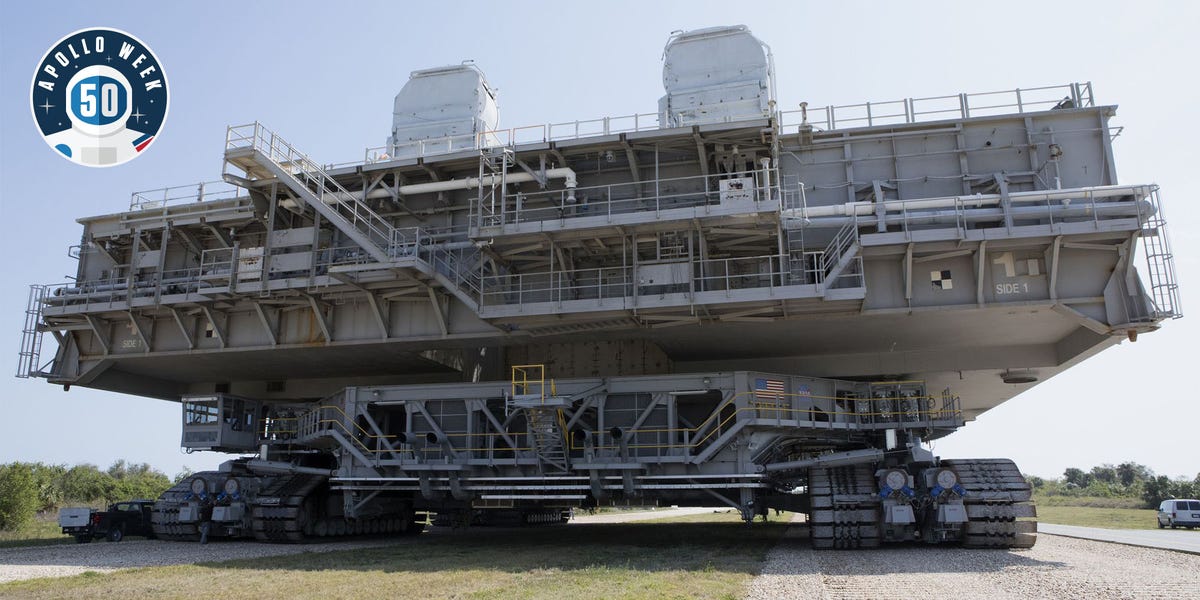
At NASA’s Kennedy Space Center, some of the most powerful machines ever built begin their journey to space at roughly the speed of a determined garden snail with a gym membership. The star of this slow-motion spectacle is the NASA crawler-transporter, a giant tracked vehicle that carries rockets and mobile launch platforms from the Vehicle Assembly Building to the launch pad. It does not sprint. It does not hurry. It does not care that your smartwatch thinks you are inactive. It crawls because, in spaceflight, slow can be brilliant engineering.
“Launching to space at a crawl” sounds like a contradiction, but it is one of the clearest examples of how modern space exploration depends on patience, precision, and infrastructure that looks like it wandered out of a science-fiction construction site. From Saturn V and the Space Shuttle to the Space Launch System and Artemis missions, the path to orbit has often begun with a carefully managed roll across a specially built road of river rock.
Why the Road to Space Begins at One Mile per Hour
When people picture a rocket launch, they imagine the final minutes: tanks full, engines chilled, gantries retracted, crew strapped in, and millions of pounds of thrust waiting for permission to misbehave. But a launch campaign begins much earlier. The rocket has to be assembled, checked, connected, transported, tested, and positioned. That is where the crawl comes in.
At Kennedy Space Center, large rockets are assembled vertically inside the Vehicle Assembly Building, often called the VAB. This enormous building is not just a garage; it is more like a cathedral for rockets, except the stained glass is replaced by steel platforms, cranes, cables, sensors, and people with very serious checklists. Once the rocket, spacecraft, and mobile launcher are ready, the crawler-transporter moves underneath the platform, lifts the whole stack, and begins the long ride to Launch Pad 39B or, historically, Pad 39A.
The pace is intentionally slow. A fully integrated moon rocket is not a pickup truck hauling a boat to the lake. It is a tower of hardware, propellant systems, avionics, plumbing, structural connections, and delicate interfaces. Moving too fast would increase vibration, stress, and risk. The crawler must keep the rocket level, negotiate curves, climb the gentle rise to the pad, and protect both the vehicle and the ground equipment. In other words, the crawler is not late. It is doing aerospace ballet while wearing steel boots.
Meet the NASA Crawler-Transporter
The crawler-transporter is one of the most wonderfully overbuilt vehicles in American engineering history. It was originally created in the 1960s to move the Saturn V moon rocket from the VAB to Launch Complex 39. The same basic concept later served the Space Shuttle program and now supports Artemis, NASA’s campaign to return humans to lunar exploration and prepare for deeper space missions.
Each crawler is larger than a baseball infield and weighs millions of pounds by itself. Its treads are enormous, its engines are industrial, and its mission is beautifully simple: move the rocket safely. Simple, of course, in the way that “just build a bridge” is simple until you remember gravity is undefeated.
The crawler does not directly launch the rocket, but without it, the rocket would not reach the launch pad in the correct configuration. It is the unsung workhorse between assembly and ignition. The rocket may get the dramatic flame trench moment, but the crawler handles the awkward commute.
Why Tracks Instead of Wheels?
Tracks spread weight over a larger surface area than regular wheels. That matters when the cargo is a rocket stack weighing many millions of pounds. The crawler’s tracked design reduces ground pressure and provides stability over the crawlerway, the special road between the VAB and the launch pads.
The tracks also allow the crawler to move with immense control. It can creep, stop, steer, adjust height, and keep its load level. The system is part vehicle, part mobile foundation, and part patience test for anyone expecting a drag race.
The Crawlerway: A Road Built for Rockets
The crawlerway is not a normal road. Your neighborhood asphalt would take one look at a crawler-transporter carrying a moon rocket and immediately file for early retirement. NASA’s crawlerway was designed specifically for extreme loads, using layers of material topped with rounded river rock. This surface helps distribute the crawler’s load and allows the massive treads to grip without destroying the entire path after every rollout.
The crawlerway stretches from the Vehicle Assembly Building to Launch Pads 39A and 39B. It is wide, rugged, and almost comically specialized. Most roads exist for cars, trucks, buses, and cyclists. This one exists because America decided to move skyscraper-sized rockets through a Florida spaceport.
The river rock surface is more than a quirky detail. It reflects a core principle of launch infrastructure: every component, even the ground under the vehicle, is part of the mission. A rocket launch is not just a rocket. It is roads, cranes, towers, flame trenches, control rooms, power systems, communications lines, environmental controls, weather rules, and teams of people who know exactly which bolt matters because all of them do.
From Saturn V to Space Shuttle to Artemis
The crawler-transporter’s legacy is a slow parade through some of the biggest chapters in space history. During Apollo, it carried Saturn V rockets that sent astronauts toward the Moon. During the Space Shuttle era, it carried orbiters, external tanks, and solid rocket boosters to the pad. Today, it carries the Space Launch System and Orion spacecraft for Artemis missions.
That continuity is remarkable. Spaceflight technology has changed dramatically since the 1960s. Computers shrank from room-filling machines to devices small enough to lose between couch cushions. Rocket materials, sensors, software, guidance systems, and mission goals evolved. Yet the crawler concept remains valuable because the physical problem remains stubborn: giant rockets must still be moved safely from assembly to launch.
The crawler has been upgraded over time, especially for the heavier demands of the Space Launch System. Bearings, hydraulic systems, electronics, generators, structural elements, and other components have been refurbished or replaced. The result is a machine with Apollo bones, shuttle memories, and Artemis muscles.
Why Not Build the Rocket at the Pad?
A reasonable question is: why not assemble the rocket directly on the launch pad and skip the slow road trip? Some launch systems do use horizontal integration or assemble closer to the pad. But for NASA’s large moon rockets, vertical assembly inside the VAB offers major advantages.
First, the VAB protects teams and hardware from Florida’s weather. The Space Coast is beautiful, but it also serves thunderstorms, salty air, heat, humidity, and the occasional hurricane drama. Building and checking a rocket indoors gives engineers more control.
Second, the VAB allows large work platforms to surround the rocket at different heights. Teams can access engines, stages, boosters, spacecraft adapters, crew access systems, umbilicals, avionics, and other components in a structured environment. A rocket is not merely stacked like toy blocks; it is integrated, tested, inspected, and verified.
Third, moving a completed stack to the pad lets the launch team use the pad primarily for final testing, fueling rehearsals, and launch operations. This division of labor makes sense: assemble in the big building, crawl to the pad, then prepare for fire.
The Mobile Launcher: The Rocket’s Traveling Launch Tower
The mobile launcher is the structure that rides with the rocket on top of the crawler. It provides the platform, tower, umbilicals, crew access, and ground support connections needed to process and launch the vehicle. If the rocket is the celebrity, the mobile launcher is the stage manager, lighting crew, power strip, dressing room, and emergency exit all welded into one very tall structure.
For Artemis missions, the mobile launcher supports the SLS rocket and Orion spacecraft. Its umbilicals provide power, data, propellant connections, environmental control, coolant, and other services before launch. Then, at liftoff, those connections must separate cleanly and quickly. There is no room for “hang on, one cable is still plugged in” when millions of pounds of thrust arrive.
The mobile launcher also experiences the violence of launch. Heat, acoustic energy, vibration, exhaust, and debris all punish the structure. After a mission, it may need inspections, repairs, and upgrades before the next rocket stack is assembled. The crawler brings it back, slowly, because even after the rocket has done the dramatic part, the ground equipment still has work to do.
Slow Is Safe, and Safe Is Fast
In high-risk engineering, speed is not always efficiency. A rushed rollout can create delays later if something is damaged, misaligned, or shaken beyond tolerance. The crawler’s slow pace reduces dynamic loads and gives teams time to monitor conditions. Engineers can watch weather, vibration, leveling, route clearance, systems health, and communications throughout the move.
Rollout weather rules are strict for good reason. Lightning, hail, high winds, and extreme temperatures can create hazards during the journey. A rocket on a mobile launcher is tall, valuable, and not exactly aerodynamic. If conditions are wrong, teams can delay. That may frustrate spectators, but rockets do not respond well to motivational speeches about punctuality.
The slow rollout is also a systems test. It confirms that the crawler, mobile launcher, route, vehicle, and operations teams can function together. Every pause, measurement, and adjustment is part of the launch campaign. By the time the rocket reaches the pad, the mission has already passed through one of its most visually impressive engineering rituals.
Artemis and the Modern Meaning of the Crawl
NASA’s Artemis program has made the crawler relevant to a new generation. Artemis I proved the integrated Space Launch System, Orion spacecraft, and ground systems during an uncrewed lunar flight. Artemis II took the next step with astronauts aboard Orion on a lunar flyby. Future Artemis missions aim to support lunar surface operations, science, commercial partnerships, and eventually preparation for human missions to Mars.
The crawler fits into that future because deep-space exploration requires more than rockets. It requires a complete launch ecosystem. Kennedy Space Center’s Exploration Ground Systems program prepares the infrastructure needed to process, launch, and recover spacecraft. That includes the VAB, crawlers, mobile launchers, Launch Pad 39B, the Launch Control Center, and recovery operations after splashdown.
It is tempting to think of space exploration as happening only above the atmosphere. In reality, a huge amount of exploration happens on the ground first. The crawler’s one-mile-per-hour journey is part of the same mission as the rocket’s thousands-of-miles-per-hour ascent. One is quiet and deliberate; the other is explosive and spectacular. Both are necessary.
What the Crawl Teaches About Engineering
The story of launching to space at a crawl offers several useful lessons, even for people whose daily work does not involve moon rockets. First, big ambitions need strong foundations. The crawlerway, crawler-transporter, VAB, and mobile launcher are not glamorous in the same way as astronauts or rocket flames, but they make the glamorous part possible.
Second, mature technology can remain valuable. The crawler-transporter is not new, but it has been maintained, upgraded, and adapted. In a world obsessed with the latest gadget, there is something refreshing about a machine that says, “I have been doing this since Apollo, and I still have range.”
Third, speed should serve the mission, not the ego. A rocket that rushes to the pad and arrives damaged is not efficient. A slow rollout that protects the vehicle and keeps the schedule realistic is smart. The best engineers know when to accelerate and when to crawl.
Specific Examples of the Crawl in Action
Apollo’s Moon Rockets
During Apollo, the crawler-transporter carried Saturn V rockets from the VAB to Launch Complex 39. Those rollouts became part of the visual identity of the Moon program: a towering black-and-white rocket, a mobile launcher, and a colossal machine inching across the Florida landscape. The Saturn V was built for speed after ignition, but before launch, it trusted the slowest giant on the spaceport.
The Space Shuttle Era
The shuttle program used the crawler system for decades. Orbiters such as Columbia, Discovery, Atlantis, Endeavour, and Challenger made the journey to the pad on mobile launch platforms. The shuttle looked different from Saturn V and flew different missions, but it still depended on the crawler’s steady ride.
Artemis Rollouts
With Artemis, the crawler has returned to the spotlight. Moving the SLS rocket and Orion spacecraft to Launch Pad 39B is a public milestone because it means the vehicle is leaving assembly and entering the final stretch of launch preparation. The rollout looks slow, but symbolically it is huge: the Moon rocket has left the building.
The Human Side of a Slow Rocket Rollout
There is something strangely moving about watching a rocket crawl. It is not as loud as liftoff. It does not make your ribcage vibrate. It does not turn night into artificial sunrise. But it carries its own drama. A rollout is the moment when a machine built indoors meets the open sky. It is the first public step toward launch.
For engineers, technicians, and launch teams, rollout is a visible reward after years of design, manufacturing, inspections, reviews, troubleshooting, and paperwork. Lots of paperwork. Spaceflight may be romantic, but it is also deeply committed to documentation. Somewhere, a spreadsheet is always involved.
For spectators, the crawler provides a rare look at the scale of space exploration. A rocket at the pad is impressive, but a rocket moving across the landscape feels almost mythical. It is like seeing a skyscraper decide to commute.
Experiences Related to “Launching To Space at a Crawl”
Anyone who has watched a major rollout, whether in person or through a live broadcast, knows the experience is oddly hypnotic. At first, you may think, “That’s it? It’s barely moving.” Then, five minutes later, you are still watching. Ten minutes later, you have opinions about crawler speed. After half an hour, you are emotionally invested in a vehicle that appears to be losing a race against landscaping.
That slow movement changes how people understand spaceflight. A launch can feel like a single event: three, two, one, liftoff. But the crawl reveals that space exploration is a long chain of careful steps. The rocket does not simply appear on the pad like a magic trick with better funding. It is assembled, tested, transported, connected, fueled, checked, rehearsed, and only then released toward the sky.
There is also a lesson in patience. Modern culture loves instant results. We want same-day delivery, fast downloads, quick answers, and coffee that appears before we finish ordering it. The crawler-transporter is an antidote to that mindset. It reminds us that some goals are too important to rush. When the cargo is a moon rocket, slow is not a weakness. Slow is wisdom wearing tank treads.
Visitors to Kennedy Space Center often come for the rockets, astronaut stories, and launch viewing opportunities, but the ground systems can be just as memorable. Seeing the crawlerway, the Vehicle Assembly Building, or the scale of Launch Complex 39 helps connect the heroic image of spaceflight to the practical work behind it. You realize that exploration is not only about brave crews and powerful engines. It is also about welders, mechanics, software engineers, crane operators, pad technicians, weather officers, safety teams, and everyone else who makes sure the rocket gets to the pad in one piece.
The phrase “launching to space at a crawl” also applies beyond NASA. Every ambitious project has a crawler phase. A business launch, a scientific breakthrough, a book, a building, a career change, or a personal reinvention often begins with slow preparation that nobody applauds. People notice the liftoff, but the crawl is where discipline lives. The crawl is where systems are tested, mistakes are found, and confidence is built.
That is why the crawler’s story is so satisfying. It makes spaceflight feel both extraordinary and practical. Yes, humans are trying to return to the Moon and eventually reach Mars. But first, someone has to move the rocket down the road. Carefully. Slowly. With weather rules, leveling systems, radio calls, inspections, and probably at least one engineer muttering, “Let’s not get cute.”
In the end, the crawl is not the opposite of launch. It is the beginning of launch. The rocket’s first mile is not upward; it is sideways, across a rock road in Florida, carried by a machine that understands the assignment: take your time, protect the dream, and deliver the future to the pad.
Conclusion: The Slowest Part of Spaceflight May Be the Smartest
Launching to space at a crawl is one of the great ironies of exploration. The final ascent is fast enough to escape Earth, but the journey to the pad can be slower than a bicycle ride. That contrast is not a flaw. It is the point.
The NASA crawler-transporter, the crawlerway, the mobile launcher, and Kennedy Space Center’s launch infrastructure show that spaceflight is not only about raw power. It is about control. It is about building systems that can handle weight, weather, vibration, heat, history, and human ambition. It is about respecting the fact that a rocket powerful enough to reach the Moon still needs a careful ride to work.
So the next time a moon rocket rolls out at one mile per hour, do not laugh at its pace. That crawl is engineering confidence in motion. It is Apollo history, shuttle heritage, and Artemis future sharing the same road. It is the quiet beginning of a loud achievement. And frankly, for a machine carrying humanity’s dreams, one mile per hour is plenty fast.
SEO Tags
Note: This original article is written for web publication in standard American English and is based on real NASA, Smithsonian, National Park Service, and U.S. space-history information, with no copied source text or unnecessary citation placeholders.

