
Makeup
It’s Been a Minute: Meaning, Usage & More
Aug
If you have ever bumped into an old friend, stared at them for half a second, and said, “Wow, it’s been a minute,” congratulations: you have participated in one of English’s favorite little tricks. The phrase sounds wildly specific, but it usually means the exact opposite of specific. Nobody is literally talking about sixty seconds. Nobody is checking a stopwatch. Nobody is yelling, “Actually, according to my watch, it’s been seven months, Karen.”
In everyday American English, “it’s been a minute” is a casual, friendly, slightly playful way to say it’s been a while. You can use it when you have not seen someone, done something, visited somewhere, or talked about a topic for longer than expected. It is conversational, flexible, and just vague enough to be useful in real life, which is probably why it keeps showing up in texts, social media captions, podcasts, and everyday speech.
This guide breaks down the it’s been a minute meaning, where the phrase likely comes from, how to use it naturally, when not to use it, and why English speakers love expressions that make perfect sense only after they stop making literal sense. Language is rude like that.
What Does “It’s Been a Minute” Mean?
The basic meaning of “it’s been a minute” is simple: it’s been a while or a significant amount of time has passed.
Plain-English definition
When someone says, “It’s been a minute,” they usually mean one of these things:
- We have not seen each other in a long time.
- I have not done this in a long time.
- This topic or situation has not come up in a while.
- I feel a sense of distance, even if I’m saying it casually.
So if a friend says, “Man, it’s been a minute since I’ve been to the gym,” they do not mean they left the treadmill sixty seconds ago. They mean they have been away long enough that their gym membership might now be more emotional support than exercise plan.
The emotional tone of the phrase
Part of what makes this expression popular is its tone. It feels lighter than saying, “It has been a very long time since our last interaction.” That sentence sounds like it belongs in a breakup email drafted by a committee. “It’s been a minute,” by contrast, sounds human. Warm. Relaxed. A little self-aware.
It often carries one or more of these vibes:
- Friendly nostalgia: “It’s been a minute! How have you been?”
- Mild surprise: “Wow, it’s been a minute since I watched that show.”
- Humor: “It’s been a minute since I cleaned this closet, and honestly the closet has developed its own government.”
- Soft confession: “It’s been a minute since I called my aunt. I should fix that.”
Why Does “Minute” Mean More Than a Minute?
Here is where English decides to be delightfully chaotic. In literal timekeeping, a minute is sixty seconds. In actual conversation, minute has long been used more loosely in idioms and everyday speech. English speakers say things like “wait a minute,” “in a minute,” “just a minute,” and “in a New York minute,” and those phrases often stretch or shrink depending on tone, context, and drama level.
That helps explain why “it’s been a minute” works. The phrase uses understatement. Instead of saying, “It has been forever,” the speaker says “a minute,” even though everyone understands the time span is much longer. That mismatch creates the charm. It is a verbal wink.
American English loves this kind of thing. We say “I haven’t slept in a week” when we mean “I am tired,” and “I’ll be there in a second” when we absolutely will not. “It’s been a minute” belongs to that same family of playful exaggeration and understatement.
Where Does “It’s Been a Minute” Come From?
The exact first moment this phrase was spoken is not something we can pin to one magical Tuesday afternoon. Like a lot of slang and informal expressions, it likely spread through speech long before many people started writing it down.
Still, language experts often trace the expression to Black American speech and slang usage, with recorded examples from the 1970s. From there, it appears to have spread more widely through college speech, media, and mainstream conversation. That path makes sense: many American slang expressions travel exactly that way, moving from local or community-based speech into wider popular culture once enough people hear them, repeat them, and decide they sound cooler than whatever they were saying before.
The phrase also became more visible in mainstream American culture through the title of the public-radio show and podcast It’s Been a Minute, hosted by Sam Sanders. That title works because the phrase already carries a built-in meaning of catching up, reconnecting, and picking up a conversation after some time has passed.
So the smart version is this: the phrase likely has roots in Black American English, later spread into broader U.S. speech, and became especially recognizable in modern media and internet conversation. The less smart version is: language got hold of a good phrase and refused to let it go.
How to Use “It’s Been a Minute” Correctly
If you want to use the phrase naturally, the easiest rule is this: use it in casual situations when some time has passed and you want to acknowledge that gap.
1. When greeting someone after a long gap
This is one of the most common uses.
- “Hey, it’s been a minute. How’ve you been?”
- “Wow, it’s been a minute since we talked.”
- “It’s been a minute, but I’m glad we finally caught up.”
2. When returning to an activity
You can also use it for hobbies, routines, or places you have neglected.
- “It’s been a minute since I cooked dinner at home.”
- “It’s been a minute since I read a book just for fun.”
- “It’s been a minute since I’ve been back to this neighborhood.”
3. In texting and social media
The phrase works especially well online because it is short, casual, and emotionally flexible.
- “It’s been a minute since I posted here.”
- “It’s been a minute, but I’m back.”
- “Y’all, it’s been a minute since I laughed this hard.”
4. When reflecting on change
Sometimes the phrase does more than mark time. It also highlights growth, distance, or change.
- “It’s been a minute since I felt this confident.”
- “It’s been a minute since life felt calm.”
- “It’s been a minute, and a lot has changed.”
When Not to Use It
Because “it’s been a minute” is informal, it does not fit every situation.
You should probably avoid it in:
- Very formal writing: business reports, academic papers, legal writing.
- Professional communication with a stiff tone: “It’s been a minute since the compliance review” is not the sentence that saves the quarterly meeting.
- Situations where exact time matters: deadlines, schedules, instructions, contracts.
In those cases, choose clearer phrases like:
- “It has been a while.”
- “It has been several months.”
- “We have not spoken recently.”
- “The project has been inactive since January.”
“It’s Been a Minute” vs. Similar Phrases
“It’s been a while”
This is the closest match. It is clearer and slightly more neutral. If “it’s been a minute” wears sneakers, “it’s been a while” wears clean loafers.
“Long time no see”
This phrase is also common and friendly, but it is more fixed as a reunion greeting. “It’s been a minute” is broader because you can use it for people, places, habits, ideas, and experiences.
“It’s been forever”
This version is more dramatic. Use it when you want stronger emotion or extra enthusiasm.
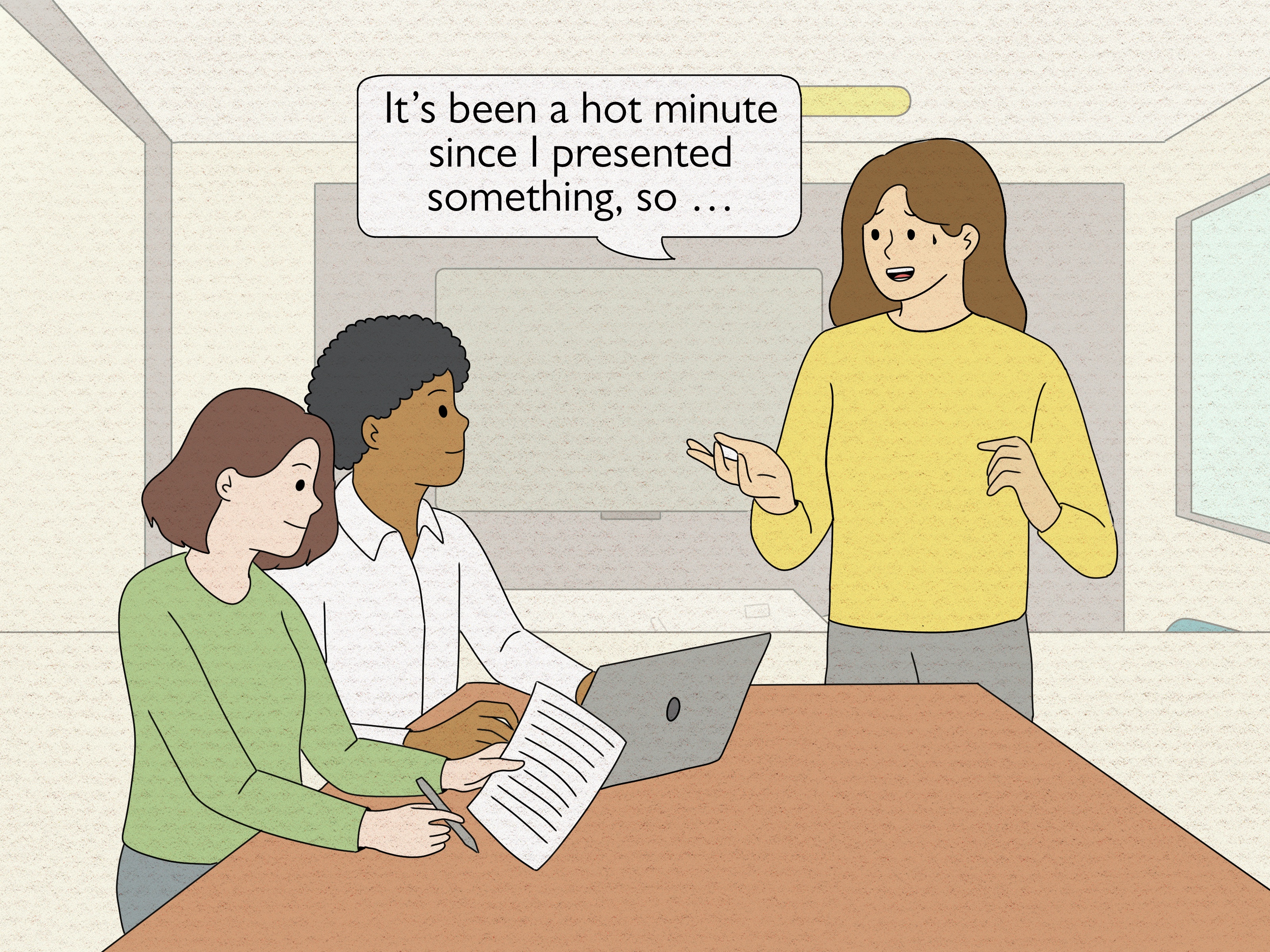
“It’s been a hot minute”
This phrase is closely related. In modern casual speech, “a hot minute” usually means a fairly long time, especially in slangy or playful contexts. It tends to sound a little more expressive than “a minute.”
Examples:
- “It’s been a hot minute since I’ve had a real vacation.”
- “We haven’t been here in a hot minute.”
Common Mistakes People Make
Taking it literally
This is the big one. No, the phrase does not usually mean one actual minute. If someone says, “It’s been a minute since I saw that movie,” they probably mean months or years.
Using it in ultra-formal settings
It sounds natural in conversation, texts, captions, and relaxed writing. It sounds less natural in a formal memo unless your office runs on cold brew and chaos.
Overusing it
Like any trendy expression, it can lose charm if used every other sentence. If every paragraph begins with “it’s been a minute,” your writing starts sounding like it got trapped in one group chat and never came out.
Why the Phrase Has Stuck Around
The reason this expression survives is not just meaning. It is social usefulness. The phrase helps speakers do several things at once:
- acknowledge time passing,
- sound casual rather than heavy,
- invite reconnection,
- show self-awareness,
- and soften awkward gaps.
That is a lot of work for three ordinary words. “It’s been a minute” can reopen a friendship, ease the tension of an overdue reply, or make a comeback post sound less dramatic. Instead of saying, “I disappeared from the internet due to stress, confusion, and my inability to answer messages like a normal person,” you can simply say, “It’s been a minute.” Elegant. Efficient. Emotionally protective. Very American, honestly.
Examples in Real-Life Style
Here are some natural-sounding examples of it’s been a minute usage in context:
- “Hey stranger, it’s been a minute. You still living in Chicago?”
- “It’s been a minute since I made pancakes on a Sunday morning.”
- “I know it’s been a minute since my last update, but I finally finished the project.”
- “Wow, it’s been a minute since we all got together like this.”
- “It’s been a minute since I listened to that album, and somehow it still slaps.”
- “It’s been a minute, but I wanted to check in and see how you’re doing.”
Notice what they have in common: the phrase introduces a gap, then opens the door to connection, reflection, or return.
Experience Section: Why “It’s Been a Minute” Feels So Real
One reason this phrase lands so well is that it matches how life actually feels. Time rarely moves in neat labels like three weeks, two days, and four hours. More often, life becomes a blur of school, work, errands, family, forgotten passwords, half-finished playlists, and coffee that went cold three emotional chapters ago. Then suddenly you run into an old friend, reopen a hobby, revisit your hometown, or log back into a social account you abandoned like a ship in a storm, and the only phrase that feels right is, “Well… it’s been a minute.”
Think about the experience of returning to something familiar after a gap. Maybe it is walking into a gym you used to visit all the time. Maybe it is hearing a song that used to rule your headphones in tenth grade. Maybe it is sitting down to draw, write, bake, or play basketball after months of telling yourself you would “get back to it soon.” The phrase works because it carries both distance and affection. It does not just say time passed. It says I remember this, I still care about it, and I notice the gap.
It is also perfect for reconnecting with people because it softens the awkwardness. If you say, “I have failed to maintain consistent communication for eight months,” you sound like a robot apologizing during a press conference. If you say, “It’s been a minute,” you sound open, relaxed, and human. The phrase admits the distance without making the moment heavier than it needs to be.
There is also something comforting about how non-specific it is. Sometimes you do not want to measure exactly how long it has been. You just want to acknowledge that enough life happened in between. That is especially true when the time gap includes change: a new city, a breakup, a harder season, a better season, a different version of yourself. “It’s been a minute” leaves room for all of that. It can carry joy, regret, relief, surprise, or simple warmth depending on how you say it.
And that may be the phrase’s secret superpower. It sounds casual, but it can hold a lot. It can mean, “I missed you.” It can mean, “I miss who I was when I did this more often.” It can mean, “Life got weird, but here I am again.” That is a lot of emotional mileage for a phrase built around a tiny unit of time. English should probably send it a thank-you card.
Final Thoughts
So, what does “it’s been a minute” mean? In standard American English, it is an informal, conversational way to say it’s been a while. It is usually used when talking about reconnecting with people, returning to habits, revisiting places, or noticing that time has quietly run off with your schedule.
The phrase is popular because it is flexible, warm, and a little funny. It acknowledges time without getting stiff about it. It sounds natural in texts, chats, social posts, and everyday conversation. And while its exact origin is hard to pin down with total precision, it is widely associated with Black American speech before becoming more mainstream in broader U.S. culture.
In other words, if you have been wondering whether the phrase is still useful, the answer is yes. Very much yes. It has been a minute, and this expression is still doing excellent work.
Note: This article is written in standard American English and cleaned for web publishing with no citation artifacts or placeholder references.

