
Makeup
How To Kill Flies
Jul
There are few household annoyances more dramatic than a fly that enters the room like it pays rent. One second you are making coffee. The next, a buzzing stunt pilot is circling your fruit bowl, landing on the window, and acting like your kitchen is an all-inclusive resort.
If you searched for how to kill flies, you probably want fast results. Fair enough. But the truth is simple: killing the flies you can see is only half the battle. If you do not remove what is feeding them, breeding them, or inviting them indoors, the next shift of tiny winged troublemakers clocks in tomorrow.
This guide covers the fastest ways to kill flies, the smartest ways to stop them from coming back, and how to handle different types of flies in your home. Because a house fly, a fruit fly, and a drain fly may all be annoying, but they do not all need the same game plan.
Why Flies Are More Than Just Annoying
Flies are not merely rude little intruders. Many common household flies are associated with garbage, pet waste, decaying organic material, or damp sludge in drains. That means they can contaminate surfaces and food as they move around your home. In plain English: if a fly has been tap dancing on trash and then lands on your sandwich, that is not ideal.
That is why effective fly control is not about playing whack-a-mole forever. It is about cutting off food, moisture, and breeding sites so the fly population collapses instead of multiplying behind your back.
Step One: Identify the Type of Fly Before You Go Full Action Hero
This is the part many people skip. Unfortunately, it matters.
House flies
These are the classic medium-size gray flies that love garbage, animal waste, and decaying organic matter. They often enter through doors, torn screens, or windows left open. If you see larger flies cruising around the kitchen or trash area, house flies are likely the culprit.
Fruit flies
These are tiny, usually tan or brownish flies often seen near bananas, tomatoes, onions, empty bottles, wine glasses, recycling bins, or anything fermenting. If the flies seem very small and hover around produce or sugary liquids, fruit flies are the usual suspects.
Drain flies
These look fuzzy and moth-like. They tend to appear near sinks, showers, floor drains, laundry areas, and rarely used bathrooms. If they sit quietly on walls and show up in damp spaces, drain flies are probably your problem.
Blow flies or other larger flies
If you suddenly notice large metallic green or blue flies, or a cluster of big flies that showed up fast, you may have a dead rodent, bird, or another decaying animal nearby. That is not a “spray and hope” situation. That is a “find the source immediately” situation.
The Fastest Ways To Kill Flies Indoors
Let us begin with the direct stuff. If you want immediate relief, these methods work best.
1. Use a fly swatter
Yes, it is old-school. Yes, it still works. A swatter is cheap, fast, chemical-free, and satisfying in a petty but understandable way. If you only have a few adult flies in the house, this is one of the best instant solutions.
Tip: move slowly until you are close, then strike quickly. Wild dramatic swinging usually turns you into the entertainment, not the winner.
2. Hang sticky fly strips in the right place
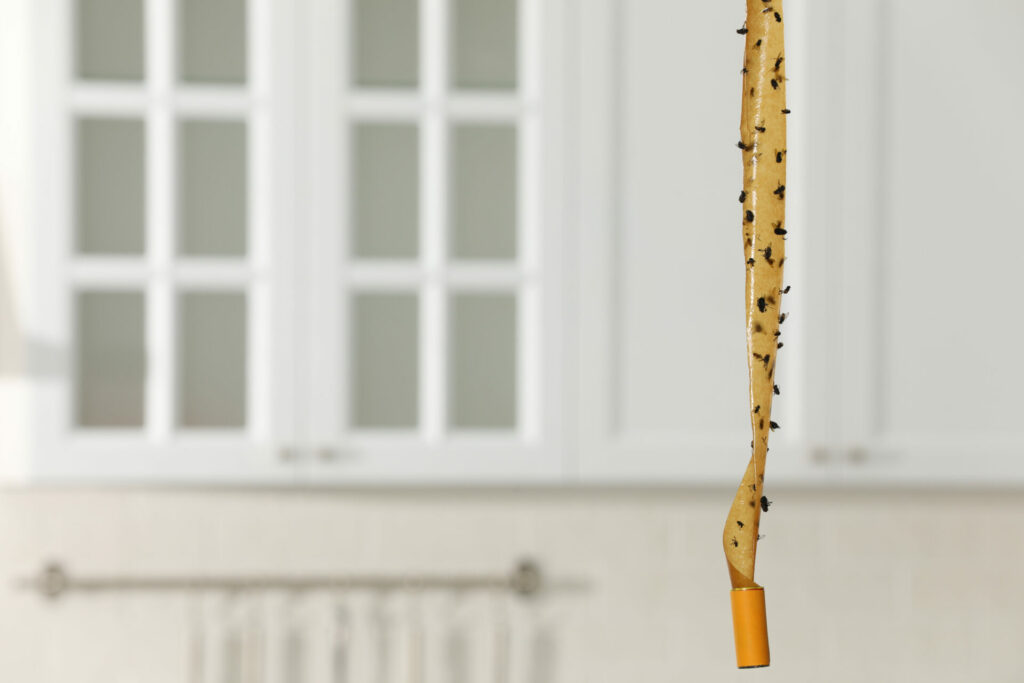
Flypaper is not glamorous, but neither is losing to insects. Sticky strips work well in garages, mudrooms, laundry rooms, utility spaces, and near trash zones. They are especially useful where air movement is low. Do not hang them where they can brush against food, hair, or your last bit of dignity.
3. Use a UV light trap indoors
A quality indoor light trap can help catch adult flies, especially in utility rooms or problem areas. Place it away from exterior doors and bright windows so it does not compete with sunlight. Also keep it away from food prep areas. Light traps are a support tool, not a magic wand, but they are useful when flies keep slipping indoors.
4. Use a targeted aerosol labeled for flying insects
If the infestation is more than a minor nuisance, a properly labeled indoor aerosol can knock down adult flies quickly. This is the key phrase: properly labeled. Always read the product label, remove or cover food and utensils if instructed, ventilate as directed, and keep children and pets away until the label says it is safe.
Do not assume that “more spray” equals “more effective.” That is not pest control. That is just bad chemistry and regret.
The Real Secret: Kill the Next Generation, Not Just the Ones Doing Flyovers
If you kill ten adult flies but leave behind the place where they are laying eggs, you have solved approximately nothing. The most effective way to kill flies long-term is to remove their breeding sites.
Clean up garbage aggressively
Take trash out often. Use garbage cans with tight-fitting lids. Wash the can itself, because sticky residue and mystery goo are basically a five-star fly nursery. If your outdoor bin smells like a science experiment, it is inviting trouble.
Pick up pet waste daily
If you have dogs, daily cleanup matters. Animal waste is one of the top fly breeding sites around homes. Skip one day, and the flies notice. Skip several, and they send postcards.
Store food properly
Keep produce in the refrigerator when practical. Wipe spills quickly. Do not leave ripe fruit, juice residue, or half-empty drink cans sitting around. Flies love the kind of “I’ll clean it later” energy that real life produces.
Rinse recycling containers
Soda cans, beer bottles, juice containers, and food jars can attract flies even when they look empty. Rinse them before putting them in a recycling bin. One sticky bottle is sometimes all it takes to support a fruit fly population that behaves like it has union protection.
Fix moisture problems
Wet organic buildup is fly heaven. Leaky pipes, standing water, slime in drains, soaked mops, damp rags, and muck under appliances can all support flies. Dry the area, clean it thoroughly, and fix the leak. Pest control without moisture control is like mopping during a flood.
How To Kill Fruit Flies
Fruit flies are tiny, fast-breeding, and wildly overconfident for something the size of punctuation.
What actually works
- Throw away overripe produce.
- Refrigerate fruit that does not need to stay on the counter.
- Rinse bottles and cans before recycling.
- Wash the inside of your trash can and recycling bin.
- Dry out sponges, mops, dishcloths, and towels.
- Clean under appliances and behind the fruit bowl.
Use a vinegar trap for adult fruit flies
A simple trap can help reduce adults while you remove the breeding source. Add a small amount of apple cider vinegar to a jar, add one drop of dish soap, cover the top with plastic wrap, and poke a tiny hole. The scent attracts them, and the soap breaks the surface tension. It is not a full solution by itself, but it is a useful sidekick.
If fruit flies return after you have cleaned the obvious places, check hidden spots: potato bins, onion bags, forgotten lunchboxes, the drip tray under the fridge, or the bottom of the recycling container. Fruit flies are tiny, but their talent for finding one neglected spill is honestly impressive.
How To Kill Drain Flies
Drain flies fool a lot of people because they look delicate and harmless. Unfortunately, if you see them, there is usually wet organic sludge somewhere nearby.
Start with cleaning, not spraying
The most effective fix is to scrub out the drain, especially the sides where organic buildup clings. Use a stiff drain brush or another mechanical cleaner. Focus on the slime layer, not just the open hole. A drain that “looks fine” from above can still be hosting larvae inside.
Check the usual problem spots
- Guest bathroom drains used infrequently
- Laundry room drains
- Floor drains in basements
- Shower drains
- HVAC condensate areas
- Under-sink leaks
- Clogged gutters near entry points
What not to do
Do not rely on random sprays as your main solution. If the sludge remains, the flies remain. Insecticide may kill some adults temporarily, but cleaning out the breeding site is what actually ends the problem.
How To Kill House Flies Around Doors, Windows, and Trash Areas
House flies usually breed outdoors and then enter the home looking for food or shelter. That means your strategy should hit both sides of the problem.
Inside the house
- Keep doors closed as much as possible.
- Repair torn window screens.
- Add door sweeps and weather stripping.
- Use a swatter, light trap, or sticky strips for adults.
- Keep food covered and surfaces wiped down.
Outside the house
- Keep garbage lids shut.
- Wash trash cans regularly.
- Do not let liquid pool in outdoor bins.
- Move dumpsters or large waste containers away from doors and windows if possible.
- Clean pet runs, kennels, and waste areas often.
If you decide to use an outdoor residual spray or bait, use only products specifically labeled for flies and for the exact area you are treating. Follow the label closely, keep pets away until the product has dried if the label says so, and never spray food contact surfaces, picnic tables, or cooking tools unless the product label explicitly allows it.
What Usually Does Not Work Very Well
The internet loves a dramatic fly hack. Flies, unfortunately, do not care about social media confidence.
Bags of water with pennies
Popular? Yes. Supported by good evidence? Not really. They are more decoration than dependable control.
Essential oils as a standalone solution
Some scents may discourage flies a little, but they are not usually enough to solve a real infestation. If your trash can is hosting a fly convention, peppermint vibes are not going to shut it down.
Ignoring the source and just spraying adults
This is the classic mistake. It feels productive for ten minutes. Then the next generation emerges like they were waiting backstage.
Using too many pesticides at once
Mixing products, overapplying them, or using the wrong product in the wrong place creates unnecessary risk for people, pets, and beneficial insects. Use the least risky effective method first, and only use pesticides exactly as directed on the label.
When To Call a Professional
Some fly problems are bigger than a DIY cleanup session.
Call a pest management professional if:
- you keep seeing large numbers of flies after cleaning and sealing entry points,
- you suspect a dead animal in a wall, attic, crawl space, or vent,
- the infestation seems to come from a drain, sewer, or plumbing defect you cannot access,
- you live near livestock, dumpsters, or another outdoor source you cannot control,
- or the flies are affecting a kitchen, restaurant-like setup, home business, or sensitive indoor space.
A good professional should focus on inspection, identification, sanitation, exclusion, and targeted treatment, not just show up with a superhero spray tank and a vague promise.
Best Practices Summary: The Smart Way To Kill Flies
If you want the shortest possible version, here it is:
- Kill visible adults with a swatter, sticky strip, light trap, or labeled aerosol.
- Identify whether you have house flies, fruit flies, drain flies, or another type.
- Remove garbage, pet waste, damp sludge, spoiled produce, or standing water.
- Seal entry points with screens, door sweeps, and better sanitation habits.
- Use pesticides only when needed and always according to the label.
That is how you stop a fly problem from becoming your home’s longest-running reality show.
Extra Experience Section: What People Learn After Fighting Flies the Hard Way
Most people do not become interested in how to kill flies because they love entomology. They become interested because one day they realize the house has entered a weird little battle of wills.
A common experience starts in the kitchen. Someone notices a few tiny flies near the fruit bowl and thinks, “No big deal.” Then they spray the air a little, wave a towel around, and move on. Two days later, there are more. That is when the fruit bowl gets blamed, then the trash can, then the sink, then possibly the laws of nature. In many homes, the actual fix turns out to be boring but effective: toss the overripe produce, rinse the recycling, wipe the sticky juice ring under the blender, and dry the mop. Suddenly the “mystery infestation” becomes a solvable housekeeping issue.
Another familiar story happens in bathrooms or laundry rooms. A homeowner sees fuzzy little flies resting on the wall and assumes they drifted in from outside. They spray a cleaner, kill a few, and think the crisis is over. But every morning there are new ones. Eventually they scrub the drain thoroughly and discover the problem was not random at all. It was the organic film inside the drain. That moment is both annoying and educational. Mostly annoying.
Pet owners often learn the same lesson outdoors. Even well-kept yards can attract flies if pet waste sits too long, garbage lids stay open, or a bin gets coated with residue. People sometimes spend money on traps and sprays first, only to realize that daily cleanup changes more than expensive gadgets do. The glamorous answer is rarely the real answer.
Homes near farms, livestock, dumpsters, or alley trash pickup have their own version of the struggle. In those cases, the residents may be doing many things right indoors, but the outside pressure is simply higher. The best results usually come from layering defenses: tighter screens, quicker door closing, cleaner cans, better waste handling, and a few targeted tools indoors to catch the flies that still sneak through.
The most useful experience people report is this: once you stop treating flies as random visitors and start treating them as a clue, the problem becomes much easier to solve. Flies are telling you something. They are saying there is food here, moisture here, waste here, or access here. As rude as that message is, it is helpful. Listen to it, fix the invitation, and the buzzing usually fades fast.
Conclusion
If you want to know how to kill flies, the answer is not one trick. It is a system. Kill the adults you can see, remove the material feeding the next generation, dry out damp breeding spots, and block new flies from getting inside. That combination works better than gimmicks, better than endless spraying, and better than hoping the problem gets bored and leaves on its own.
Flies may be persistent, but they are not magical. Once you remove their food, moisture, and access, they lose fast.

