
Body Care
How A Mother Would Handle “BBC Dad’s” Tricky Situation
Jul
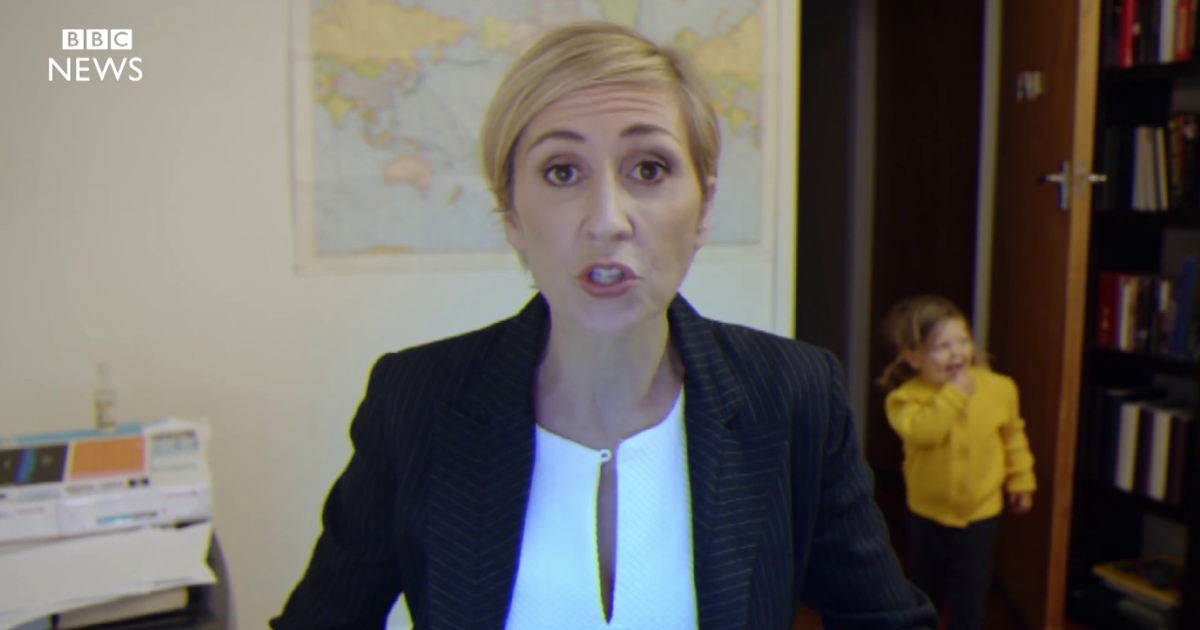
One of the internet’s all-time greatest home-office plot twists happened in 2017, when political scientist Robert E. Kelly was giving a serious live BBC interview about South Korea and his children burst into the room like tiny agents of chaos with excellent timing. The clip was short, hilarious, and instantly immortal. It had everything: a startled father, a fearless toddler, a baby on wheels, and a mother making a last-second save worthy of an action movie. The internet, naturally, did what the internet does best: replayed it a billion times, turned it into a meme, and then asked the next obvious questionwhat if the person in that chair had been a mom instead?
That question inspired the now-famous parody often described as “BBC Mom,” where the mother doesn’t panic, doesn’t break stride, and somehow continues the interview while parenting, multitasking, and basically running civilization. It was funny because it was exaggerated. It was memorable because it was not that exaggerated. The joke landed not just because moms are capable, but because so many women instantly recognized the deeper truth underneath it: mothers are often expected to keep everything going while appearing calm, competent, and mildly unbothered by the fact that a child is currently climbing the furniture.
Why the “BBC Dad” Moment Hit So Hard
The original clip worked because it smashed two worlds together: polished professional life and gloriously messy family life. For years, work culture tried to pretend these worlds were separate. Adults were supposed to show up polished, focused, and apparently produced in a lab with no toddlers in the background. Then along came this live interview, reminding everyone that behind many “serious professionals” is a door that may or may not be locked properly.
But what really gave the clip a second life was the reaction to it. Viewers didn’t just laugh at the interruption. They started debating what it revealed about parenting, gender, race, and the hidden rules of work. Some people praised Kelly for staying composed. Others focused on how quickly his wife had to swoop in and clean up the scene. Still others noticed how fast some viewers wrongly assumed she was the nanny rather than the children’s mother. Suddenly, the clip was no longer just slapstick; it had become a mirror for the assumptions people bring to family life and professional life alike.
The “BBC Mom” Parody Was a Joke With Teeth
The parody of how a mother would handle the same situation became popular because it pushed a familiar stereotype to comic extremes. In that version, mom keeps talking, keeps caregiving, keeps fixing things, and keeps the household spinning on its axis. The humor was broad, but the point was sharp: mothers are often expected to perform two jobs at once and make it look seamless.
That expectation did not come out of nowhere. In family after family, women still carry more of the daily household management, more child care time, and more of the invisible planning work that keeps everything from collapsing into a pile of permission slips and unmatched socks. Plenty of dads are far more hands-on than fathers were decades ago, and that matters. But the broader pattern still leans heavily toward moms doing more, especially in the everyday, repetitive, mentally exhausting tasks that never make it onto a résumé but somehow determine whether everyone has lunch, clean socks, and a pediatric appointment.
So, How Would a Mother Handle “BBC Dad’s” Tricky Situation?
The honest answer is: probably in several ways at once, because that is the whole point.
1. She would improvise faster because she has practice
Many mothers are trained by life to make rapid, weirdly specific decisions at Olympic speed. Can I answer this question, hand over crackers, prevent a sibling dispute, and mute my mic before someone screams “I licked the dog”? A lot of moms do not develop this skill because it is fun. They develop it because the household often quietly assumes they will.
In the imagined “BBC Mom” version, she might simply pull the child into frame, keep talking, and pivot without apology. Not because she is superhuman, but because apologizing would take extra time she does not have.
2. She would already be running the backup plan in her head
One of the biggest differences between visible labor and invisible labor is that only one of them gets applause. The visible problem in the BBC clip was the child entering the room. The invisible problem was everything that came before it: Who is watching the kids? Is the door locked? Is there a snack ready? What happens if the interview runs long? Is the baby occupied? Is someone overdue for a nap and about to become a very small dictator?
A mother in that scenario might not just be handling the interruption in the moment. She might also be mentally revising three backup plans while answering questions about geopolitics. It is not glamorous, but neither is looking for a missing shoe five minutes before a preschool drop-off, and yet here we are.
3. She might look calmer, but she is not necessarily less stressed
Here is the trap in the “moms can do it all” storyline: it sounds flattering, but it can also be a sneaky way of normalizing overload. A mother may appear smoother in a chaotic moment because she has been conditioned to absorb disruption without making the disruption everyone else’s problem. That does not mean the pressure costs her less. It usually means the cost is hidden better.
In other words, the world often reads maternal competence as effortless when it is actually highly skilled labor performed under sleep deprivation, deadline pressure, and the constant threat of somebody needing juice right now.
4. She would probably be judged by a different standard
If a dad gets interrupted by his kids on live television, people may see a lovable, relatable family moment. If a mom gets interrupted, she may still get warmth and sympathybut she is also more likely to be evaluated for whether she looks prepared, professional, organized, and sufficiently in control. Working mothers often live in a double bind: be fully present at work, be fully present at home, and whatever you do, do not let either audience catch you struggling.
That double standard is what gives the “BBC Mom” idea its staying power. The joke is not simply that a mother would keep going. The joke is that many people already expect her to.
The Bigger Story: Parenting Is Still Unevenly Distributed
To be fair, modern fatherhood has changed a lot. Fathers today generally spend more time on child care and housework than fathers did in previous generations, and many are deeply involved, emotionally present, and fully competent parents. That is real progress, and it deserves recognition.
But progress is not the same as parity. The broad American pattern still shows mothers spending more time on child care, more time on household activities, and more time doing the mental organizing that keeps family life operational. They are also more likely to report that work-family balance has become harder, especially when work happens from home and children are also home, which is less a schedule and more a survival challenge with Wi-Fi.
This is where the “BBC Mom” parody stops being just a funny sketch and starts feeling like cultural commentary. It captures the fact that motherhood is not only physical work. It is logistical work, emotional work, anticipatory work, and sometimes theater. The audience sees the interview. Mom sees the interview, the child’s mood, the next meal, the afternoon schedule, the laundry in the dryer, and the suspicious silence from the other room that is never a good sign.
What the Pandemic Changedand What It Revealed
If the original “BBC Dad” clip was ahead of its time in 2017, the pandemic made it look almost prophetic. By 2020, millions of people were working from home while caring for children, and the polished wall between work and family simply exploded. Kids wandered into Zoom calls. Babies made guest appearances in meetings. Snack negotiations happened off camera but definitely not out of mind.
For many parents, this was the first time employers and coworkers saw domestic reality in high definition. But even then, the burden was not always shared equally. Research and reporting during the remote-work era repeatedly showed that mothers were more likely than fathers to shoulder heavy child care duties during the workday, to report interruptions, and to experience work-family balance as harder to manage.
That context makes the “BBC Mom” joke feel even more relevant now. It was never just predicting that moms could manage the interruption. It was pointing out that moms often manage interruptions, work, caregiving, and household planning all at onceand then get congratulated with the grand prize of more expectations.
What Families and Workplaces Should Actually Learn From It
Stop romanticizing maternal overload
Calling moms superheroes sounds nice, but it can become a way of excusing unfair systems. If one parent is always the fixer, the planner, and the default responder, the household is not magically efficient. It is leaning on one person too hard.
Make the invisible work visible
Families tend to count tasks they can see: doing dishes, driving to school, giving baths. What gets missed is the mental load behind those tasks: remembering the school form, noticing the milk is low, booking the dentist appointment, packing the backup clothes, and realizing tomorrow is spirit day and nobody owns anything neon. Sharing labor fairly means sharing that thinking work too.
Normalize parenting at work for everyone
One useful lesson from the whole saga is that parenting should not be treated like a scandalous interruption to “real” work. Parents are workers. Workers are parents. The more workplaces accept that reality, the less likely women are to absorb all the pressure privately while pretending everything is fine.
Give dads room to be full parents, not backup adults
Another overlooked point is that fathers do not benefit from outdated scripts either. When dads are treated like occasional helpers instead of full partners, everyone loses. Mothers burn out, fathers get underestimated, and children absorb a lopsided model of adulthood. A better goal is not “moms can do it all.” It is “no one should have to.”
The Real Reason This Story Still Resonates
The enduring charm of the “BBC Dad” moment is that it captured family life in its natural habitat: badly timed, funny, and deeply human. The enduring power of the “BBC Mom” response is that it exposed something more complicated. Beneath the joke is a social truth many women know by heart: mothers are often expected to stay on script even while everything around them goes off script.
So how would a mother handle “BBC Dad’s” tricky situation? She might hold a child, answer the question, keep smiling, remember the grocery list, and mentally estimate whether the baby needs a nap. She might look unruffled because she has done versions of this ten thousand times before. And when it is over, she might still be the one who has to refill the snack drawer.
Which is exactly why the joke keeps landing. It is funny. It is familiar. And for a lot of mothers, it is barely fiction.
What This Looks Like in Real Life: A 500-Word Reality Check
Ask almost any working mother what she would do in a “BBC Dad” situation, and the answer usually sounds less like a heroic speech and more like a tactical operations manual. First, she would clock the child’s energy level before the meeting even began. Second, she would place snacks like strategic decoys. Third, she would make sure the loudest toy in the house had mysteriously disappeared. Fourth, she would begin the call already half-aware that all planning is temporary and toddlers consider boundaries an interesting suggestion.
Then the interruption happens anyway.
A preschooler barges in wearing rain boots and a superhero cape. A baby starts protesting the injustice of being placed on the floor for seven consecutive seconds. The dog chooses this exact moment to announce that a leaf moved outside. Mom keeps talking. Not because she is calm inside, but because momentum is all she has left. Her face says, “As I was saying about quarterly strategy,” while her brain says, “Who gave you markers, and why is the wall suddenly editorial?”
This is the part many mothers know well: the split-screen existence. One side is professional, articulate, and trying to finish a sentence. The other side is scanning for danger, listening for suspicious silence, remembering that one child hates the blue cup today, and calculating whether there is enough time after the meeting to switch the laundry before school pickup. The mental tabs stay open all day. None of them stop spinning just because a calendar says “focus time.”
What makes these moments especially exhausting is that mothers are often expected to absorb them smoothly. If they recover quickly, people say, “Wow, you handled that so well.” If they look frazzled, people quietly wonder whether they are stretched too thin. It is a performance review wrapped in a family moment. Charming for the audience, sometimes punishing for the person living it.
And yet mothers do keep finding ways through. They become masters of the one-handed email, the strategic mute button, the under-table snack pass, the camera angle that hides a pile of toy dinosaurs staging a coup. They learn to translate chaos into continuity. They become brilliant at making impossible overlaps look merely inconvenient.
Still, the most honest version of this story is not that mothers are magical. It is that they are experienced. Experience is what teaches a woman to answer a serious question while removing crayons from a heating vent. Experience is what lets her comfort a child, pivot a conversation, and mentally rewrite dinner plans in the same 30 seconds. The skill is real, but so is the workload that created it.
That is why the “BBC Mom” idea continues to resonate. It reflects a lived reality that countless women recognize instantly. The point is not that moms are better at interruptions because they were born with special powers. The point is that society has given many of them enough repetition to earn a black belt in interruption management. Funny? Absolutely. Impressive? No question. Sustainable? That is where the real conversation should begin.
Conclusion
“BBC Dad” became a viral classic because it was adorable, awkward, and painfully relatable. But the reason people still talk about how a mother would handle the same scene is that the question taps into something bigger than one interview. It touches the everyday reality of who gets interrupted, who adapts, who plans ahead, who cleans up the chaos, and who is expected to smile through it.
The sharpest takeaway is not that mothers are naturally better at multitasking. It is that many have been socially trained to carry more of the family’s visible and invisible labor. That is why the parody worked. It wasn’t just imagining a different parent in the chair. It was exposing a different set of expectations.
In the end, maybe the smartest response to the whole “BBC Dad” debate is this: the goal should not be admiring how gracefully mothers manage impossible moments. The goal should be building homes and workplaces where impossible moments are not automatically assigned to them in the first place.

