
Body Care
Hilarious Security Flaw In Counter Strike 2 Is Now Patched
Jun
Note: This article summarizes publicly reported information about the patched Counter-Strike 2 security flaw. It avoids exploit payloads, step-by-step abuse methods, and unsafe technical instructions.
Counter-Strike 2 is a game where one pixel, one sound cue, or one badly timed reload can ruin your evening. But for a brief and extremely strange moment, the most dangerous thing in a match was not an AWP angle on Dust II. It was a player name.
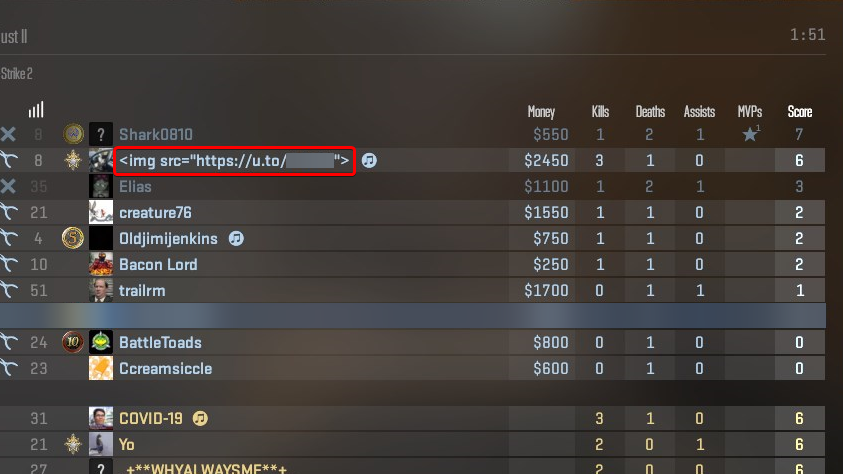
Yes, really. A hilarious security flaw in Counter-Strike 2 briefly allowed players to inject visual content into parts of the game interface through Steam names and in-game UI panels. What began as a goofy “look at this image popping up in a vote-kick box” prank quickly became a serious reminder that modern games are not just games anymore. They are sprawling software ecosystems with web-like interfaces, live services, account systems, inventories, matchmaking, and millions of users ready to click “Play” after work.
The good news: the Counter-Strike 2 security flaw is now patched. The better news: the incident gave the gaming world a perfect example of how even a silly bug can reveal a much bigger software lesson. The bad news: for a short time, CS2’s user interface behaved like it had accidentally wandered into a web security conference wearing a chicken hat.
What Happened With the Counter-Strike 2 Security Flaw?
The issue was widely reported as an HTML injection vulnerability affecting Counter-Strike 2’s user interface. In simple terms, certain areas of the game appeared to treat player-supplied text as something more powerful than plain text. Instead of displaying a name only as a name, parts of the interface could interpret embedded markup-like content and render it visually.
That distinction matters. A player name should behave like a label on a lunchbox. It should say “Mike,” “BananaPeek,” or “DefinitelyNotAFK.” It should not act like a tiny command center capable of pulling outside content into the game UI. When software fails to properly sanitize user input, the result can range from harmless-looking visual weirdness to privacy and security concerns.
Reports at the time suggested that some players used the bug to make images appear in vote-kick panels and other interface areas. That is the hilarious part: a competitive shooter briefly turned into a cursed PowerPoint presentation. But there was also a more serious side. Because remote visual content can cause a client to request data from an outside server, the flaw raised concerns about exposing IP addresses and enabling harassment such as targeted connection disruption.
Why Everyone First Thought “XSS”
When the issue spread across gaming communities, many players immediately called it an XSS exploit. XSS, short for cross-site scripting, is a classic web security problem where untrusted input is treated as executable or renderable content in a dangerous way. In web applications, XSS can be used to steal data, impersonate users, or manipulate what victims see.
In the CS2 case, later reporting described the bug more narrowly as HTML injection rather than full-blown arbitrary script execution. That is an important difference. HTML injection can still be bad, especially when it allows unwanted images, external requests, or privacy leaks. But it is not automatically the same as an attacker fully running code on another player’s computer.
This is where online panic did what online panic does best: sprinted downhill wearing roller skates. Rumors quickly inflated the risk. Some players feared account theft, skin theft, remote code execution, and every other nightmare usually reserved for suspicious browser pop-ups that say your computer has 47 viruses and only one miracle toolbar can save it.
The more balanced view is this: the flaw was embarrassing, real, and worth patching quickly. It was not something to casually ignore. At the same time, the best public information suggested it was mainly an interface injection issue, not a confirmed magic button for stealing everyone’s Dragon Lore dreams.
Why the Flaw Was Funny and Serious at the Same Time
The reason this story traveled so fast is that it had the perfect internet recipe: a beloved game, a weird visual result, a scary security label, and screenshots that looked ridiculous. Counter-Strike has always had a culture of sharp aim, sharper trash talk, and community chaos. A bug that made player names behave like little web pages felt absurd enough to become instant gaming folklore.
But the seriousness comes from trust. Players trust a game client to render game information safely. A name should be inert. A vote panel should not become a billboard for whatever someone else wants to load. The moment user-controlled content can alter another player’s interface, the game has crossed from “funny bug” into “security design problem.”
Imagine walking into a ranked match expecting crisp utility usage and clean crosshair placement, only to have the UI display unwanted images because someone discovered that text fields were not locked down properly. That is not just annoying. It can affect player experience, streamer safety, tournament integrity, and confidence in the game’s technical polish.
The Valve Patch: What Changed?
Valve reportedly addressed the CS2 HTML injection flaw with a small update. After the patch, injected content appeared to be treated as ordinary text rather than being interpreted by the interface. That is exactly what should happen: when a player enters a name, the game should display that name as a string, not render it as markup.
In security language, this is about sanitization and output encoding. In normal-person language, it means the game should look at suspicious user input and say, “Nice try, keyboard goblin, but you are just text now.”
The fix appears to have restored the expected boundary between user input and interface rendering. That boundary is one of the most basic rules in secure software development. If users can type it, upload it, rename themselves with it, or paste it into a profile field, the software should treat it as untrusted until proven otherwise.
Why Counter-Strike 2’s Panorama UI Matters
Counter-Strike 2 uses Valve’s Panorama UI framework, a modern interface system influenced by web technologies such as HTML, CSS, and JavaScript. This kind of approach can be powerful. It helps developers create flexible menus, animated panels, scalable layouts, and visually rich interfaces without reinventing every button from scratch.
There is nothing automatically wrong with using web-like UI concepts inside games. In fact, many modern games use similar approaches because they make interfaces easier to design and iterate. The problem begins when a system that can render rich content receives untrusted player input without proper controls.
A game UI is not a simple scoreboard anymore. It may show player names, avatars, inventory items, vote panels, chat snippets, team data, event prompts, live service messages, marketplace elements, and tournament overlays. Every one of those display surfaces is a potential place where user-generated content can appear. If one of those surfaces forgets to sanitize input, the result can be messy.
How a Tiny Input Bug Becomes a Big Community Event
Security flaws in popular games spread at warp speed because players are excellent testers, chaotic researchers, and professional overreactors all at once. The moment someone finds a strange behavior, the clip goes to social media. Then comes the Reddit thread. Then comes the YouTube warning. Then someone says “do not launch the game.” Then someone else says “it is harmless.” Then a third person claims their toaster has been compromised.
That messy communication cycle is part of modern game security. Developers patch. Players speculate. Security writers investigate. Streamers demonstrate the visible part. Communities argue about whether the risk is real, exaggerated, or somehow caused by the matchmaking system, because every CS2 conversation eventually blames matchmaking.
In this case, the community reaction helped bring attention to the issue quickly. While public discussion can sometimes become noisy, it also creates pressure for fast fixes. The key is separating useful reporting from panic. A screenshot of a weird vote panel is useful. A claim that everyone’s Steam inventory is doomed without evidence is not.
What Players Should Do After the Patch
For regular Counter-Strike 2 players, the patched flaw is a reminder to keep the game updated and avoid treating social media rumors as official technical analysis. If Valve pushes an update, install it. If a security issue is being actively discussed, do not download random “fixes,” third-party tools, or miracle anti-exploit files from strangers. That is how a small scare turns into a real problem.
Players should also use basic account safety habits. Steam Guard, strong passwords, unique login credentials, and caution around trade links still matter more than most dramatic exploit rumors. Many gaming security disasters do not begin with elite hackers in dark rooms. They begin with someone clicking a fake tournament invite at 2:00 a.m. because the profile picture had a nice knife skin.
Another practical lesson is to understand what an IP address leak can and cannot do. An exposed IP address is not the same as handing over your bank account. But it can still be used for harassment, rough location estimation, or connection attacks. That is why privacy issues deserve attention even when they are not catastrophic.
What Game Developers Should Learn
For developers, the CS2 incident is a neat little security case study wrapped in a clown costume. The lesson is simple: never trust user-controlled text. Player names, clan tags, chat messages, profile bios, custom lobby titles, workshop descriptions, and uploaded metadata should all be treated as potentially hostile input.
Games are especially vulnerable to this kind of oversight because they blend entertainment design with internet-scale software complexity. A UI designer wants rich text. A backend engineer wants identity data. A gameplay programmer wants the vote panel to show names clearly. A community feature wants profile integration. Somewhere in that chain, one small assumption can turn “display this name” into “render whatever this name contains.”
The safest default is boring, and boring is beautiful. Display user input as plain text unless there is a strong reason not to. If rich formatting is allowed, use strict allowlists, context-aware encoding, and dedicated sanitization libraries. Test every place user data appears, not just the obvious chat box. The bug may not live where players type; it may live where the game later displays what they typed.
Why This Story Fits Counter-Strike So Perfectly
Counter-Strike has always been a game of tiny details. A pixel gap can win a round. A footstep can lose a clutch. A smoke lineup can decide an economy swing. So it is oddly poetic that a tiny text-handling mistake created such a loud moment. The game is famous for precision, and this bug was the software equivalent of missing a one-tap on an AFK opponent.
It also arrived during a period when CS2 was under intense scrutiny. Players were already debating subtick, performance, missing features, anti-cheat concerns, and whether the transition from CS:GO felt complete. A security-flavored UI bug landed on top of those conversations like a flashbang through a skylight.
Still, the fast patch matters. Live-service games are never frozen. They change constantly, and every change can create new bugs. What matters is how quickly serious issues are identified, confirmed, fixed, and communicated. Valve’s reported update showed that the problem was not allowed to linger for long.
The Bigger Picture: Games Are Now Security Products
Modern games are not isolated entertainment boxes. They are social networks, marketplaces, streaming content sources, identity systems, payment-adjacent platforms, and competitive environments. Counter-Strike 2 is free to play, connected to Steam, supported by inventories and cosmetics, and played by a massive global community. That makes security part of the product, not an optional side quest.
When a bug affects a game like CS2, it reaches casual players, professional competitors, streamers, skin traders, tournament organizers, and security researchers. A funny image in a vote panel can become a privacy concern within hours. A small UI mistake can become a headline because the audience is huge and the trust surface is broad.
That is why the patched Counter-Strike 2 security flaw deserves more than a laugh. It deserves a laugh, absolutely, because the idea of a shooter UI being bullied by a player name is objectively ridiculous. But it also deserves analysis, because it shows how security basics matter everywhere, including places that look like pure entertainment.
Experience Section: What This Incident Feels Like as a Player and Tech Observer
Anyone who has spent time in online shooters knows that players will test every boundary they can find. Give them a wall, and they will try to boost over it. Give them a scoreboard, and they will try to break the formatting. Give them a name field, and someone will eventually ask, “What happens if I put something cursed in here?” The CS2 HTML injection incident feels like the natural result of that endless curiosity meeting a tiny gap in input handling.
From a player’s perspective, the funniest part is how harmless the first wave probably looked. You queue into a match, someone starts a vote, and suddenly the interface shows something it absolutely should not show. It is the kind of bug that makes everyone in voice chat stop arguing about B-site and start yelling, “Wait, what is that?” For a few seconds, the competitive seriousness of Counter-Strike collapses into pure internet theater.
But the mood changes when the privacy angle appears. A prank that only displays a silly image is one thing. A trick that can force other clients to contact an outside resource is another. Most players do not think about their game client making background requests because a UI panel rendered something incorrectly. They should not have to. Good software protects users from that kind of surprise.
This incident also highlights a familiar pattern in gaming communities: technical uncertainty creates drama. Some players know enough to identify the general category of bug but not enough to measure the real risk. Others know very little but post with enormous confidence. The result is a fog of warnings, jokes, half-truths, and panic. The best response is calm caution: update the game, avoid spreading unverified claims, and wait for reliable technical reporting.
For developers and site owners, the lesson is wonderfully reusable. If you run a website, a game server, a forum, a quiz platform, or any system where users can submit names and messages, treat this CS2 flaw as a reminder. Never assume “small text field” means “small risk.” Usernames travel. They appear in dashboards, emails, leaderboards, exports, notifications, overlays, and admin panels. A field that looks boring in one place may become dangerous in another.
As a tech story, the CS2 bug is memorable because it is easy to understand without being trivial. You do not need a PhD in cybersecurity to see why a name should not turn into rendered interface content. That clarity makes it a great teaching example. Security is often explained through abstract rules, but this one is visual: plain text went in, unexpected UI behavior came out, and everyone learned why sanitization exists.
In the end, the experience is a mix of amusement and respect. Amusement because the flaw was weird, visible, and very Counter-Strike in its community chaos. Respect because the fix appears to have arrived quickly, and because the incident reminded millions of players that software security is not only about banks, browsers, and operating systems. Sometimes it is about making sure “xXHeadshotDudeXx” remains a name, not a tiny haunted webpage with a crosshair.
Conclusion
The hilarious security flaw in Counter-Strike 2 is now patched, but its lesson should stick around. The incident showed how a simple user input field can become a security problem when software treats untrusted text as renderable content. It also showed how quickly a gaming community can detect, amplify, misunderstand, and help pressure-test a live service.
For players, the takeaway is simple: keep CS2 updated, protect your Steam account, and be skeptical of dramatic exploit rumors. For developers, the message is even simpler: sanitize input like your reputation depends on it, because one day, it might.
Counter-Strike 2 will continue to be judged by its shooting, maps, movement, matchmaking, and competitive integrity. But for one odd moment, its biggest talking point was a player name that behaved badly. The bug was patched, the memes survived, and the internet gained another perfect example of why security people keep repeating the same boring sentence: never trust user input.

