
Beauty Unlocked
Companies Already Have the Ability to Decode Your Brainwaves
Jul
For years, “mind reading” belonged to science fiction, questionable carnival acts, and that one friend who always claims to know what you are thinking. Today, the reality is less theatrical but considerably more important: companies can already collect brain signals and use algorithms to infer certain intentions, mental states, and patterns of cognitive activity.
That does not mean a random corporation can secretly extract your childhood memories or discover what you genuinely thought about yesterday’s meeting. Current brainwave decoding is narrower, more structured, and highly dependent on sensors, training data, context, and user cooperation. Still, it is real enough that consumer headphones can estimate focus, medical brain-computer interfaces can translate intended movement into cursor control, and experimental systems can turn neural activity associated with speech into audible words.
The age of neural data has arrived. It simply showed up wearing headphones instead of a silver science-fiction helmet.
What Does It Mean to Decode Brainwaves?
Brainwave decoding is the process of recording neural activity and using statistical or machine-learning models to identify meaningful patterns within it. The word “decode” can sound more magical than the underlying process. In practice, a system usually looks for a limited signal associated with a particular task, such as paying attention, imagining a hand movement, recognizing a visual stimulus, or attempting to speak.
The system does not begin with a perfect dictionary translating every burst of electricity into a private thought. Instead, researchers collect labeled examples. A person may be instructed to imagine moving a cursor left, right, up, or down while sensors record brain activity. An algorithm then learns which patterns tend to accompany each intended direction.
EEG Reads Patterns, Not Complete Thoughts
Many commercial products use electroencephalography, or EEG. Electrodes placed on or near the scalp detect tiny voltage changes produced by groups of active neurons. EEG is useful because it is noninvasive, relatively portable, and fast enough to follow changes in brain activity in real time.
However, scalp EEG is also noisy. Hair, muscle movement, blinking, poor sensor contact, and electrical interference can affect the recording. It captures broad patterns from large populations of neurons rather than listening to individual brain cells whispering confidential information.
That is why a consumer EEG headset may estimate whether someone appears focused, fatigued, relaxed, or mentally overloaded, but it generally cannot produce a transcript of that person’s uncensored internal monologue. Your grocery-list thoughts remain reasonably safe, although your declining attention during a 94-slide presentation may be less mysterious.
Implants Produce More Detailed Signals
Implanted brain-computer interfaces can obtain stronger and more precise signals because their electrodes sit on, inside, or near brain tissue. These systems are being investigated primarily as medical tools for people with paralysis, spinal cord injuries, stroke, or conditions such as amyotrophic lateral sclerosis.
Because invasive devices can record activity from areas responsible for movement or speech, algorithms may decode a user’s intention to move a hand, select a letter, operate a computer, or attempt to say a word. These devices require surgery or another medical procedure, extensive calibration, clinical supervision, and active participation. They are not covert mind-reading machines hiding inside the office coffee maker.
What Companies Can Already Infer From Brain Activity
Commercial neurotechnology exists on a spectrum. At one end are wellness and productivity products that analyze broad mental states. At the other are investigational medical implants designed to restore communication or device control. Both involve brainwave decoding, but their capabilities and risks are dramatically different.
Focus, Attention, Fatigue, and Cognitive Workload
Consumer neurotechnology companies already offer EEG-enabled headbands, headphones, earbuds, and research headsets. Products from companies such as Neurable and EMOTIV are designed to record brain signals and translate them into metrics related to focus, relaxation, cognitive stress, engagement, or mental workload.
Neurable, for example, has developed headphones containing EEG sensors and software that tracks changes in focus. The product can prompt a user to take a break when sustained concentration appears to be declining. EMOTIV markets EEG systems for research, workplace studies, wellness applications, and cognitive-performance analysis.
These products are not reading the subject of your thoughts. They are classifying patterns that correlate with particular mental conditions. A focus score might indicate that your attention is fading, but it does not reveal whether you are distracted by lunch, an overdue invoice, or a deeply regrettable message sent at 2 a.m.
Intended Movement and Computer Control
Companies developing implanted brain-computer interfaces have demonstrated that neural signals associated with intended movement can control digital devices. Neuralink’s investigational interface is being studied as a way for people with paralysis to operate computers and other external equipment through movement intention.
Synchron uses an investigational device called the Stentrode, which is placed in a blood vessel near the brain’s motor cortex. Its system is designed to detect intended movement and convert it into commands for activities such as selecting items on a screen, browsing, or communicating.
Precision Neuroscience is also developing a thin, high-density interface placed on the brain’s surface. The company reports work involving real-time decoding of speech- and movement-related signals, although its system remains investigational rather than an ordinary consumer product.
This is genuine decoding. The user intends an action, electrodes capture the associated activity, and software translates the pattern into a command. It is also highly task-specific. Thinking vaguely about vacation will not cause the computer to purchase a plane ticketat least not unless somebody has made several astonishingly irresponsible design decisions.
Attempted Speech and Inner Speech
Some of the most impressive advances involve speech neuroprostheses. Research teams associated with Stanford, UC Berkeley, UC San Francisco, and federally supported clinical programs have developed systems that translate brain activity related to attempted speech into text or synthesized audio.
In one NIH-reported advance, a brain-to-voice system generated speech with very little delay. The system decoded a large vocabulary at approximately 47.5 words per minute and a limited 50-word vocabulary at more than 90 words per minute. The work was designed to restore natural communication for a person with severe paralysis, not to extract secret thoughts from an unsuspecting shopper.
Researchers have also shown that activity associated with inner speech can sometimes be detected by implanted electrodes. Importantly, current systems do not reliably decode unrestricted, rapidly changing thoughts. Studies commonly involve a small number of participants, controlled prompts, individual calibration, limited vocabularies, and sensors implanted for medical research.
Scientists are already considering protective designs, including deliberate activation cues or mental “passwords” that allow decoding only when the user intends to communicate. That distinction matters: a helpful communication system should act like a microphone with an on switch, not a roommate who listens through the wall.
How Brainwave Decoding Actually Works
Most brain-computer interfaces follow a similar pipeline, although the hardware and complexity vary considerably.
- Signal collection: EEG sensors, implanted electrodes, or other instruments record neural activity.
- Signal cleaning: Software reduces noise caused by blinking, muscle activity, movement, or environmental interference.
- Feature extraction: The system identifies patterns such as frequency changes, timing differences, or activity across specific sensor locations.
- Model training: An algorithm learns how particular patterns correspond to labeled tasks or mental states.
- Prediction: New signals are classified as an intended action, a cognitive condition, a letter, a word, or another predefined output.
- Feedback: The user sees or hears the result, helping both the person and the model improve performance.
Artificial intelligence has accelerated this process. Modern models can analyze complex, rapidly changing neural data far more efficiently than older rule-based systems. They can also adapt to individual users, whose brain patterns may differ substantially.
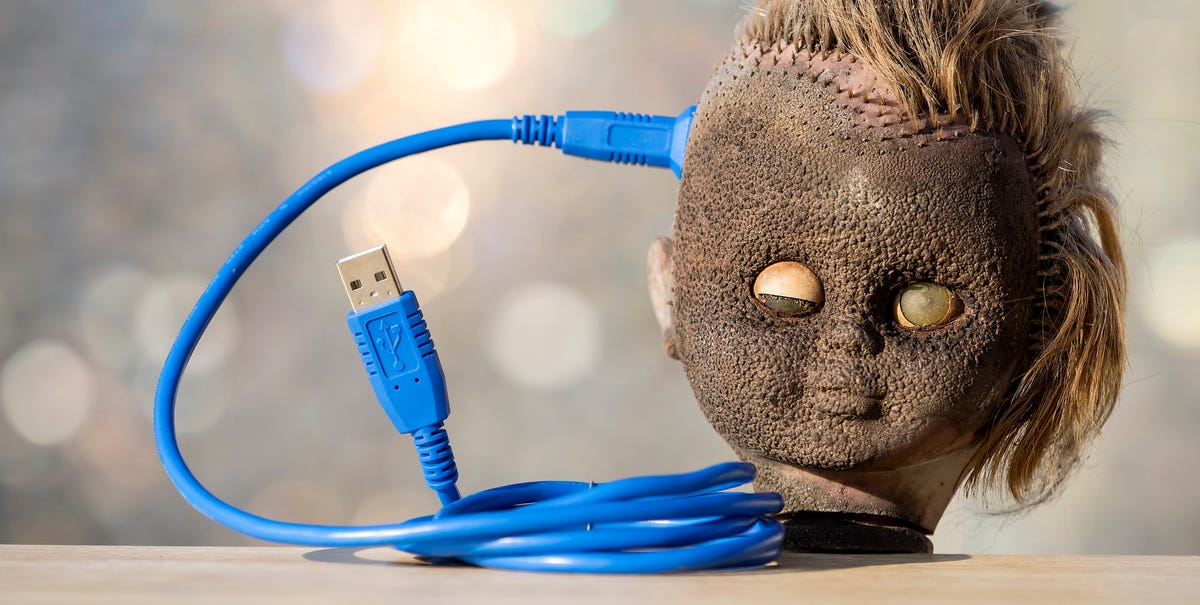
Personalization is essential. A model trained on one person’s neural activity may perform poorly when applied to someone else. Even the same person’s signals can change with fatigue, medication, electrode placement, distraction, illness, or the passage of time. The brain is not a standardized USB accessory, despite Silicon Valley’s apparent disappointment.
Why Businesses Want Neural Data
Neural data could support extraordinary medical benefits, but it also has obvious commercial appeal. Companies already compete to understand what users click, watch, buy, skip, and abandon. Brain-derived information adds another possible layer: how strongly a person reacts, how hard a task feels, when concentration fades, or whether an experience produces stress.
Product Testing and User Experience
Companies can use EEG in controlled research to compare reactions to advertisements, websites, packaging, games, vehicles, or physical environments. Neural measurements may be combined with eye tracking, heart rate, facial expressions, and conventional surveys.
This can help researchers study attention and cognitive workload without relying entirely on what participants remember afterward. A person may say an app was easy to use while their physiological signals suggest the checkout process required the mental effort of assembling furniture without instructions.
Workplace Monitoring
Workplace applications are among the most controversial possibilities. Brain-sensing devices might be used voluntarily to help employees understand fatigue, reduce cognitive overload, or schedule breaks. The same technology could become coercive if employers use it to rank workers, evaluate productivity, or penalize normal fluctuations in attention.
A focus metric is not a complete measure of value. Creative thinking, emotional processing, collaboration, and problem solving do not always resemble steady concentration. An employee staring out the window may be mentally absentor may be solving the problem everyone else has been attacking with spreadsheets.
Personalized Advertising
Neural responses could theoretically be combined with browsing history, location, purchases, and demographic information to refine advertising profiles. Current consumer devices do not provide advertisers with a flawless pipeline into private beliefs, but neural data may still reveal reactions that users did not intentionally communicate.
The most immediate concern is not a billboard hearing your thoughts from across the highway. It is function creep: data collected for meditation, gaming, research, or productivity may later be repurposed for profiling, product development, insurance decisions, or marketing.
What Brain-Decoding Companies Still Cannot Do
The phrase “decode your brainwaves” should not be confused with universal mind reading. Today’s systems face major limitations:
- They usually require sensors touching or implanted near the body.
- They perform best during specific, predefined tasks.
- They often need substantial training data from the individual user.
- Consumer EEG signals are vulnerable to noise and movement.
- Accuracy varies across people, environments, and mental conditions.
- Most systems classify broad states or constrained choices rather than unrestricted thoughts.
- Implanted systems remain experimental and are designed mainly for serious medical needs.
Companies cannot generally place a standard headset on an uncooperative person and download an accurate autobiography. Brain activity is distributed, dynamic, highly individual, and affected by context. The same region may participate in several functions, while one thought can involve multiple networks.
Marketing language can also outrun scientific evidence. Terms such as “mind reading,” “brain optimization,” and “cognitive enhancement” deserve careful scrutiny. Consumers should look for peer-reviewed validation, independent testing, clearly described limitations, and transparent explanations of what a device measures.
Neural Data Privacy May Become the Next Major Digital Rights Battle
Brain data is unusually sensitive because it may reveal information about health, emotion, cognitive performance, disability, fatigue, or reactions to stimuli. It can also be difficult to change. You can reset a password after a breach; replacing your characteristic neural patterns is a slightly more demanding weekend project.
A Neurorights Foundation assessment of consumer neurotechnology examined the policies of 30 companies and found significant gaps in privacy practices and user protections. Concerns included broad data-use permissions, limited deletion rights, weak restrictions on sharing, and uncertainty about how neural information might be used to train future algorithms.
HIPAA Does Not Cover Every Brain-Sensing Product
Many consumers assume that anything resembling health information is automatically protected by the Health Insurance Portability and Accountability Act. HIPAA generally applies to covered health care providers, health plans, clearinghouses, and certain business associates. A consumer wellness app or headset company may fall outside that framework.
Other laws and Federal Trade Commission authority may still apply, especially when companies make deceptive promises or use data unfairly. Nevertheless, protections can depend on where a person lives, what kind of company collects the information, and how the product is categorized.
States Have Started Protecting Neural Information
Colorado became the first U.S. state to amend a comprehensive privacy law specifically to protect neural data as sensitive biological information. California also expanded its privacy framework to address neural information, including data generated from the central and peripheral nervous systems.
These laws are important early steps, but regulation remains fragmented. Definitions differ, exceptions may apply, and many organizations are still deciding how neural data should be separated from ordinary biometric, health, or behavioral information.
How Consumers Can Protect Their Brainwave Data
People do not need to panic and wrap every EEG headset in aluminum foil. They should, however, evaluate neural devices with the seriousness normally reserved for health records, financial information, and biometric identifiers.
- Read the privacy policy: Check what raw signals, derived scores, account details, and device information are collected.
- Look for deletion controls: Determine whether both raw brain data and algorithmic profiles can be erased.
- Check data-sharing language: Watch for broad references to affiliates, advertising partners, research partners, or future business purposes.
- Review cloud requirements: Find out whether processing occurs locally or whether recordings are uploaded to company servers.
- Limit unnecessary permissions: A meditation headband probably does not need unrestricted access to contacts, location, and every photo from your cousin’s wedding.
- Separate voluntary wellness from employment: Workers should understand who can see workplace neural metrics and whether participation is genuinely optional.
- Prefer transparent companies: Strong providers explain security, encryption, retention periods, research practices, and model-training policies in plain language.
The Future of Brainwave Decoding
The most valuable applications of brain-computer interfaces may be medical. Faster speech neuroprostheses could restore conversation to people who cannot speak. Movement decoding could help users operate computers, wheelchairs, robotic arms, or smart-home systems. Neural interfaces may also improve rehabilitation by connecting intended movement with electrical stimulation or assistive devices.
Consumer uses will probably expand as sensors become smaller and disappear into headphones, earbuds, helmets, glasses, and other everyday objects. Algorithms will become better at detecting fatigue, attention shifts, stress patterns, and responses to digital content.
The critical question is no longer whether companies can decode anything useful from brain activity. They already can. The question is who controls the resulting data, how much users understand, and whether consent remains meaningful after a product changes owners, policies, or business models.
Neurotechnology does not need to become perfect mind reading to affect privacy. It only needs to reveal something valuable that a person did not intend to share.
Conclusion: Your Brain Is Not an Open Book, but It Is Producing Data
Companies already have the ability to decode brainwaves in limited but meaningful ways. Consumer EEG devices can estimate attention, fatigue, cognitive workload, and relaxation. Investigational implants can translate intended movement into computer commands. Advanced research systems can convert speech-related neural activity into text or synthesized audio for people with paralysis.
None of this amounts to effortless, universal thought extraction. Current technology requires hardware, context, training, and carefully defined goals. Yet the distance between “mental activity” and “commercial data” has undeniably narrowed.
The responsible path is not to reject neurotechnology. Its medical potential is too valuable, and many consumer applications may be useful when they are voluntary and honestly described. The better approach is to demand strong consent, narrow data collection, independent validation, deletion rights, security, and legal protection before brain-sensing products become as ordinary as fitness trackers.
After all, humanity spent decades learning not to reuse the same password everywhere. We should probably establish a few rules before uploading signals from the organ that creates the passwords.
Experience: What Using Brainwave-Decoding Technology Can Feel Like
A practical encounter with consumer brainwave technology is usually less dramatic than the phrase “mind-reading device” suggests. Imagine putting on a pair of EEG-enabled headphones before beginning a demanding writing, coding, or design session. The sensors need steady contact with the skin, the companion app may require a short calibration period, and unnecessary movement can interfere with the signal. Nobody announces that your deepest secrets have been located. Instead, a graph begins to move.
During the first few minutes, it is tempting to watch the focus score constantly. This creates a wonderfully silly problem: monitoring whether you are concentrating becomes the main reason you are not concentrating. After the novelty fades, the device becomes more useful as a background tool. Long periods of demanding work may produce a recognizable rise in its focus metric. Interruptions, phone notifications, or mental fatigue can correspond with a drop.
The experience also reveals the limits of automated interpretation. A low score does not always mean laziness or distraction. Quiet reflection can look different from intense task engagement. Reading a complicated paragraph, planning the next step of a project, and staring blankly at the screen may produce overlapping signals even though the mental experiences are very different.
Movement creates another reality check. Adjusting the headphones, tightening the jaw, blinking repeatedly, or shifting posture may introduce artifacts. Consumer software attempts to clean the signal, but brainwave data is not captured in a laboratory vacuum. The human attached to the brain insists on breathing, moving, scratching, and occasionally sneezing at the worst possible moment.
Still, repeated sessions can reveal useful personal patterns. A user may discover that deep-focus periods are shorter in the afternoon, that certain environments create more cognitive strain, or that regular breaks improve sustained performance. These insights can feel similar to using a fitness tracker: the value lies less in any single number and more in the trends that emerge over time.
The privacy questions become more tangible once the app accumulates several days of recordings. Where is the raw EEG stored? Does the company retain only a simplified focus score, or does it preserve the complete signal? Can the information be used to improve commercial models? Will deleting the account erase everything, including derived profiles and research copies?
Those questions matter even when the product works exactly as promised. A device does not need to identify individual thoughts to create a sensitive record. Patterns of fatigue, stress, concentration, sleep, and cognitive performance may reveal information a person would not willingly place in an advertising profile or employment file.
The most balanced reaction to the experience is neither panic nor blind enthusiasm. Brain-sensing devices can provide interesting feedback and may eventually become valuable tools for accessibility, safety, learning, and personal wellness. At the same time, their scores should be treated as estimates rather than verdicts. A focus algorithm does not understand ambition, creativity, grief, boredom, motivation, or why the neighbor decided that 7 a.m. was the ideal time to operate a leaf blower.
Using brainwave-decoding technology makes one fact clear: the device is not reading the mind like a book. It is observing patterns, making calculated guesses, and improving those guesses with data. That may sound less sensational than mind reading, but it is exactly why thoughtful privacy rules are needed now rather than after neural wearables become ordinary.

