
Beauty Tools & Accessories
5 Favorites: Bedside Shelves (in Lieu of Tables)
Aug
A traditional nightstand can be useful, handsome, and surprisingly talented at collecting half-empt, and three novels you swear you are still reading. Unfortunately, it can also consume precious floor spaceespecially in a compact bedroom where the path between the bed and wall already requires choreography.
That is where bedside shelves earn their place. Mounted on the wall, attached to the bed, or incorporated into a headboard, these small-space nightstand alternatives provide a practical landing spot without adding another bulky piece of furniture. They keep the floor visible, make cleaning easier, and can visually expand a tight bedroom. A well-chosen floating bedside shelf also encourages restraint: phone, book, water, lampdone. Your collection of expired coupons must find another home.
The following five favorites cover different rooms, routines, and decorating styles. Some offer hidden storage, while others are intentionally minimal. The goal is not to find the biggest shelf that will fit. It is to choose the smallest design that comfortably supports what you actually use at night.
Why Choose a Bedside Shelf Instead of a Table?
A wall-mounted nightstand does more than save a few inches. Because the floor remains open beneath it, the room appears lighter and less crowded. That visual breathing room is especially valuable in apartments, attic bedrooms, guest rooms, converted offices, and any space where a standard 20-inch-wide nightstand feels roughly the size of a refrigerator.
Bedside shelves also give you control over height. Rather than accepting the fixed dimensions of a table, you can mount a shelf level with the top of your mattress or slightly above it. That makes a phone, glass, or book easy to reach without performing a midnight shoulder exercise.
Other benefits include:
- Easier cleaning: A vacuum or mop can move freely beneath the shelf.
- Better use of narrow spaces: Shallow shelves fit beside beds that are close to a wall, closet, radiator, or doorway.
- Flexible styling: Wood, metal, painted MDF, acrylic, and upholstered designs can complement almost any bedroom.
- Custom installation: The shelf can be positioned for a low platform bed, tall mattress, bunk bed, or adjustable bed.
- Less clutter: Limited surface area encourages you to keep only genuine nighttime essentials nearby.
What to Consider Before Installing a Floating Bedside Shelf
Measure Your Bed at Its Finished Height
Measure from the floor to the top of the mattress after the bed is fully assembled, including the foundation, topper, and bedding. A bedside surface generally feels most comfortable when it is close to mattress height. Mounting it several inches too low can make reaching awkward, while placing it too high increases the chance of introducing your elbow to the shelf before sunrise.
Temporarily tape a cardboard template to the wall and test the position while sitting and lying in bed. This low-tech rehearsal is far cheaper than filling an incorrectly placed hole and pretending it was always part of the design.
Choose the Right Depth
For basic essentials, a shelf approximately 8 to 12 inches deep is often sufficient. A narrow picture ledge may work for a phone and reading glasses, but it will not safely support a wide lamp or large tumbler. Deeper shelves provide more usable space, yet they can intrude into the walkway or become a forehead hazard.
Use the objects you plan to store as your measuring tools. Place them together on a piece of paper, trace the minimum footprint, and add a little breathing room. This produces a more realistic shelf size than shopping by optimism.
Plan for Lighting and Charging
A floating shelf works best when it is not forced to carry an oversized table lamp. Pair it with a wall sconce, pendant light, clip-on lamp, or rechargeable lamp. Moving the light source off the shelf leaves room for the objects you reach for in the dark.
For charging, look for a shelf with a cable opening, rear gap, integrated power access, or raised edge that prevents a cord from sliding behind the bed. Adhesive cable clips can keep wires against the underside of the shelf. A neatly routed cable is a small detail, but it prevents your charger from disappearing nightly into the under-bed wilderness.
Match the Hardware to the Wall
A bedside shelf is only as trustworthy as its mounting system. Fastening brackets to wall studs generally provides the strongest support. Where studs are unavailable, use anchors rated for the wall material and the combined weight of the shelf and its contents. Drywall, plaster, masonry, and concrete require different fasteners.
Always follow the manufacturer’s installation instructions and weight limits. Do not assume that a shelf capable of holding a paperback can also support a leaning person, a stack of art books, and a ceramic lamp apparently made from solid moon rock.
5 Favorite Bedside Shelves That Replace Traditional Tables
1. The Slim Solid-Wood Ledge
The simplest bedside shelf is often the most attractive: one piece of wood, concealed mounting hardware, and just enough surface area for a book, phone, and water glass. Oak, walnut, maple, and ash add warmth without visually crowding the room. A natural wood ledge works particularly well in Scandinavian, midcentury, rustic, Japandi, and minimalist bedrooms.
Choose a design with a subtly raised back or front lip. The lip prevents small objects from rolling away and gives the shelf a more finished appearance. Rounded corners are another worthwhile detail beside a bed, where sleepy people frequently make questionable navigational decisions.
A slim wood ledge is best for disciplined minimalists or guest rooms. It does not conceal clutter, which is either a disadvantage or the accountability system your bedroom has been waiting for. Style it with a compact rechargeable lamp, one small book, a coaster, and perhaps a tiny vase. Leaving part of the surface empty makes the arrangement feel intentional rather than overworked.
Best for: Narrow bedrooms, natural interiors, guest rooms, and people who carry only a few essentials to bed.
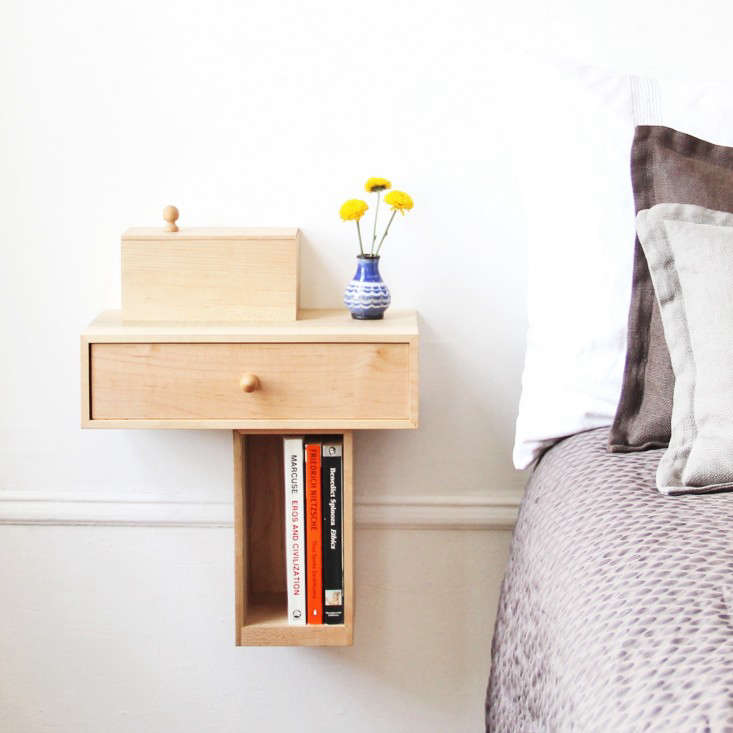
2. The Floating Shelf with a Drawer
A wall-mounted shelf with a drawer offers the best compromise between minimalism and real life. The top remains clear for frequently used items, while the drawer hides reading glasses, lip balm, medication, earplugs, charging cables, and the emergency chocolate that is nobody else’s business.
Look for a shallow drawer with smooth hardware and an easy-to-grip edge. Push-to-open mechanisms provide a clean, handle-free appearance, although they can be less convenient when operated from bed. A small recessed pull or finger groove is often easier to use in the dark.
Wood veneer gives this floating nightstand a furniture-like quality, while painted versions can blend into the wall. Matching the shelf color to the wall creates a quiet, built-in effect. Choosing a contrasting finish turns the unit into a small architectural feature.
Because the drawer adds weight, secure mounting is essential. Avoid filling it with heavy hardcovers simply because they fit. A floating drawer should store small bedside necessities, not your complete illustrated history of European furniture.
Best for: Primary bedrooms, clutter-prone sleepers, modern interiors, and anyone who wants concealed storage without a full table.
3. The Open Cubby Bedside Shelf
An open wall-mounted cubby provides two useful surfaces: the top for water and technology, and the interior for books or decorative objects. It has more visual presence than a single ledge but still keeps the floor clear. Compact box-style units can also be installed at a customized height, making them practical beside platform beds and unusually tall mattresses.
The cubby is especially convenient for readers because books remain visible and easy to grab. Position taller books horizontally if the opening is low, or use a bookend to stop slim volumes from slumping like tired commuters. A small basket can turn the open compartment into semi-concealed storage, though it should slide easily enough to operate from bed.
White or wall-colored cubbies visually recede, while dark wood or metal versions create contrast. An industrial wall-mounted bedside unit with an open shelf and flip-down compartment can provide even more organization without becoming physically bulky.
The main challenge is keeping the opening tidy. Open storage displays everything, including the charging adapter, mystery receipt, and lone sock you placed there “temporarily” six months ago. Limit the contents to a few attractive or frequently used items.
Best for: Book lovers, children’s rooms, modern apartments, and sleepers who prefer open, easy-access storage.
4. The Metal Tray Shelf
A metal tray shelf is the hardworking option of the group. Its raised edges help contain phones, glasses, jewelry, and other objects that enjoy sliding onto the floor at 2:00 a.m. Powder-coated steel creates a crisp modern look, while brass, bronze, or blackened metal adds warmth and contrast.
Metal shelves are usually visually thinner than wood cabinets, making them useful in extremely narrow spaces. They also pair naturally with metal wall sconces and simple platform beds. For a cohesive arrangement, repeat the shelf finish in the lamp, cabinet hardware, curtain rod, or picture frames.
Because hard metal can amplify the sound of a phone or glass being set down, add a small leather mat, felt liner, cork coaster, or fabric tray. This reduces noise and protects the finish. It also prevents the shelf from announcing every late-night glass of water to the rest of the household.
A perforated design can allow charging cables to pass through, while a solid tray provides better protection against spills. Avoid placing an unprotected metal shelf directly where you could bump your head or shoulder. Rounded edges and careful positioning matter more than they do on a decorative wall across the room.
Best for: Industrial bedrooms, contemporary spaces, very narrow layouts, and anyone who wants a durable shelf with protective edges.
5. The Clip-On or Headboard-Integrated Shelf
Not every room allows permanent wall mounting. Renters, dorm residents, bunk-bed sleepers, and chronic furniture rearrangers may prefer a shelf that attaches directly to the bed. Clip-on bedside shelves use clamps or brackets to create a compact platform without drilling holes. Some include cable slots, cup recesses, or raised borders.
Before buying one, measure the thickness and shape of the bed rail. A clamp designed for a flat wood frame may not fit a rounded metal tube or upholstered side rail. Confirm the shelf’s weight capacity and periodically check that the attachment remains tight.
A headboard with built-in ledges offers a more permanent version of the same idea. Integrated shelves can slide or be repositioned, allowing each sleeper to customize the setup. They are particularly effective when under-bed drawers need unobstructed access or when the bed is centered on a wall too narrow for separate tables.
These designs can also reduce visual clutter because the storage appears to be part of the bed rather than an additional piece of furniture. The result feels streamlined and coordinated, although changing the bed may also mean losing the bedside shelf.
Best for: Renters, dorm rooms, bunk beds, adjustable layouts, and bedrooms with integrated storage beds.
How to Style a Bedside Shelf Without Overloading It
The limited surface of a bedside shelf is a feature, not a design flaw. Start with function and add decoration only when space remains. Most successful arrangements need three categories of objects:
- One practical item: A water glass, alarm clock, or charging phone.
- One comfort item: A book, hand cream, sleep mask, or small candle that is extinguished before sleeping.
- One decorative item: A bud vase, framed photograph, miniature artwork, or small plant.
Vary the height of the objects while preserving negative space. A wall sconce above the shelf can act as the tallest visual element, allowing the shelf itself to remain simple. A small tray keeps loose items grouped, and a closed box can conceal necessities when there is no drawer.
Skip tall, unstable décor near pillows and avoid placing liquids directly over electrical outlets. Heavy objects should sit close to the wall rather than near the outer edge. If the shelf begins to resemble a crowded airport gift shop, remove half the items and see whether you miss them.
Bedside Shelf Mistakes to Avoid
Installing It Before Choosing the Mattress
Mattress and foundation heights vary considerably. Finalize the bed setup before drilling so the shelf aligns with the actual sleeping surface, not the height you imagined while standing in a furniture showroom.
Buying a Shelf That Is Too Shallow
A narrow ledge may look elegant online but become frustrating when your water glass barely fits. Measure your largest essential item and allow a safety margin around it.
Ignoring the Walkway
A deep shelf can save floor space while still projecting into the path beside the bed. Check door swings, closet access, bedding clearance, and your normal route through the room.
Trusting Weak Hardware
Use appropriate screws, anchors, and brackets. Recheck the shelf after installation and stop using it if it shifts, sags, or pulls away from the wall.
Expecting Minimal Storage to Fix Maximum Clutter
A bedside shelf can improve organization, but it cannot absorb an unlimited collection of books, electronics, paperwork, and skin-care products. Move overflow into a dresser, under-bed box, or nearby cabinet. The shelf should support a nighttime routine, not the complete administrative operations of your household.
Real-World Experiences: What Living with Bedside Shelves Is Actually Like
The first noticeable change after replacing a traditional nightstand with a floating bedside shelf is not storageit is movement. In a narrow bedroom, exposing even a small strip of floor can make the route around the bed feel less cramped. The improvement is especially obvious when changing sheets or vacuuming. Instead of dragging a table away from the wall, catching its cord on the bed frame, and discovering a historic layer of dust underneath, the area can be cleaned in one pass.
The second change is behavioral. A large nightstand quietly invites accumulation. There is always room for another book, another bottle, another charging cable, and one more object that has no permanent address. A shallow bedside shelf does not negotiate. After a few nights, most people identify the objects they truly use: usually a phone, water, glasses, and perhaps a book. Everything else starts to look like an uninvited guest.
Open ledges tend to work beautifully for disciplined users and less beautifully for people who empty their pockets beside the bed. Coins, receipts, earbuds, keys, and hair ties can quickly overwhelm a minimalist shelf. For that routine, a floating drawer or cubby with a small basket is more forgiving. The bedroom still looks orderly, but daily necessities do not need to become part of the décor.
Lighting often determines whether the arrangement feels effortless or frustrating. When a full-size lamp occupies most of the shelf, the space-saving benefits shrink considerably. A wall-mounted or rechargeable light usually transforms the setup. It frees the surface and positions illumination closer to reading height. The shelf then feels like a deliberate system rather than a tiny table struggling heroically against impossible working conditions.
Charging cables are another practical lesson. Without clips or a cable opening, the cord frequently slides behind the bed the moment the phone is unplugged. Adding two adhesive cable guides beneath the shelf can solve this minor but deeply irritating problem. A short charging cable also produces a cleaner appearance than six feet of wire coiled beside a glass of water.
Installation height matters more in daily use than it appears to during planning. A shelf mounted only a few inches too high can require an awkward reach from a lying position. One mounted too low may be hidden by bedding or become difficult to see at night. Testing a cardboard mock-up for several days is surprisingly helpful. It reveals whether the shelf interferes with pillows, blankets, outlets, or a favorite sleeping position before any permanent holes are made.
Couples do not always need matching bedside shelves. One person may require a drawer for medication and glasses, while the other needs only a slim ledge for a phone. Coordinating the material, color, or mounting height can create visual balance without forcing identical storage habits. Matching function to the sleeper often produces a more comfortable bedroom than buying a symmetrical pair simply because tradition says nightstands arrive in twos.
The most successful bedside shelf ultimately becomes almost invisible in daily life. It is easy to reach, strong enough for its intended load, simple to clean, and large enoughbut not too largefor essential objects. That quiet efficiency is the real appeal. The shelf does not demand attention. It simply gives your water glass a safe home while returning several valuable inches of floor to the room.
Conclusion
Bedside shelves prove that a functional bedroom does not require matching tables on either side of the bed. A slim wood ledge suits minimal routines, a floating drawer hides personal items, an open cubby keeps books within reach, a metal tray contains small objects, and a clip-on or headboard shelf works where drilling is not practical.
The right choice depends on your wall type, bed height, storage habits, lighting, and available clearance. Measure carefully, test the position, use secure mounting hardware, and resist the temptation to cover every inch with décor. When selected thoughtfully, a floating bedside shelf makes a compact bedroom feel calmer, cleaner, and more spaciouswhile still providing a reliable parking spot for the essentials of modern sleep, including the phone you absolutely promised yourself you would stop checking in bed.
Note: Product dimensions, mounting systems, weight capacities, and availability can change. Confirm current specifications and use hardware appropriate for your wall construction before installation. This article was informed by current small-bedroom guidance, wall-mounted storage examples, installation recommendations, and bedside organization advice from established American design, retail, and home-improvement publications. ode>

