
Beauty Tools & Accessories
26 Stone Patio Ideas We Love for Any Outdoor Space
Jul
If your backyard currently looks more “parking lot” than “paradise,” a stone patio might be the glow-up it’s been waiting for. Natural stone and stone-look pavers are durable, timeless, and surprisingly flexiblewhether you’re working with a tiny side yard, a sprawling garden, or a narrow strip behind a townhome. From rustic flagstone to sleek granite tiles, there’s a stone patio idea for every outdoor space and every budget.
Below, we’ll walk through 26 stone patio ideas we love, plus practical tips on choosing the right materials, mixing textures, and making your patio as comfortable as your living room. Think of this as your design mood board, but with way more helpful details and fewer “out of stock” alerts.
Before You Start: Choosing the Right Stone for Your Patio
Before we jump into design ideas, it helps to know what you’re actually walking on. Popular stones and stone-look materials for patios include flagstone, bluestone, slate, limestone, granite, cobblestone, and manufactured concrete pavers that mimic natural stone. Each has its own vibe:
- Flagstone: Irregular shapes, earthy tones, and a naturally textured surface that offers good grip. Ideal for organic, cottage-style patios.
- Bluestone: Dense, durable, and often blue-gray in tone. Great for modern or traditional spaces that need a clean, upscale look.
- Limestone: Softer color palette and pleasantly smooth texture. Beautiful for family patios that see a lot of foot traffic.
- Granite and slate: Hard-wearing and often used for more contemporary spaces where you want crisp lines and a polished look.
- Stone-look pavers: Concrete pavers molded and colored to look like natural stone, often at a lower cost and with simpler installation.
Also think about climate (freeze-thaw cycles, heavy rain, blazing sun), slip resistance, and how much maintenance you’re willing to do. Sealing natural stone periodically can help resist staining and weathering, especially around grills, dining areas, or pools.
26 Stone Patio Ideas We Love for Any Outdoor Space
1. Natural Stone and Gravel Combo Patio
If you love a relaxed, European courtyard vibe, pair irregular natural stone slabs with a gravel base. Large stones act as “islands” for dining chairs, lounge furniture, or planters, while pea gravel or crushed rock fills in the gaps. It drains well, feels casual, and keeps costs lower than paving the whole area in stone.
2. Flagstone Patio With Lush Planting Borders
Flagstone’s organic edges look incredible when they melt right into greenery. Create a simple seating area, then surround it with hydrangeas, ornamental grasses, and low shrubs. The combination of rough stone and soft foliage instantly turns a basic backyard into a garden retreat.
3. Bluestone Terrace for a Polished Look
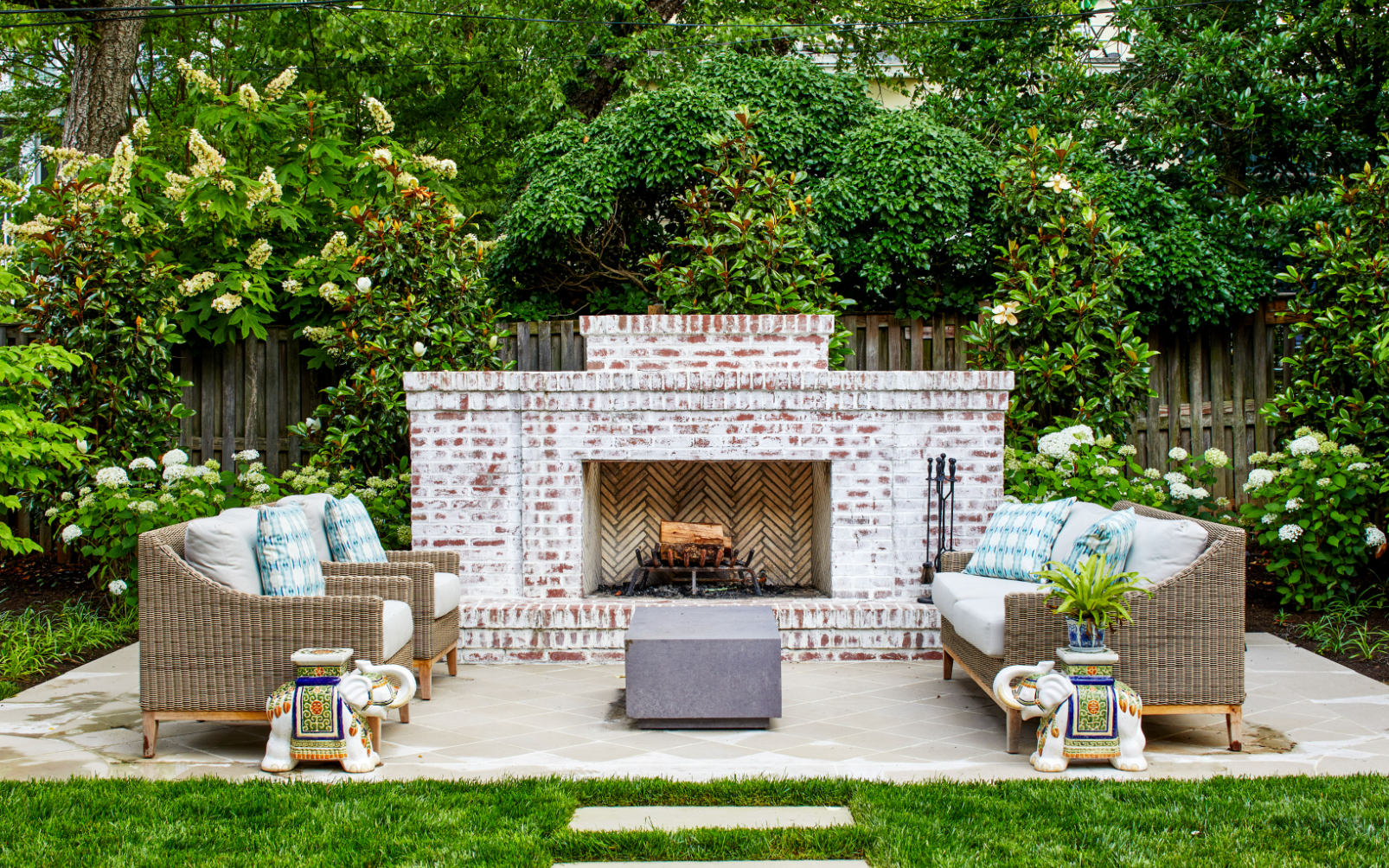
For a space that feels tailored and timeless, go for bluestone set in a pattern of rectangles and squares. Its color rangeblue-grays, charcoals, and subtle tanspairs beautifully with white trim, black-framed doors, and classic outdoor furniture. Add a simple gas fire table, and you’ve got a high-end terrace without stepping into resort pricing.
4. Rustic Cobblestone Courtyard
Love old-world charm? A cobblestone patio delivers that “been here for 100 years” feeling on day one. Use tumbled or rounded stones to soften the look and make it more comfortable underfoot. This style pairs perfectly with brick facades, climbing roses, and bistro-style seating.
5. Stone Pavers Laid in a Herringbone Pattern
Take simple rectangular pavers and elevate them with a herringbone layout. This pattern adds visual movement and looks especially good in long, narrow yards, where the zigzag lines break up the “bowling alley” effect. Choose a medium-gray stone for a balanced, easy-to-style backdrop.
6. Large-Format Stone Slabs for a Modern Minimal Patio
If your design style leans modern, opt for large-format stone or stone-look tiles. Fewer grout lines create a clean, open feel that makes smaller patios look bigger. Pair these slabs with streamlined furniture, a couple of sculptural planters, and maybe a single tree for shade and drama.
7. Mixed Materials: Stone, Wood, and Gravel
Mixing materials adds depth and character. Think stone pavers surrounded by gravel, bordered by a low wood deck or bench. The combination of texturessmooth stone, warm wood, and crunchy gravelkeeps the space interesting and helps visually separate zones for dining, lounging, and grilling.
8. Stone Patio Under a Pergola
A stone patio paired with a pergola instantly becomes an outdoor room. Use flagstone or bluestone underfoot, then add a wood or metal pergola overhead for shade. Grow vines over the top, hang string lights, and you’ve just created the coziest outdoor living room on the block.
9. Curved Stone Patio That Flows With the Landscape
Instead of a harsh square or rectangle, design your patio with gentle curves that follow the natural shape of your yard. Irregular flagstone or custom-cut pavers make it easier to create a rounded edge. Curved patios feel organic and are especially lovely in garden-heavy landscapes.
10. Small Stone Bistro Patio for Tight Spaces
No backyard? No problem. Even a small side yard or city courtyard can fit a stone “bistro pad.” Lay a circle, square, or rectangle of stone large enough for a small table and two chairs. Frame it with container plants and a wall-mounted light or lantern for a tiny-but-mighty outdoor coffee spot.
11. Stone Patio With an Integrated Fire Pit
Extend patio season with a built-in fire pit surrounded by stone seating or low retaining walls. Use the same stone on the patio surface and the fire feature for a unified look. Just be sure to choose a stone rated for high heat around the actual fire pit and follow local safety codes.
12. Multi-Level Stone Patio on a Slope
If your yard slopes, don’t fight itembrace it with a multi-level stone patio. Use low stone retaining walls and wide steps to create terraces for dining, lounging, and gardening. Each level can have its own purpose, but keeping the same stone throughout ties it all together.
13. Poolside Stone Patio With Large Stepping Pavers
For pool areas, large stone or stone-look pavers set in gravel or turf make great “landing pads” for loungers and side tables. Choose a textured surface that stays grippy when wet and a stone color that won’t scorch bare feet in full sun.
14. Earth-Toned Stone Patio for a Warm, Cozy Feel
Warm earth tonesthink browns, tans, and soft rust colorshelp your patio blend with surrounding landscape instead of standing out like a concrete island. Natural stone in warm hues pairs beautifully with wood furniture, terracotta pots, and string lights for a relaxed, welcoming vibe.
15. Stone Patio With Built-In Seating Walls
Low stone walls along the edges of a patio do double duty: they define the space and provide extra seating. Top them with smooth caps that are comfortable to sit on, and you’ve got instant overflow seating for parties without having to drag extra chairs outside.
16. Patterned Bluestone or Slate for a Custom Look
Play with different sizes of bluestone or slate to create a unique pattern. Mix large rectangles with smaller squares in a deliberate layout to keep things visually interesting without overwhelming the space. This works especially well in medium-to-large patios where a simple grid might feel too plain.
17. Stone Patio Framed by a Gravel or Mulch Border
If you’re worried about crisp edges or future changes, frame your stone patio with a gravel or mulch border instead of grass right up to the edge. It makes mowing easier, gives roots a place to roam, and visually softens the transition between hardscape and garden.
18. Checkerboard Stone and Grass Patio
For a playful, photogenic patio, lay square stone pavers in a checkerboard pattern with grass or groundcover in between. This look works particularly well in sunny areas with decent drainage. It adds instant charm and makes even a flat yard feel tailored and designed.
19. Stone Patio With an Outdoor Kitchen Zone
If you love to cook outside, build your outdoor kitchen right on a durable stone patio. Choose a stone that resists staining and is easy to wipe clean, and make sure the surface is level for grills and appliances. Add a stone or tile backsplash behind the grill to protect siding and tie the whole kitchen zone into the patio design.
20. Gravel and Stone Patio for a Budget-Friendly Upgrade
When you want a beautiful patio without a huge price tag, combine a gravel base with strategically placed stone pavers. Use gravel for most of the surface, then add larger stones where you need stable footingunder a table, in front of doors, or along a main walking path. It’s a smart way to stretch your budget while still getting a high-end look.
21. Stone Patio With a Central Tree or Planter Cutout
Instead of removing a beloved tree, design your patio around it. Cut out a circle or square in the patio surface to give the tree trunk space and keep it mulched. The result feels like a built-in “feature tree” or planter that adds shade, texture, and instant character.
22. Narrow Side-Yard Stone Walkway Patio
Side yards are often wasted space. Turn yours into a mini stone patio by widening a stone path just enough to fit a bench, a couple of chairs, or a slim café table. Add wall-mounted planters or vertical trellises to make the most of the space.
23. Stone Patio With Raised Garden Beds
For gardeners, a stone patio flanked by raised beds is the ultimate “living room meets kitchen garden” combo. Use natural stone or stone-look blocks for the beds to match or complement the patio surface. You get a clean, mud-free floor plus arm’s-reach access to herbs, veggies, and flowers.
24. Stone Steps Flowing Down to a Lower Patio
If your back door sits higher than the yard, make the transition a design moment. Use wide stone steps that gradually lead down to a larger stone patio. Vary the tread depths for places where people can sit, set down drinks, or add potted plants for a layered look.
25. Brick and Stone Combo Patio
Brick and stone play well together. Try a stone patio field (the main surface) with a brick border, or flip it and use stone as an accent band within a brick patio. The mix of textures and colors gives your outdoor space a bespoke, custom-designed feel.
26. Cozy Fire-Table Lounge on a Compact Stone Pad
Even if you’re tight on space, you can still have a dreamy stone patio. Lay a compact stone pad and top it with a loveseat, two chairs, and a small fire table. With an outdoor rug and a couple of throw pillows, you’ve just created the most popular “room” in your home.
Real-World Stone Patio Experiences: What Actually Works
Ideas are great, but what happens after the last stone is laid and the contractors leave? Here are some lived-in lessons and “wish I’d known” moments that often come up once people have spent a few seasons with their stone patios.
1. Comfort underfoot matters more than you think. People often fall in love with a particular stone because of its color or texture in photos, then realize later that it feels rough, slippery, or scorching hot. Before you commit, walk on sample pieces barefoot, in sandals, and in sneakers. If you’re in a hot climate, leave samples in the sun for a few hours and test how they feel. A gorgeous slate that burns your feet at 2 p.m. in July will not feel so gorgeous in real life.
2. Size and layout trump stone type for small spaces. In tiny backyards or side yards, the biggest difference in how “usable” the patio feels often comes from layout, not material. A well-planned 8-by-10-foot stone patio that fits a small sofa, two chairs, and a narrow table will get used constantly, even if it’s made from basic pavers. A larger patio with awkward traffic flow and no clear zones may sit empty, no matter how fancy the stone is.
3. Drainage is the unsung hero of a long-lasting patio. A lot of patio regrets come from poor drainage: puddles under furniture, slick surfaces after rain, or shifting stones over time. On the flip side, homeowners who invested in a proper basecompacted gravel, slight pitch away from the house, and thoughtful placement of drains or gravel bordersoften report that their patios still look great years later with minimal maintenance. It’s not glamorous, but making sure water has somewhere to go is one of the best ways to protect your investment.
4. Mixed materials help with future flexibility. Using all one material can look beautiful, but mixing in gravel areas, mulched planting strips, or a small deck section gives you flexibility later. If you decide to add a hot tub, extend seating, or change a planting bed, it’s much easier to adjust a gravel or mulch zone than to rip out a fully paved patio. Homeowners who “broke up” their patios with soft zones often find it simpler to evolve the space as their family and hobbies change.
5. Lighting and shade turn a good patio into a favorite room. Many people focus heavily on the stone itself and underestimate the impact of lighting and shade. In practice, patios that get used morning and night tend to have some combination of string lights, path lights, lanterns, or built-in fixtures, along with a pergola, umbrella, or shade sail. The stone is the foundation, but the comfort layer (being able to see your book, not roast in the sun, and not trip on a step) is what keeps people out there for hours.
6. Furniture scale can make or break the design. Oversized sectionals crammed onto small patios make the space feel tight and cluttered. On the other hand, slim-profile chairs, benches, and café tables can make a modest patio feel airy and generous. People who take a tape measure outside before ordering furnitureand leave room to walk comfortably around ittend to be much happier with how their stone patio functions day to day.
7. Maintenance routines are easier when they’re built into your habits. Natural stone can handle a lot, but it appreciates a little care. Homeowners who treat patio maintenance like a quick seasonal ritual tend to keep their spaces looking fresh: sweep or blow off debris weekly, rinse down surfaces as needed, reseal every couple of years if the stone calls for it, and address weeds or shifting stones early. It’s rarely a massive project if you handle small tasks regularly.
8. Patios evolveplan for “phase two” from the start. A common theme from happy patio owners is that they didn’t try to do everything at once. Maybe they started with a simple stone pad and a small dining set, then added a pergola and fire pit later. Designing the initial patio with a potential “phase two” in mindspace for an extra seating zone, a future outdoor kitchen, or raised garden bedsmeans you can grow your space gracefully without tearing everything out.
Ultimately, the best stone patio for your outdoor space is the one you’ll actually use and enjoy. Focus on comfort, flow, and durability first, then layer in style, color, and accessories. With the right stone underfoot and a thoughtful layout, your patio can become the heart of your home’s outdoor lifewhether you’re hosting a big summer cookout or sipping a quiet morning coffee with your bare feet on cool stone.
Conclusion
From rustic flagstone hideaways to sleek bluestone terraces, stone patios can transform any outdoor space into a place you actually want to hang out in. Think about how you livegrilling, gardening, lounging, or all of the aboveand choose stone, layout, and features that support that lifestyle. Mix materials if you like, experiment with patterns, and don’t underestimate the power of plants, lighting, and shade to soften and complete the space.
Whether you’re mapping out your first small bistro patio or upgrading a large backyard, these 26 stone patio ideas offer a solid starting point. Once the last paver is in place and the chairs are pulled up, you’ll have an outdoor room that looks good, works hard, and invites you outside season after season.

