
Makeup
Best Charred Peppers with Queso Blanco Recipe – How to Make Charred Peppers with Queso Blanco
Jun
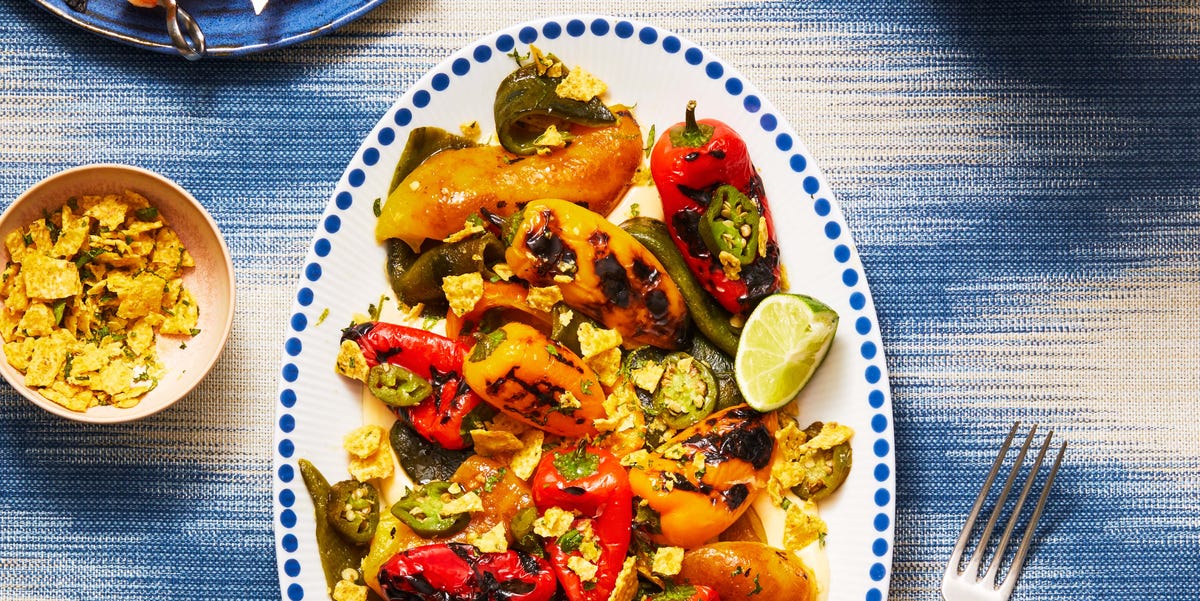
Some appetizers politely wait for guests to notice them. Charred peppers with queso blanco do not have that kind of patience. The platter arrives with blistered peppers piled over warm, creamy white cheese, finished with fresh lime and a crunchy tortilla-chip topping. Suddenly, everyone is standing suspiciously close to the snack table.
This colorful dish combines smoky poblano peppers, sweet mini peppers, juicy bell peppers, and lively jalapeños with a silky queso blanco sauce. It has sweetness, moderate heat, tangy citrus, creamy richness, and just enough crunch to keep every bite interesting. Better yet, it looks impressive without requiring restaurant equipment, advanced culinary training, or a small committee of sous-chefs.
The recipe works beautifully as a party appetizer, cookout side dish, game-day snack, or light meal. Add grilled shrimp, chicken, black beans, or roasted corn when you want something more substantial. Serve it with warm tortillas or sturdy tortilla chips, and prepare to explain why there is no queso left five minutes later.
Charred Peppers with Queso Blanco at a Glance
“`
| Preparation time | Approximately 20 minutes |
|---|---|
| Cooking time | Approximately 20 minutes |
| Total time | About 40 minutes |
| Yield | 6 appetizer servings |
| Heat level | Mild to medium, depending on the jalapeños |
| Best served | Warm, immediately after assembly |
“`
Why This Charred Pepper Recipe Works
“`
The success of this recipe comes from contrast. High heat blisters the pepper skins and creates smoky, lightly bitter edges while concentrating the natural sweetness inside. The creamy queso softens that smokiness, lime brightens the rich cheese, and crushed tortilla chips add texture.
Using several pepper varieties is more than a visual trick. Poblanos contribute an earthy green-chile flavor, bell peppers bring sweetness and body, mini peppers become especially tender, and jalapeños supply adjustable heat. Each pepper tastes slightly different after charring, so the finished platter has more depth than a basic bowl of cheese dip.
The queso blanco sauce also uses two cheeses for a reason. Monterey Jack gives it a mild dairy flavor and satisfying stretch, while white American cheese helps the sauce remain smooth and cohesive. This is not the crumbly fresh cheese sometimes sold as queso blanco. Here, the term refers to a warm white queso sauce designed for pouring, dipping, and shamelessly scraping from the platter.
“`
Ingredients
“`
For the Charred Peppers
- 1 pound poblano peppers, approximately 5 medium peppers
- 1/2 pound mini sweet peppers
- 2 bell peppers, preferably one yellow and one orange
- 2 fresh jalapeños
- 1 tablespoon olive oil
- 1/2 teaspoon kosher salt, plus more to taste
For the Queso Blanco
- 1/2 cup half-and-half
- 6 ounces Monterey Jack cheese, freshly and coarsely grated
- 3 slices white American cheese, torn into smaller pieces
For the Lime Tortilla Crunch
- 1 fresh lime
- 1/2 cup tortilla chips, finely crushed
- 1 tablespoon finely chopped fresh cilantro
Optional Additions
- Grilled shrimp or sliced grilled chicken
- Charred corn kernels
- Cooked black beans
- Thinly sliced scallions
- Pickled red onions
- Extra cilantro for serving
“`
Choosing the Best Peppers
“`
Select peppers that feel firm, heavy for their size, and smooth-skinned. Avoid peppers with soft spots, deep wrinkles, or leaking stems. Minor surface marks are harmless, but badly bruised areas can cook unevenly and may taste unpleasant.
Poblanos are usually mild, although an occasional pepper may be surprisingly spirited. Jalapeños are even less predictable. Two peppers from the same produce bin can have completely different heat levels, because apparently jalapeños enjoy practical jokes.
For a gentler dish, remove the jalapeño seeds and pale interior ribs after charring. For more heat, leave some ribs attached or substitute one serrano pepper for a jalapeño. Keep the colorful bell and mini peppers in the mixture; their sweetness balances the sharper chiles.
“`
How to Make Charred Peppers with Queso Blanco
“`
Step 1: Wash and Dry the Peppers
Rinse all peppers thoroughly under cool running water. Do not wash produce with dish soap or household detergent. Dry the peppers completely with a clean kitchen towel or paper towels. A dry surface chars more effectively; wet peppers tend to steam before they blister.
Leave the peppers whole for grilling. Keeping them intact makes them easier to turn and prevents the interiors from becoming watery. Preheat a gas or charcoal grill to medium-high heat, approximately 400°F to 450°F. Clean and lightly oil the grill grates.
Step 2: Season and Char
Place the peppers in a large bowl or on a rimmed baking sheet. Drizzle with olive oil and turn until lightly coated. Sprinkle evenly with kosher salt.
Arrange the peppers over direct heat. Grill them for 5 to 9 minutes, rotating every minute or two, until their skins are blistered and charred on multiple sides. Mini sweet peppers may finish first, followed by jalapeños and poblanos. Thick bell peppers usually require the most time.
Do not insist that every pepper finish simultaneously. Remove each one when it is softened and well blistered. Otherwise, the small peppers may collapse while the bell peppers are still considering whether they would like to cook today.
Step 3: Rest, Peel, and Cut
Transfer the charred peppers to a cutting board. For easier peeling, place the poblanos, bell peppers, and jalapeños in a heat-safe bowl and cover it for about 5 minutes. The trapped steam loosens the skins.
When the peppers are cool enough to handle, scrape away most of the blackened skin with the back of a knife or a paper towel. A few charred flecks are desirable, so there is no need to polish each pepper like a trophy. Avoid rinsing them after charring, because water can wash away flavorful juices.
Remove the stems and seeds from the poblanos, bell peppers, and jalapeños. Cut them into broad strips or bite-size pieces. The mini sweet peppers may be left whole if they are small, or sliced lengthwise for easier serving.
Step 4: Prepare the Queso Blanco
Pour the half-and-half into a small heavy-bottomed saucepan and warm it over medium-low heat until it begins to steam. It should gently simmer around the edges but should not reach a hard boil.
Reduce the heat to low. Add the Monterey Jack in small handfuls, whisking after each addition. Add the pieces of white American cheese and continue whisking until the sauce is fully melted, glossy, and smooth.
Remove the saucepan from the heat as soon as the cheese has melted. Excessive heat can cause natural cheese to tighten, separate, or become grainy. If the queso seems too thick, whisk in warm half-and-half one tablespoon at a time. The ideal consistency is thick enough to coat a pepper but loose enough to spread across a platter.
Step 5: Make the Lime Tortilla Topping
Finely grate the lime zest into a small bowl. Add the crushed tortilla chips and chopped cilantro, then toss until the zest and herbs are distributed evenly.
Use plain or lightly salted corn tortilla chips. Heavily flavored chips can overpower the peppers and make the dish unnecessarily salty. Crush them into coarse crumbs rather than powder; the topping should crunch, not disappear into the queso like edible sawdust.
Step 6: Assemble the Platter
Spread the warm queso blanco over a large shallow platter or serving plate. Arrange the charred peppers across the cheese, mixing the colors and shapes rather than stacking each variety separately.
Cut the zested lime in half and squeeze fresh juice over the peppers. Finish with the tortilla-chip mixture and, if desired, additional cilantro, scallions, or pickled onions. Serve immediately while the queso is creamy and the tortilla topping is crisp.
“`
No Grill? Use the Broiler or Gas Burner
“`
Broiler Method
Position an oven rack about 5 inches below the heating element and preheat the broiler. Line a rimmed sheet pan with foil. Arrange the oiled and salted peppers in a single layer, leaving space between them.
Broil for approximately 8 to 12 minutes, turning the peppers several times, until the skins are blistered and blackened in spots. Smaller peppers may need to be removed earlier. Watch them closely because broilers can move from “beautifully charred” to “someone alert the smoke detector” remarkably quickly.
Gas-Burner Method
For poblanos, bell peppers, or jalapeños, place one pepper directly over a medium gas flame. Turn it frequently with long metal tongs until the skin is evenly blistered. Do not leave the burner unattended, and keep towels, packaging, and other flammable objects away from the stove.
This technique provides strong smoky flavor but is inconvenient for a large batch. Use it when making a half recipe or when the grill is unavailable.
“`
Common Mistakes and Easy Fixes
“`
The Peppers Are Soft but Not Charred
The grill may not be hot enough, the peppers may have been wet, or they may have been crowded. Increase the heat, dry the next batch thoroughly, and leave space around each pepper so hot air can circulate.
The Queso Turned Grainy
Graininess usually indicates excessive heat. Remove the pan from the burner and whisk in a tablespoon of warm half-and-half. Freshly grated cheese also melts more smoothly than pre-shredded cheese, which often contains anti-caking ingredients.
The Queso Is Too Thick
Whisk in warm half-and-half or milk, one tablespoon at a time. Do not pour in a large amount at once or the sauce may become watery.
The Dish Is Too Spicy
Add more charred bell peppers or mini sweet peppers and serve the platter with extra queso. Sour cream, avocado, or warm tortillas can also soften the perceived heat.
The Dish Tastes Flat
Add another squeeze of lime and a small pinch of salt. Rich cheese often needs acidity to keep it from tasting heavy. Taste the pepper, queso, and tortilla topping together before making major adjustments.
“`
Serving Ideas
“`
Serve charred peppers with queso blanco as a communal appetizer with tortilla chips, toasted baguette slices, or warm flour and corn tortillas. Guests can scoop up the cheese, tuck peppers into tortillas, or build small open-faced bites.
For a complete meal, top the platter with grilled shrimp seasoned with cumin and lime. Sliced chicken, skirt steak, roasted mushrooms, or crispy chickpeas work well too. A side of cilantro-lime rice or black beans turns the peppers into a satisfying dinner.
The dish also fits naturally into a taco bar. Place the peppers and queso beside shredded cabbage, pico de gallo, guacamole, and pickled onions. Leftover peppers are excellent in quesadillas, breakfast tacos, scrambled eggs, grilled-cheese sandwiches, or grain bowls.
“`
Recipe Variations
“`
Extra-Smoky Version
Add a pinch of smoked paprika to the queso or mix a finely chopped chipotle pepper into the finished sauce. Use a restrained amount so the chipotle does not erase the fresh flavor of the grilled peppers.
Roasted Corn Version
Grill two ears of corn beside the peppers. Cut the kernels from the cobs and scatter them over the queso before adding the tortilla topping.
Vegetarian Main-Dish Version
Add drained black beans, grilled zucchini, corn, and sliced avocado. Serve with tortillas for an easy build-your-own dinner.
Hotter Queso Blanco
Keep the jalapeño ribs, add a serrano pepper, or stir a spoonful of chopped pickled jalapeños into the cheese sauce. A little pickling liquid can also add acidity, but use it carefully to avoid thinning the queso too much.
Milder Family Version
Replace the jalapeños with additional mini sweet peppers. Poblanos are generally mild, but they can vary, so substitute green bell peppers when serving people who strongly dislike chile heat.
“`
Make-Ahead, Storage, and Reheating
“`
The peppers can be charred, peeled, and cut up to one day in advance. Store them in a covered container in the refrigerator. Bring them close to room temperature or warm them briefly before assembling the platter.
The tortilla topping may also be prepared several hours ahead. Keep it in an airtight container at room temperature so it stays crisp. Do not add the lime juice to the chips.
Queso blanco is best made shortly before serving. When reheating, use a saucepan over low heat and stir frequently. Add a splash of milk or half-and-half as needed. Avoid high heat and prolonged microwaving, which can make the sauce oily or grainy.
Refrigerate leftovers in a covered container within two hours of serving. For the best texture, store the peppers, queso, and crunchy topping separately. Consume refrigerated leftovers within three to four days.
“`
Kitchen Experience: What I Learned Making Charred Peppers with Queso Blanco
“`
The first useful lesson is that a mixed batch of peppers refuses to follow one schedule. Mini sweet peppers blister quickly and may be ready several minutes before thick bell peppers. On an early attempt, I waited for everything to reach the same stage. The result was a tray containing perfect bell peppers and mini peppers that looked as though they had completed a wilderness survival course.
The better approach is to treat the grill like an airport pickup zone: everyone leaves when they are ready. Keep a clean platter beside the grill and remove individual peppers as soon as their skins are blistered and their flesh feels tender. This small change produces better texture across the entire batch.
The second lesson involves peeling. It is tempting to remove every black speck, but complete perfection is unnecessary and can actually make the peppers less flavorful. Most of the papery skin should come off, especially from poblanos and bell peppers, yet a few charred marks contribute appealing bitterness and visual character. Covering the hot peppers briefly loosens stubborn skin, while wiping them with a paper towel preserves their flavorful juices.
Heat control matters even more when making the queso. The sauce can go from beautifully smooth to stubbornly grainy when the pan is too hot. Warming the dairy gently, lowering the heat before adding cheese, and whisking in small batches makes a major difference. Once the cheese melts, the pan should come off the burner. Queso does not improve through aggressive boiling. It merely becomes angry.
I also found that freshly grated Monterey Jack is worth the extra minute of work. It melts more evenly than packaged shredded cheese. White American cheese may not sound glamorous, but it gives the sauce the stable, creamy texture people associate with restaurant-style white queso. Together, the two cheeses deliver better flavor and consistency than either one alone.
The lime should be added at the last possible moment. Its zest can go into the tortilla crumbs in advance, but the juice belongs directly on the warm peppers just before serving. That fresh acidity wakes up the sweet peppers and prevents the cheese from feeling too rich. Adding the tortilla crumbs last is equally important. Once they touch the queso, their countdown to softness begins.
Serving the dish on a shallow platter instead of in a deep bowl was another improvement. A platter creates more surface area, allowing the peppers to remain visible rather than sinking into the cheese. It also helps guests scoop up a balanced amount of queso, pepper, and topping in each bite.
For parties, I prefer preparing the peppers and chip mixture in advance, then making the queso shortly before guests arrive. The peppers can be rewarmed on the grill or in a skillet while the cheese melts. Assembly takes only a few minutes, yet the finished platter looks as though considerably more planning occurred. There is no requirement to correct that impression.
Finally, do not underestimate how filling this appetizer can become. With grilled shrimp, chicken, or black beans, it easily shifts into light-dinner territory. Warm tortillas turn the mixture into casual tacos, while rice and avocado make it a full bowl. The basic recipe is simple, but its flexibility is one of the main reasons it deserves a permanent place in the summer cooking rotation.
“`
Final Thoughts
“`
The best charred peppers with queso blanco bring together everything a memorable appetizer needs: bold color, smoky flavor, creamy cheese, fresh citrus, adjustable heat, and a crisp finishing touch. The ingredient list is approachable, the method is flexible, and the entire dish can be ready in about 40 minutes.
Give each pepper enough heat to blister, remove it when it is ready, and keep the queso over gentle heat. Those three details separate a decent platter from the kind people hover around until only a lonely cilantro leaf remains.
Note: Pepper heat varies naturally. Taste a small cooked piece before serving the entire batch to children or guests who are sensitive to spicy foods.
“`

