
Beauty Unlocked
Where To Invest In A Rising Interest Rate Environment?
Jun
When interest rates rise, money suddenly develops an attitude. Savings accounts stop looking like forgotten couch cushions, bonds start acting moody, mortgages become expensive dinner guests, and investors begin asking the same nervous question: where should I invest now?
A rising interest rate environment can feel confusing because it changes the rules investors got used to during low-rate periods. When rates were near zero, people often stretched for yield by buying long-term bonds, growth stocks, speculative assets, and anything with a chart that looked like a ski jump going upward. But when the Federal Reserve keeps policy rates elevated to fight inflation, the market begins rewarding patience, selectivity, liquidity, and cash flow.
The good news? Higher rates are not automatically bad for investors. They simply require a different playbook. Instead of chasing every shiny object with a ticker symbol, investors can focus on assets that benefit from higher yields, protect against inflation, reduce interest rate risk, and preserve flexibility. Think of it as switching from roller skates to hiking boots: less flashy, but much better when the terrain gets bumpy.
Why Rising Interest Rates Matter for Investors
Interest rates are the price of money. When rates go up, borrowing becomes more expensive for consumers, companies, and governments. That can slow spending, cool inflation, and pressure businesses that rely heavily on cheap debt. At the same time, savers and income investors may finally earn meaningful returns from conservative assets such as Treasury bills, certificates of deposit, and money market funds.
The Federal Reserve influences short-term interest rates through its target range for the federal funds rate. When that policy rate is elevated, yields on many short-term investments often rise as well. This is why investors may suddenly see attractive rates on CDs, Treasury bills, and money market funds after years of earning approximately enough interest to buy half a coffee.
However, higher rates also create a classic problem for bond investors. Bond prices and interest rates generally move in opposite directions. When new bonds are issued with higher yields, older bonds with lower coupons become less attractive, so their market prices fall. This does not mean bonds are useless. It means investors need to pay attention to maturity, duration, credit quality, and whether they plan to hold bonds until maturity or trade them before then.
Best Places To Invest When Interest Rates Are Rising
1. High-Yield Savings Accounts and Cash Reserves
Cash is usually boring. In a rising rate environment, boring can be beautiful. High-yield savings accounts, cash management accounts, and insured bank deposits can become useful places to park emergency funds, short-term savings, and money you may need within the next 6 to 24 months.
The key advantage is flexibility. If rates continue rising, you are not locked into a low long-term yield. You can move money as better opportunities appear. For example, someone saving for a home down payment next year may prefer a high-yield savings account over a volatile stock fund. The goal is not to become rich overnight. The goal is to avoid explaining to your future self why the house fund was invested in a meme stock named after a vegetable.
For U.S. bank deposits, FDIC insurance generally covers up to $250,000 per depositor, per insured bank, for each ownership category. That makes insured savings accounts and CDs useful for safety-focused investors. Still, investors should compare rates, read account terms, and avoid assuming that every account at every institution offers the same protection.
2. Certificates of Deposit for Predictable Income
Certificates of deposit, or CDs, can be attractive when rates are high because they allow investors to lock in a known yield for a specific term. A CD ladder is especially useful. Instead of putting all your money into one five-year CD, you might divide it among 3-month, 6-month, 1-year, and 2-year CDs. As each CD matures, you can reinvest at current rates or use the cash.
This strategy helps manage reinvestment risk and liquidity risk. If rates rise again, shorter CDs mature soon enough to take advantage of higher yields. If rates fall, longer CDs may preserve today’s better rates. In plain English: a CD ladder keeps your money from wearing cement shoes.
CDs are best for investors who value certainty. They are less ideal for money that must remain instantly available, because early withdrawal penalties can apply. Brokered CDs may have different risks and pricing behavior than bank CDs, especially if sold before maturity.
3. Treasury Bills and Short-Term U.S. Government Securities
Treasury bills, often called T-bills, are short-term U.S. government securities with maturities ranging from four weeks to 52 weeks. They are sold at a discount or at par, and investors receive face value at maturity. Because they mature quickly, T-bills usually have lower interest rate sensitivity than longer-term bonds.
For rising rates, this short maturity is a major advantage. Investors can roll maturing T-bills into new bills if yields become more attractive. Treasury bills are also backed by the U.S. government and are exempt from state and local income taxes, though federal tax still applies.
A simple example: an investor with $20,000 of short-term savings could split it into 4-week, 13-week, and 26-week T-bills. As each bill matures, the investor can decide whether to reinvest, move to CDs, increase stock exposure, or keep cash available. This strategy is not glamorous, but neither is a seatbeltand both can be very useful when conditions get rough.
4. Short-Term Bond Funds
Short-term bond funds can also make sense in a rising rate environment. These funds usually hold bonds with shorter maturities, which makes them less sensitive to interest rate changes than long-term bond funds. The concept to understand is duration. Duration estimates how much a bond or bond fund may move when interest rates change. A fund with a duration of two years is generally less vulnerable to rising rates than a fund with a duration of eight or ten years.
Short-term bond funds may invest in government bonds, investment-grade corporate bonds, or a mix of fixed-income securities. They can provide more income potential than cash, but they are not risk-free. Prices can still decline, especially if credit spreads widen or rates rise quickly. Investors should examine expense ratios, average duration, credit quality, and whether the fund fits their time horizon.
5. Floating Rate Notes and Floating Rate Funds
Floating rate investments are designed to adjust their interest payments as market rates change. U.S. Treasury Floating Rate Notes mature in two years, pay interest quarterly, and have interest rates that can reset over time. This structure can be helpful when rates are rising because the income stream may adjust upward instead of staying fixed.
Floating rate funds and bank loan funds may also benefit from higher rates, but they come with added risk. Many bank loan funds invest in loans made to below-investment-grade companies. That means they may have less interest rate risk but more credit risk. In other words, floating rate funds can be useful tools, but they are not magic umbrellas. They may keep off some rain while still letting a few financial raindrops hit your face.
Investors considering floating rate funds should check the fund’s holdings, credit quality, fees, liquidity, and performance during periods of economic stress. Rising rates can help income, but if higher borrowing costs hurt weaker companies, credit losses may increase.
6. Treasury Inflation-Protected Securities and I Bonds
Rising interest rates often occur because inflation is too hot. In that situation, inflation-linked securities deserve attention. Treasury Inflation-Protected Securities, or TIPS, are U.S. government bonds designed to help protect purchasing power. Their principal adjusts with inflation, and interest payments are based on the adjusted principal.
TIPS can be useful for long-term investors who want inflation protection, but they are not perfect short-term shields. TIPS prices can fall when real interest rates rise, especially for longer-duration TIPS. Investors who want less volatility may prefer shorter-term TIPS funds or individual TIPS held to maturity.
Series I Savings Bonds are another inflation-linked option. Their rate changes every six months based partly on inflation, and they are purchased through TreasuryDirect. They can be appealing for conservative savers, but they have restrictions: you generally cannot cash them in during the first year, and redeeming before five years means giving up the last three months of interest. They are not ideal for emergency funds you might need next Tuesday because your water heater decided to become a fountain.
7. Financial Stocks: Banks, Brokers, and Insurers
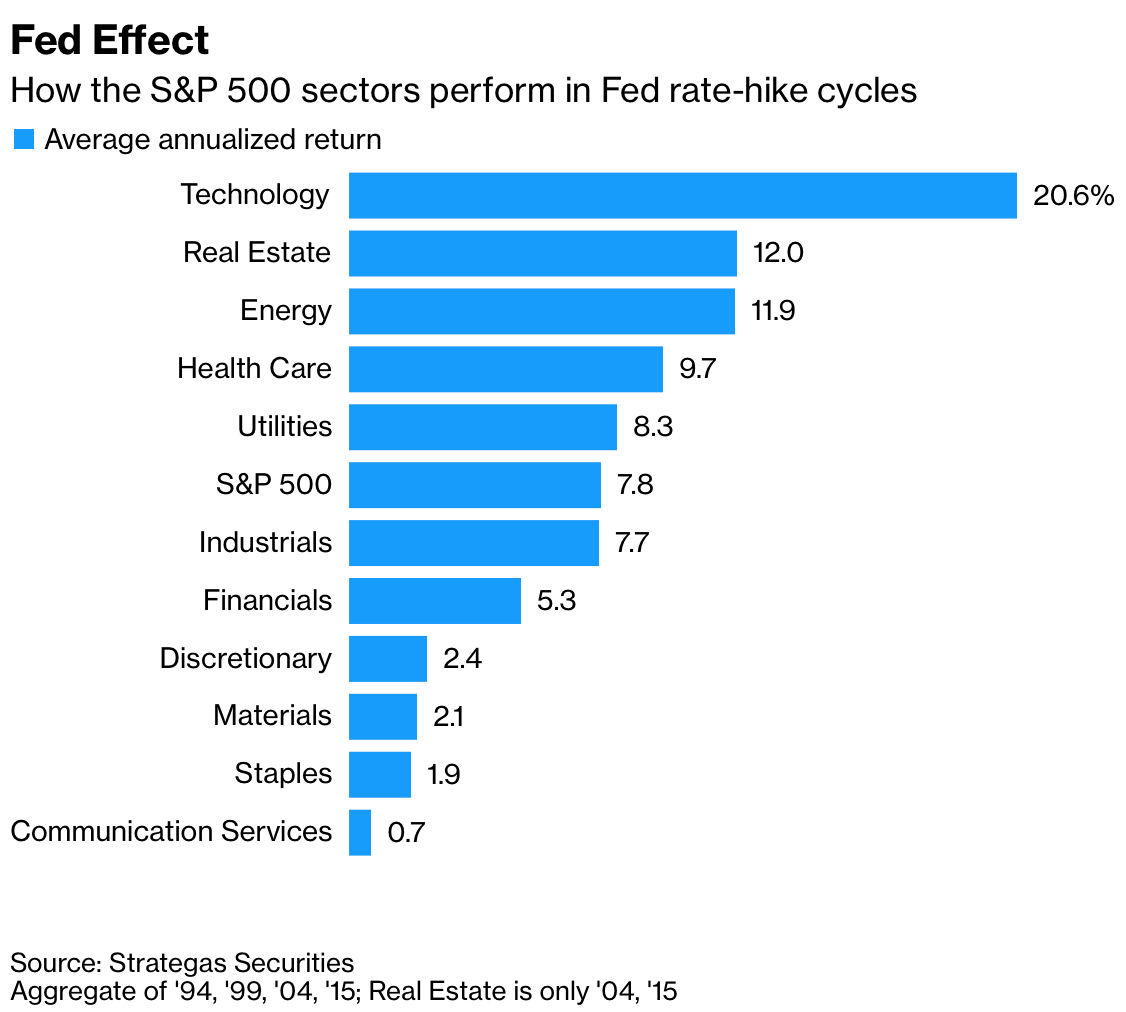
Some equity sectors may benefit from higher interest rates. Financial companies are the classic example. Banks may earn more on loans when rates rise, while brokerages and insurers may benefit from higher yields on cash and fixed-income portfolios.
That said, investors should avoid the lazy assumption that “higher rates equal all banks go up.” Banks can suffer if deposit costs rise faster than loan income, if borrowers default, or if the yield curve creates pressure on margins. Regional banks may also face different risks than large diversified banks. The smart approach is to look for strong balance sheets, disciplined lending, stable deposits, and reasonable valuations.
Insurance companies can also become more attractive when they can invest premiums at higher yields. But underwriting discipline still matters. A poorly run insurer does not become a masterpiece just because Treasury yields improved. A raccoon wearing a bow tie is still a raccoon.
8. Quality Dividend Stocks
Dividend stocks can provide income during higher-rate periods, but investors must be selective. When cash and Treasury bills offer competitive yields, weak dividend stocks lose some appeal. Why take equity risk for a shaky dividend when a safer instrument offers a respectable yield?
The best dividend candidates are usually companies with durable cash flow, moderate payout ratios, manageable debt, and a history of maintaining or growing dividends through different economic cycles. Investors should be careful with extremely high yields. A huge dividend yield can be a bargainor a blinking warning sign wearing a tiny neon hat.
Sectors such as consumer staples, healthcare, utilities, and certain industrials may offer defensive qualities, but valuation matters. Utilities and real estate investment trusts often carry heavy debt loads and can be interest-rate sensitive, so investors should analyze balance sheets rather than buying only because the dividend looks tempting.
9. Value Stocks and Companies With Pricing Power
Higher interest rates often pressure long-duration growth stocks because their expected future earnings are discounted at a higher rate. This does not mean growth stocks are doomed. It means investors may become less willing to pay sky-high valuations for profits expected far in the future.
Value stocks, profitable companies, and businesses with current cash flow may become more attractive. Companies with pricing power can pass some cost increases to customers without destroying demand. Examples may include essential consumer brands, certain healthcare companies, infrastructure-related businesses, and established industrial firms.
The common thread is resilience. Investors should ask: does this company need constant cheap borrowing to survive, or can it generate cash through the cycle? In a rising rate environment, cash flow is not just a financial metric. It is the business equivalent of bringing snacks on a long road trip.
10. Real Assets, Commodities, and Infrastructure
Real assets can sometimes help during inflationary periods, though they are not guaranteed winners. Commodities, energy infrastructure, and certain real asset investments may perform well when inflation is driven by supply constraints or strong demand. Infrastructure businesses with long-term contracts and inflation-linked revenue can also provide portfolio diversification.
However, these assets can be volatile. Commodity prices can swing sharply based on geopolitics, weather, global demand, and currency movements. Investors should avoid treating commodities as a simple “rates are rising, buy stuff from the ground” strategy. Position sizing matters.
11. Be Careful With Long-Term Bonds and Highly Leveraged Assets
Long-term bonds are highly sensitive to interest rate changes. If rates rise significantly, long-duration bond prices can fall sharply. Long-term bonds may still play a role for diversification, especially if rates later decline during a recession, but investors should understand the volatility before buying.
Highly leveraged companies, speculative growth stocks, and real estate businesses with floating-rate debt may also struggle when borrowing costs rise. Real estate investment trusts can offer attractive income, but they often underperform when rates rise because higher yields compete with REIT dividends and increase financing costs. Strong REITs with quality properties and manageable debt may still be worth watching, but selectivity is essential.
Sample Investment Strategies for Rising Rates
The Conservative Investor
A conservative investor may focus on FDIC-insured savings accounts, CDs, Treasury bills, short-term Treasury funds, and a modest allocation to TIPS or I Bonds. The goal is capital preservation, income, and inflation awareness. This investor is not trying to win a cocktail-party performance contest. They are trying to sleep well.
The Balanced Investor
A balanced investor may combine cash reserves, short-term bonds, floating rate exposure, dividend stocks, financial stocks, and broad equity index funds. This approach accepts some volatility while reducing dependence on any single rate-sensitive asset class.
The Growth-Oriented Investor
A growth investor may still own technology and innovation-focused companies, but rising rates make valuation discipline more important. Instead of buying every exciting story, the investor may focus on profitable companies with strong balance sheets, recurring revenue, and realistic growth expectations.
Common Mistakes To Avoid
Chasing Yield Without Reading the Fine Print
Higher yields are attractive, but yield is never free. A bond fund yielding much more than Treasury bills may be taking credit risk, liquidity risk, leverage risk, or duration risk. Always ask why the yield is high. Sometimes the answer is “because this is a great opportunity.” Other times the answer is “because danger is wearing cologne.”
Locking Up Too Much Money Too Long
If rates are still rising, locking all your money into one long-term fixed-rate product may limit flexibility. Laddering CDs or bonds can help reduce this risk.
Abandoning Stocks Completely
Higher rates can pressure equities, but stocks remain important for long-term growth. Inflation erodes purchasing power, and high-quality companies can grow earnings over time. The solution is not necessarily to flee stocks. The solution is to own them thoughtfully.
Ignoring Taxes
Interest income from savings accounts, CDs, and many bonds is typically taxable at ordinary income rates. Treasury securities are generally exempt from state and local income taxes, which can make them attractive for investors in high-tax states. Municipal bonds may offer tax advantages, but they also carry credit and interest rate risk. After-tax return matters more than headline yield.
Experience-Based Perspective: What Rising Rates Feel Like in Real Life
One of the biggest lessons from investing during rising interest rates is that the emotional shift can be just as important as the math. When rates are low, investors often feel pushed into risk. Cash earns almost nothing, bonds feel dull, and everyone seems to be bragging about some exciting investment that doubled before breakfast. In that environment, patience feels expensive.
When rates rise, patience starts paying rent. Suddenly, a cautious investor can earn meaningful income from short-term instruments without taking wild risks. This changes behavior. People who once ignored savings accounts begin comparing yields. Investors who bought long-term bond funds without understanding duration start learning why bond prices fell. Retirees who needed income may finally have better options than stretching into risky dividend stocks. The entire investment conversation becomes more balanced.
A practical experience many investors share is the discovery that cash is not one thing. There is lazy cash sitting in a low-yield checking account, and there is hardworking cash in a high-yield savings account, Treasury bill ladder, CD ladder, or money market fund. The difference can be substantial over time. Moving idle cash into a better-yielding, appropriate vehicle can feel like finding a subscription you forgot to cancelexcept this time, money flows toward you.
Another real-world lesson is that rising rates punish assumptions. Many investors once believed bond funds were automatically safe. Then they saw longer-duration funds decline when rates climbed. The lesson is not “bonds are bad.” The lesson is “details matter.” A short-term Treasury fund, a long-term corporate bond fund, and a floating rate bank loan fund are all fixed-income investments, but they behave very differently.
For stock investors, higher rates teach discipline. A company with exciting growth but no profits may look wonderful when money is cheap. When borrowing costs rise, investors start asking old-fashioned questions: Does the business make money? Can it refinance debt? Does it have pricing power? Is management careful with capital? These questions may sound boring, but boring questions often prevent expensive mistakes.
Rising rates also remind investors to match assets with goals. Money needed soon should not be exposed to major volatility. Long-term retirement money should not sit entirely in cash just because cash finally has a pulse. Emergency funds, home down payments, college savings, retirement accounts, and taxable investments each deserve different strategies.
The best personal approach is usually not dramatic. It is a thoughtful mix: keep enough safe cash, use short-term fixed income wisely, consider inflation protection, stay diversified in quality stocks, and avoid overconcentration in assets that depend on cheap debt. Investing in a rising interest rate environment is less about predicting the Fed’s next move and more about building a portfolio that does not panic every time a central banker clears their throat.
Conclusion
So, where should you invest in a rising interest rate environment? The strongest answer is not one investment. It is a strategy. Consider high-yield savings accounts for emergency funds, CDs for predictable income, Treasury bills for short-term safety, short-term bond funds for moderate income, floating rate securities for rate-adjusting exposure, TIPS and I Bonds for inflation protection, and high-quality stocks for long-term growth.
At the same time, be cautious with long-duration bonds, speculative companies, highly leveraged real estate, and any investment whose only selling point is a juicy yield. Higher interest rates reward investors who understand risk, value liquidity, and think in time horizons. They punish those who chase returns without reading the label.
In short, rising rates are not a financial apocalypse. They are a reminder that money has options again. Use that to your advantage, stay diversified, and let your portfolio behave less like a fireworks show and more like a well-built engine.

