
Hair Care
3 Ways to Use a Plasma Cutter
Jun
Note: Plasma cutting involves electricity, extreme heat, ultraviolet light, sparks, fumes, and sharp metal. This article is an educational, safety-first overview for adult readers, trained workers, and supervised shop environments. Always follow the manufacturer’s manual, workplace safety rules, local regulations, and professional training before operating any cutting equipment.
Introduction: Meet the Metal-Cutting Tool With a Tiny Lightning Attitude
A plasma cutter is one of those tools that makes you feel like the future accidentally wandered into a metal shop. It uses a high-speed jet of electrically charged gas to cut through conductive metals such as mild steel, stainless steel, aluminum, copper, and brass. In plain English: it turns compressed gas into an extremely hot, focused arc that melts metal, while the gas stream blows the molten material out of the cut. Elegant? Yes. Dramatic? Absolutely. Something to treat casually? Not even a little.
For fabricators, repair technicians, artists, farm mechanics, construction crews, and advanced metalworking shops, plasma cutting is valued because it is fast, versatile, and surprisingly neat compared with many older cutting methods. It does not require the same preheating routine as oxy-fuel cutting, and it can handle metals that oxy-fuel does not cut well, such as stainless steel and aluminum. That makes a plasma cutter useful for everything from trimming sheet metal to preparing parts, shaping custom signs, removing damaged sections, and cutting repeatable patterns on CNC tables.
Still, “useful” does not mean “casual weekend toy.” A plasma cutter produces intense arc light, hot sparks, fumes, noise, and cut edges that are sharp enough to remind you that metal has a personality. The best way to use one begins with safety, training, and respect for the work area. Once those basics are in place, there are three major ways people commonly use plasma cutters: freehand cutting, guided or template cutting, and automated CNC plasma cutting.
This guide breaks down those three approaches in a practical, SEO-friendly, human-friendly waywithout sounding like a robot swallowed a welding manual. Let’s cut into it carefully.
What Is a Plasma Cutter?
A plasma cutter is a metal-cutting machine that uses electricity and compressed gas to create a plasma arc. Plasma is often called the fourth state of matter, after solid, liquid, and gas. In plasma cutting, gas is forced through a small nozzle and energized by an electrical arc. The result is a focused stream hot enough to melt conductive metal along the intended cutting path.
The process is popular because it combines speed, portability, and flexibility. A handheld plasma cutter can be used in repair shops, fabrication bays, farm workshops, automotive garages, and construction settings. Larger mechanized systems can be mounted on cutting tables for repeatable production work. The same basic technology can be adapted for straight cuts, curved profiles, holes, bevels, and metal removal.
Common Metals Cut With Plasma
Plasma cutting works on electrically conductive metals. Common examples include:
- Mild steel
- Stainless steel
- Aluminum
- Copper
- Brass
- Cast iron and other conductive alloys
The quality of the cut depends on the metal type, thickness, machine capacity, air quality, consumable condition, travel speed, torch angle, and operator technique. In other words, plasma cutting is powerful, but it is not magic. If the air is wet, the consumables are worn, or the operator is moving like they are sketching during an earthquake, the cut will show it.
Before Using a Plasma Cutter: Safety Comes First
Before talking about the three ways to use a plasma cutter, let’s address the glowing elephant in the workshop: safety. Plasma cutting can expose workers to fumes, ultraviolet radiation, electrical hazards, burns, fire risks, flying sparks, and sharp edges. Proper personal protective equipment, ventilation, training, and workspace preparation are not optional extras. They are the difference between a productive cut and a bad day with paperwork.
Essential Safety Practices
A plasma cutting area should be clean, dry, well ventilated, and free of flammable materials. Operators should wear appropriate eye and face protection, flame-resistant clothing, gloves, hearing protection when needed, and sturdy footwear. The workpiece should be secure, and bystanders should be protected from arc flash and sparks.
Ventilation matters because cutting metal can create fumes and gases. Stainless steel, coated metals, painted metals, galvanized materials, and unknown scrap can create additional hazards. In professional settings, local exhaust ventilation, fume extraction, and respiratory protection may be required depending on the material and exposure level. When in doubt, stop and get a qualified safety professional involved. Your lungs are not shop filters.
Never cut sealed containers, pressurized vessels, fuel tanks, or unknown materials. Residue inside a container can ignite or explode. Also, never use oxygen as a substitute for ventilation or compressed air cleaning. Plasma cutting is already dramatic; it does not need help becoming a disaster movie.
Way 1: Freehand Cutting for Repairs, Trimming, and Custom Metalwork
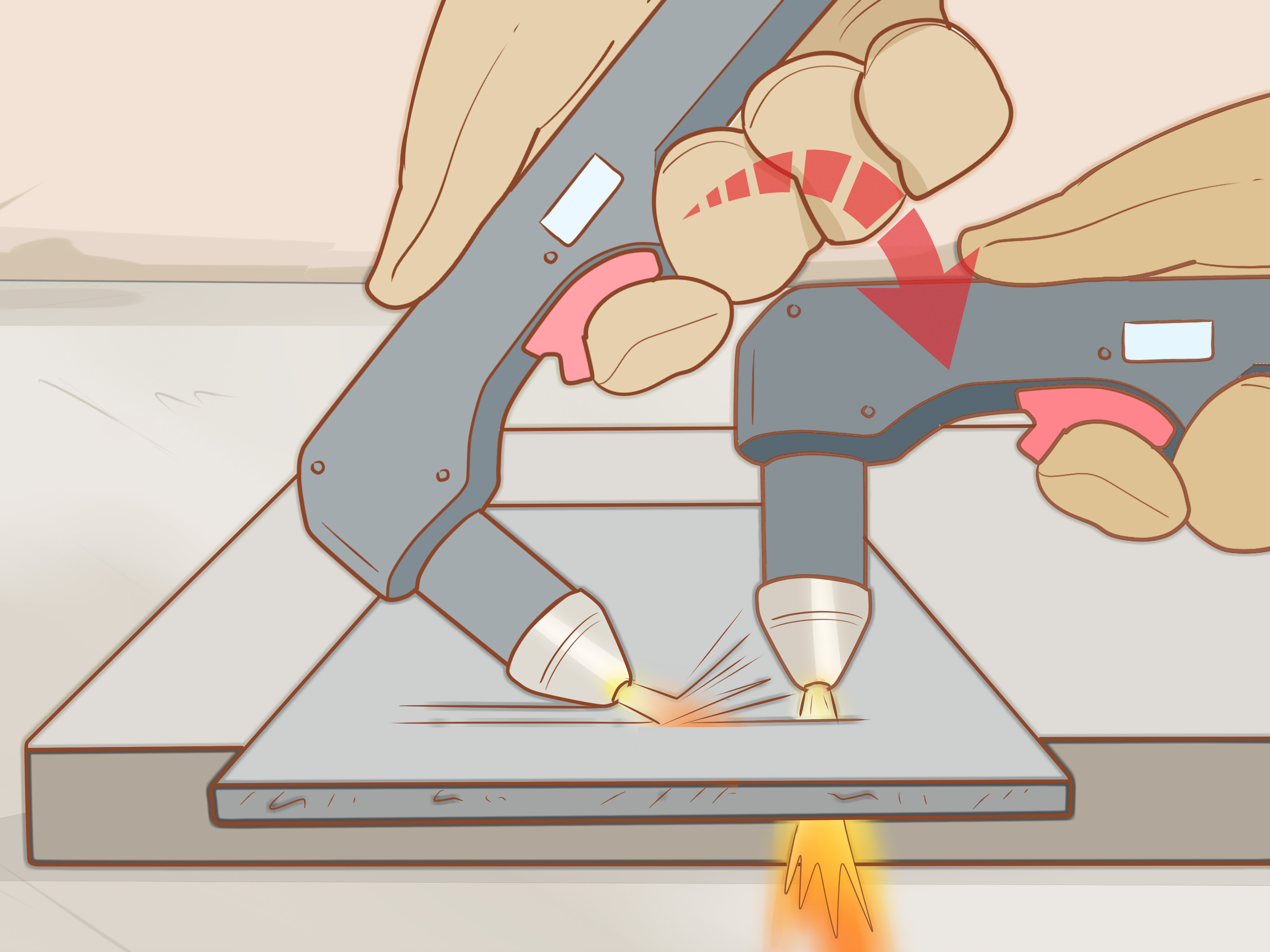
Freehand cutting is the most familiar way to use a plasma cutter. The operator guides a handheld torch along a marked line to cut metal into the desired shape. This approach is common in repair work, maintenance jobs, automotive projects, farm equipment fixes, construction adjustments, and small fabrication tasks.
Freehand plasma cutting is popular because it is flexible. You do not need a full CNC table or elaborate fixture to remove a damaged bracket, trim a plate, cut a patch panel, or shape a custom piece. A trained operator can bring the tool to the work, which is especially valuable when the metal is too large, awkward, or stubborn to move. Metal, as anyone who has dragged plate across a shop floor knows, does not always cooperate politely.
When Freehand Plasma Cutting Makes Sense
Freehand cutting is useful when the job is one-off, irregular, or repair-focused. For example, a maintenance technician might cut away a cracked section of steel plate before welding in a replacement. An automotive fabricator might trim a sheet metal panel to fit a restoration project. A farm mechanic might cut a worn bracket from equipment so a new piece can be fitted.
It is also useful for rough shaping. The cut may not always be as perfectly repeatable as a machine-guided profile, but it can be fast and effective. For many repair situations, speed and access matter more than showroom-perfect edges.
Best Practices for Cleaner Freehand Results
Good freehand cutting starts before the arc is ever created. The operator should inspect the equipment, check the consumables, confirm clean and dry air, secure the workpiece, and make sure the cut path is clear. A clear line helps, whether marked with soapstone, a scribe, or another shop-approved method. The steadier the guide path, the less grinding and cleanup may be needed afterward.
Operators typically aim to maintain a consistent torch angle, distance from the workpiece, and travel speed according to the machine manual. Moving too slowly can create excess dross, while moving too quickly may leave incomplete cuts. Worn consumables can make a cut wander or widen. Moisture in the air supply can also reduce cut quality and shorten consumable life. Plasma cutters like dry air the way coffee lovers like clean mugs: technically possible without it, but why invite misery?
Examples of Freehand Plasma Cutting Projects
Freehand plasma cutting can be used for cutting out rusted metal panels, trimming trailer parts, modifying brackets, removing damaged floor plate, cutting holes for access panels, and breaking down scrap into manageable pieces. In metal art, freehand cutting can create organic shapes, rough silhouettes, and decorative edges. In repair work, it can save hours compared with saws, grinders, or manual cutting methods.
The trade-off is precision. If the part needs identical repeats, tight tolerances, or clean bolt-quality holes, freehand cutting may not be the best choice. That is where guides, templates, and CNC systems enter the scene, wearing the metaphorical safety glasses of accuracy.
Way 2: Guided Cutting With Straightedges, Templates, and Circle Guides
The second way to use a plasma cutter is guided cutting. Instead of relying completely on hand control, the operator uses a straightedge, template, circle guide, track, or standoff accessory to help the torch follow a more consistent path. This approach bridges the gap between fully manual cutting and expensive automated systems.
Guided plasma cutting is ideal when the cut needs to be cleaner, straighter, or more repeatable than freehand work can easily provide. It is commonly used in fabrication shops, metal sign work, repair projects, and small production tasks where precision matters but a full CNC table is not necessary.
Using a Straightedge for Long Cuts
A straightedge or guide rail can help produce a cleaner line across sheet metal or plate. This is useful for cutting rectangular blanks, trimming edges, preparing panels, or sizing material for later welding. A guide helps reduce hand wobble, especially on longer cuts where even a tiny drift at the beginning can become an embarrassing scenic route by the end.
For best results, the guide must be stable, heat-resistant, and positioned so the torch can move smoothly. The operator still needs to account for kerf width, which is the material removed by the cut. Ignoring kerf is like measuring a sandwich before taking a bite and expecting it to be the same size afterward.
Using Templates for Shapes and Repeated Parts
Templates are useful for cutting repeated shapes, decorative panels, gussets, brackets, and sign elements. A template can be made from suitable material and used to guide the torch around curves, corners, or repeated profiles. This method is helpful for small shops that need consistency but do not have a CNC plasma table.
Templates are especially popular in creative metalwork. Artists and fabricators can cut letters, logos, animal silhouettes, garden panels, wall art, and furniture components. The plasma cutter’s ability to cut curves and irregular forms makes it more flexible than many mechanical cutting tools.
Using Circle Guides and Hole-Cutting Accessories
Circle guides help cut round holes or discs more consistently than freehand motion. They can be used for access holes, pipe openings, decorative circles, flanges, and round plates. However, for high-precision bolt holes or parts requiring tight mechanical fit, drilling, machining, or CNC plasma cutting may be more appropriate.
Plasma-cut holes can require cleanup depending on the application. If a hole needs a bolt to pass through roughly, guided plasma may be fine. If that hole is part of a precision assembly, measure twice, cut once, and still prepare to finish the edge properly. Metal has a way of humbling anyone who believes “close enough” is a universal engineering standard.
Guided Cutting Advantages
Guided plasma cutting improves consistency, reduces cleanup, and helps operators produce straighter lines and cleaner curves. It is also more affordable and portable than CNC cutting. For small batches, repair work, custom brackets, signs, and fabrication layouts, guides and templates can deliver a strong balance of speed and accuracy.
The main limitation is that guided cutting still depends on operator control. The human hand is still part of the process, and the results can vary with fatigue, torch handling, material thickness, and equipment condition. For repeat production, complex nesting, or detailed patterns, automation offers a major upgrade.
Way 3: CNC Plasma Cutting for Repeatable Parts and Complex Designs
The third major way to use a plasma cutter is CNC plasma cutting. CNC stands for computer numerical control. In a CNC plasma system, a computer-controlled table moves the torch along programmed paths to cut shapes from metal sheet or plate. This method is widely used in fabrication, manufacturing, sign making, agricultural equipment production, automotive parts, industrial repair, and custom metal design.
CNC plasma cutting is the choice when repeatability matters. Instead of tracing a line by hand, the operator creates or imports a digital design, nests parts efficiently on the sheet, and lets the machine follow the toolpath. The result can be faster production, more consistent parts, and less material waste.
What CNC Plasma Cutting Is Good For
CNC plasma cutting is excellent for repeated brackets, gussets, mounting plates, decorative panels, signage, machine guards, furniture components, trailer parts, and structural shapes. It is also useful for complex curves and internal cutouts that would be time-consuming to produce manually.
For businesses, CNC plasma can improve workflow because the machine can cut multiple parts from a single sheet while the operator focuses on setup, quality control, and finishing. Modern systems can also use nesting software to arrange parts efficiently, which reduces scrap. Less scrap means less wasted money and fewer oddly shaped metal leftovers haunting the corner of the shop.
CNC Plasma Cutting and Design Workflow
The CNC workflow usually begins with a digital file. The design is prepared in CAD or drawing software, converted into machine-readable instructions, and arranged on the material. The machine then follows the programmed path. Professional operators still need to understand material thickness, cut quality, consumables, grounding, ventilation, and machine maintenance. Automation does not remove skill; it relocates skill into setup, programming, and quality control.
CNC plasma cutting can produce impressive results, but it is not always the right tool for every job. Laser cutting may be better for very fine details on thin material. Waterjet cutting may be preferred for materials that should not be heat affected. Oxy-fuel may still be practical for very thick mild steel. Plasma sits in a sweet spot: fast, versatile, cost-effective, and capable of handling a broad range of conductive metals.
Limitations of CNC Plasma Cutting
CNC plasma systems require space, investment, maintenance, software knowledge, and dust or fume control. Cut edges can still need cleanup depending on thickness, settings, and material. Holes, especially small holes, may not match machined-hole quality without specialized equipment and careful setup.
For small shops, the decision often comes down to volume. If a shop cuts the same part repeatedly or spends too much time laying out shapes by hand, CNC plasma may be worth considering. If the work is mostly occasional repair and rough cutting, a handheld machine with good guides may be the smarter move.
Bonus Application: Plasma Gouging and Metal Removal
Although this article focuses on three main ways to use a plasma cutter, plasma technology can also be used for gouging. Plasma gouging removes metal rather than cutting completely through it. It is used for weld removal, surface preparation, defect removal, back gouging, and removing unwanted attachments from metal surfaces.
Gouging requires the right torch setup, consumables, ventilation, and training. It can be faster and cleaner than some traditional removal methods, but it also creates fumes, sparks, noise, and molten metal. Like all plasma work, it belongs in trained hands and properly controlled environments.
How to Choose the Right Plasma Cutting Method
The best way to use a plasma cutter depends on the job. Freehand cutting is flexible and fast for repairs. Guided cutting improves straightness and repeatability without full automation. CNC plasma cutting is ideal for production work, complex patterns, and repeated parts.
Choose Freehand Cutting When:
- The project is a one-off repair or modification.
- The cut does not require tight dimensional accuracy.
- The workpiece is large, awkward, or fixed in place.
- Speed and access matter more than perfect repeatability.
Choose Guided Cutting When:
- You need straighter cuts or cleaner curves.
- You are making simple repeated shapes.
- You want better results without investing in CNC equipment.
- The part needs moderate accuracy and less cleanup.
Choose CNC Plasma Cutting When:
- You need repeatable parts.
- You cut complex shapes or decorative panels.
- You want efficient sheet nesting and reduced waste.
- Production speed and consistency are important.
Common Mistakes to Avoid
One common mistake is trying to cut material beyond the machine’s realistic capacity. Many machines list maximum severance capacity, but that does not always mean the cut will be clean or efficient. For regular work, operators should focus on rated clean-cut capacity rather than heroic “it technically made it through” capacity.
Another mistake is neglecting air quality. Plasma cutters generally need clean, dry compressed air. Moisture and oil in the air supply can damage consumables and reduce cut quality. If the cut looks rough and the machine seems unhappy, the air supply may be part of the problem. Machines, like people, perform poorly when forced to breathe junk.
Worn consumables are another source of frustration. Electrodes, nozzles, and shields do not last forever. A worn nozzle can produce a wider, less focused arc, which leads to rough cuts, bevel, and extra cleanup. Good operators inspect consumables regularly and replace them according to the manufacturer’s guidance.
Cutting painted, coated, oily, or unknown metals is also risky. Coatings can create hazardous fumes, and contamination can affect cut quality. When material history is unknown, professional evaluation is the safe move. Finally, poor workpiece support can cause the metal to shift, drop, pinch, or create awkward cut conditions. Secure material is safer material.
Finishing After Plasma Cutting
After a plasma cut, the work is not always finished. Edges may have dross, sharp burrs, discoloration, or heat-affected areas. Depending on the project, the part may need grinding, deburring, sanding, cleaning, drilling, fitting, or welding preparation.
For decorative work, finishing can be part of the design. A plasma-cut sign might be cleaned, brushed, painted, powder coated, or left with an industrial raw-metal look. For structural or mechanical parts, finishing is about fit, weld quality, and safety. Sharp edges should be handled carefully and removed when appropriate. A plasma-cut edge can look harmless until it introduces itself to your glove like a tiny metal shark.
Experience-Based Tips for Using a Plasma Cutter
Experienced plasma cutter users often say the same thing in different ways: the cut is won before the torch moves. Preparation is the quiet hero. A clean work area, dry air, correct consumables, good grounding, clear layout, and stable material support can make an average machine perform well. Poor preparation can make an expensive machine act like it woke up cranky.
One practical experience from metal shops is that operators should test on scrap material whenever possible. A small test cut can reveal whether the machine is cutting cleanly, whether the travel speed feels right, and whether the consumables are in good shape. Skipping a test cut to save thirty seconds can lead to ten minutes of grinding, plus a bonus lecture from whoever has been in the shop longest.
Another experience-based lesson is to plan the cut sequence. When cutting a part from a larger sheet, internal holes and cutouts are often handled before the outside profile so the material remains stable longer. If the outside is cut first, the part may shift, drop, or vibrate while the remaining details are being cut. That can affect accuracy and safety. On CNC tables, software and experienced operators manage this through toolpath planning. In manual work, the operator still needs to think ahead.
Good lighting and clear marking also make a difference. Plasma cutting creates bright light, sparks, and smoke, so a faint line can disappear quickly. A clear layout reduces hesitation. Hesitation can cause uneven travel speed, which can create dross or rough edges. A smooth, confident motion is easier when the operator knows where the cut is going before it starts.
In guided cutting, the guide must be secured well. A straightedge that shifts during a cut can ruin the line and the mood. Clamps should be positioned safely away from the torch path, and the operator should make sure the torch can travel without bumping into obstacles. The best guide in the world is not helpful if the torch crashes into a clamp halfway through the cut like a shopping cart with one bad wheel.
Many users also learn to respect consumable life. If cut quality suddenly changes, the first instinct should not be to blame the universe. Inspect the nozzle, electrode, shield, and air supply. Consumables wear out gradually, then seem to fail suddenly when the cut matters most. Keeping spares on hand is not over-preparing; it is shop wisdom with a drawer.
Ventilation is another real-world priority. Plasma cutting fumes are not something to shrug off. Experienced operators pay attention to the material being cut, the coating on the metal, and the direction fumes are moving. Cutting indoors without proper fume control is a bad habit. Cutting unknown coated scrap without understanding the hazard is worse. The safest shops treat air quality as seriously as cut quality.
Finally, experienced users know that plasma cutting is not always the finishing tool. It is often the fast shaping tool. A cut edge may still need cleanup, especially if the part will be welded, painted, fitted, or handled frequently. Planning for finishing time makes projects more realistic. Plasma can save time, but it does not eliminate craftsmanship. It simply moves the work along faster, with more sparks and a slightly more dramatic soundtrack.
Conclusion: The Smart Way to Use a Plasma Cutter
A plasma cutter can be used in three main ways: freehand cutting for flexible repairs and custom work, guided cutting for straighter and more repeatable shapes, and CNC plasma cutting for production parts and complex designs. Each method has a place. The right choice depends on the material, accuracy needed, project volume, equipment available, and operator training.
The key lesson is simple: plasma cutting rewards preparation. Clean dry air, good consumables, safe ventilation, proper PPE, secure material, and a realistic plan will improve results before the arc ever begins. Used correctly by trained operators in controlled environments, a plasma cutter is one of the most versatile metal cutting tools available. Used carelessly, it can create serious hazards faster than you can say, “I probably should have read the manual.”

