
Beauty Unlocked
10 More Modern Conveniences That Met with Weird Resistance
Aug
Progress rarely arrives wearing a name tag that says, “Hello, I am the future, and I will make your Tuesdays easier.” More often, it rattles, sparks, smells suspicious, threatens somebody’s business model, or asks people to change a habit they have mistaken for a law of nature.
That helps explain why many modern conveniences were initially greeted with mockery, panic, moral outrage, and confident predictions of social collapse. New inventions were accused of weakening memory, harming pregnant women, destroying motherhood, encouraging laziness, corrupting manners, and even giving the devil a direct line into the living room.
Some objections were reasonable. Early cars were dangerous, telephone wires could attract lightning, and cosmetics were not always carefully regulated. The reactions became weird when practical caution turned into imaginative catastrophe. Here are ten modern conveniences and cultural staples that faced bizarre resistance before becoming ordinary parts of daily life.
Why Modern Conveniences Inspire Resistance
Resistance to technology usually grows from several ingredients: uncertainty, threatened jobs, changing social roles, real safety problems, and a generous spoonful of human imagination. A new invention may bypass established authorities, eliminate familiar work, expose people to unfamiliar risks, or force society to write new rules.
The public is not always irrational. The weirdness begins when a sensible question such as “Is this safe?” becomes a prophecy that the invention will destroy morality, intelligence, family life, and possibly lunch.
10. Computers Were Supposedly Needed in Tiny Numbers
The Famous Prediction That Was Probably Never Made
Technology histories frequently claim that IBM leader Thomas J. Watson predicted a world market for “maybe five computers.” It is an excellent punch line, but the quotation is almost certainly apocryphal.
A documented 1953 statement from Thomas Watson Jr. concerned IBM’s expectation that it might receive five orders for the extremely expensive IBM 701 scientific computer. The company returned with 18 orders. He was describing demand for one specialized machine, not predicting that humanity would stop after purchasing five computers.
The myth survived because it feels believable. Early computers filled rooms, cost fortunes, and served governments, laboratories, and enormous corporations. Few people imagined billions of smaller computers hiding inside cars, watches, phones, appliances, and toys. IBM’s later System/360 helped expand the computer’s role by offering a scalable architecture for science and business. The resistance was less about stupidity than a failure to imagine how dramatically size, price, and usefulness could change.
9. Fast Trains Were Blamed for Medical Catastrophes
When Speed Felt Physically Unnatural
Early rail travel compressed distance in a way that felt almost supernatural. Passengers accustomed to walking, horses, and carriages suddenly flew through the landscape inside noisy machines powered by fire, steam, and metal.
Modern retellings often claim that nineteenth-century observers feared high-speed trains would cause women’s uteruses to become dislodged or fly from their bodies. The story is repeated constantly, but historians have noted that many colorful quotations about early railway fears are exaggerated, misattributed, or poorly sourced.
Broader medical anxieties were real. Train travel was blamed for nervous disorders, shock, exhaustion, breathing problems, and bodily damage. The concerns were intensified by genuine crashes and by cultural beliefs that women were physically fragile. The famous uterus story may be folklore, but the gendered fear surrounding mechanical speed certainly was not.
8. Plato Worried Writing Would Weaken Memory
The Original “Technology Is Making Us Dumb” Debate
Long before smartphones were blamed for shrinking attention spans, Plato presented a critique of writing in the Phaedrus. Through Socrates, the dialogue suggests that written words could weaken memory by allowing people to rely on external marks instead of exercising their minds.
The irony is magnificent: Plato’s warning against writing survived because he wrote it down.
His argument was more sophisticated than “books are bad.” Written words cannot answer questions, adjust an explanation to a particular listener, or defend themselves when misunderstood. Plato considered writing useful as a reminder and a companion to philosophical discussion, but not a replacement for genuine understanding.
In modern terms, he was warning against confusing access to information with knowledge. Anyone who has copied an online answer without understanding it may reluctantly admit that the old philosopher had a point.
7. Computer Monitors Were Feared as a Cause of Miscarriage
Office Technology Meets Pregnancy Anxiety
As video display terminals spread through offices during the late 1970s and 1980s, reports of miscarriage clusters among workers created fears that CRT monitors emitted dangerous radiation or electromagnetic fields.
The technology seemed especially alarming because its inner workings were invisible and difficult for ordinary users to understand. A large box that fired electrons toward a glass screen was not designed to inspire warm feelings of maternal safety.
Researchers investigated the concern seriously. A major NIOSH-associated study found no excess risk of spontaneous abortion among women who used video display terminals during the first trimester. Researchers also found no dose-response relationship based on the number of hours spent using the equipment.
The episode demonstrates the healthy side of technological anxiety. A public concern led to proper scientific investigation. The important final step was allowing evidence to replace the frightening original rumor.
6. Answering Machines Were Treated as Suspicious Attachments
Talking to a Machine Was Apparently Too Much Freedom
The answering machine seems harmless today, particularly because many people now treat an unexpected live phone call as a minor home invasion. Its journey into American homes, however, was slowed by telephone-company control over equipment attached to the network.
Recording devices raised concerns about technical interference, unauthorized connections, privacy, and wiretapping. There was also social discomfort. Callers had to speak to a machine without knowing who might eventually hear the recording.
Telephone monopolies preferred equipment they manufactured or approved, leaving independent inventors to battle a tightly controlled system. Regulatory changes eventually opened telephone networks to customer-owned devices, helping answering machines, fax machines, and modems become common.
The answering machine did not destroy human conversation. It simply popularized “Sorry I missed your call,” a sentence that has performed heroic amounts of emotional labor ever since.
5. Telephones Were Called Instruments of the Devil
A Voice Came Through a Wire, So Satan Was Suspected
The early telephone did something profoundly unsettling: it separated a human voice from a visible human body. In Sweden, some citizens and religious leaders reportedly described the telephone as an instrument of the devil.
People worried about evil spirits traveling through wires, mysterious voices escaping from broken lines, electric shocks, and lightning. Farmers and landowners sometimes objected to telephone poles crossing their property.
Not every fear was imaginary. Early telephone lines were vulnerable to storms, and lightning could travel along exposed wires. The technology also disrupted privacy, courtship, business, visiting hours, and established ideas of polite conversation.
Telephone companies initially promoted practical business uses before recognizing that social chatter was profitable. The supposedly demonic instrument eventually evolved into the smartphonea device many people now use primarily to avoid speaking on the telephone.
4. The Cheeseburger Looked Like a Bizarre Experiment
Humanity Needed Time to Process Meat Plus Cheese
Today, placing cheese on a hamburger feels less like an invention and more like a natural law. American newspapers, however, once treated the cheeseburger as a strange California novelty.
In 1938, the dish appeared in reporting about the whimsical habits of California restaurants. A 1947 food article acknowledged that combining beef, cheese, and tomato might initially seem bizarre before concluding that the mixture made excellent gastronomic sense.
The hesitation illustrates how food traditions operate. Familiar ingredients can suddenly look ridiculous when assembled in a new format, especially when the dish comes from a region considered eccentric.
Once diners experienced melted cheese meeting a hot beef patty, resistance collapsed. The cheeseburger became a diner staple, a fast-food standard, and proof that certain cultural disagreements can be solved by lunch.
3. Modern Nail Polish Was Dismissed as a Passing Fad
Too Shiny, Too Modern, and Possibly Too Independent
Modern nail lacquer developed alongside the expanding cosmetics culture of the 1920s. Manufacturers borrowed ideas from glossy automobile finishes, while companies such as Cutex, Max Factor, and Revlon turned manicures into mass-market beauty products.
Some newspapers treated colored nail polish as a temporary foreign fashion. The New York Times reportedly described it as a “London fad” in 1927. That prediction did not age particularly well.
Resistance involved more than aesthetics. Bright cosmetics were associated with flappers, changing gender roles, public self-expression, and women’s increasing purchasing power. Concerns about product safety were not entirely unreasonable because cosmetics regulation and ingredient standards were still developing. Modern regulators continue to oversee nail products and require appropriate labeling and warnings.
The so-called fad now includes salons, home kits, gels, extensions, nail art, seasonal collections, and enough color names to make a paint store feel seriously underdressed.
2. Automobiles Were Condemned as Impractical and Terrifying
The Horseless Carriage Had a Public-Relations Problem
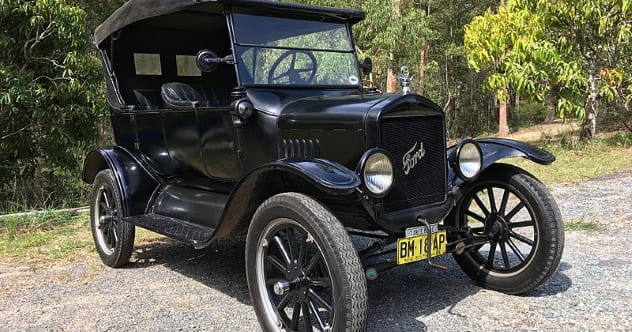
Early automobiles were noisy, expensive, unreliable, difficult to repair, and forced to travel on roads built for horses and wagons. Their arrival caused conflict among pedestrians, cyclists, streetcars, horse-drawn traffic, and drivers operating before standardized licenses or traffic signals.
Newspapers described automobiles as a terror of modern transportation, and many critics doubted they could become practical for ordinary families. Some skepticism was justified. Cars frightened horses, broke down frequently, injured pedestrians, and demanded enormous investments in roads and safety rules.
Critics underestimated the feedback loop between manufacturing and infrastructure. Mass production lowered prices. More drivers demanded better roads. Better roads made automobiles useful to more people, creating even greater demand.
The automobile did not simply adapt to the existing world. Roads, communities, businesses, and eventually entire cities were rebuilt around it. Early cars looked impractical partly because the environment required to make them practical did not exist yet.
1. Teddy Bears Were Accused of Threatening Motherhood
The Softest Moral Panic in American History
The teddy bear became popular after Theodore Roosevelt’s famous 1902 hunting incident inspired a political cartoon and a new style of stuffed toy. Five years later, the cuddly bear found itself accused of endangering civilization.
In 1907, a Michigan clergyman argued that teddy bears were replacing baby dolls and weakening girls’ maternal instincts. Using the racialized language of the period, he connected the toy to fears about declining white birth rates and “race suicide.”
The argument combined sexism, eugenic anxiety, and the timeless adult habit of blaming children’s toys for social change. A stuffed animal was treated as a competitor to a prescribed future in which every girl practiced motherhood through doll play.
Newspapers spread and mocked the controversy, while children continued loving their bears. More than a century later, teddy bears symbolize comfort, affection, and childhood. Civilization survived the plush menace.
What These Strange Reactions Reveal About Innovation
These stories are amusing when viewed from the future, but they should not become an excuse to dismiss everyone who questions new technology. Inventions can create genuine danger, inequality, surveillance, environmental damage, and job displacement. Early critics may misunderstand the mechanism while correctly sensing that a major social transformation is coming.
The useful approach is to separate evidence from symbolism. Ask what measurable risks exist, who benefits, who bears the costs, and which rules are missing. Then watch for emotional claims that transform an unfamiliar object into a supernatural villain.
The telephone was not demonic, writing did not eliminate human memory, and teddy bears did not end motherhood. Nevertheless, each innovation changed behavior in ways that deserved thoughtful discussion.
Experiences We Still Have When Convenience Feels Uncomfortable
The First Encounter Is Usually Awkward
Most people have experienced a smaller version of these historical reactions. Consider the first time a restaurant replaced its printed menu with a QR code. The task sounded simple: point a phone, tap a link, and choose lunch. Yet the screen was too bright, the signal was weak, the menu loaded slowly, and someone at the table inevitably had 3 percent battery. A convenience designed to eliminate paper suddenly required a charged device, a camera, mobile data, and the patience of a systems administrator.
The same pattern appeared with self-checkout machines. Supporters saw shorter lines and faster purchases. Critics saw job displacement, surveillance, unpaid labor, and a machine loudly announcing that an unidentified item had entered the bagging area. Both perspectives contained truth. The technology was convenient when it worked and infuriating when it transferred every error to the customer. Resistance did not necessarily mean shoppers hated progress; sometimes they hated being recruited as temporary grocery-store employees.
Ride-sharing apps created another unusual transition. Ordering a car from a moving map felt magical, but getting into a stranger’s vehicle because a screen displayed the correct license plate required a new kind of trust. Online banking produced similar anxiety. People who comfortably handed paper checks to store clerks became nervous about moving money through an invisible network, even though paper systems had fraud risks of their own. A stamped document felt real, while digital confirmation felt like a polite promise made by electricity.
Smart speakers, facial recognition, cloud storage, telemedicine, and artificial intelligence continue the pattern. Each offers convenience while asking users to surrender something: privacy, control, familiar routines, professional authority, or the comforting belief that humans remain necessary at every step.
The strongest resistance often appears when the trade-off is hidden. People may accept a machine that saves time, but they become suspicious when they cannot determine what information it collects, how it reached a decision, or who is responsible when the system fails.
There is also a generational element. A younger person may adopt a tool because it feels intuitive, while an older relative sees unnecessary complexity. Eventually, the roles reverse. Yesterday’s enthusiastic adopter encounters a platform filled with unfamiliar gestures, strange slang, and an interface designed by someone who apparently considers labels a moral weakness. Suddenly, the technology lover becomes a grumpy traditionalist asking why the perfectly good button had to disappear.
That experience creates sympathy for people in the past. Imagine hearing a voice emerge from a wire, moving faster than any horse, or being asked to trust food stored inside a humming electric cabinet. The reaction might not be elegant. It might include rumors, sermons, angry editorials, and one neighbor who is completely certain that the device will damage the moon.
The best response to a new convenience is neither blind enthusiasm nor automatic rejection. Test the tool, examine the evidence, understand the trade-offs, and maintain a sense of humor. Today’s ridiculous novelty may become tomorrow’s invisible infrastructure. It may also become a forgotten gadget in a kitchen drawer. History does not reward every invention, but it repeatedly punishes confident declarations that nobody will ever want something useful, affordable, and easy enough to become a habit.

