
Beauty Tools & Accessories
10 Easy Pieces: Bunk Beds for Kids’ Rooms
Aug
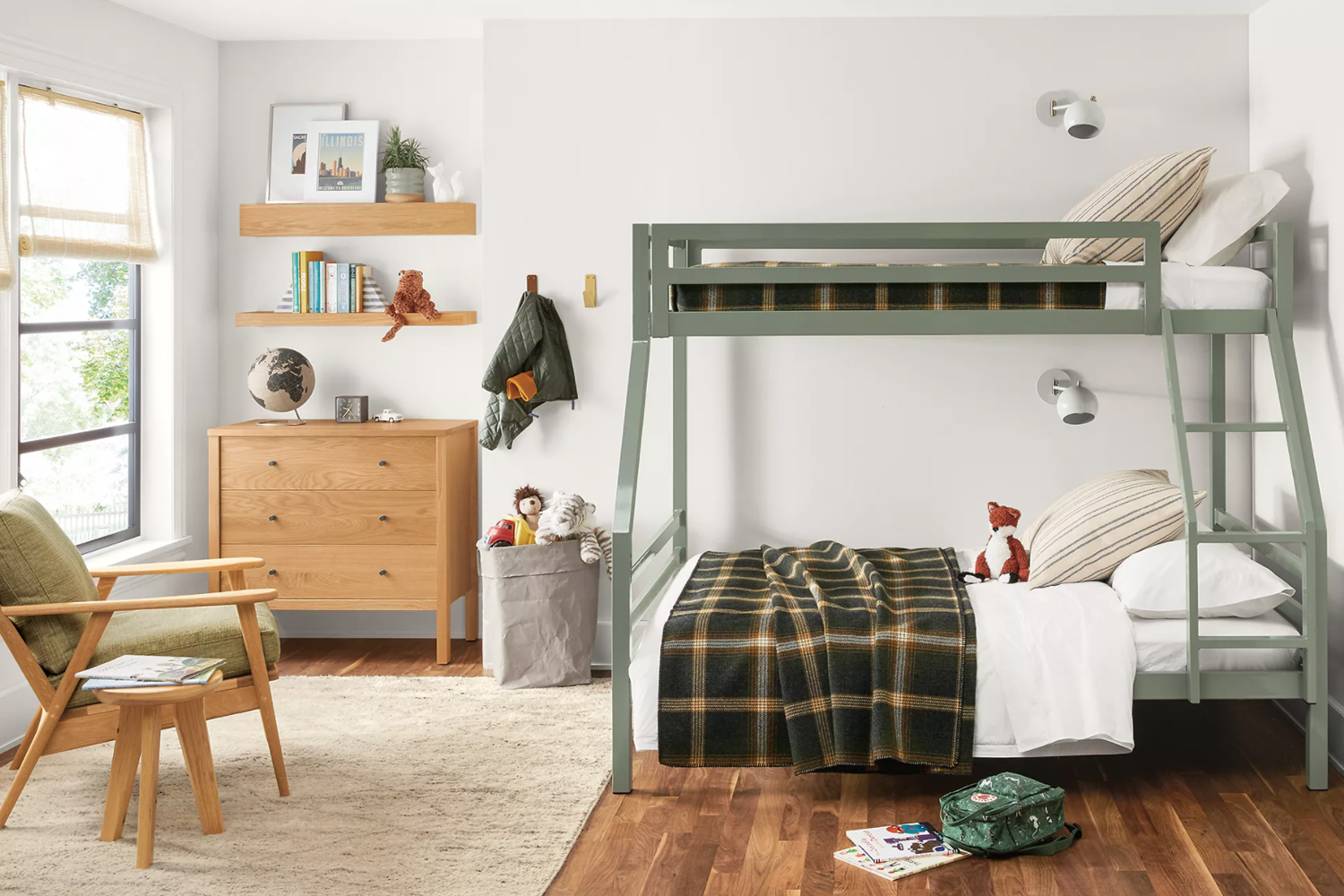
Bunk beds are the Swiss Army knives of children’s furniture. They stack sleeping space, free up the floor, simplify sleepovers, and somehow turn an ordinary Tuesday night into “summer camp, but with central air.” For siblings sharing a bedroom or families trying to make a small room work harder, a well-chosen bunk bed can solve several design problems at once.
The challenge is finding a kids’ bunk bed that balances safety, durability, style, and everyday practicality. The most photogenic model on the internet may be too tall for your ceiling, too difficult to climb, or designed for a mattress so thin that your favorite plush option turns the guardrail into decorative trim.
This guide highlights 10 easy pieces representing the best bunk-bed styles for kids’ rooms, from compact metal frames to convertible solid-wood designs. These are not simply beds that look good in a professionally styled photograph. Each selection offers a useful lesson about choosing furniture that can survive siblings, sleepovers, room makeovers, and at least one mysterious marker stain.
What to Check Before Buying a Kids’ Bunk Bed
Before falling in love with a curved headboard or clever staircase, measure the room carefully. Record the ceiling height, baseboard depth, available wall length, window placement, door swing, and distance from any ceiling fan. Then compare those figures with the fully assembled dimensions of the bed.
Leave enough headroom for a child to sit up comfortably on both bunks. Remember that the advertised frame height does not tell the whole story: the mattress adds height, and the upper sleeper still needs clearance above it. A low bunk bed can be especially helpful in rooms with eight-foot ceilings or for parents who would rather not climb a ladder every time a fitted sheet stages a rebellion.
Follow the Upper-Bunk Age Rule
Children younger than six should not sleep on the upper bunk. Younger children may lack the coordination and judgment needed to climb safely or avoid falling. The ladder should be permanently attached or securely fastened, and a night-light should illuminate the route without creating dangling cords.
Protect the Guardrail Height
Federal requirements call for guardrails on both sides of the upper bunk, with the rail extending at least five inches above the top of the mattress. That measurement includes mattress pads and toppers. Never substitute a thicker mattress simply because it feels more luxurious; follow the manufacturer’s maximum mattress-thickness specification.
Inspect the Structure Regularly
Check bolts, slats, guardrails, ladder connections, and support components after assembly and periodically thereafter. Children should not jump, wrestle, or play on the ladder. Scarves, ropes, belts, cords, and bags should never be tied to the frame because they can create strangulation hazards.
1. IKEA TUFFING Bunk Bed Frame
The IKEA TUFFING is a practical example of a low-profile metal bunk bed. Its streamlined steel frame and fabric guardrail panels give it a lighter visual footprint than a bulky wooden model, which can help a compact bedroom feel less crowded.
Because TUFFING sits lower than many conventional bunk beds, parents can reach the upper mattress more easily while making the bed or delivering a goodnight hug. A centered ladder also gives the design a balanced appearance and can be useful when neither end of the frame offers much clearance.
This style works best in a contemporary room where floor space matters more than built-in storage. Its dark neutral finish pairs easily with colorful sheets, graphic rugs, and bright wall art. The metal structure is also a reasonable choice for anyone seeking an unfussy bunk that does not pretend to be a castle, fire station, or pirate vessel.
Best for: Small rooms, lower ceilings, minimalist interiors, and budget-conscious families.
2. IKEA MYDAL Solid-Pine Bunk Bed
The MYDAL demonstrates why a simple pine bunk bed remains a classic. Its solid-wood construction, straightforward lines, and unfinished-looking natural tone can blend with Scandinavian, farmhouse, coastal, or colorful eclectic décor.
Natural pine also gives creative households room to personalize. The frame can remain plain, or the surrounding room can be updated with painted walls, removable decals, striped bedding, or fabric pockets attached according to the manufacturer’s safety guidance. Keep alterations away from guardrails and structural components, and never add hooks or dangling accessories to the bed itself.
MYDAL is better for families willing to invest time in careful assembly. Measure the lower-bunk headroom and confirm the approved upper-mattress thickness before buying mattresses. The reward is a sturdy-looking, adaptable design that does not dominate the room.
Best for: Natural interiors, do-it-yourself decorators, shared bedrooms, and families seeking solid wood without luxury pricing.
3. Pottery Barn Kids Camden Low Bunk Bed
The Camden Twin-Over-Twin Low Bunk Bed offers a more polished interpretation of the low-bunk concept. Its compact height makes the upper bed feel more accessible, while its paneled wood construction gives the room a finished, furniture-like appearance.
The Camden is especially appealing when parents want a children’s room to coordinate with the rest of the home. It avoids cartoonish details and relies on clean lines, neutral finishes, and traditional craftsmanship instead. Current versions are marketed with certifications related to indoor air quality and responsible material sourcing, considerations that may matter in a room where children spend many hours sleeping and playing.
A low bunk is not an excuse to place a younger child on top; the six-and-older guidance still applies. However, the reduced height can simplify sheet changes and make the top bunk feel less like an expedition to Base Camp.
Best for: Younger school-age siblings, low ceilings, refined rooms, and parents who value certified materials.
4. Crate & Kids Abridged Twin-Over-Full Bunk Bed
A twin-over-full bunk bed is one of the most flexible configurations for a growing family. The narrower upper bunk preserves the classic stacked silhouette, while the full-size lower bed gives an older child more room to stretch out. It can also accommodate a parent during story time or an adult guest when needed.
The Abridged design from Crate & Kids stands out for its clean, sculptural shape and integrated ladder. It feels modern without looking temporary, which matters when a bunk bed represents a significant furniture purchase. The restrained finish also allows bedding and artwork to change as a child moves from dinosaurs to skateboards to the mysterious teenage phase known as “please knock.”
A twin-over-full frame occupies more floor space than a standard twin-over-twin model, so confirm both the width and ladder clearance. Also check the recommended mattress dimensions for each level rather than assuming the two bunks use identical bedding.
Best for: Mixed-age siblings, guest-ready children’s rooms, and families wanting a design with long-term visual appeal.
5. Pottery Barn Kids Belden Stair Bunk Bed
For children who dislike vertical ladders, a staircase bunk can make climbing feel more stable and familiar. The Belden Twin-Over-Full Stair Bunk combines a roomy lower bed with broad steps and integrated storage, turning circulation space into a useful home for pajamas, books, toys, or spare bedding.
The trade-off is size. Staircase bunks are substantially longer than ladder models, and their storage sections may determine which wall the bed must occupy. Measure the complete footprint rather than the mattress area alone. Check that doors, drawers, and the staircase can all open without colliding with a dresser or bedroom entrance.
This configuration can be especially effective in a shared room with limited closet space. It replaces two separate beds and a small storage unit with one coordinated structure, although assembling it may feel like constructing a tasteful wooden apartment building.
Best for: Children who prefer stairs, rooms lacking storage, mixed-size mattresses, and carefully measured long walls.
6. Oeuf Perch Twin Bunk Bed
The Oeuf Perch is designed for households that want modern furniture with a lighter visual presence. Its slim profile, Baltic birch construction, angled ladder, and smooth guardrails create an airy look that works particularly well in urban apartments and design-conscious homes.
Its greatest advantage is adaptability. The bunks can be separated into a standalone twin bed and a loft, allowing the arrangement to change as children grow or move into separate rooms. Optional storage and trundle components can add functionality without requiring families to replace the entire frame.
Convertible furniture is valuable only when owners keep the hardware and instructions. Label unused connectors and store them in a sealed bag somewhere more memorable than “that safe place” nobody can find three years later.
Best for: Modern rooms, apartment living, families expecting future layout changes, and buyers prioritizing convertible furniture.
7. Babyletto Bondi Convertible Bunk Bed
The Babyletto Bondi brings softer shapes to a category often dominated by square posts and straight rails. Rounded feet, curved panels, and warm wood tones create a relaxed, bohemian-inspired look that feels friendly without becoming overly themed.
Bondi can separate into two twin beds, and its ladder can be positioned on either side to suit different room layouts. That flexibility is helpful when moving homes or rearranging a bedroom around windows, closets, and heating vents. A compatible trundle can provide either extra sleepover space or storage, depending on the household’s priorities.
The model is also marketed as GREENGUARD Gold Certified and uses child-safe finishing processes. Certifications should not replace normal comparison shopping, but they offer useful information for parents evaluating chemical-emission standards and materials.
Best for: Warm modern interiors, flexible room plans, design-conscious parents, and siblings who may eventually use separate beds.
8. Max & Lily Twin Low Bunk Bed With Staircase
The Max & Lily low staircase bunk is a practical solution for rooms that need both vertical sleeping space and accessible storage. At roughly 50 inches high, the frame is lower than many full-height bunks, while the staircase incorporates compartments for frequently used belongings.
Its solid-wood construction and high stated weight capacity make it attractive to families seeking a substantial frame. Still, weight limits refer to proper use and do not grant permission for synchronized trampoline practice. Every sleeper, mattress, and accessory must remain within the manufacturer’s limits.
The staircase adds nearly two feet of length compared with many ladder bunks, so this model requires a generous wall. In return, children get broader climbing surfaces, and parents gain storage that does not consume additional floor area.
Best for: Lower ceilings, storage-hungry bedrooms, children who prefer steps, and families needing a sturdy wood frame.
9. West Elm Mid-Century Twin Bunk Bed
The West Elm Mid-Century Twin Bunk Bed is for parents who would like the children’s furniture to speak the same design language as the living-room credenza. Tapered legs, warm wood tones, and a restrained silhouette create a grown-up look that can survive years of changing interests.
Timeless furniture is often more sustainable in practice because it is less likely to be replaced when a child outgrows a theme. Instead of buying a bed shaped like a racing car, families can introduce personality through lower-cost, easily changed elements such as bedding, framed art, baskets, lamps, and rugs.
This model suits rooms with enough height for a conventional bunk and enough visual space for a darker wood finish. Pair it with pale walls or lively textiles to prevent the room from feeling too formal.
Best for: Mid-century interiors, long-term use, coordinated homes, and parents who prefer classic furniture over themed designs.
10. RH Callum Bunk Bed
The Callum Bunk Bed from RH represents the substantial, architectural end of the category. Its platform-style lower bunk and stout corner posts give it the presence of built-in furniture without requiring a custom carpenter.
A heavier visual design works well in larger children’s rooms, vacation homes, and dedicated bunk rooms. It can anchor layered quilts, wall sconces, striped rugs, or cabin-inspired décor without looking flimsy. The styling is traditional enough to accommodate children now and adult guests later, provided the selected configuration and weight limits are appropriate.
Before choosing a large-scale frame, tape its dimensions on the floor and mark its height on the wall. This low-tech trick reveals whether the bed will overwhelm the room, block a window, or force everyone to enter sideways like they are boarding an airplane restroom.
Best for: Spacious rooms, vacation houses, traditional interiors, and buyers seeking a furniture-like focal point.
How to Choose Among These Bunk-Bed Styles
Start with the room rather than the product photograph. A low twin-over-twin model is usually the most efficient choice for a compact shared bedroom. A twin-over-full design provides more flexibility for different ages or occasional guests. Stair bunks trade floor space for easier climbing and storage, while convertible frames offer the best chance of remaining useful after siblings stop sharing.
Then compare construction, stated weight capacity, mattress requirements, ladder placement, guardrail design, certifications, warranty terms, and assembly needs. Confirm whether the bed can be separated and whether doing so requires an additional conversion kit. Read the instruction manual before ordering mattresses; it is less exciting than choosing sheets, but considerably more useful.
Real-Life Experience: What Living With a Bunk Bed Is Actually Like
Bunk beds look wonderfully tidy in catalogs because nobody photographs them at 7:12 a.m. with one blanket hanging from the guardrail, three stuffed animals trapped behind the ladder, and a child loudly disputing whose turn it is to occupy the “penthouse.” In real life, the best bunk bed is not necessarily the fanciest one. It is the model that fits the room, supports daily routines, and can be cleaned without requiring advanced mountaineering skills.
One of the first lessons families learn is that upper-bunk sheet changes deserve their own fitness category. A lower frame makes the job easier, but every bunk benefits from fitted sheets with deep elastic edges and lightweight bedding. Bulky comforters are harder to tuck around guardrails, while a washable quilt or duvet can be folded neatly with less wrestling. Keeping a small lidded basket for clean sheets nearby also saves repeated trips across the house.
The second lesson involves personal territory. Even siblings who share everything from toys to cereal-box arguments usually want their own sleeping zone. Individual bedding, a designated wall pocket, and separate reading lights can make each bunk feel private. Any accessories should be manufacturer-approved and installed without creating entrapment or strangulation risks. Battery-powered lighting may avoid loose cords, but it still needs secure installation and routine battery checks.
Storage works best when children can reach it independently. Stair drawers are useful for pajamas and toys, while a trundle drawer can hold seasonal bedding. Under-bed bins are less successful when they are so tightly packed that opening one causes an avalanche of forgotten craft supplies. A simple rule helps: store daily items near the front and long-term items elsewhere.
Bedtime behavior also matters. Children need clear rules from the first night: one person on the ladder at a time, no jumping, no hanging from rails, and no attaching ropes, scarves, belts, or bags to the frame. These rules may sound obvious to adults. To a child, however, a bunk ladder can resemble playground equipment that happens to be indoors and conveniently available after lights-out.
Parents should inspect the bed regularly, particularly after a move or energetic sleepover. Tighten hardware according to the instructions, look for cracked slats, test the ladder, and confirm that the guardrails remain secure. Check the upper mattress height whenever a topper is added. A soft new pad may feel harmless, but it reduces the effective height of the safety rail.
Finally, think beyond the current room. Convertible bunks are especially valuable when siblings may eventually separate. Keep every bolt, dowel, bracket, and instruction booklet in a labeled container. Photograph the hardware before storing it and save a digital copy of the manual. Future you, standing in a half-assembled bedroom surrounded by identical wooden pegs, will consider this an act of extraordinary kindness.
When chosen thoughtfully, bunk beds do more than conserve square footage. They create reading nooks, encourage imaginative play aroundnot onthe structure, make sleepovers easier, and give siblings a memorable shared space. The goal is not to create a showroom. It is to create a safe, durable room that works on ordinary mornings, chaotic evenings, and all the blanket-fort negotiations in between.
Conclusion
The best bunk beds for kids’ rooms combine efficient proportions with secure guardrails, appropriate mattresses, strong construction, and a layout suited to the actual bedroom. Low bunks simplify access in tighter spaces, staircase models add storage and easier climbing, twin-over-full frames accommodate growing children, and convertible bunks can become separate beds later.
Choose a neutral, durable frame and let bedding, rugs, and artwork supply the personality. Children’s interests may change overnight; replacing dinosaur sheets is much easier than explaining why a life-size dinosaur-shaped bed no longer feels sophisticated.

