
Skincare
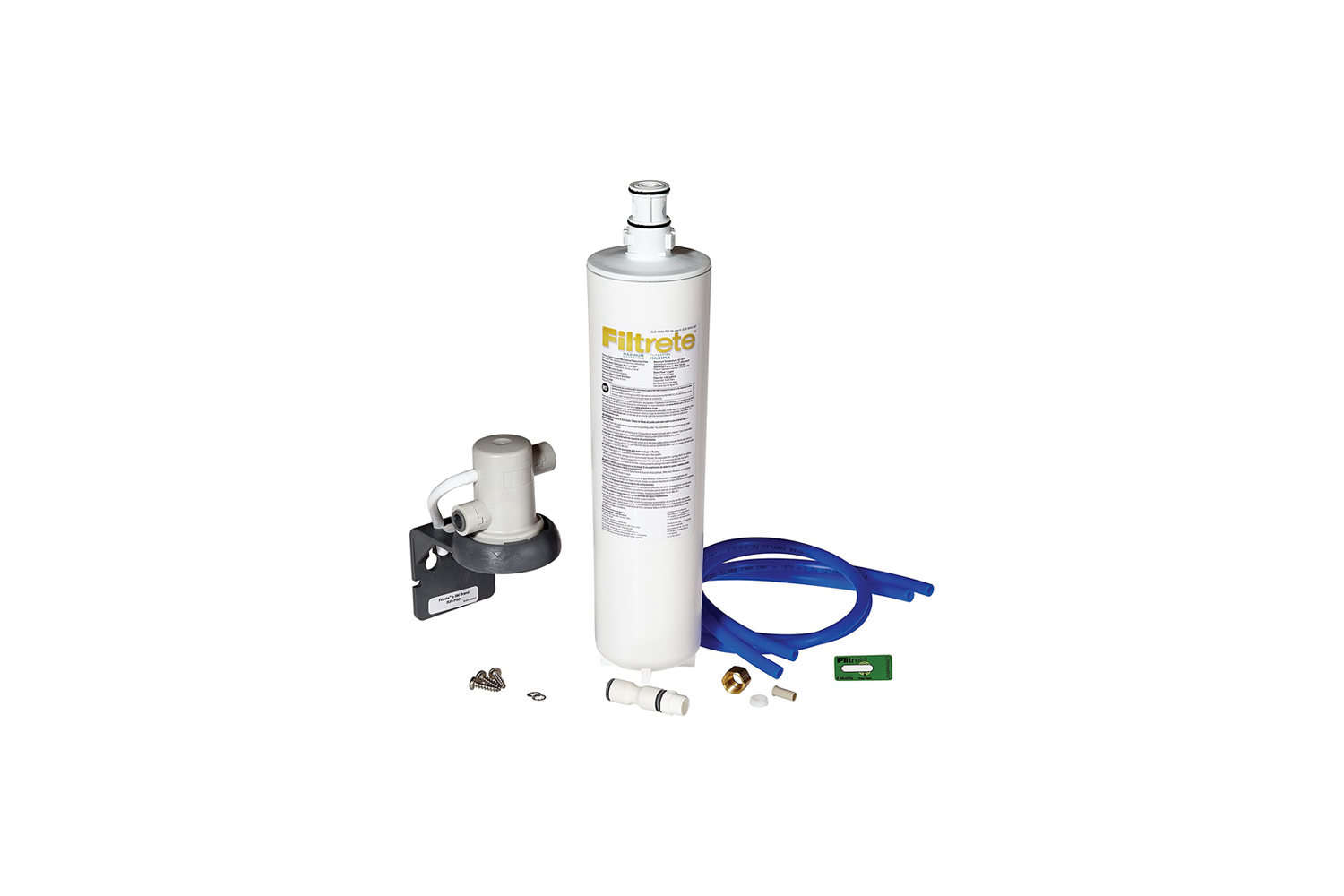
Filtrete Maximum Under Sink Water Filtration System
Aug
Tap water should taste like waternot like a swimming pool, a handful of pennies, or the mysterious inside of an old pipe. The Filtrete Maximum Under Sink Water Filtration System, commonly identified by model number 3US-MAX-S01, was designed to improve drinking water without turning the cabinet beneath your sink into a miniature treatment plant.
This compact, single-cartridge system connects directly to the cold-water line serving an existing kitchen or bathroom faucet. Unlike many under-sink filters, it does not require a separate dispenser, countertop modification, storage tank, drain connection, or electrical outlet. Once installed, cold water from the regular faucet passes through the filter automatically.
The system’s strongest selling points are its high flow rate, substantial contaminant-reduction claims, simple cartridge replacement, and space-saving design. However, it is not reverse osmosis, does not soften water, and should not be expected to remove every possible contaminant. Understanding those distinctions is the key to deciding whether it belongs under your sinkor whether your household needs something more specialized.
What Is the Filtrete Maximum Under Sink Water Filtration System?
The Filtrete Maximum system is a point-of-use water filter. Instead of treating every gallon entering the home, it filters cold water immediately before that water leaves a particular faucet. This approach concentrates filtration where it matters most for drinking, cooking, coffee, tea, ice, and food preparation.
The original system uses the 3US-MAX-F01 or regionally labeled equivalent replacement cartridge. Its carbon-block filtration media is designed to reduce chlorine taste and odor, fine sediment, lead, and certain microbial cysts. Published specifications identify a nominal capacity of approximately 1,500 gallons, a rated service interval of up to six months, a filtration rating of 0.5 micron, and a flow rate of about 1.5 gallons per minute.
Filtrete-branded water filtration products are also undergoing a branding transition to Aqua-Pure Water Filtration. That change can make shopping slightly confusing because older Filtrete packaging, updated Aqua-Pure branding, and third-party compatible cartridges may appear in the same search results. The model number and certified reduction claims matter more than the color of the logo on the box.
Key Specifications at a Glance
| Feature | Published Specification |
|---|---|
| System model | 3US-MAX-S01 |
| Replacement cartridge | 3US-MAX-F01 or applicable branded equivalent |
| Installation type | Under-sink, direct connection to an existing cold-water faucet |
| Dedicated faucet required | No |
| Rated capacity | Up to 1,500 gallons |
| Suggested replacement interval | Up to six months or when performance declines |
| Rated flow | Approximately 1.5 gallons per minute |
| Micron rating | 0.5 micron |
| Typical filtration medium | Carbon block with mechanical filtration |
| Reverse osmosis | No |
| Wastewater produced | No wastewater stream during normal filtration |
How the Filtrete Maximum System Works
The system is installed between the cold-water shutoff valve and the faucet supply line. When the cold tap is opened, household water pressure pushes water through the cartridge. The filter combines mechanical screening with adsorption inside a dense carbon block.
Mechanical filtration
The cartridge traps fine particles such as sand, soil, silt, rust, and sediment. This can be especially useful in older homes where aging plumbing occasionally contributes tiny flakes or discolored particles. Sediment reduction may also make water appear clearer and help keep particles out of kettles, coffee makers, and ice trays.
Activated-carbon adsorption
Activated carbon contains a large network of microscopic pores. As water passes through, compounds responsible for undesirable tastes and odors adhere to the carbon’s surface. Chlorine reduction is often the change users notice first, particularly in municipal water with a strong disinfectant smell.
Health-related reduction claims
Retail and manufacturer documentation for the maximum-level cartridge has advertised reductions of roughly 99% of lead, 99% or more of certain microbial cysts, and approximately 97% of chlorine taste and odor under specified testing conditions. Exact claims should always be confirmed on the current cartridge packaging and performance data sheet because certification applies to specific models and contaminantsnot to every vaguely similar cartridge that happens to fit the head.
Understanding NSF/ANSI Certification
Water-filter marketing can become a festival of impressive adjectives: premium, advanced, ultra, maximum, mega-maximum and, presumably, maximum-plus-with-a-cape. Certification is more useful than adjectives because it connects a specific product to standardized laboratory testing.
NSF/ANSI Standard 42 generally covers aesthetic effects, including chlorine taste and odor and certain particulate-reduction claims. NSF/ANSI Standard 53 covers specified contaminants that may affect health, such as lead or microbial cysts, when those exact claims are included in the certification listing.
The U.S. Environmental Protection Agency advises consumers seeking lead reduction to verify that a filter is certified for that specific purpose rather than assuming all carbon filters remove lead. The Centers for Disease Control and Prevention likewise emphasizes that different filters remove different substances and that buyers should match the product’s certified capabilities to the contaminants present in their water.
Certification to a broad standard does not automatically mean a cartridge reduces every contaminant covered by that standard. Check the exact model, performance data sheet, certification directory, and packaging language. This is particularly important when considering inexpensive compatible filters. A third-party cartridge may physically fit the Filtrete housing yet carry only chlorine-reduction certification, without the original cartridge’s certified lead or cyst claims.
Major Benefits of the Filtrete Maximum Under Sink Filter
It uses the faucet already installed
Many under-sink systems require a dedicated drinking-water faucet. That can mean drilling through a countertop or repurposing a soap-dispenser hole. The Filtrete Maximum system filters the cold water delivered through the main faucet, so there is no second spout competing for countertop territory.
It delivers practical household flow
A rated flow of approximately 1.5 gallons per minute is considerably more convenient than the slow trickle associated with some dedicated-faucet filters. Filling a stockpot, water bottle, pet bowl, or coffee reservoir remains reasonably quick. There may still be a modest pressure difference compared with completely unfiltered plumbing, but the faucet should not behave as though it has suddenly developed stage fright.
It does not require electricity or a storage tank
The system operates using existing water pressure. There is no pump, power adapter, control panel, or pressurized storage tank. This keeps installation relatively simple and reduces the number of components that can demand attention later.
It does not generate a reject-water stream
Reverse-osmosis systems separate water into treated water and a concentrate stream sent to the drain. The Filtrete carbon-block system does not use that process, so it produces no routine wastewater during filtration. That can appeal to households primarily concerned about taste, sediment, lead, or certified cyst reduction rather than broad dissolved-solids removal.
Cartridge replacement is simple
The sanitary quick-change design uses a quarter-turn cartridge connection. Once the water supply is shut off and pressure is relieved, the old cartridge can be rotated out and a new one locked into place. No filter wrench, open sump, loose O-ring, or bucket full of suspicious cabinet water should be necessary.
Installation: What to Expect
Manufacturer and retailer materials commonly describe installation as a project that can be completed in less than 30 minutes. That estimate is realistic when the shutoff valve works, the plumbing connections are compatible, the cabinet is accessible, and no fitting has been fused in place since the first moon landing.
Typical installation process
- Turn off the cold-water shutoff valve beneath the sink.
- Open the cold faucet to relieve pressure.
- Disconnect the existing cold-water faucet supply line.
- Mount the filter head vertically in an accessible cabinet location.
- Connect the supplied tubing and adapters between the valve, filter head, and faucet line.
- Insert the cartridge and rotate it until securely locked.
- Slowly reopen the shutoff valve.
- Inspect every connection for leaks.
- Flush the new cartridge according to its current instructions.
Leave adequate clearance beneath the cartridge so it can be removed later. Mounting it directly above a shelf, cleaning-product crate, or heroic collection of reusable grocery bags may turn a ten-second filter change into a cabinet excavation project.
The system should normally be installed on a cold, potable water line. It is not intended to make microbiologically unsafe water safe unless adequate disinfection is provided and the system is specifically approved for the intended application. Homeowners with private wells should test their water and select treatment based on actual results rather than purchasing a filter solely because the label looks reassuring.
Maintenance and Replacement Schedule
The replacement interval is generally stated as up to six months or 1,500 gallons, whichever comes first. Real cartridge life depends on household consumption, sediment levels, chlorine concentration, plumbing condition, and local water quality.
A family that uses the filtered faucet for nearly every cold-water task may reach the capacity sooner than a single-person household that uses it mainly for drinking. Heavy sediment can also restrict flow before the theoretical gallon rating is reached.
Signs that the cartridge needs replacement
- Water flow has noticeably slowed.
- Chlorine taste or odor has returned.
- The cartridge has reached its rated service interval.
- Local authorities have issued instructions requiring filter replacement.
- The system was unused for an extended period and the manufacturer recommends replacement.
Do not continue using an exhausted cartridge indefinitely simply because water still passes through it. The CDC warns that poorly maintained filters can support microbial growth and recommends replacing under-sink cartridges according to manufacturer instructions. A neglected water filter is not a fine wine; extra aging does not improve it.
Write the installation date on the cartridge or create a recurring phone reminder. Memory is unreliable, particularly when the filter is hidden behind trash bags, dishwasher tablets, and the bottle of cleaner nobody remembers buying.
What the Filtrete Maximum System Does Not Do
It does not reduce total dissolved solids like reverse osmosis
The system is not designed to remove the broad range of dissolved salts handled by reverse osmosis. A handheld total-dissolved-solids meter may therefore show little or no change after filtration. That does not necessarily indicate cartridge failure; carbon filtration and dissolved-solids rejection are different processes.
It is not a water softener
Calcium and magnesium cause scale and hardness. The Filtrete Maximum system does not replace an ion-exchange softener. It may improve taste and remove sediment, but it will not stop hard-water spots from staging a comeback on glassware.
It does not automatically remove PFAS
NSF/ANSI 53 certification alone should not be interpreted as proof of PFAS reduction. The current packaging or certification listing must explicitly identify PFAS, PFOA, or PFOS reduction. The EPA recommends selecting a product certified for the exact PFAS claim needed and checking the certifier’s directory.
It is not a substitute for emergency instructions
During a boil-water advisory or known contamination event, follow instructions from public-health authorities. A routine under-sink filter should not be assumed to provide adequate protection against viruses, bacteria, chemicals, or unusual contaminants unless the relevant reduction is specifically certified.
Filtrete Maximum Versus Reverse Osmosis
The Filtrete Maximum system makes the most sense when the goal is convenient filtration with good flow, minimal equipment, and no drain connection. Reverse osmosis is more appropriate when testing identifies contaminants that require broader dissolved-contaminant reduction.
| Category | Filtrete Maximum | Typical Reverse-Osmosis System |
|---|---|---|
| Uses existing faucet | Yes | Usually no |
| Storage tank | No | Common on traditional systems |
| Drain connection | No | Usually required |
| Electricity | No | Not always, but many tankless models require it |
| Water flow | High for a filtered line | Varies; often slower |
| Dissolved-solids reduction | No meaningful TDS reduction expected | Yes |
| Wastewater | None during normal operation | Produces a concentrate stream |
| Installation complexity | Relatively simple | Usually more involved |
Who Should Consider This System?
The Filtrete Maximum Under Sink Water Filtration System is best suited to households that:
- Want to improve chlorine taste and odor.
- Need a certified filter for specific claims such as lead or microbial cyst reduction.
- Prefer using the existing kitchen faucet.
- Want faster flow than many dedicated drinking-water faucets provide.
- Have limited cabinet space.
- Do not want a storage tank, drain connection, or electrical equipment.
- Are willing to replace cartridges on schedule.
It may be less suitable for homes requiring water softening, nitrate reduction, arsenic treatment, broad PFAS reduction, significant dissolved-solids removal, or treatment of microbiologically unsafe well water. In those cases, begin with laboratory testing or the local Consumer Confidence Report and choose equipment certified for the actual problem.
Replacement-Filter Availability and Compatibility
Availability deserves special attention. Some major retailer listings for the original 3US-MAX-S01 system and 3US-MAX-F01 cartridge now show the products as unavailable or no longer sold, while the official product family remains documented during the transition from Filtrete and 3M branding to Aqua-Pure branding. Inventory may therefore vary by region and seller.
Several third-party cartridges claim physical compatibility with the original filter head. They may be useful when genuine cartridges are difficult to locate, but compatibility does not guarantee equivalent filtration. A replacement certified only to NSF/ANSI 42 for chlorine reduction should not be treated as a substitute for an original cartridge carrying verified NSF/ANSI 53 lead or cyst claims.
Before purchasing, confirm five things: the exact cartridge model, physical compatibility, rated flow, service capacity, and certified contaminant claims. Avoid listings that borrow the original product’s reduction percentages without providing an independent certification record for the cartridge actually being sold.
Final Verdict
The Filtrete Maximum Under Sink Water Filtration System offers an appealing middle ground between a basic taste-and-odor filter and a complex reverse-osmosis installation. It is compact, relatively easy to install, capable of serving an existing faucet at a practical flow rate, and associated with meaningful reduction claims when used with the correct certified cartridge.
Its limitations are equally important. It does not soften water, broadly reduce dissolved solids, or automatically address PFAS and every other emerging contaminant. Cartridge availability and branding changes also mean buyers should verify current model numbers and certification details before investing in the system.
For households with treated municipal water that want better taste, sediment control, and certified reduction of particular contaminants without sacrificing normal faucet convenience, the Filtrete Maximum remains a thoughtfully designed option. Just remember that the cartridge is the working heart of the system. Installing a bargain replacement with weaker certifications can turn “maximum filtration” into “maximum optimism.”
A Realistic Ownership Experience With the Filtrete Maximum System
A typical ownership experience begins with a very ordinary complaint: the tap water is technically drinkable, but nobody particularly wants to drink it. It may have a noticeable chlorine smell in the morning, leave tiny sediment particles in the faucet aerator, or make coffee taste sharper than expected. The refrigerator dispenser is too slow, pitcher filters are constantly empty, and cases of bottled water occupy half the pantry.
After the Filtrete Maximum system is installed, the first noticeable difference is usually convenience. There is no special faucet to remember and no pitcher to refill. Turn on the cold tap, and filtered water arrives. That sounds almost comically simple, but simplicity is what makes a filtration system part of daily life rather than another kitchen gadget gradually migrating toward the back of a cabinet.
During the first flush, the water may contain harmless carbon fines or appear slightly cloudy from trapped air. Following the cartridge instructions resolves this. Afterward, the chlorine smell is often much less noticeable. Cold water tastes cleaner, ice cubes carry less odor, and tea no longer seems to have been brewed beside a public swimming pool.
The 1.5-gallon-per-minute flow is another practical advantage. Filling a large pasta pot still takes a reasonable amount of time. A slower dedicated-faucet system might encourage someone to use unfiltered water for cooking simply because dinner is already running late. With full-flow filtration, using filtered water for soup, rice, coffee, pet bowls, and produce rinsing requires little extra thought.
Cabinet space remains usable because the cartridge is tall and narrow rather than surrounded by multiple stages and a storage tank. Careful positioning matters, though. Mounting it too close to the cabinet floor can make replacement difficult. Mounting it directly behind the garbage disposal can transform routine maintenance into an awkward yoga pose involving a flashlight and several regrettable vocabulary choices.
The first filter change is usually easier than expected. The water supply is closed, pressure is released, and the cartridge turns out of the head. Because the housing is sealed, there is no wet sump to unscrew and no loose filter element to handle. A towel is still sensibleplumbing enjoys reminding everyone who is in chargebut the process is generally tidy.
Over time, maintenance habits determine satisfaction. A household that replaces the cartridge every six months may enjoy consistent taste and flow. A household that forgets for a year may experience declining pressure, returning chlorine odor, or uncertainty about whether the media is still performing as intended. Setting a calendar alert immediately after installation prevents the filter from becoming invisible both physically and mentally.
The most frustrating ownership issue may be replacement shopping. Original Filtrete-branded cartridges can be harder to find in some markets, and online listings are crowded with compatible products. A less expensive cartridge may fit perfectly but carry different certifications and reduction capabilities. Reading the small print becomes more important than reading the large word “compatible.”
Overall, the experience is strongest when expectations match the technology. This system can make everyday tap water more pleasant and reduce specified contaminants without tanks, wastewater, electricity, or countertop clutter. It will not turn extremely hard, salty, or heavily contaminated water into laboratory-grade water. Used for the right water problem and maintained correctly, however, it is the kind of appliance that quietly does its jobwhich is exactly what most people want from something living under the sink.
Note: Product branding, availability, replacement-filter model numbers, and certification listings may change. Verify the current packaging and independent certification record before purchasing or substituting a cartridge.

