
Body Care
Display Your City’s Emotional State With Illuminated Snow
Aug
What if a snowbank could blush, cheer, sulk, or glow with the collective mood of a city? It sounds like something a poetic urban planner might pitch after three espressos and one dramatic weather forecast. Yet the idea behind displaying your city’s emotional state with illuminated snow is surprisingly practical: take public mood data, process it with sentiment analysis, send the results to LED lights, and let snow do what snow does bestturn harsh light into a soft, magical glow.
The original concept became a clever example of data-driven public art. A maker used an Arduino connected to the internet, gathered local tweets within a defined radius, analyzed their emotional tone, and translated changes in sentiment into an LED display buried beneath snow. Instead of a blinking holiday decoration repeating the same tired routine, the snow became a living mood ring for the neighborhood. One moment it could pulse with optimism; the next, it might dim into a chilly blue that says, “The commute was terrible, the coffee was weak, and everyone has opinions.”
Beyond the novelty, this project sits at a fascinating intersection of interactive public art, smart city technology, sentiment analysis, urban data visualization, and LED lighting design. It asks a playful but serious question: can a city see itself feeling?
What Does “Illuminated Snow” Actually Mean?
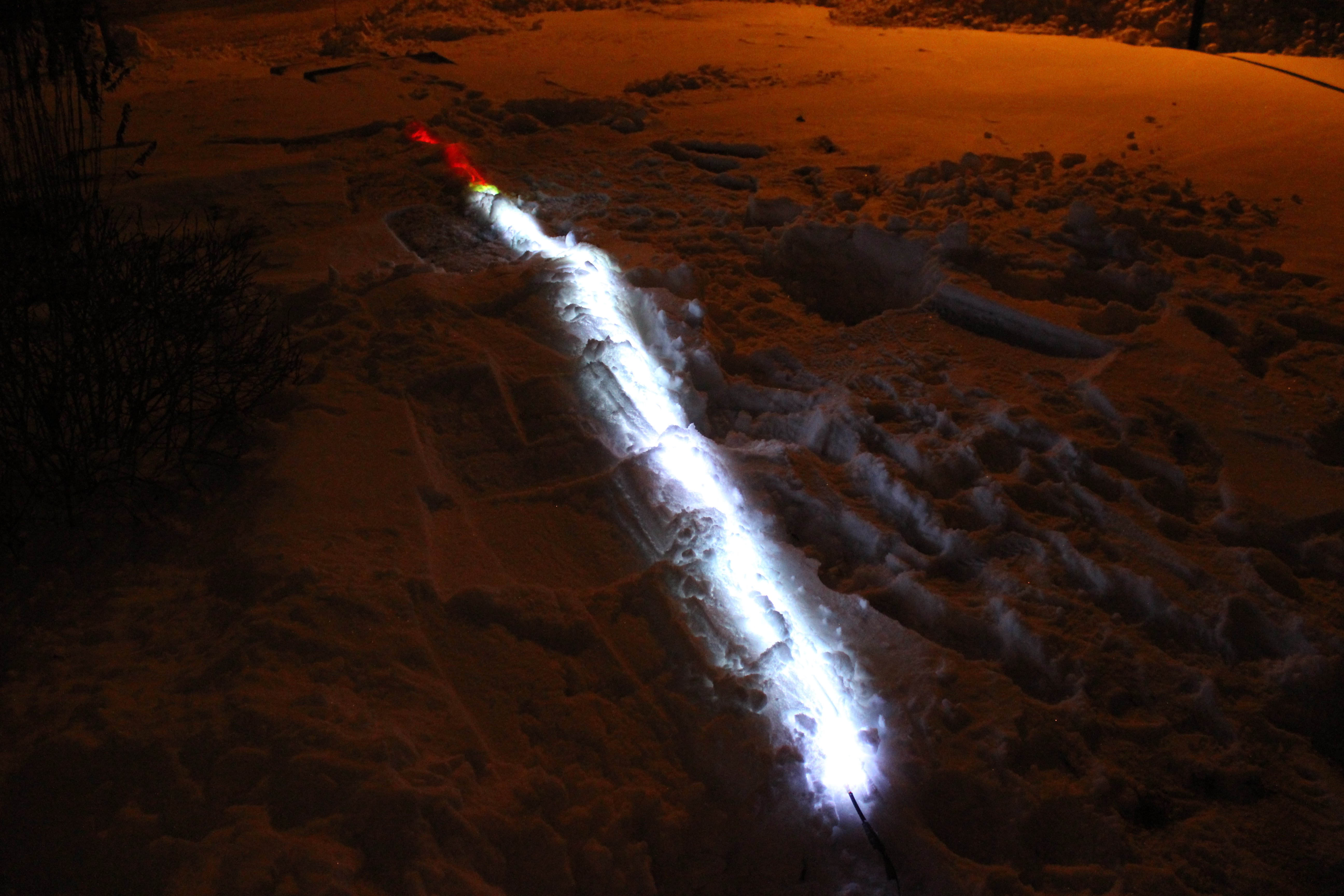
Illuminated snow is exactly what it sounds like: snow used as a glowing surface or diffuser for light. Instead of pointing an LED strip directly at viewers, the project hides the electronics under a layer of snow. The snow scatters the light, softens sharp points, and creates a smooth luminous effect. Individual LEDs disappear, and what remains is a continuous band of color that looks more like frozen aurora than hardware.
This is where nature quietly outperforms expensive design materials. Fresh snow reflects visible light extremely well, and its countless tiny ice crystals scatter light in many directions. That means a simple LED strip can suddenly look sophisticated, atmospheric, and oddly expensive. It is the same principle that makes winter nights feel brighter after a snowfall. The ground is not just covered; it becomes a giant, frosty reflector.
In the original setup, the maker experimented with different snow depths and found that a few inches created the best visual result. Too little snow allowed individual LED points to show through. Too much snow swallowed the brightness. The sweet spot turned the strip into a smooth glowing line, proving that sometimes the best optical diffuser is not sold in a specialty catalog. Sometimes it falls from the sky and blocks your driveway.
How the City’s Mood Becomes Light
The emotional snow display works through a simple chain of events. First, a system collects local social media posts. Then sentiment analysis software estimates whether the language is positive, negative, or neutral. Next, a microcontroller converts that emotional reading into a light pattern. Finally, LEDs glow under the snow, giving the city’s mood a visible form.
Step 1: Collecting Local Signals
The original project used tweets posted within about a 15-mile radius. That geographic boundary mattered because the artwork was not trying to visualize the entire internet. It was trying to create a neighborhood-scale emotional snapshot. In a modern version, a creator could use public posts with location tags, event hashtags, municipal feedback, weather comments, transit alerts, or even opt-in community mood surveys.
It is important to be realistic. Social media does not represent every resident. Some people post constantly. Others would rather communicate with smoke signals than update a public feed. Location-tagged posts are also only a slice of total online activity. So the phrase “city’s emotional state” should be read with a wink. The display does not reveal the soul of the city with scientific certainty. It shows the emotional tone of a selected public data stream.
Step 2: Understanding Sentiment Analysis
Sentiment analysis is a natural language processing technique that estimates emotional tone in text. A simple system might label a post as positive, negative, or neutral. More advanced tools can assign a score, detect intensity, identify emotion categories, or distinguish between sentiment toward different subjects.
For example, “The snow downtown is beautiful” might score positive. “The snow downtown trapped my car and stole my afternoon” would probably score negative, although the software may not fully appreciate the dramatic flair. Sarcasm, slang, local jokes, and mixed emotions remain difficult. A sentence like “Great, another blizzard, exactly what my knees ordered” may confuse a machine that has never shoveled a sidewalk.
That limitation is not a failure of the artwork. It is part of the artwork. The slight awkwardness between human emotion and machine interpretation creates a meaningful tension. The glowing snow is not a perfect emotional census. It is a public conversation starter about how cities feel, how data simplifies us, and how technology tries to translate messy human life into neat little numbers.
Step 3: Sending the Mood to LEDs
Once sentiment is measured, a microcontroller such as an Arduino can receive the data and control an LED strip. In the original version, an Arduino used an Ethernet shield to connect to the internet. Today, makers might use Wi-Fi-enabled boards, Raspberry Pi devices, ESP32 modules, or cloud-connected lighting controllers.
The light design can be simple or complex. Positive sentiment might glow warm gold. Negative sentiment might shift to blue or violet. High emotional intensity could pulse faster. Calm neutral chatter might become a soft white. Instead of showing raw sentiment, the original project displayed changes in sentiment over time because the overall average did not move dramatically enough to look interesting. That is a smart artistic decision. A display should not merely be accurate; it should be legible.
Why Snow Makes the Project Feel Magical
LEDs are useful, efficient, and flexible, but direct LED strips can look technical. Snow changes the emotional character of the light. It hides the machinery and leaves only the glow. That single design move transforms a maker project into an urban experience.
Snow also carries emotional meaning. It can make a city feel quiet, inconvenient, beautiful, nostalgic, or wildly unprepared. A glowing snowbank taps into those associations. People already stop to look at unusual light in winter. Add data-driven color, and the snow becomes a public dashboard that does not look like a dashboard. Nobody wants to spend a winter evening admiring a spreadsheet. But a glowing drift on a front lawn? That can pull neighbors into conversation.
The medium also has delightful impermanence. A digital billboard demands attention. Snow accepts attention gently. It melts. It changes shape. It gets stepped on by dogs with mysterious agendas. That temporary quality makes the installation feel alive. The artwork is not fixed in a gallery. It depends on weather, temperature, timing, and the moods of strangers typing into their phones.
From Holiday Lights to Responsive Public Art
Holiday lighting is usually decorative. It is programmed once, placed outside, and left to blink until January. The illuminated snow project pushes that tradition into smarter territory. Instead of showing the same pattern every night, it responds to city data. That makes it part of a broader movement toward responsive public art.
Public art has long helped communities express identity, memory, beauty, and belonging. Murals, monuments, sculptures, plazas, and light installations can make a place feel less generic. Interactive public art adds another layer: participation. A viewer does not just look at the object; the viewer helps shape the experience.
Projects like heartbeat-driven street installations, data-responsive bridges, urban light sculptures, and social media mood displays show how cities can turn invisible patterns into shared public moments. A bridge can glow in response to weather and traffic. A sculpture can turn heartbeats into music. A snowbank can become a mood display. These projects make data visible without requiring people to open a dashboard, attend a planning meeting, or pretend they enjoy municipal PDFs.
The Smart City Angle: Data With a Human Face
Smart city technology often focuses on efficiency: traffic sensors, energy systems, parking data, emergency alerts, and infrastructure monitoring. Those tools matter, but they can make urban technology feel cold and managerial. Illuminated snow offers a softer version of the smart city. It does not optimize garbage pickup or reduce congestion. It makes people pause and wonder what their community is expressing.
That matters because cities are not only systems. They are emotional environments. A neighborhood can feel tense after a storm, joyful after a local win, anxious during a crisis, or calm on a quiet winter evening. When public technology acknowledges emotion, it can make urban data more relatable.
A city mood light display could be used at winter festivals, libraries, university campuses, transit plazas, public parks, or community art events. It could visualize festival excitement, neighborhood feedback, local pride, or collective concern during severe weather. With the right safeguards, it could become a playful civic thermometerless “official government statement” and more “the city is humming tonight.”
Privacy and Ethics: The Part That Should Not Be Buried Under Snow
Any project that uses social data must treat privacy seriously. Public posts may be visible, but that does not automatically make every use respectful. A responsible version of this installation should avoid displaying individual messages, names, handles, or exact locations. It should aggregate data, smooth results over time, and communicate clearly what is being measured.
The best approach is transparency. A small sign or web page could explain that the display uses public, aggregated, anonymized text signals or opt-in community submissions. It should also explain that the result is symbolic, not scientific proof of citywide happiness or despair. Nobody wants to discover that their grumpy post about frozen pizza became the reason a snowbank turned purple.
There is also the issue of bias. Social media users are not a perfect sample of a city. Certain age groups, languages, neighborhoods, and income levels may be underrepresented. A community mood project should not pretend otherwise. If used for art, that limitation can be acknowledged. If used for decision-making, it needs much stronger methodology.
Design Ideas for a Modern Illuminated Snow Mood Display
A modern version of this project could be more robust, accessible, and community-friendly than the original quick build. Here are several practical ideas for creators, cities, schools, or art collectives.
Use Opt-In Mood Inputs
Instead of relying only on public social media, invite residents to submit one-word mood check-ins through a website, QR code, kiosk, or event app. This makes participation clearer and reduces privacy concerns. The system could ask, “How does the city feel tonight?” and offer choices such as joyful, calm, tired, excited, worried, or hopeful.
Create a Color Legend
People enjoy decoding public art. A simple color legend can help: amber for joy, blue for calm, red for frustration, violet for reflection, green for hope, and white for neutral. The display should still feel poetic, but viewers need enough information to understand the concept.
Keep the Lighting Responsible
Outdoor lighting should be useful, targeted, low-level, controlled, and warm when possible. Even an art project should avoid blasting light into neighbors’ windows or contributing unnecessary skyglow. Timers, dimming, shielding, and short operating windows can keep the installation beautiful without turning the block into a UFO landing zone.
Build for Weather
Snow is magical, but moisture is ruthless. Any outdoor electronics need waterproof housings, proper cable protection, safe low-voltage power, ground-fault protection, and cold-rated components. Cheap LED strips may work for a quick experiment, but a public installation needs safer planning and maintenance.
Add Accessibility
Because public art should reach more than sighted viewers, consider audio descriptions, tactile signs, vibration feedback, or a companion web page that describes the current mood state. A glowing snow display can be visually enchanting, but inclusive design makes the idea stronger.
Why This Project Still Feels Fresh
Even years after the original experiment, the concept remains relevant because it combines three things people still care about: cities, feelings, and light. It also anticipates current conversations about AI, public data, social listening, and civic design. Today, we have more advanced sentiment tools, cheaper connected hardware, and better conversations around privacy. That makes the idea easier to buildand more important to build thoughtfully.
The charm lies in its humility. It is not a billion-dollar smart city platform. It is not a giant command center with wall screens and dramatic maps. It is a strip of light, a bit of code, some local text, and snow. Yet it communicates something powerful: data does not have to stay trapped in dashboards. It can become atmosphere. It can become a shared moment on a winter street.
Challenges That Make the Idea Better
The project has obvious limitations. Snow melts. LEDs fail. APIs change. Social media gets noisy. Sentiment analysis misunderstands sarcasm. Neighborhoods have different moods at the same time. But those challenges are not reasons to abandon the concept. They are design prompts.
If snow melts, the display could shift to frosted acrylic, translucent stone, ice blocks, or fabric diffusers. If social media access becomes unreliable, use opt-in community input. If sentiment models struggle, combine automated analysis with simple direct voting. If one citywide mood feels too simplistic, divide the display into zones, each representing a neighborhood, campus, or event area.
The best public art does not eliminate complexity. It invites people to notice it. A city is never just happy or sad. It is tired on Monday morning, excited during a festival, tense during a storm, proud after a local victory, and hungry around 6 p.m. A responsive snow display can hint at that complexity without pretending to solve it.
Experience Section: Living With a Glowing City Mood
Imagine walking home on a winter evening when the sidewalks are quiet and the air has that clean, metallic cold that makes every sound sharper. At the edge of a small park, a low ridge of snow glows softly from within. It is not the hard glare of a streetlamp or the frantic blink of holiday lights. It is a slow wash of color, almost breathing. A nearby sign explains that the snow is reflecting the city’s emotional state based on aggregated public mood signals.
The first reaction is curiosity. People stop. They point. Someone says, “Why is it green?” Another person scans the QR code and discovers that green means hope or positive momentum. The city has been posting about a local charity drive, a school championship, and the first clear night after a week of storms. Suddenly, the glow feels less random. It becomes a tiny civic mirror.
On another night, the snow shifts blue. The display does not feel sad exactly; it feels thoughtful. A storm delayed trains, schools closed early, and half the city seems to be complaining about slush. The blue does not fix anything. It does not plow the roads or find everyone’s missing gloves. But it gives shape to a shared mood. People laugh because the snowbank appears to understand them. That laugh matters.
Children would probably love it first. They are natural experts in glowing objects, mysterious colors, and asking questions adults are not prepared to answer. “Is the city happy?” a child might ask. That question opens the door to conversations about technology, weather, feelings, and community. It turns a public installation into an outdoor classroom.
Adults may appreciate it more slowly. A commuter might pass it every night and begin noticing patterns. Warm colors on festival weekends. Cool tones during storms. Bright pulses after a sports win. Muted colors during quiet weeks. The display becomes part of the rhythm of the place, like a clock tower with emotional intelligence and better winter fashion.
For artists, the experience is about translation. Feelings become words. Words become numbers. Numbers become light. Light becomes atmosphere. Atmosphere becomes conversation. At every step, something is gained and something is lost. That is why the project is interesting. It does not claim that data is the same as emotion. It shows how imperfect translation can still create connection.
For city planners and community organizers, the experience offers a gentle reminder: public space should not only move people efficiently. It should also give them reasons to linger, smile, talk, and feel that the city notices them. A glowing snow mood display is not essential infrastructure in the traditional sense. It will not replace bridges, buses, housing, or snow removal. But it can make a place feel more alive, and that is not a small thing.
For residents, the magic may be in the fact that the installation is temporary. Snow arrives, glows, changes, and disappears. The city’s emotions do the same. A public mood display made of illuminated snow captures that fleeting quality beautifully. It says: this is how we felt tonight. Tomorrow, we may feel differently. And if the forecast is correct, tomorrow we may also need better boots.
Conclusion
Displaying your city’s emotional state with illuminated snow is more than a clever winter lighting trick. It is a compact vision of what public technology can be when it is playful, visible, and human-centered. By combining sentiment analysis, LED lighting, urban data, and the natural diffusion of snow, the project turns invisible digital chatter into a shared physical experience.
The idea works because it does not overexplain itself. It glows. It changes. It invites questions. It makes people think about how their city feels and how technology interprets that feeling. With careful attention to privacy, accessibility, lighting responsibility, and community participation, an illuminated snow mood display could become a memorable feature at winter festivals, campuses, civic plazas, and neighborhood events.
Most smart city projects promise efficiency. This one offers wonder. And sometimes, on a cold night, wonder is exactly the infrastructure a city needs.

