
Beauty Tools & Accessories
10 Surprising Musical Moments From Popular Shows
Aug
Television characters usually communicate by talking, arguing, whispering dramatic secrets, or staring meaningfully across hospital corridors. Occasionally, however, a show throws ordinary conversation out the window and replaces it with choreography, harmonies, tap dancing, or an aggressively catchy chorus that refuses to leave your brain.
The best musical moments from popular shows do more than give actors an excuse to sing. They reveal secrets, resolve emotional conflicts, parody television conventions, and sometimes transform a familiar series into something completely unexpected. A supernatural drama becomes Broadway. A medical comedy turns brain surgery into a production number. A cartoon town buys public transportation because a charming salesman sings loudly enough.
Some of these scenes occupy an entire musical episode, while others arrive as a single gloriously strange interruption. All ten prove that when television finds its jazz hands, almost anything can happen.
1. “Once More, with Feeling” Buffy the Vampire Slayer
A demon turns emotional repression into show tunes
Few viewers expected a supernatural action drama about vampires, grief, and the occasional apocalypse to produce one of television’s most influential musical episodes. Yet the 2001 episode “Once More, with Feeling” did exactly that.
A demon named Sweet causes the residents of Sunnydale to burst into elaborate musical numbers. The premise initially feels playful, especially when ordinary citizens sing about dry cleaning and mustard stains. The comedy gradually darkens, however, because the songs force Buffy and her friends to express truths they have been avoiding.
Buffy reveals that her friends did not rescue her from a hell dimension as they believed. They pulled her out of heaven. Tara discovers that Willow has manipulated her memory. Xander and Anya transform their relationship anxieties into a cheerful duet that is approximately three dance steps away from couples counseling.
Sarah Michelle Gellar’s singing voice was nearly dubbed, but she ultimately performed her own parts. The episode became celebrated not simply because the cast sang, but because the music permanently changed several relationships and advanced the season’s central story.
2. “The Bitter Suite” Xena: Warrior Princess
Ancient mythology enters the Land of Illusia
Before musical episodes became a familiar television stunt, Xena: Warrior Princess sent its heroes into an emotional fantasy world where nearly every disagreement required an orchestra.
“The Bitter Suite,” which aired in 1998, arrives after a devastating conflict between Xena and Gabrielle. Their friendship has nearly collapsed under betrayal, anger, and grief. Rather than resolve the crisis through another sword fight, the episode transports them to Illusia, a dreamlike realm built from symbolic sets, theatrical costumes, tarot imagery, and original songs.
The surprising part is not merely that Xena sings. It is that the musical structure allows the show to confront emotional wounds that ordinary dialogue could not easily contain. Xena and Gabrielle accuse, forgive, mourn, and reconnect through melodies that move from operatic drama to comic relief.
The result was ambitious enough to earn Emmy recognition and helped demonstrate that a genre series could use music as serious storytelling rather than as a disposable novelty. It also answered an important question: What happens when two warrior women have unresolved feelings? Apparently, the answer involves mythology, key changes, and spectacularly committed costume design.
3. “The Monorail Song” The Simpsons
Springfield gets sold a terrible idea in perfect rhythm
Springfield has made many questionable decisions, but few were presented as persuasively as the monorail proposed by fast-talking salesman Lyle Lanley.
In the 1993 episode “Marge vs. the Monorail,” the town must decide how to spend a financial windfall. Marge proposes repairing the roads. Lanley proposes an unnecessary monorail and launches into a musical sales pitch inspired by The Music Man. Within minutes, nearly the entire town is chanting along.
The number works because it captures how enthusiasm can overpower common sense. Lanley does not provide evidence that Springfield needs a monorail. He provides rhymes, confidence, and the vocal performance of Phil Hartman. For an excitable crowd, that is apparently sufficient infrastructure planning.
The episode was written by Conan O’Brien, who drew on his affection for The Music Man. The sequence became so enduring that O’Brien later performed the song live at the Hollywood Bowl. It remains one of the clearest examples of television using musical theater as satire: the town does not buy transportation because the proposal is logical; it buys transportation because the proposal has a chorus.
4. “My Musical” Scrubs
A medical condition makes Sacred Heart sound like Broadway
Scrubs regularly entered the imagination of J.D., where hospital life could become a sitcom, action movie, or dance routine without warning. “My Musical” cleverly gives that imaginative perspective to a patient.
Patti Miller, played by Broadway performer Stephanie D’Abruzzo, arrives at Sacred Heart hearing ordinary speech as music. Her condition is eventually connected to an aneurysm, but before the doctors diagnose it, nearly every conversation becomes a production number.
The episode includes songs about friendship, frustration, hospital routines, romantic confusion, and the uncomfortable truth that nearly every medical term sounds terrifying when sung by a cheerful chorus. “Everything Comes Down to Poo” is both medically relevant and exactly as dignified as its title suggests.
The songs were developed with Robert Lopez and Jeff Marx, known for their work on Avenue Q. That expertise helps the episode move beyond random singing. Each number has a distinct theatrical style, and the music reflects Patti’s fear that she may not survive surgery.
The emotional ending works because the singing stops when her condition is treated. What seemed like a comic fantasy suddenly becomes something she misses, giving the episode a bittersweet final note.
5. “The Nightman Cometh” It’s Always Sunny in Philadelphia
Charlie stages the least appropriate musical imaginable
Charlie Kelly is not a conventional playwright. He has difficulty reading, eats alarming substances, and possesses a creative process that appears to be powered entirely by glue fumes and unresolved childhood trauma.
Naturally, he writes a musical.
In “The Nightman Cometh,” Charlie recruits the rest of the gang to perform an original stage production about a character called the Dayman battling the sinister Nightman. The lyrics, costumes, choreography, and suspiciously personal story confuse everyone involved.
Charlie secretly intends the performance to end with a marriage proposal to the Waitress. Because this is It’s Always Sunny in Philadelphia, the plan fails spectacularly. The Waitress rejects him, the audience is baffled, and the gang learns nothing.
The musical is surprising because it turns years of strange Charlie mythology into a complete stage production. Earlier references to the Nightman and Dayman suddenly become part of a bizarre artistic universe. The episode later inspired real live performances featuring the cast, proving that even a deliberately terrible fictional musical can develop a devoted audience when its songs are catchy enough.
6. “Nothing Suits Me Like a Suit” How I Met Your Mother
Barney chooses between romance and formalwear
Barney Stinson’s devotion to suits was already one of How I Met Your Mother’s longest-running jokes. The show’s 100th episode decided that ordinary dialogue could no longer adequately express this relationship.
In “Girls Versus Suits,” Barney considers giving up his beloved wardrobe to impress an attractive bartender who dislikes men in suits. The decision triggers a fantasy in which Neil Patrick Harris and the cast perform “Nothing Suits Me Like a Suit.”
The sequence expands from a simple street scene into a polished musical spectacle with dozens of dancers and a large orchestra. The choreography moves through city sidewalks, storefronts, and an open plaza while Barney celebrates lapels, ties, cuff links, and the life-changing emotional support provided by excellent tailoring.
The production reportedly involved 65 dancers and a 50-piece orchestra. Series creators Carter Bays and Craig Thomas received an Emmy nomination for the original song. That level of effort turns a recurring costume joke into a full Broadway-style declaration of identity.
Many television characters sing about love. Barney sings about wool blends. Somehow, it feels equally sincere.
7. “Regional Holiday Music” Community
A cheerful holiday special becomes a show-choir infection
Community rarely met a television convention it did not want to examine, parody, disassemble, and rebuild with at least one joke about popular culture. Its 2011 holiday episode takes aim at the enthusiastic world of televised show choirs.
After Greendale’s glee club becomes unavailable under suspicious circumstances, the study group is gradually recruited as replacements. Each member receives a musical number designed to exploit a personal weakness.
Troy and Abed perform an energetic Christmas rap. Annie uses an increasingly absurd baby voice in a seductive song aimed at Jeff. Shirley turns religious inclusion into a smiling territorial dispute. Britta, meanwhile, is treated as the emergency backup singer nobody wanted, which is essentially her natural position in the Greendale ecosystem.
The comedy comes from watching musical enthusiasm spread like a highly choreographed virus. Characters who initially refuse to participate become glassy-eyed performers obsessed with reaching “regionals,” even though no one seems capable of explaining what happens there.
Rather than merely copying a show-choir series, the episode uses original songs to parody artificial optimism, emotional manipulation, and the strange intensity of holiday specials.
8. “Song Beneath the Song” Grey’s Anatomy
A medical emergency turns familiar soundtrack songs into dialogue
Music had always been central to Grey’s Anatomy. The drama became famous for emotional montages built around carefully selected songs, and nearly all of its episode titles have musical connections. Still, hearing the doctors themselves perform those songs was a major departure.
In “Song Beneath the Song,” Callie Torres suffers severe injuries in a car crash. As the medical team fights to save her and her unborn child, Callie experiences an out-of-body perspective in which the people around her sing.
The episode uses songs previously associated with the series, including “Chasing Cars,” “How to Save a Life,” and “The Story.” Sara Ramirez, who played Callie, had substantial musical theater experience and delivers the episode’s most powerful vocal performance.
The musical format divided viewers because the circumstances are intensely serious. Yet that tension is precisely what makes the episode memorable. The characters are not singing because the hospital has suddenly become cheerful. The music represents Callie’s fear, pain, love, and fading connection to the physical world.
It is melodramatic, ambitious, and completely committedwhich is also a reasonable description of Grey’s Anatomy itself.
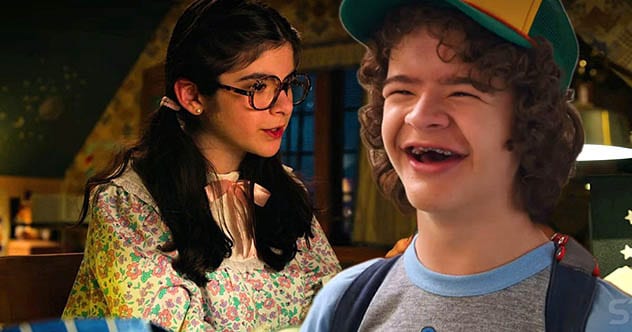
9. “Never Ending Story” Stranger Things
Dustin and Suzie pause an emergency for a duet
The third-season finale of Stranger Things places its characters in a situation involving monsters, secret Russian technology, dangerous machinery, and the possible destruction of Hawkins. Naturally, this is when Dustin Henderson’s girlfriend requests a romantic duet.
Dustin contacts Suzie by radio because she knows the value of Planck’s constant, information the group urgently needs. Suzie refuses to provide it until Dustin joins her in singing “The NeverEnding Story,” the theme from the 1984 fantasy film.
The scene cuts between Dustin and Suzie happily harmonizing and the other characters listening in disbelief while their lives remain in immediate danger. Steve looks confused. Hopper looks furious. Time continues to pass at a rate that is medically unhelpful.
The sequence could have shattered the finale’s tension. Instead, it became one of the season’s most memorable moments because it perfectly captures Dustin’s personality. He is a science enthusiast, loyal friend, romantic optimist, and a young man willing to risk group humiliation for a girlfriend who controls access to crucial mathematical information.
Netflix later continued to highlight the duet as one of the defining music moments from the series.
10. “Subspace Rhapsody” Star Trek: Strange New Worlds
The final frontier develops a choreography problem
After decades of exploring strange planets, alternate timelines, artificial intelligence, and interstellar diplomacy, Star Trek eventually encountered something truly dangerous: an anomaly that makes everyone sing about their feelings.
“Subspace Rhapsody,” released in 2023, became the franchise’s first full musical episode. The crew of the Enterprise interacts with a quantum probability field that causes reality to follow the rules of musical theater. Private emotions become public lyrics, romantic complications turn into duets, and confidential communications become significantly harder to manage.
The episode features original music by Kay Hanley and Tom Polce. Celia Rose Gooding’s Uhura receives the emotional centerpiece, “Keep Us Connected,” while Spock, La’an, Nurse Chapel, Captain Pike, and Number One use their numbers to confront ongoing character conflicts.
The most unexpected moment arrives when threatening Klingons appear as a synchronized pop group during the finale. The creative team reportedly developed an alternate operatic approach before choosing the much funnier boy-band version.
What could have been a lightweight novelty instead advances multiple relationships while honoring the grand emotional logic of musical theater. In space, no one can hear you screambut apparently everyone can hear your bridge and final chorus.
Why Musical Moments Work So Well on Television
A musical episode is risky because audiences already understand how a show is supposed to behave. Doctors operate. Detectives investigate. Superheroes fight villains. Sitcom characters create preventable misunderstandings and then gather in the same apartment despite apparently having jobs.
When those characters begin singing, the series deliberately breaks its own rules. That disruption creates surprise, but novelty alone is not enough. The strongest television musical moments preserve the personalities, conflicts, and emotional stakes that viewers already care about.
Music makes hidden emotions impossible to hide
Musical theater allows characters to express feelings that would sound unnatural in ordinary conversation. Buffy cannot casually announce that she was happier after death. Uhura may struggle to explain her fear of isolation. Xena and Gabrielle carry emotions too large for a calm discussion beside a campfire.
A song creates permission for emotional exaggeration. Repetition becomes meaningful, metaphors become natural, and a character can move from denial to revelation before the final note.
Genre changes reveal new sides of familiar performers
Musical moments also uncover talents that a show may not regularly use. Neil Patrick Harris, Sara Ramirez, Celia Rose Gooding, Melissa Benoist, Grant Gustin, and many other television actors arrived with significant musical experience. A special episode lets the production build around those abilities without permanently changing the show’s format.
Even performers without Broadway backgrounds can benefit. A slightly imperfect voice may feel more emotionally honest than a polished studio recording because viewers remain aware of the character beneath the song.
Comedy becomes bigger without losing character
Singing allows comedy to grow beyond normal physical limitations. Barney can command dozens of dancers. Springfield can transform a town meeting into a civic anthem. Charlie can stage a fantasy battle between the Dayman and Nightman with costumes that appear to have been designed during a gas leak.
The spectacle amplifies the joke, but the humor still comes from recognizable personalities. Barney loves suits. Springfield loves bad ideas. Charlie does not understand how theater, romance, or human communication works.
A 500-Word Viewing Experience: What These Musical Surprises Feel Like
Watching an unexpected musical moment in a familiar television show creates a very specific sequence of emotions. First comes confusion. A character pauses. Music begins. Background performers suddenly know choreography that nobody rehearsed within the story. The viewer wonders whether the episode has become a dream, hallucination, parody, supernatural event, or evidence that someone in the writers’ room won a very unusual argument.
Then comes recognition. The songs may sound new, but the characters remain familiar. Buffy sings with the same emotional guardedness she displays in conversation. Barney performs with the confidence of a man who considers a necktie a moral philosophy. Dustin embraces a radio duet because embarrassment has never been strong enough to defeat his enthusiasm.
That combination of unfamiliar form and familiar personality is what makes the experience exciting. A musical episode temporarily removes the boundaries viewers have accepted. Hospital corridors can become stages. A spaceship can support synchronized dancing. A small animated town can approve an enormous public-works project through the democratic process of chanting one word repeatedly.
Musical moments are especially rewarding during a rewatch. The first viewing emphasizes spectacle: costumes, vocal surprises, choreography, and jokes. A second viewing reveals how carefully the songs connect to earlier episodes. “Once More, with Feeling” contains emotional consequences that continue throughout Buffy the Vampire Slayer. “The Bitter Suite” depends on the accumulated pain between Xena and Gabrielle. “Subspace Rhapsody” uses musical honesty to push existing relationships toward decisions they were already avoiding.
These episodes can also become social experiences. Viewers quote lyrics, share clips, rank performances, and debate whether the musical experiment was brilliant or deeply uncomfortable. Some fans happily sing along. Others sit silently with the expression of a person whose favorite medical drama has unexpectedly become community theater.
The divisive reaction is part of the appeal. Musical storytelling is emotionally direct, and direct emotion can feel thrilling or embarrassing depending on the viewer. A spoken confession may appear restrained and realistic. The same confession delivered with an orchestra, spotlight, and sustained final note leaves nowhere to hide.
There is also a special pleasure in watching a production commit fully to an absurd concept. Halfhearted musical episodes feel like temporary costume parties. Successful ones reshape cinematography, editing, performance, and narrative rhythm. The camera pulls back to reveal movement. Scenes build toward refrains. Characters interrupt one another through counterpoint instead of dialogue. Even a ridiculous number feels convincing when every department treats it seriously.
Ultimately, the viewing experience works because music changes how time feels. A three-minute song can contain a joke, argument, confession, fantasy sequence, and emotional turning point. Television briefly stops moving at its normal speed and enters a heightened world where thoughts become lyrics and feelings acquire backup dancers.
When the episode returns to ordinary dialogue, the show feels slightly different. The characters have said too much. The audience has seen another side of them. And somewhere, usually at the least convenient moment, the chorus begins playing again in the viewer’s head.
Conclusion
The most surprising musical moments from popular shows succeed because they are more than interruptions. They use melody, performance, and spectacle to deepen stories viewers already understand.
Buffy the Vampire Slayer transformed suppressed pain into confession. Scrubs found fear beneath medical comedy. Community weaponized holiday cheer. The Simpsons demonstrated that local government is dangerously vulnerable to catchy songs. Stranger Things inserted young love into an emergency, while Star Trek: Strange New Worlds carried musical theater where no franchise had gone before.
Television does not need every character to sing. In fact, Dr. Cox would probably object loudly for several uninterrupted minutes. But when a musical moment matches the characters and advances the story, it can become more memorable than dozens of conventional episodes.
Note: This article contains minor episode spoilers and is based on documented broadcast information, cast interviews, production reporting, and retrospective coverage from reputable American entertainment publications.
SEO Data

