
Makeup
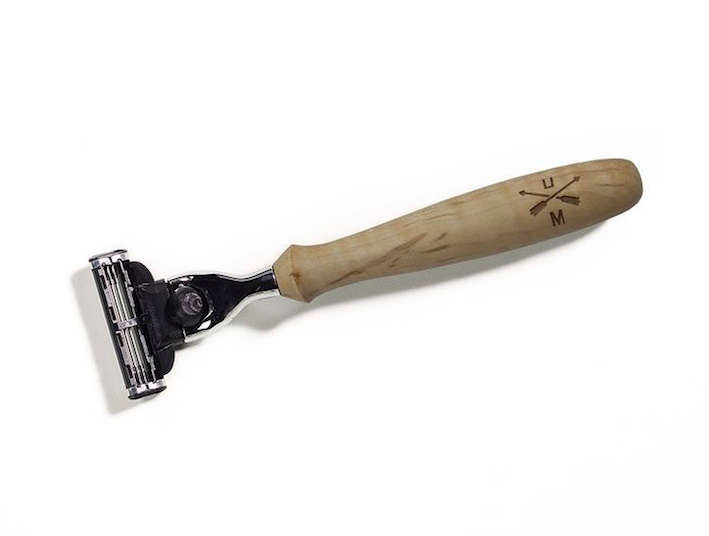
Ursa Major Tiger Maple Razor
Aug
Most razors are designed to disappear into the bathroom cabinet. The Ursa Major Tiger Maple Razor was designed to make you pause before putting it away.
Created as a limited-edition grooming tool, this distinctive razor paired a reclaimed tiger maple handle sourced in New England with the convenience of replaceable cartridge blades. The original product description identified compatibility with Gillette Mach3 and Venus cartridges, included one Mach3 cartridge, and emphasized that the razor was made in Vermont. At the time of its archival listing, the price was $36.
That combination explains the razor’s enduring appeal. It was neither an intimidating straight razor requiring the concentration of a bomb technician nor another anonymous plastic handle destined to spend its life face-down beside a toothpaste tube. Instead, it brought the texture and personality of figured American wood to a familiar cartridge shaving system.
For grooming enthusiasts, design collectors, and anyone who thinks a morning routine deserves better scenery, the Ursa Major Tiger Maple Razor represents an interesting idea: an ordinary tool can still feel special.
What Is the Ursa Major Tiger Maple Razor?
The Ursa Major Tiger Maple Razor was a limited-edition wooden-handled cartridge razor associated with Vermont skincare brand Ursa Major. Its defining feature was a handle made from reclaimed tiger maple sourced in New England. Rather than forcing users into a proprietary shaving ecosystem, the design accepted widely recognized cartridge formats.
The original product information highlighted three main characteristics:
- A reclaimed tiger maple handle sourced in New England.
- Compatibility with Gillette Mach3 and Venus cartridges.
- Production in Vermont, with one Mach3 cartridge originally included.
The word limited-edition matters here. This was not positioned as a permanent mass-market razor competing for fluorescent shelf space at every drugstore in America. It appeared as a special holiday product and gift-oriented grooming accessory. The surviving archival listing describes it specifically as a holiday exclusive.
Today, Ursa Major’s current shaving lineup is focused primarily on skincare products such as Stellar Shave Cream rather than this wooden razor, making the Tiger Maple Razor best understood as an archival piece from an earlier chapter of the brand’s grooming catalog.
Why the Tiger Maple Handle Is the Star
Tiger Maple Is About Figure, Not a Separate Tree Species
The phrase tiger maple sounds as though lumberjacks discovered a particularly aggressive tree roaming the Vermont wilderness. Thankfully, no helmets are required.
Tiger maple generally refers to maple with a dramatic figured grain pattern characterized by bands or stripes that appear to run across the normal grain. The effect is closely associated with curly or ripple figure. WOOD Magazine describes curl as a figure that can also be called tiger stripe or ripple and notes that the changing fiber structure can create the illusion of depth.
The result is one of wood’s best optical tricks. As a figured maple object moves under the light, the surface can appear to shimmer or shift. Woodworkers often call this visual quality chatoyance. The pattern does not merely sit on the surface like printed decoration; it emerges from the way light interacts with the wood’s structure.
On a large dining table, figured maple can be dramatic. On a razor handle, the scale becomes more intimate. You notice the grain every time you pick it up. Because natural figure varies, individual wooden handles can also have subtle visual differences, giving the object more personality than an injection-molded equivalent.
Why Reclaimed Wood Adds Character
The original description specified reclaimed tiger maple sourced in New England. That choice fits naturally with the identity Ursa Major developed around Vermont, outdoor inspiration, and a less conventional approach to personal care. The company traces its origins to founders who left New York City for Vermont and built the brand around effective, forest-inspired skincare.
Reclaimed wood also changes the emotional character of an object. A synthetic razor handle is essentially born yesterday. Reclaimed timber arrives with a previous life, even when its exact biography is unknown. It may carry tonal variation, grain irregularities, or other visual details that make the finished product feel less sterile.
That does not automatically make every wooden object superior to plastic or metal. Wood requires thoughtful finishing and reasonable care, especially around water. But from a design perspective, it offers warmth that most conventional shaving tools simply do not possess.
A Smart Combination of Craft and Convenience
The cleverest feature of the Ursa Major Tiger Maple Razor may not have been the wood. It may have been the decision to pair that handcrafted appearance with an ordinary cartridge system.
Traditional shaving enthusiasts often celebrate double-edge safety razors and straight razors, and for good reason. They can provide excellent results and turn shaving into a deliberate ritual. They also involve a learning curve. A hurried Tuesday morning before an 8:30 meeting is not always the ideal moment to discover that your razor technique has the confidence of a samurai and the accuracy of a shopping cart with one bad wheel.
By using a cartridge format, the Tiger Maple Razor kept the familiar mechanics of modern shaving. The archival product description specifically identified Mach3 and Venus compatibility. Gillette’s current Mach3 system uses three progressively positioned blades, while the broader Mach3 family continues to use interchangeable cartridges within that system.
This approach gives the razor an appealing balance:
- The handle feels decorative and distinctive.
- The blade system remains familiar.
- Replacement cartridges are easier to understand than specialty razor hardware.
- The user can enjoy a more crafted object without completely changing shaving technique.
In other words, it offers some of the romance of traditional grooming without requiring you to become the sort of person who casually discusses blade angles at dinner.
How the Ursa Major Tiger Maple Razor Fits the Brand
The razor makes more sense when viewed alongside Ursa Major’s broader identity. The company was established in Vermont after its founders’ experience in the beauty industry and has long emphasized efficient routines, plant-forward formulations, and an outdoors-inspired sensibility. That Vermont connection was not decorative marketing added to the razor after the fact; it was central to the brand itself.
Ursa Major’s Stellar Shave Cream also provides context. The current product is positioned as a nourishing shave cream for face and body, designed to cushion the skin during shaving. The brand recommends applying it to damp skin and rinsing the razor regularly during use.
Grooming publications have also covered Ursa Major’s shaving products over the years. GQ has highlighted the brand’s shave cream in multiple grooming roundups, reinforcing the idea that shaving has long been part of the company’s product story rather than a random holiday experiment.
The Tiger Maple Razor therefore represented a physical extension of that philosophy. Instead of selling only what goes on the skin, Ursa Major briefly offered the tool that moves across it.
What Makes a Wooden Razor Different in Daily Use?
Visual Warmth
Bathrooms tend to be visually cold environments: tile, glass, chrome, porcelain, plastic. A tiger maple handle introduces a natural material with visible grain and tonal movement. Even a small object can soften the appearance of a sink or grooming shelf.
A More Personal Feel
Wood grain gives an object individuality. Two pieces cut from figured maple may share a family resemblance without looking completely identical. That small variation can make a practical grooming tool feel more like a personal possession.
Familiar Cartridge Performance
Because the original razor used mainstream cartridge compatibility, the shaving experience depended heavily on the installed blade. The wooden handle changed the tactile and visual experience, while the cartridge continued to do the actual cutting.
This distinction is important. A beautiful handle cannot rescue a worn-out blade. No amount of artisanal maple can negotiate with blunt steel.
How to Get a Better Shave With a Cartridge Razor
Whether the handle is tiger maple, stainless steel, or something found in the back of a hotel toiletry kit, shaving technique still matters.
Soften the Hair First
Dermatologists recommend moistening and softening hair before shaving. Shaving near the end of a shower or using warm water can make the process more comfortable. The American Academy of Dermatology also recommends applying shaving cream or gel rather than dragging a blade across inadequately prepared skin.
Use Light Pressure
A cartridge razor should glide rather than excavate. Pressing harder usually does not transform an aging blade into a sharper one. It simply increases friction and makes irritation more likely.
Use controlled strokes and let the cartridge perform the cutting. This is particularly helpful around the jawline and neck, where changing hair-growth patterns can tempt users into repeated passes.
Start With the Grain
Shaving in the direction of hair growth can help reduce razor bumps and irritation, according to guidance from the American Academy of Dermatology. People who are especially prone to ingrown hairs may need to be even more conservative about ultra-close multi-pass shaving.
Rinse the Cartridge Frequently
Hair and shaving product accumulate between blades. Rinsing during the shave helps keep the cartridge working efficiently. Avoid aggressively banging the cartridge against the sink, as Gillette notes that this can damage precisely positioned razor components.
Replace a Cartridge That Starts Tugging
Blade life varies with beard density, shaving frequency, preparation, and care. The practical signal is often easier to recognize than any calendar schedule: when the razor starts pulling, skipping, requiring extra pressure, or creating unusual irritation, the blade may be past its comfortable working life.
Gillette currently states that a Mach3 refill can provide up to 15 comfortable shaves, although real-world longevity naturally varies by user.
Caring for a Tiger Maple Razor Handle
A wooden grooming tool deserves slightly more consideration than a disposable plastic handle. That does not mean it requires a climate-controlled display vault and a security guard named Bernard. It simply means prolonged moisture is not wood’s favorite hobby.
Rinse the Blade Without Soaking the Handle
Clean shaving residue from the cartridge after use, but avoid leaving the entire razor submerged in water. A finished wooden handle is designed for normal handling around a sink, not for an indefinite underwater vacation.
Dry the Razor After Use
Shake off excess water and allow the razor to air-dry in a ventilated location. Gillette similarly recommends allowing cartridge blades to air-dry rather than wiping the cutting edges with a towel, which can damage them.
Do Not Store It in Standing Water
A puddle around the base of a razor stand may look harmless, but repeated moisture exposure is unnecessary. Keeping the razor dry between uses is a simple habit that benefits both the blade assembly and the handle.
Treat the Finish Conservatively
Figured maple is prized because its changing grain can create remarkable visual depth. Woodworking publications frequently discuss careful finishing techniques designed to enhance that figure. With a finished consumer product, however, owners should avoid experimenting with aggressive solvents, abrasive cleaners, or random furniture chemicals unless the maker specifically recommends them.
A soft cloth and sensible drying are safer than turning routine razor care into an unsupervised chemistry experiment.
Is the Ursa Major Tiger Maple Razor Still Worth Seeking Out?
For someone interested purely in shaving performance, there are many current razors to choose from. Modern cartridge handles, safety razors, and electric shavers compete across every imaginable price level.
The appeal of the Ursa Major Tiger Maple Razor is different. It lies in the combination of:
- Limited-edition product history.
- Reclaimed New England tiger maple.
- Vermont craftsmanship and brand identity.
- Compatibility with a familiar cartridge shaving format.
- A design that makes an ordinary grooming tool visually memorable.
That makes the razor particularly interesting for collectors of discontinued grooming objects, fans of Ursa Major, lovers of figured wood, or gift buyers searching the secondary market for something less predictable than another black plastic grooming gadget.
Condition would be especially important when evaluating an older example. A prospective buyer should examine the wooden handle for cracks, major finish damage, swelling, looseness around fittings, or evidence of prolonged water exposure. The cartridge connection should also be secure.
Because the razor was sold as a limited-edition product rather than an indefinitely available core item, scarcity may influence asking prices. Historical retail pricing should not automatically be treated as a current market value.
Who Would Appreciate This Razor Most?
The Design-Minded Groomer
This is the person who notices the grain on a cutting board, the weight of a pen, and the unnecessary ugliness of a perfectly functional soap dispenser. The Tiger Maple Razor turns a basic tool into part of the room.
The Ursa Major Enthusiast
Fans of the Vermont brand may appreciate the razor as a tangible piece of its earlier product history, particularly because it connects directly with Ursa Major’s longstanding shaving category.
The Woodworking Fan
Tiger maple has a visual presence that photographs do not always capture. A small handheld object allows the user to rotate the grain under changing light and experience the depth associated with figured wood.
The Practical Gift Buyer
Many handsome grooming gifts fail the practicality test. They look impressive, then require obscure blades available only from a monastery every third Wednesday. The Ursa Major concept avoided much of that problem by pairing its special handle with familiar cartridge technology.
The Broader Appeal of Beautiful Everyday Tools
The Ursa Major Tiger Maple Razor belongs to a broader design philosophy: objects used every day deserve attention.
A razor is normally treated as a consumable platform. The blades wear out, cartridges are replaced, and handles are upgraded whenever a manufacturer invents another pivot, vibration motor, glowing strip, or feature that sounds suspiciously capable of connecting to Wi-Fi.
A wooden handle pushes in the opposite direction. It makes the permanent part of the tool feel more permanent.
That psychological shift matters. People often enjoy routines more when the tools involved are pleasant to handle. A favorite coffee mug does not chemically improve coffee. A well-made notebook does not automatically produce better ideas. Yet good objects can make repetitive actions feel more intentional.
The Tiger Maple Razor applied that logic to shaving. The cutting technology remained accessible and replaceable, while the handle became the part worth keeping.
Experience: What Living With an Ursa Major Tiger Maple Razor Would Feel Like
The most noticeable experience would probably begin before the first stroke. A typical cartridge razor is visually invisible after a few days of ownership. You know where it is, you use it, and you think about it approximately as often as you think about the hinge on your refrigerator.
A tiger maple handle is different. The figure encourages you to pick it up and turn it slightly in the light. One angle can look relatively calm; another can reveal darker bands and a stronger three-dimensional effect. That small visual interaction becomes part of the routine.
In the hand, the appeal would come from contrast. At the top sits a familiar cartridge mechanism engineered for efficient modern shaving. Below it is a natural material associated more readily with furniture, musical instruments, and woodworking than bathroom hardware. The combination feels slightly unexpected, which is precisely why it works.
The first few uses would also reveal an important truth: the wood does not magically change cartridge shaving. The blade remains the blade. A fresh Mach3 cartridge behaves according to its own design, and good preparation still matters. Warm water, adequate shaving cream, light pressure, and sensible stroke direction remain more important to skin comfort than the species of wood attached to the handle.
Yet the handle can change the experience around the shave.
Instead of grabbing a disposable-looking object, the user handles something that feels chosen. That can encourage a slower, more deliberate routine. Perhaps you rinse the cartridge more carefully. Perhaps you stop throwing the razor into a wet corner of the shower. Perhaps the entire process gains thirty seconds of attention. This is not exactly a spiritual awakening, but at 7:15 in the morning, we should celebrate available victories.
The razor would also work particularly well in a simple bathroom where natural materials stand out. Beside a ceramic sink, neutral tile, or a wooden grooming tray, the striped maple could function almost like a small decorative accent. Unlike purely ornamental objects, however, it earns its place by being useful.
Long-term ownership would demand one behavioral adjustment: respecting the handle as wood. Someone accustomed to abandoning a plastic razor in a permanently wet shower might need to develop better habits. Rinse the working end, remove excess water, and let the tool dry. That small amount of care is not difficult, but it reinforces the idea that the razor is a durable object rather than disposable bathroom clutter.
There is also a collecting experience attached to the product today. Because the original razor was presented as a limited-edition holiday item, finding one now is less like ordering a standard current model and more like searching for a discontinued design object. Condition, authenticity, finish quality, and hardware integrity become part of the decision.
For the right person, that history increases the appeal. The Ursa Major Tiger Maple Razor captures a particular moment when independent grooming brands were expanding the idea of what men’s personal-care products could look like. Instead of chrome-heavy luxury or drugstore plastic, it offered regional material, Vermont identity, and a practical cartridge system.
The experience, then, is not really about obtaining the most technologically advanced shave imaginable. It is about making an ordinary routine feel less generic.
That may be the razor’s greatest strength. You still have stubble. You still have to stand in front of the mirror. You still occasionally discover, five minutes after leaving home, that you somehow missed one heroic patch of hair under your jaw. The Tiger Maple Razor does not repeal the laws of shaving.
It simply gives the ritual more character.
Conclusion: A Small Grooming Tool With an Unusually Big Personality
The Ursa Major Tiger Maple Razor remains memorable because it solved a design problem most people never realized they had. It took the practical convenience of a cartridge razor and gave the permanent part of the tool warmth, regional character, and visual depth.
Its reclaimed New England tiger maple handle connected naturally with Ursa Major’s Vermont roots, while Mach3 and Venus compatibility kept the product approachable. The result was neither aggressively traditional nor disposable-looking. It occupied the comfortable space between craftsmanship and convenience.
For everyday users, the lesson extends beyond this particular limited-edition razor. A grooming tool does not need twenty features to be enjoyable. Sometimes a thoughtful material, a comfortable routine, and a blade that is actually sharp are enough.
The Ursa Major Tiger Maple Razor may have been a small holiday exclusive, but it demonstrated something larger: even the most ordinary bathroom object can become memorable when useful design meets material with a story.
Research note: Historical product details, brand background, wood characteristics, cartridge information, and shaving guidance were synthesized from archival and current manufacturer materials, woodworking publications, grooming publications, and dermatologist-reviewed medical guidance.

