
Makeup
How to Become a Meteorologist: 12 Steps
Jul
Becoming a meteorologist is not just about pointing at a green screen and saying, “There is a 40% chance your picnic is doomed.” Meteorology is a serious science built on physics, math, computer modeling, observation, communication, and a healthy respect for the atmosphere’s ability to ruin perfectly good outdoor plans.
If you love storms, climate patterns, radar loops, satellite images, weather apps, aviation forecasts, or the satisfying drama of a well-timed cold front, meteorology can be a rewarding career. Meteorologists work for the National Weather Service, private forecasting companies, airlines, television stations, emergency management agencies, universities, research labs, energy companies, agriculture firms, and climate organizations. Some forecast tomorrow’s severe weather; others study long-term climate trends, build computer models, brief pilots, analyze wildfire risk, or explain hurricanes to the public without causing panic.
This guide explains how to become a meteorologist in the United States, including education requirements, useful skills, internships, certifications, career paths, and practical experience. The path is challenging, but if you enjoy science with a side of clouds, computers, and controlled chaos, it may be exactly your kind of sky.
What Does a Meteorologist Do?
A meteorologist is a trained atmospheric scientist who studies, observes, analyzes, and forecasts weather and climate. Daily work may include interpreting radar data, reviewing satellite imagery, running weather models, issuing forecasts, preparing severe weather warnings, writing technical reports, building graphics, briefing decision-makers, or communicating risk to the public.
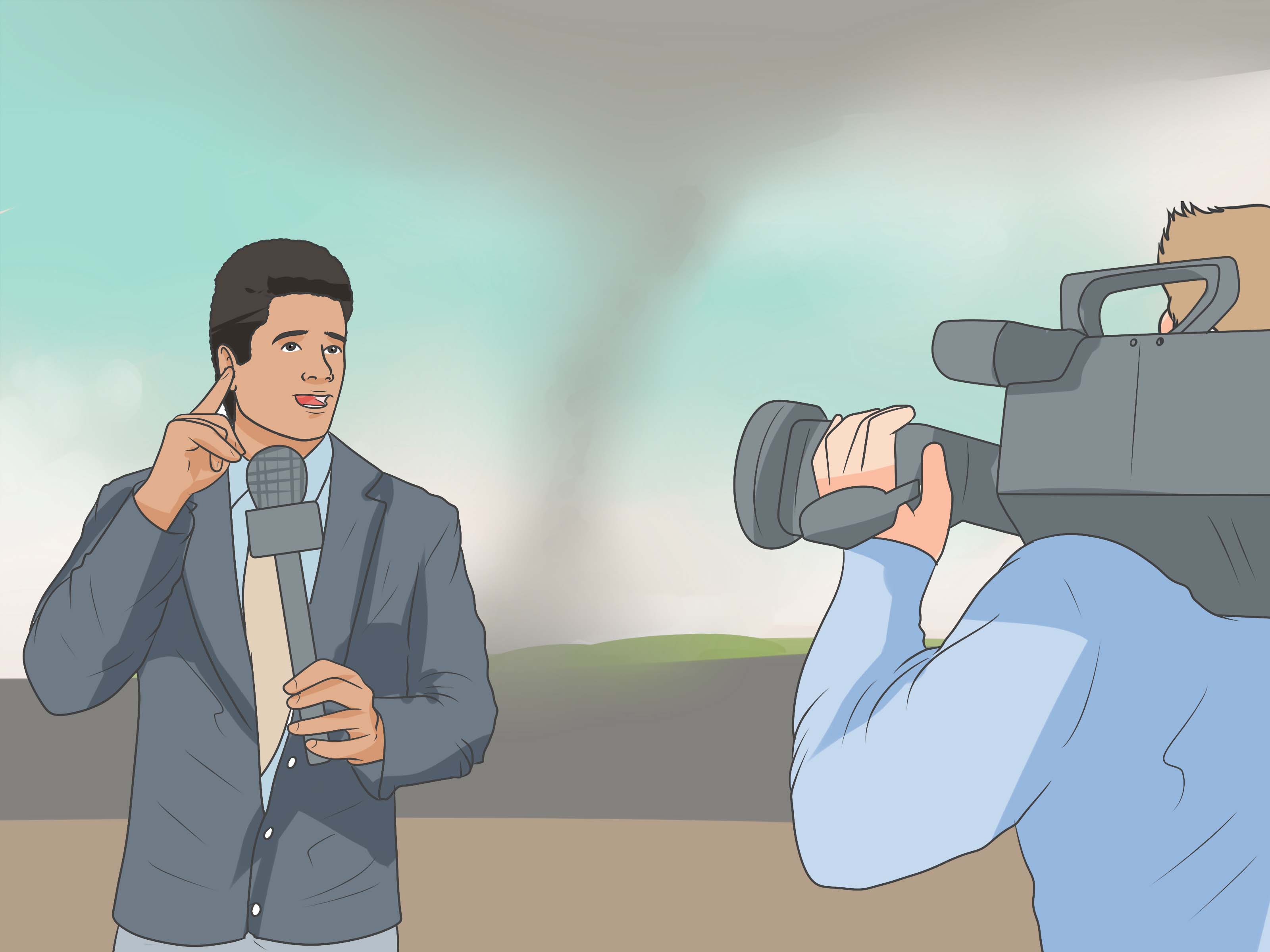
Not every meteorologist appears on television. In fact, many never stand in front of a camera. Operational meteorologists forecast weather for public safety. Broadcast meteorologists explain weather through TV, radio, streaming, and social media. Research meteorologists investigate atmospheric processes such as tornado formation, hurricanes, lightning, climate variability, air pollution, and precipitation patterns. Forensic meteorologists reconstruct past weather for legal, insurance, transportation, or accident investigations. Private-sector meteorologists help businesses make decisions related to energy demand, shipping, agriculture, aviation, construction, and event planning.
The field is broad, technical, and increasingly data-driven. Modern meteorology depends heavily on mathematics, physics, computer programming, statistical analysis, remote sensing, and clear communication. In other words, you need to understand both the atmosphere and the humans who keep asking, “But will it rain at 3:15?”
How to Become a Meteorologist: 12 Steps
1. Start With a Genuine Interest in Weather and Science
The first step is simple: become curious. Watch the sky. Track storms. Learn the difference between weather and climate. Follow local forecasts and compare them with what actually happens. Notice how clouds build before thunderstorms, how wind shifts before a front, and how humidity can turn a normal summer afternoon into soup with sidewalks.
Curiosity matters because meteorology is not a “memorize a few cloud names and call it a career” subject. It asks you to think in systems. Temperature, pressure, moisture, wind, terrain, ocean temperatures, sunlight, and upper-level atmospheric patterns all interact. A future meteorologist learns to ask why, not just what.
Students can begin early by joining science clubs, participating in weather-related projects, reading National Weather Service forecast discussions, exploring radar apps, or volunteering with community weather awareness programs. Even keeping a simple weather journal can build observational skills.
2. Build a Strong High School Foundation
High school is the perfect time to prepare for meteorology coursework. Focus on math and science, especially algebra, geometry, trigonometry, calculus if available, physics, chemistry, earth science, environmental science, and computer science. Statistics is also useful because weather forecasting is full of probabilities, uncertainty, and model interpretation.
English and communication classes matter too. Meteorologists often explain complicated atmospheric processes to people who do not want a lecture on vorticity before breakfast. Whether you are writing a forecast, briefing emergency managers, or appearing on camera, clear language is a professional skill.
If your school offers coding classes, take them. Python, R, JavaScript, and data visualization tools are increasingly valuable in meteorology. Forecasting today is not just about reading maps; it is about handling large datasets, interpreting model output, and creating useful graphics.
3. Choose the Right College Major
Most meteorologists need at least a bachelor’s degree in meteorology, atmospheric science, or a closely related natural science field with significant meteorology coursework. For many jobs, especially federal meteorologist positions, the exact coursework matters as much as the degree title.
A strong undergraduate program usually includes atmospheric dynamics, thermodynamics, synoptic meteorology, mesoscale meteorology, physical meteorology, weather analysis, climatology, remote sensing, radar meteorology, statistics, physics, differential equations, and computer programming. That may sound like a thunderstorm made of textbooks, but each course builds the scientific toolkit needed to understand the atmosphere.
Before choosing a college, review the curriculum carefully. Some programs emphasize broadcast meteorology, some focus on atmospheric science research, and others offer concentrations in climate, hydrology, aviation, air quality, or environmental applications. If your goal is to work for the National Weather Service or another federal agency, make sure your course plan lines up with federal qualification standards.
4. Understand Federal Meteorologist Requirements
In the United States, many meteorologists work in federal roles, especially within NOAA and the National Weather Service. Federal meteorologist jobs often fall under the Meteorology Series 1340. These positions typically require a degree in meteorology, atmospheric science, or another natural science major that includes a specific set of atmospheric science, physics, math, and related science courses.
Coursework commonly expected for federal meteorologist qualification includes at least 24 semester hours in meteorology or atmospheric science, with studies in atmospheric dynamics and thermodynamics, synoptic and mesoscale weather systems, physical meteorology, and remote sensing or instrumentation. Additional requirements often include calculus-based physics with a lab, differential equations, and related courses such as statistics, computer science, hydrology, chemistry, climatology, oceanography, or radiative transfer.
This is why planning early matters. A student who waits until senior year to discover a missing differential equations requirement may experience a personal low-pressure system. Work with academic advisers, compare your courses with official requirements, and keep copies of syllabi and transcripts.
5. Learn the Core Tools of Modern Weather Forecasting
Meteorologists use many tools: radar, satellites, surface observations, upper-air soundings, weather balloons, numerical weather prediction models, climate datasets, and visualization software. Learning how these tools work is essential.
Radar helps identify precipitation, storm structure, rotation, hail potential, and severe weather signatures. Satellite imagery shows cloud patterns, moisture movement, fire smoke, tropical systems, snow cover, and atmospheric features over large areas. Weather models simulate future atmospheric conditions, but they are not magic crystal balls. A meteorologist must know how to compare models, evaluate uncertainty, recognize biases, and blend computer guidance with human expertise.
Students should practice reading weather maps, analyzing fronts, interpreting model runs, and following real-time severe weather events. The goal is not to worship the model. The goal is to understand what the model is suggesting, why it might be wrong, and how the atmosphere is actually behaving.
6. Develop Computer and Data Skills
Modern meteorology is powered by data. Forecast models, radar grids, satellite products, climate records, and observational networks produce huge amounts of information. Meteorologists who can code, clean data, automate workflows, and create visualizations have a major advantage.
Python is especially useful because it is widely used for data analysis, mapping, meteorological calculations, and scientific visualization. Students may also benefit from learning Linux, Git, SQL, R, GIS software, and basic machine learning concepts. You do not need to become a full-time software engineer, but you should be comfortable enough with code that a dataset does not make you immediately close your laptop and reconsider your life choices.
Good projects include creating a local forecast dashboard, analyzing historical temperature trends, mapping storm reports, comparing model forecasts with observations, or building scripts to download and visualize weather data. Projects like these also strengthen your resume and portfolio.
7. Get Hands-On Experience Through Internships and Volunteering
Experience is one of the best ways to turn classroom learning into career readiness. Internships, student volunteer roles, research assistantships, campus weather stations, broadcast clubs, emergency management projects, and forecasting contests can all help.
NOAA, the National Weather Service, universities, research labs, private weather companies, and local television stations may offer student opportunities. Some National Weather Service offices provide job shadowing or student volunteer experiences, allowing students to observe operational forecasting, warning decision-making, and office workflow.
Internships help you learn what meteorologists actually do when the atmosphere refuses to behave politely. You may write forecasts, analyze data, help maintain instruments, build graphics, support research, or sit in on briefings. Just as importantly, you meet professionals who can offer advice, references, and realistic insight into the field.
8. Choose a Career Track
Meteorology has several career tracks, and choosing one helps you target the right experience. If you enjoy public safety and fast-paced decision-making, operational forecasting may fit. If you like explaining science to the public, broadcast or digital meteorology could be attractive. If you love deep questions and data analysis, research or climate science may be your lane.
Private-sector meteorology is growing in areas such as energy, insurance, transportation, agriculture, aviation, logistics, commodities, outdoor events, and risk analytics. These roles often require strong forecasting skills plus business awareness. For example, an energy meteorologist may forecast temperature patterns that affect electricity demand, while an aviation meteorologist may focus on turbulence, icing, visibility, and thunderstorms.
Graduate school is often important for research roles, university teaching, advanced climate science, atmospheric chemistry, modeling, and specialized technical careers. A master’s degree or Ph.D. can open doors, but it is not required for every meteorology job.
9. Strengthen Communication Skills
A meteorologist’s work is only useful if people understand it. Communication is not an extra skill; it is part of the job. Severe weather warnings, climate summaries, aviation briefings, media updates, and emergency management reports all require accuracy, clarity, and judgment.
Practice explaining technical ideas in plain English. Learn how to describe uncertainty without sounding vague. For example, instead of saying, “The convective environment is conditionally unstable,” you might say, “Storms may develop quickly if the atmosphere gets enough lift this afternoon.” The first version impresses three people. The second version helps thousands.
Broadcast meteorologists also need camera presence, storytelling ability, graphics skills, and calm delivery during dangerous weather. Digital meteorologists should understand social media, short-form video, newsletters, web writing, and audience behavior. Even research meteorologists benefit from strong writing and presentation skills because grants, papers, posters, and conference talks are part of scientific life.
10. Consider Professional Certification
Certification is not required for every meteorology job, but it can improve credibility in certain fields. The American Meteorological Society offers professional certification programs, including the Certified Broadcast Meteorologist credential for qualified broadcast meteorologists.
Broadcast certification generally involves meeting education and experience standards, demonstrating scientific competence, and showing effective communication skills. The credential can signal to employers and viewers that the meteorologist has formal training, professional experience, and a commitment to high standards.
Consulting meteorologists may also pursue credentials depending on their specialty. If you plan to work in broadcasting, consulting, forensic meteorology, or expert testimony, research certification requirements early so you can plan the right coursework and experience.
11. Build a Resume, Portfolio, and Professional Network
Your resume should show more than your degree. Include internships, research projects, coding projects, forecasting experience, presentations, publications, campus leadership, volunteer work, and technical tools. If you want broadcast work, create a demo reel. If you want data-focused roles, build a portfolio with code samples, maps, visualizations, and project summaries. If you want research, highlight methods, datasets, posters, papers, and conference participation.
Networking matters in meteorology because the field is specialized. Join student chapters, attend conferences, follow professional organizations, connect with alumni, and ask working meteorologists about their paths. Many professionals are generous with advice because they remember being the student who once thought “geopotential height” sounded like a villain in a science-fiction movie.
Use networking to learn, not just to ask for jobs. Ask what skills are most useful, what mistakes to avoid, and what entry-level applicants often misunderstand. Those conversations can sharpen your career plan.
12. Apply Strategically and Keep Learning
Entry-level meteorology jobs can be competitive, so apply strategically. Read job descriptions closely. Match your resume to the role. If the job requires Python, forecasting shifts, radar analysis, public communication, GIS, aviation knowledge, or climate data experience, make those strengths easy to find.
Federal jobs may require transcripts and proof of specific coursework. Private employers may care more about technical ability, forecasting judgment, communication style, and project experience. Broadcast employers will review both science knowledge and on-air performance. Research positions may prioritize graduate study, publications, and specialized modeling or data skills.
Once hired, learning does not stop. Weather science changes, models improve, satellites evolve, climate datasets expand, and communication methods shift. A good meteorologist stays curious, humble, and willing to update their thinking. The atmosphere has been surprising humans for a very long time, and it has no plans to retire.
How Long Does It Take to Become a Meteorologist?
For many entry-level roles, becoming a meteorologist takes about four years of college study. Students who pursue a master’s degree may spend six years or more in formal education, while Ph.D. researchers may spend eight to ten years developing advanced expertise.
The timeline depends on your career goal. A National Weather Service or private-sector forecasting role may be possible with a bachelor’s degree and strong internship experience. Research, university teaching, and advanced climate modeling usually require graduate education. Broadcast meteorology may require a degree, practical forecasting ability, on-camera experience, and years of professional work before certification eligibility.
Is Meteorology a Good Career?
Meteorology can be a good career for people who enjoy science, problem-solving, public service, data, technology, and communication. The work can be meaningful because weather affects safety, transportation, agriculture, energy, health, travel, and daily life. Meteorologists help people make decisions before hurricanes, tornadoes, floods, heat waves, winter storms, wildfires, and aviation hazards.
According to recent U.S. labor data, atmospheric scientists, including meteorologists, earn a strong median annual wage compared with many occupations. However, employment growth is modest, and competition can be real, especially for desirable locations or highly visible broadcast roles. The best candidates usually combine solid academic preparation with internships, technical skills, communication ability, and flexibility about location or specialty.
Experience Section: What the Journey Feels Like in Real Life
Learning how to become a meteorologist is one thing; living the process is another. The experience often begins with fascination. Maybe you watched a thunderstorm roll in as a kid and wondered why the clouds looked like stacked mountains. Maybe a hurricane forecast made you realize that science can save lives. Maybe you simply loved checking the radar more than checking social media, which is a strong sign that the atmosphere has already recruited you.
The early academic experience can be exciting and humbling. Many students enter college loving weather maps, then meet calculus, physics, and thermodynamics and briefly wonder whether clouds have betrayed them. That is normal. Meteorology is beautiful because it connects visible weather to invisible forces. Wind, pressure, heat, moisture, rotation, radiation, and terrain all interact in ways that require serious math and science. The challenge is part of the profession. A forecast is not a guess; it is a scientific argument made under time pressure.
Hands-on experience often changes everything. The first time you analyze a real sounding, compare radar velocity with storm reports, or watch a forecast discussion unfold during severe weather, the classroom becomes real. Students who volunteer at a campus weather station or shadow a National Weather Service office often discover that meteorology is teamwork. Forecasters debate model solutions, monitor observations, coordinate warnings, and communicate with emergency managers. During active weather, the room has the focused energy of an airport control tower mixed with a science lab.
Internships can also reveal which path fits your personality. Some students love operational forecasting because it is immediate and mission-driven. Others prefer research because they enjoy asking deeper questions and working with long-term datasets. Some discover a talent for broadcasting, where the job is part science, part communication, part live performance, and part staying calm while the graphics computer chooses the worst possible moment to misbehave. Private-sector internships may show how weather affects energy markets, shipping routes, crop planning, insurance claims, or outdoor events.
The job search experience requires patience. Entry-level meteorology roles may involve shift work, weekends, nights, or relocation. Weather does not observe holidays, and severe storms have never once said, “Let’s wait until Monday.” Flexibility helps. So does a strong portfolio. A student who can show forecasts, code projects, radar analysis, research posters, graphics, and communication samples will usually stand out more than one who simply lists courses.
The most important experience is learning humility. Meteorologists work with uncertainty every day. Sometimes the storm develops twenty miles east of where the models suggested. Sometimes the atmosphere caps convection and your dramatic thunderstorm forecast becomes a very humid apology. Great meteorologists do not pretend uncertainty does not exist. They explain it clearly, learn from every forecast, and keep improving.
In the end, becoming a meteorologist is a journey into one of Earth’s most dynamic systems. It rewards curiosity, discipline, resilience, and communication. If you can handle math, respect uncertainty, work with data, and stay fascinated by the sky even after a difficult forecast, you may find that meteorology is not just a career. It is a lifelong conversation with the atmosphere.
Conclusion
Becoming a meteorologist takes planning, persistence, and a strong science foundation. Start with curiosity, build math and physics skills, choose a rigorous atmospheric science program, gain practical experience, learn coding and data analysis, practice communication, and target the career path that fits your strengths. Whether you want to forecast severe storms, study climate, brief pilots, work in emergency management, appear on television, or help businesses manage weather risk, meteorology offers meaningful work for people who like science with real-world impact.
The sky is complicated, but that is exactly what makes the field interesting. If you are willing to study hard, ask better questions, and accept that the atmosphere will occasionally humble everyone in the room, you can build a career that is intellectually challenging, socially useful, and rarely boring.
Note: This article is based on current U.S. career guidance and education standards from reputable organizations such as the U.S. Bureau of Labor Statistics, NOAA, the National Weather Service, the U.S. Office of Personnel Management, the American Meteorological Society, UCAR, and related academic career resources.

