
Skincare
Woman Hilariously Recreates Celebrity Outfits Using Food, And The Result Is Better Than The Original
Jul
There are red-carpet gowns that cost more than a house, and then there are red-carpet recreations made from lettuce, crackers, candy, fruit peels, and whatever else happens to be hanging around the kitchen. Guess which version the internet cannot stop staring at?
The answer, delightfully, is the edible one. That is the magic behind the now-viral genre of food fashion: a woman sees a glamorous celebrity outfit, raids the pantry like a stylist with a grocery cart, and rebuilds the entire look with ingredients that absolutely should have been minding their own business. The result is funny, smart, unexpectedly beautiful, and sometimes so charming that it does feel better than the original.
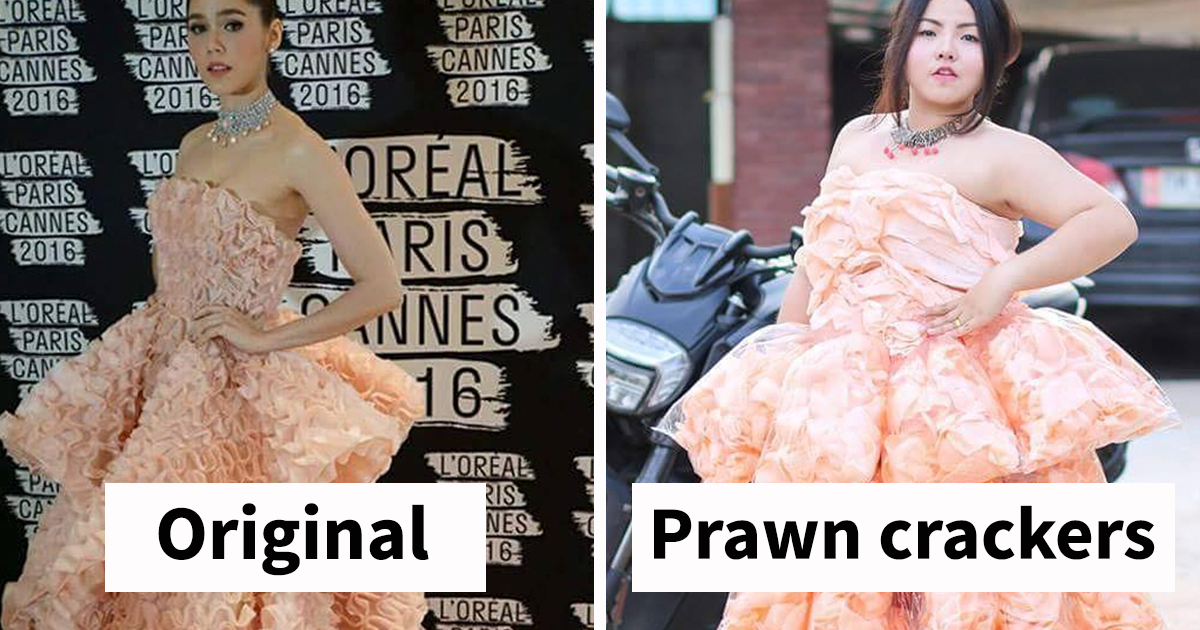
What makes this kind of creativity so irresistible is that it works on multiple levels at once. It is parody, but it is also admiration. It pokes fun at celebrity culture, yet it clearly understands fashion. It turns luxury into low-budget comedy without turning the joke mean. And perhaps most importantly, it reminds us that style is not only about money, labels, or exclusive invitations. Sometimes style is just a very committed person staring at a bunch of prawn crackers and thinking, “Yes, this is now couture.”
When Celebrity Fashion Meets Kitchen Creativity
The internet has seen several creators turn food into fashion commentary, but the concept became especially memorable through women who recreated celebrity looks with whatever they had on hand. One of the most talked-about examples came from Thai creator Sine Benjaphorn, who became known for playful remakes of famous looks using food and everyday household items. Her recreations transformed glamour into something more democratic, more absurd, and honestly more fun to look at.
Then came creators like Ruby Perman, whose work brought the same idea into a more polished social-media format: tiny celebrity gowns made from avocado slices, cherries, sprinkles, chips, fruit scraps, and colorful produce arranged with the precision of a stylist and the imagination of a visual comedian. That combination helped make food fashion feel less like a one-off joke and more like a legitimate internet art form.
The appeal is easy to understand. Celebrity outfits are already designed to be seen in photographs, discussed in group chats, dissected on fashion sites, and turned into memes five minutes after they hit the carpet. The second a dramatic gown appears online, the public starts translating it into familiar objects. A dress becomes lasagna. A train becomes whipped frosting. A sculptural sleeve becomes cabbage. Fashion does not just invite interpretation anymore; it practically begs for it.
Why Food Works So Well as Fashion Parody
Food is funny because everyone understands it instantly. You do not need a fashion degree to recognize that a ruffled skirt made of shrimp chips is hilarious. You do not need access to haute couture archives to appreciate that lettuce can impersonate tulle with suspicious confidence. Food is universal, visual, textural, and gloriously unserious. It lowers the barrier to entry while raising the entertainment value.
It also helps that food already behaves like fabric in strange little ways. Avocado fans mimic pleats. Pomegranate seeds can read like beadwork. Candy strips can look like fringe. Cabbage leaves bring dramatic volume. Frosting can fake embroidery. Suddenly the produce aisle starts looking less like dinner and more like a costume department having a nervous breakdown.
That visual resemblance is what makes these recreations more than just jokes. They are observations. The creator is saying, “I see exactly how this gown is built. I understand the silhouette, the color story, the texture, the mood, and the drama.” Turning food into fashion is not just goofing off. It is close reading with snacks.
There is also something wonderfully rebellious about replacing luxury with perishables. A celebrity may arrive wearing custom couture with hand-sewn embellishment and a team of stylists behind the scenes. The food-fashion artist answers with kiwi slices and a dream. That contrast creates instant comedy, but it also makes a deeper point: creativity can compete with expense. Imagination can absolutely body-slam exclusivity.
The Joke Is Funny Because the Fashion Is Real
What separates a clever food recreation from random chaos is accuracy. The best recreations do not just throw ingredients at a silhouette and hope for the best. They study the original look closely. If the celebrity dress has layers, movement, and volume, the food version needs layers, movement, and volume too. If the original look depends on sparkle, the edible version needs color, shine, or a visually satisfying substitute. If the outfit is dramatic, the recreation has to commit. No half-hearted lettuce skirt ever changed culture.
This is why the funniest recreations often come from artists who genuinely love fashion. They understand how a garment tells a story. A red-carpet look is never just fabric. It is status, persona, branding, fantasy, and spectacle. Recreating it with food strips some of that seriousness away while preserving the silhouette everyone recognizes. It is the fashion equivalent of a brilliant impression: exaggerated, affectionate, and somehow revealing.
The joke gets even better when the replacement ingredient is unexpectedly perfect. Prawn crackers standing in for ruffles? Inspired. Lettuce imitating a cascading green gown? Weirdly elegant. Cherries forming a glamorous bodice? Honestly, somebody in luxury fashion probably just wrote that down for next season.
Why the Food Version Can Feel Better Than the Original
Now, let us address the spicy little claim in the headline: can the recreated outfit actually be better than the original? In a literal fashion-house sense, no. A gown made of produce is unlikely to survive a red carpet, a seated dinner, or a strong sneeze. But in terms of cultural impact, memorability, and personality, the answer is sometimes yes.
The original celebrity outfit may be polished, expensive, and technically stunning. But the food version adds surprise. It adds wit. It adds the thrill of recognition. Viewers get two pleasures for the price of one: first they recognize the celebrity look, then they realize it has been rebuilt from ingredients that belong in a salad, snack bowl, or dessert tray. That second beat is where the laugh lives.
The recreated version can also feel more human. Celebrity fashion often arrives wrapped in distance: security teams, luxury labels, brand ambassadors, flawless lighting, and enough prestige to make normal people feel like they should not even breathe near it. Food parody drags all that glamour into the most ordinary room in the house. It says, “Relax, this is not a sacred artifact. This is a look. We can play with it.”
And that playfulness matters. It turns spectators into participants. Suddenly fashion is not a sermon delivered from above. It is a conversation. It is a joke you can join. It is inspiration with a side of chaos. In an era when so much online content feels overproduced, brand-managed, and desperate to appear effortless, a funny food recreation feels refreshingly honest. You can practically see the thought process happening in real time.
Food Fashion Is Also Sneakily Smart Art
Underneath all the humor, there is real design thinking here. Food stylists and visual creators know that presentation shapes emotion. Color balance matters. Height matters. Negative space matters. Texture matters. The most effective edible outfit recreations work because they understand composition as much as comedy. The plate, the background, the pose, and the arrangement all help sell the illusion.
That is why these images travel so well on social media. They read instantly on a small screen. They are bright, graphic, and satisfying. Even before the viewer understands the joke, the composition pulls them in. Then the brain catches up: wait, is that a celebrity dress made of candy? By then it is too late. The post has won.
There is also an unexpectedly eco-conscious spirit to some of this work. Artists who repurpose scraps, peels, leftovers, or humble produce are showing that creativity does not always need premium materials. Sometimes it just needs attention. A food recreation can turn what looks disposable into something visually memorable. That does not mean every avocado rose is a manifesto, but it does mean the art form carries a subtle message: value is not fixed. It can be invented.
What This Trend Says About Internet Culture
Food-based celebrity outfit recreations are funny because they capture the modern internet in one image. We love glamour, but we also love puncturing it. We admire celebrity style, but we enjoy remixing it into something more relatable. We are drawn to craft, humor, and transformation. Most of all, we love content that feels both skilled and slightly unhinged.
This is why red-carpet fashion so often becomes meme material. A dramatic look is practically an invitation. The public does not merely consume celebrity style anymore; it responds to it, reinterprets it, and turns it into collaborative culture. One person posts a gown. Another compares it to pasta. A third recreates it with fruit. By the end of the night, the internet has staged its own unofficial after-party.
That playful response is not necessarily disrespectful. In many cases, it is a sign that the original look landed. Nobody parodies a forgettable outfit. People only bother recreating the looks that spark attention, curiosity, or delight. In that way, the food version is almost a compliment with extra seasoning.
Related Experiences: Why This Kind of Creativity Feels So Familiar
Part of the reason people connect so strongly with food-fashion recreations is that the experience feels strangely familiar, even if they have never turned a grape into an accessory in their lives. Most people have had at least one moment where they needed to make something fun out of very little. Maybe it was a last-minute Halloween costume built from cardboard and tape. Maybe it was a school spirit day outfit made from random closet leftovers. Maybe it was a themed party where someone announced “dress fancy” and the budget responded, “best I can do is confidence.”
That spirit lives inside these celebrity outfit recreations. They tap into the same make-do energy that fuels so much joyful creativity. You look around the room, take inventory, and start seeing objects differently. A towel becomes a cape. A cereal box becomes armor. A snack becomes couture. The thrill is not only in the final result. It is in the act of noticing possibilities where other people see clutter.
There is also a very real social pleasure in making people laugh with something handmade. A food-based fashion parody does not just show skill; it creates instant connection. Friends get the reference. Family members laugh at the ingredient choice. Someone points out that the lettuce version may actually have more personality than the designer original. Suddenly the whole thing becomes bigger than a costume or a photo. It becomes a shared moment.
For many people, that kind of creativity also brings back memories of scrolling through award-season coverage with friends and assigning food comparisons to every major look. This one is definitely whipped cream. That one is absolutely ravioli. Another looks like it was inspired by a chandelier having a dramatic personal crisis. The difference is that artists who recreate the outfits with actual food take that passing joke and fully commit to the bit. They do not just say the dress looks like dessert. They make dessert prove it.
There is something comforting about that level of commitment. It reminds viewers that the internet can still be playful in a way that feels inventive rather than cynical. Not every viral post has to be a scandal, a feud, or a manufactured outrage machine. Sometimes it can just be a deeply talented person spending an unreasonable amount of time arranging fruit into a gown for a celebrity cutout. Frankly, that is healthy for society.
These recreations also resonate because they collapse the distance between ordinary life and pop culture. Most people will never attend the Met Gala, Cannes, or a major awards show. But many people do have crackers, lettuce, pasta, candy, or leftovers in the kitchen. Recreating a glamorous outfit with everyday ingredients becomes a way of participating in the spectacle without needing a ticket, sponsorship, or stylist on speed dial. It turns spectatorship into play.
And then there is the deeper emotional layer: making something out of almost nothing can feel empowering. It proves that creativity is not reserved for people with giant budgets, professional studios, or luxury wardrobes. It belongs to anyone willing to experiment, fail, rearrange, laugh, and try again. That is why these edible outfit recreations feel bigger than a visual gag. They speak to a very basic human pleasure: transforming the ordinary into something memorable.
Conclusion
A woman hilariously recreating celebrity outfits using food is not just a funny internet headline. It is a perfect snapshot of how modern creativity works. It borrows from fashion, food styling, meme culture, and DIY resourcefulness all at once. It celebrates celebrity style while keeping its ego in check. And it proves that sometimes the version made from lettuce, crackers, cherries, or chips sticks in your brain longer than the custom couture ever did.
That is why the result can feel better than the original. Not because it is more luxurious, but because it is more alive. It is clever. It is relatable. It is handmade. It invites viewers to laugh, admire the craft, and maybe glance at their own kitchen in a slightly more fashionable light. Today it is a cabbage gown. Tomorrow? Somebody is absolutely making a ball skirt out of waffles, and the internet will be there with applause.

