
Beauty Tools & Accessories
How To Prevent the ‘Summer Slide’
Jun
Summer break is supposed to smell like sunscreen, backyard grills, library books, pool towels, and maybe one suspiciously sticky popsicle melting down a child’s elbow. It is not supposed to feel like school with better weather. Still, many parents, teachers, and caregivers worry about the “summer slide,” the informal name for the learning loss or skill stagnation that can happen when students spend weeks away from regular reading, writing, math, and structured learning routines.
The good news? Preventing the summer slide does not require turning your kitchen table into a miniature classroom, issuing pop quizzes between watermelon slices, or canceling all fun until September. In fact, the best summer learning often feels like ordinary life: reading a mystery novel, measuring ingredients for pancakes, comparing prices at the grocery store, writing postcards, visiting a museum, playing strategy games, or talking about what happened in a movie after the credits roll.
Based on education research and guidance from trusted learning organizations, the smartest approach is simple: keep kids curious, consistent, and connected. A little reading, a little math, a little movement, and a lot of real-world conversation can help children return to school confident instead of rusty. Think of it as sunscreen for the brain: apply regularly, don’t overdo it, and yes, reapply after swimming in pure laziness.
What Is the Summer Slide?
The “summer slide” refers to the academic skills students may lose or fail to strengthen during summer break. It is most often discussed in reading and math, because those are easier to measure across school years. Some studies show noticeable declines, especially in math computation and among students with less access to books, enrichment programs, tutoring, safe outdoor spaces, or adult-guided learning. Other research shows the pattern is more complicated: not every child loses skills, not every subject is affected equally, and family routines can make a major difference.
That nuance matters. The summer slide is not a monster hiding under the bed with a calculator. It is more like a slow leak in a bicycle tire. If a child stops reading, stops practicing number sense, and spends most days in passive entertainment mode, skills can soften. But if summer includes steady reading, meaningful play, conversation, problem-solving, and a few short academic refreshers, students can maintain or even build momentum.
Why Summer Learning Loss Happens
During the school year, students practice skills almost daily. They read directions, solve problems, write sentences, discuss ideas, follow routines, and receive feedback. Summer removes much of that structure. For some children, the gap is filled with camps, books, travel, library visits, sports, and family projects. For others, summer may mean long stretches of unstructured time, limited supervision, fewer books at home, and more screens than anyone wants to admit out loud.
Summer learning loss is also connected to opportunity gaps. Children from higher-income households are often more likely to participate in enrichment activities, visit cultural institutions, own more books, and have adults available to support learning. Children from lower-income households may be equally bright and motivated, but they may have fewer resources and less access to structured summer opportunities. Preventing the summer slide, then, is not about blaming families. It is about building realistic routines that work in real homes with real schedules.
How To Prevent the Summer Slide Without Ruining Summer
The secret is balance. Kids need rest. They need boredom, play, sunshine, and time to invent games whose rules make absolutely no sense to adults. But they also need gentle, consistent chances to use their brains. The best summer learning plan is not intense; it is repeatable.
1. Create a Simple Summer Learning Routine
A summer routine does not need to be complicated. Try a “20-20-20” plan: 20 minutes of reading, 20 minutes of math or problem-solving, and 20 minutes of creative or physical activity. That is only one hour a day, and it can be broken into smaller pieces. A child might read in the morning, play a math game after lunch, and draw a comic or ride a bike in the evening.
The key is predictability. When children know that learning is a normal part of the day, it becomes less of a battle. Make it visible with a calendar, checklist, or jar of activity cards. Keep the tone light. Summer learning should feel like brushing teeth, not negotiating a treaty between two tiny nations.
2. Make Reading the Main Event
Reading is one of the most powerful ways to prevent the summer slide. It builds vocabulary, comprehension, background knowledge, attention span, imagination, and writing ability. Better yet, it travels well. A book can go to the beach, the bus, the doctor’s office, grandma’s couch, or the back seat of a car during a road trip.
Let children choose books that interest them, even if those books are not what adults would call “serious literature.” Graphic novels, joke books, sports biographies, fantasy series, cookbooks, magazines, and audiobooks all count. Choice matters because children read more when they feel ownership. A child who devours a book about sharks is not “avoiding real reading.” That child is learning vocabulary such as “cartilage,” “predator,” and “please never swim again.”
For younger readers, read aloud every day. For older readers, create quiet reading time for the whole family. Adults should participate too. Nothing ruins a reading routine faster than a parent saying, “Go read,” while scrolling like an Olympic thumb athlete.
3. Visit the Library Like It’s a Free Amusement Park for the Brain
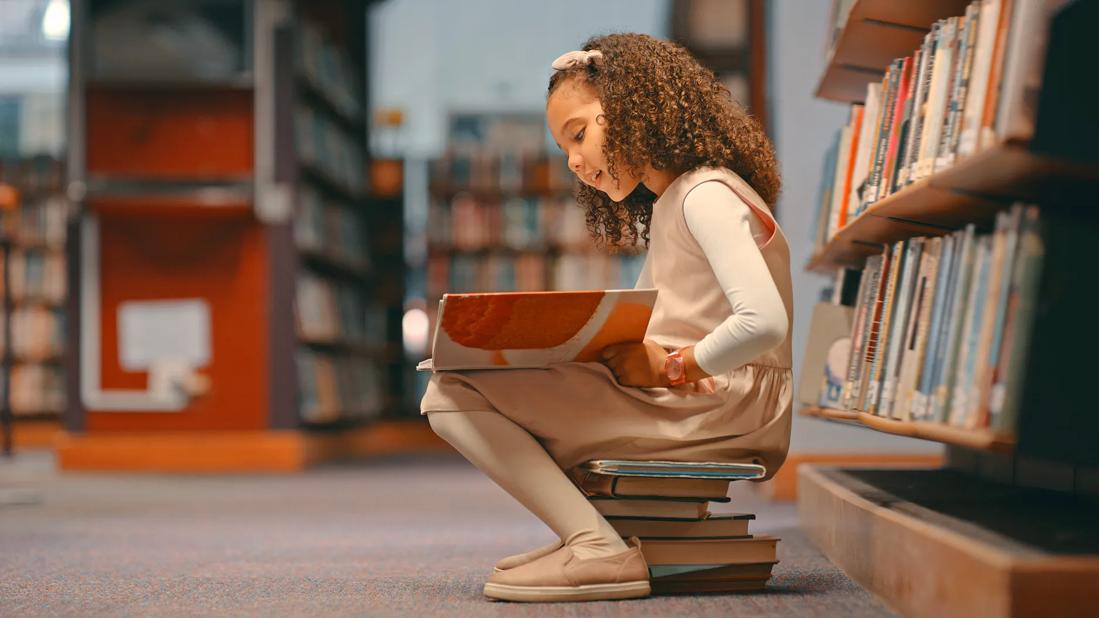
Public libraries are one of the best summer learning tools in the United States. Many offer free summer reading programs, story times, teen clubs, craft days, STEM activities, reading challenges, and access to audiobooks or e-books. A library card can open more doors than many expensive apps.
Make library visits part of the weekly routine. Let your child browse. Ask librarians for recommendations. Encourage your child to pick a “fun book,” a “challenge book,” and a “wild card book” each visit. The wild card might be about volcanoes, origami, magic tricks, Greek myths, bugs, or the suspicious history of pickles. Curiosity is a learning engine, and libraries provide premium fuel at zero dollars per gallon.
4. Practice Math in Real Life
Math skills often need regular practice because they rely on fluency and confidence. Fortunately, summer is full of math if you know where to look. Cooking involves fractions, measurement, multiplication, temperature, and time. Grocery shopping teaches estimation, budgeting, unit prices, and percentages. Sports involve statistics, averages, angles, and scoring. Road trips include distance, speed, maps, and elapsed time.
Instead of handing your child a worksheet every day, ask practical questions: “If this recipe serves four and we need eight servings, how much flour do we need?” “Which cereal is cheaper per ounce?” “If the movie starts at 3:15 and lasts 105 minutes, what time will it end?” “If your team scored three touchdowns and two field goals, what is the total?” These questions make math useful, not mysterious.
For extra support, use short online lessons or practice tools, especially for grade-level review. Keep sessions brief. Ten to fifteen focused minutes can be more effective than one dramatic, tear-soaked hour in which everyone learns only that math pencils can snap under pressure.
5. Encourage Writing That Has a Purpose
Writing can slide during summer because many children simply stop doing it. The solution is not always a formal essay. Children can write postcards, comic strips, short stories, restaurant reviews, travel journals, letters to relatives, instructions for a made-up game, or captions for a family photo album.
Give writing an audience. A child is more likely to care about a letter to a cousin than a random paragraph titled “My Summer Vacation,” especially if the vacation has mostly involved cereal and arguing about whose turn it is to feed the dog. For reluctant writers, start small: three sentences a day, a silly poem, a list of questions, or a one-page “field report” after a zoo, park, or museum visit.
6. Use Screen Time Strategically
Screens are not automatically the villain. Educational videos, coding games, digital books, math practice platforms, documentaries, language apps, and creative tools can support learning. The problem is passive, unlimited screen time that replaces sleep, reading, outdoor play, conversation, and hands-on exploration.
Create a family media plan for summer. Decide when screens are allowed, what types of content are encouraged, and what must happen first. For example: reading before gaming, outdoor play before videos, or chores before tablets. The goal is not to turn the home into a device courtroom. The goal is to help kids use technology with intention.
A helpful rule is “create before consume.” Before watching videos, a child might draw, build, write, cook, read, practice music, or solve a puzzle. This keeps screens in their proper place: useful tools and entertainment, not tiny glowing bosses of the household.
7. Add Hands-On STEM Activities
Summer is perfect for science, technology, engineering, and math activities because mess is easier to tolerate outdoors. Children can build paper airplanes and test distance, grow herbs and track plant height, create a homemade weather chart, design a bridge with craft sticks, make a sundial, observe insects, or compare how quickly ice melts in different locations.
Hands-on STEM activities help children ask questions, make predictions, test ideas, and revise their thinking. That process matters more than getting a perfect result. If the homemade bridge collapses under five toy cars, congratulations: the child has discovered engineering data. Also, the cars are probably fine.
8. Keep Learning Social
Children learn through conversation. Ask open-ended questions at dinner, in the car, or while walking around the neighborhood. “What surprised you today?” “Why do you think that happened?” “How would you solve this problem?” “What would you do differently next time?” These questions build reasoning and language skills without feeling like homework.
Learning can also happen with friends. Start a neighborhood book swap, organize a puzzle afternoon, create a backyard science club, or invite kids to write and perform a short play. For older students, study groups can review math, practice vocabulary, or work through summer assignments together. Snacks help. Snacks always help.
9. Choose Quality Summer Programs When Available
High-quality summer programs can help prevent learning loss, especially when they combine academics, enrichment, social connection, and consistent attendance. Strong programs usually include trained instructors, engaging curriculum, small groups, regular attendance, and enough time for students to practice reading and math meaningfully.
Look for programs through schools, libraries, community centers, museums, parks departments, universities, nonprofits, or local youth organizations. The best option is not always the most expensive one. A free library reading challenge plus a community robotics club may be more useful than a pricey program your child dislikes. Fit matters.
10. Protect Sleep, Movement, and Nutrition
Academic skills do not exist in a vacuum. Children learn better when they sleep enough, move their bodies, eat regular meals, and feel emotionally secure. Summer schedules can drift, and some flexibility is healthy. But if bedtime moves from 9:00 p.m. to “somewhere between midnight and the next geological era,” attention and mood can suffer.
Try to keep a consistent sleep rhythm most nights. Encourage outdoor play, swimming, walking, biking, dancing, sports, or simple movement games. Offer balanced meals and snacks when possible. A child’s brain is part of the body, and the body does not do its best work when powered entirely by chips, blue light, and vibes.
A Practical Weekly Summer Slide Prevention Plan
Here is a sample plan families can adapt. It is intentionally simple because complicated plans tend to collapse by the second Tuesday.
Monday: Reading and Math Refresh
Start the week with 20 minutes of independent reading and 10 minutes of math facts, fractions, or grade-level review. Add a short walk and ask your child to describe three things they noticed.
Tuesday: Library or Book Time
Visit the library or browse digital books. Let your child choose reading material. In the evening, ask them to summarize what they read in three sentences or draw a favorite scene.
Wednesday: Real-World Math Day
Cook together, compare grocery prices, track sports statistics, or plan a pretend vacation budget. The goal is to show that math is not trapped inside textbooks; it is roaming around the house wearing flip-flops.
Thursday: Creative Writing
Have your child write a postcard, comic, poem, review, journal entry, or short story. Keep it low-pressure. Focus on expression first, then choose one small skill to polish, such as punctuation or stronger verbs.
Friday: STEM or Exploration
Try a science experiment, nature observation, museum visit, building challenge, or documentary discussion. Ask your child to make a prediction before the activity and explain the result afterward.
Weekend: Family Learning Adventure
Take a walk in a new park, visit a farmers market, play board games, attend a free community event, or have a family reading hour. Learning sticks when it is connected to real memories.
Summer Slide Tips by Age Group
For Preschool and Kindergarten
Focus on read-alouds, songs, rhymes, counting games, sorting objects, drawing, outdoor play, and conversation. Young children build literacy through language, sound awareness, and storytelling. Ask them to retell a story, identify letters on signs, count steps, or sort snacks by shape and color.
For Elementary School Students
Daily reading and playful math practice are essential. Use chapter books, audiobooks, library challenges, math games, cooking, puzzles, and short writing activities. Keep activities varied so children do not feel like summer has been replaced by School: The Sequel.
For Middle School Students
Middle schoolers benefit from choice and independence. Let them pick books, podcasts, documentaries, or projects tied to their interests. Encourage them to manage a summer checklist, review math concepts, volunteer, learn a practical skill, or create something: a video, blog, garden plan, playlist analysis, or small business idea.
For High School Students
Older students can prevent summer learning loss by reading challenging material, reviewing math before the next course, exploring career interests, practicing writing, volunteering, working part-time, or taking a short online course. The goal is not to pack the summer with resume confetti. It is to keep thinking skills sharp and help students connect learning to real goals.
What Parents Should Avoid
First, avoid turning summer learning into punishment. If reading becomes the price a child pays before fun can exist, books may start to feel like broccoli with pages. Keep the tone positive and predictable.
Second, avoid over-scheduling. Children need downtime. Unstructured play builds creativity, self-regulation, problem-solving, and independence. A summer calendar should have blank spaces. Blank spaces are where imagination sneaks in.
Third, avoid comparing children. One child may read five novels in a week; another may need support to finish one short book. Progress is personal. The goal is growth, not a family leaderboard with dramatic music.
Finally, avoid all-or-nothing thinking. Missing a few days does not ruin the summer. Restart gently. A successful summer learning plan is flexible enough to survive vacations, rainy days, visiting cousins, late nights, and the mysterious disappearance of every pencil in the house.
Real-Life Experiences: What Preventing the Summer Slide Looks Like at Home
In real life, preventing the summer slide rarely looks perfect. It looks like a parent handing a child a library book in the car and saying, “Just read until we get there.” It looks like a grandparent asking a child to help double a pancake recipe. It looks like a teenager watching a documentary and then arguing passionately at dinner about whether the narrator was biased. It looks like a second grader writing three wobbly sentences about a turtle and feeling like a published author.
One family I know created a “summer menu” instead of a strict schedule. The menu had categories: read, move, make, help, and think. Each day, the child picked one activity from three categories. Reading could mean a chapter book, comic, audiobook, or reading to the dog. Moving could mean biking, swimming, or a dance-off in the living room. Making could be LEGO, drawing, cooking, or building a cardboard city that took over the hallway like a tiny municipal crisis. Because the child had choices, the routine felt less like homework and more like ownership.
Another practical experience comes from families who use errands as learning labs. At the grocery store, kids estimate the total cost before checkout. At the gas station, they calculate miles per gallon. At restaurants, they figure out tips or compare menu prices. During road trips, they track distance and time. These moments are small, but they add up. The child learns that math is not just something teachers put on worksheets because they enjoy watching pencils suffer. Math answers real questions.
Reading routines also work best when they match the child’s personality. A reluctant reader might not suddenly fall in love with a 400-page classic in July. But give that same child a graphic novel series, a book about extreme weather, or an audiobook during quiet time, and the door opens. One parent started a “late bedtime reading deal”: the child could stay up 20 minutes later only if reading. It worked so well that the child believed they had successfully outsmarted bedtime. The parent wisely accepted victory and said nothing.
For busy families, the most realistic strategy is attaching learning to habits that already exist. Read after breakfast. Practice math before screen time. Tell stories in the car. Write grocery lists together. Listen to audiobooks while cleaning. Ask children to explain the rules of a game. None of these activities requires a perfect home, a teaching degree, or an expensive summer camp.
Preventing the summer slide is really about keeping the brain in motion. Some days will be rich with books, projects, and outdoor adventures. Other days will involve cereal for dinner and a child claiming that “thinking about reading” should count as reading. That is fine. The goal is consistency over perfection. When families treat learning as part of everyday life, children return to school with stronger skills, better confidence, and fewer “Wait, we learned this?” moments in September.
Conclusion: Make Summer Learning Light, Steady, and Joyful
The best way to prevent the summer slide is not to recreate the school year at home. It is to build a summer that keeps children reading, thinking, counting, questioning, moving, and creating. A few minutes a day can protect hard-earned skills. A weekly library visit can spark curiosity. A simple math question during dinner can build confidence. A family conversation can strengthen vocabulary and reasoning.
Summer should still feel like summer. Let kids rest. Let them play. Let them get bored enough to invent something. Then add small, steady learning habits that keep their minds awake. When September arrives, they may not remember every worksheet from the previous year, but they will remember how to wonder, solve, explain, read, and try again. That is not just preventing the summer slide. That is building a stronger learner.
SEO Tags
Note: This article was developed from current U.S.-based education, literacy, pediatric, and summer learning guidance, rewritten in original language for web publication without source links or citation placeholders.

