
Skincare
Tech In Plain Sight: Super Glue
Jun
Super glue is one of those tiny household technologies that looks too simple to be interesting. A tube, a cap, a warning label, maybe a crusty nozzle that has seen things. Yet inside that little container is a fast-reacting polymer system, a wartime research story, a repair-shop hero, a forensic tool, and a medical cousin that helps close wounds. Not bad for something usually found rolling around in the junk drawer next to one lonely AA battery and a mystery Allen key.
The magic ingredient in most super glue is ethyl cyanoacrylate, a liquid monomer that can turn into a strong plastic-like polymer almost instantly when it meets trace moisture. That means the same humidity that ruins your hair on a summer day is also the invisible assistant that makes super glue work. This article takes a plain-English look at the technology hiding in plain sight: how super glue was discovered, why it bonds so quickly, where it shines, where it fails, and how to use it without accidentally becoming part of the project.
The Accidental Genius Behind Super Glue
Super glue’s origin story has the wonderful flavor of laboratory chaos. In the 1940s, chemist Harry Coover and other researchers were exploring clear materials for military optical applications. Cyanoacrylates were interesting, but they had an inconvenient personality trait: they stuck to almost everything. For a research team trying to make transparent plastic, that was less “breakthrough” and more “who glued the expensive instrument shut?”
Years later, while working on heat-resistant polymers, Coover and colleague Fred Joyner revisited the same family of chemicals. This time, instead of dismissing the stickiness as a problem, they recognized it as the product. That shift in perspective is the real invention story. The compound had not changed; the interpretation had. A nuisance became a commercial adhesive because someone looked at a failed material and thought, “Wait a minute, this failure is doing one thing extremely well.”
By the late 1950s, cyanoacrylate adhesive reached consumers as a fast-bonding glue. Since then, super glue has become a staple for model builders, engineers, crafters, homeowners, electronics tinkerers, and anyone who has ever broken a decorative mug and thought, “This is fine. I am basically a restoration expert now.”
How Super Glue Works: A Tiny Chemistry Sprint
Most adhesives need evaporation, heat, pressure, mixing, or a long cure time. Super glue is different. It works through polymerization, which is the process of small molecules linking together into long chains. The liquid in the bottle is mostly made of cyanoacrylate monomers. When those monomers encounter tiny amounts of water, even the microscopic moisture on a surface or in the air, they begin joining rapidly into a solid polymer.
This is why super glue sets so quickly on fingers. Skin is not only textured and warm; it also carries moisture. To cyanoacrylate, your fingertip is basically a five-star resort with polymerization breakfast included. Smooth glass, metal, ceramic, and some plastics can also bond well because a thin layer of moisture is usually present on their surfaces.
The bond forms fast because the chemistry is fast. A small drop spreads into narrow gaps, grabs onto microscopic surface features, and hardens into a rigid polymer network. That also explains why super glue often performs best when parts fit closely together. It is not a great gap-filler in its standard liquid form. If two pieces are separated by a canyon, super glue looks at the job, checks its watch, and quietly resigns.
Why Moisture Is Both Friend and Enemy
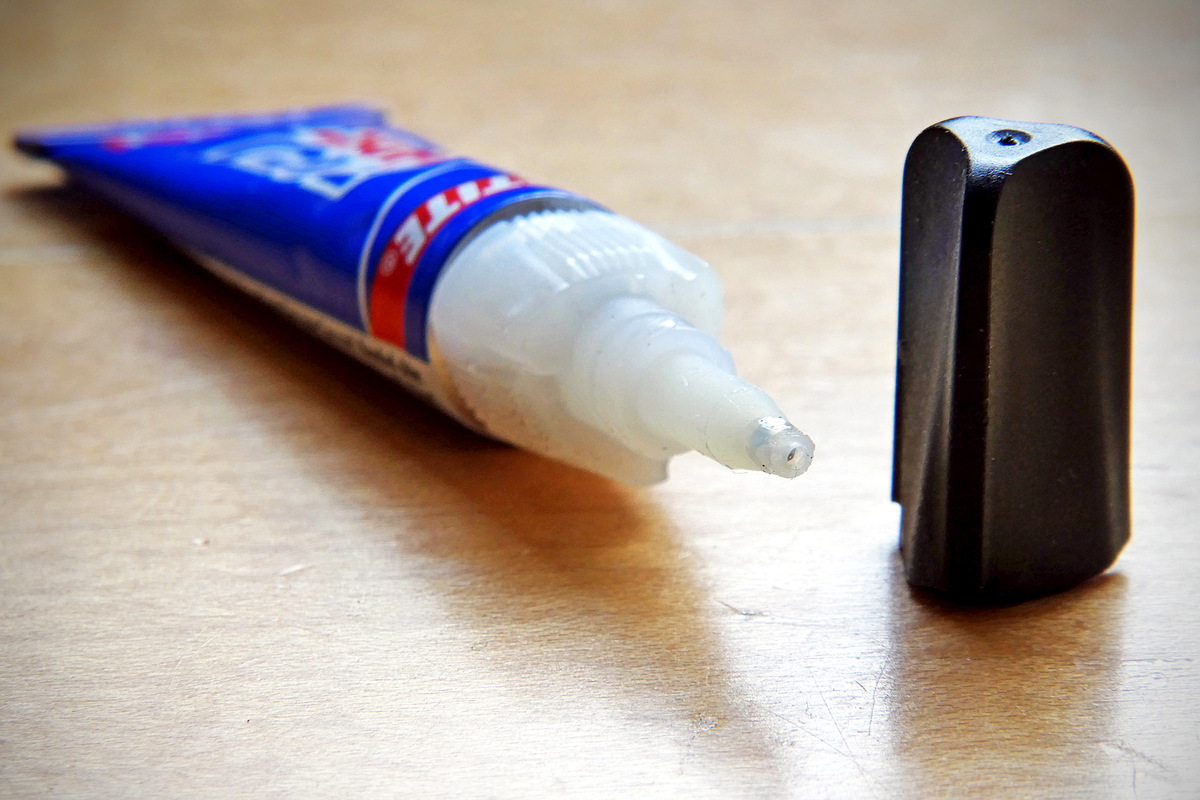
Moisture starts the curing reaction, but it also shortens shelf life. Once air and humidity enter the bottle, the adhesive can slowly thicken, clog, or harden. That familiar white crust around the cap is not a design feature; it is a tiny monument to exposure. For longer storage, keep the cap clean, close the bottle tightly, and store it in a cool, dry place. Some experienced makers keep cyanoacrylate bottles in sealed containers with desiccant packs to reduce humidity.
Why Super Glue Feels So Strong
Super glue can feel almost supernatural because it combines speed with high bond strength. The cured polymer can hold tightly to rigid surfaces, especially when the joint is clean, close-fitting, and not asked to flex too much. That makes it ideal for small repairs involving ceramic, metal, hard plastic, rubber, leather, wood, and many household materials.
However, “strong” needs context. Super glue is excellent in tension and shear on small, well-matched surfaces. It is less impressive when a joint is repeatedly peeled, twisted, soaked, heated, or flexed. A coffee mug handle may seem like a perfect candidate, but if the mug will hold hot liquid and be washed repeatedly, the repair can become risky. A decorative mug on a shelf? Fine. Your favorite boiling-hot espresso delivery system? Maybe let that one retire with dignity.
Liquid, Gel, and Specialty Formulas
Not all super glues behave the same. Thin liquid formulas wick into hairline cracks and porous materials. Gel formulas stay where you put them, which is helpful for vertical surfaces and awkward repairs. Rubber-toughened versions can resist impact and vibration better than brittle standard formulas. There are also specialty primers for difficult plastics such as polyethylene and polypropylene, which ordinary super glue often struggles to bond.
The best formula depends on the job. For a tiny crack in a model part, thin liquid cyanoacrylate is excellent. For a broken shoe sole or a vertical ceramic chip, gel may be easier to control. For a vibrating gadget housing or a small automotive trim piece, a tougher formula may last longer. Super glue is not one tool; it is a family of tools wearing the same tiny cape.
Super Glue in the Workshop: Small Drops, Big Results
In electronics and maker spaces, super glue is the emergency room nurse of adhesives. It can tack wires, secure standoffs, repair plastic clips, reinforce 3D prints, and hold temporary jigs. Woodworkers sometimes use cyanoacrylate for quick fixes, small inlays, pen turning, and stabilizing tiny cracks. Model builders use it for resin, metal, and plastic assemblies. Musicians may use specialized cyanoacrylate techniques for instrument repairs, though valuable instruments deserve professional care rather than heroic improvisation at the kitchen table.
A useful trick is the “temporary tack.” A tiny drop can hold a part in position while a stronger mechanical fastener, epoxy, solder joint, or bracket does the real long-term work. In this role, super glue is not pretending to be a structural engineer. It is simply holding the ladder while the engineer climbs.
Surface Preparation Matters
Super glue rewards patience, even though it cures quickly. Clean the surfaces first. Remove oil, dust, loose paint, and old adhesive. Test the fit before applying glue. Use the smallest practical amount. Press the parts together and hold them steady. Too much glue can slow curing, create a weaker joint, or bloom into a white haze around the repair. In adhesive work, more is not always more. Sometimes more is just a shiny puddle with commitment issues.
The White Haze: What Is Super Glue Blooming?
If you have ever used super glue near dark plastic or glossy surfaces, you may have seen a chalky white film appear nearby. This is often called blooming or frosting. It happens when cyanoacrylate vapors cure on surrounding surfaces, leaving a pale residue. It is especially noticeable on black plastic, clear acrylic, camera lenses, jewelry, and display pieces.
To reduce blooming, use less glue, improve ventilation, avoid enclosed spaces, and choose a low-odor or foam-safe formula when appearance matters. For display models and transparent parts, apply glue with a fine tip or toothpick instead of squeezing directly from the bottle. Super glue is powerful, but it has the subtlety of a marching band if you let the fumes roam freely.
Medical-Grade Glue Is Not the Same as Junk-Drawer Glue
One of the most fascinating branches of cyanoacrylate technology is medical tissue adhesive. Medical-grade products, such as certain 2-octyl cyanoacrylate formulations, are designed for topical closure of properly selected wounds. They are used by trained professionals for surgical incisions and simple lacerations with edges that can be easily brought together.
This does not mean the household tube in your drawer should become your family clinic. Consumer super glue is not manufactured, tested, packaged, or labeled for wound care. Medical adhesives are formulated for flexibility, biocompatibility, and controlled use on skin. Household versions can irritate tissue, trap contamination, and cause complications if used on deep, dirty, jagged, infected, or high-tension wounds. For real injuries, soap, water, pressure, bandaging, and medical advice beat “I saw a guy online do it” every time.
Super Glue in Forensics: Fingerprints from Thin Air
Super glue also has a starring role in forensic science. Investigators can use cyanoacrylate fuming to develop latent fingerprints on nonporous surfaces such as glass, plastic, and metal. In a controlled chamber, cyanoacrylate vapor reacts with residues left in a fingerprint. The result is a whitish polymer deposit that outlines the ridges, making prints easier to see, photograph, and enhance with powders or dyes.
This is a wonderfully weird use of a household product. The same chemical family that repairs a broken toy can help reveal evidence. Of course, professional fingerprint fuming requires controlled equipment, safety procedures, and careful timing. Do not turn your bathroom into a crime lab. Your mirror already has enough mysteries.
Safety: How Not to Glue Yourself to the Plot
Super glue is common, but it deserves respect. It can bond skin and eyes quickly, irritate the eyes and respiratory tract, and produce fumes that are unpleasant in poorly ventilated spaces. Always read the product label. Work in a ventilated area. Use eye protection for overhead or high-risk applications. Keep glue away from children, pets, flames, cotton, wool, and your mouth. Opening a glue tube with your teeth is not a shortcut; it is a tiny audition for an emergency room anecdote.
If skin gets bonded, do not yank it apart. Soak the area in warm soapy water and gently roll or peel the skin apart. Oils, petroleum jelly, or acetone-based nail polish remover may help on appropriate areas, but acetone can irritate skin and damage many plastics and finishes. If glue gets in the eye, mouth, or a sensitive area, contact poison control or a healthcare professional. The goal is separation, not dramatic sound effects.
Heat and Cotton Warning
Cyanoacrylate can react strongly with cotton, wool, and some natural fibers, generating heat. That is why wiping a spill with a cotton cloth can be a bad idea. Use proper absorbent materials, follow the label, and avoid large spills. A tiny tube may look harmless, but chemistry does not care about packaging aesthetics.
Where Super Glue Fails
Super glue is fast, but it is not universal. It performs poorly on some low-energy plastics without special primers. It can become brittle under impact. It may weaken with prolonged water exposure. It is not ideal for large structural repairs, flexible fabric seams, food-contact surfaces, or items exposed to high heat. For big gaps, epoxy or polyurethane adhesive may be better. For flexible materials, contact cement or flexible urethane may win. For wood joinery, wood glue is usually stronger and more forgiving.
Think of super glue as a precision sprinter. It is fast, focused, and impressive over short distances. Ask it to run a marathon while carrying a refrigerator, and the results become less inspiring.
How to Use Super Glue Like You Know What You Are Doing
Step 1: Choose the Right Formula
Use thin liquid for cracks and tight joints. Use gel for vertical surfaces, porous materials, and better control. Use rubber-toughened formulas for impact-prone repairs. Use plastic bonding systems for difficult plastics.
Step 2: Clean and Test-Fit
Dry-fit the pieces before opening the glue. If they do not align without pressure, fix the fit first. Clean surfaces with a suitable cleaner and let them dry.
Step 3: Apply Less Than You Think
A small drop is often enough. Spread it thinly if needed. Excess glue can weaken the bond and create messy squeeze-out.
Step 4: Hold Still
Press the parts together for the recommended set time. Avoid wiggling. Full strength may take longer than the first “grab,” so do not stress the repair immediately.
Step 5: Store It Correctly
Wipe the nozzle, cap it tightly, and store it dry. If your bottle becomes a fossil after one use, humidity probably won the match.
Tech in Plain Sight: Why Super Glue Still Matters
Super glue matters because it makes advanced chemistry ordinary. You do not need a lab coat, vacuum chamber, or industrial press to use it. A few drops can repair a household item, hold a prototype together, support a craft project, or stabilize a tiny component. It is a consumer product, but it carries lessons from chemistry, materials science, medicine, manufacturing, and forensic investigation.
Its real power is not that it sticks everything forever. It does not. Its power is that it solves a particular class of problems quickly: small, close-fitting, relatively rigid repairs where speed and convenience matter. When used intelligently, it can save money, reduce waste, and extend the life of objects that might otherwise be tossed away. That makes it not just glue, but a quiet little tool for repair culture.
Hands-On Experience: Lessons from the Land of Sticky Fingers
Anyone who has used super glue more than twice eventually develops a personal rulebook. Mine begins with this: never trust the nozzle. A fresh tube behaves like a polite fountain pen. An old tube behaves like a ketchup bottle at a diner: nothing, nothing, nothing, then suddenly enough material to renovate a bridge. The best move is to squeeze gently, away from the final workpiece, and apply the glue with a toothpick, pin, scrap wire, or disposable applicator. Precision is the difference between a clean repair and a crime scene for fingerprints that you personally donated.
The second lesson is that super glue loves confidence but punishes rushing. I have seen people apply glue before checking alignment, then spend ten frantic seconds discovering that “instant adhesive” is a brutally honest phrase. Dry-fitting parts first feels boring until the alternative is holding two crooked pieces together while whispering negotiations at chemistry. A good repair often happens before the glue is opened: clean the surfaces, test the fit, decide where fingers will go, and plan how pressure will be applied.
Another experience-based truth: gel and liquid formulas are different personalities. Thin liquid glue is brilliant when it can wick into a tight crack. It sneaks into seams like it has backstage passes. But that same talent becomes a problem on porous wood, fabric, or paper, where it can run, stain, smoke slightly on certain fibers, or attach your project to the bench. Gel is slower to flow and easier to place, especially on vertical surfaces. It is the calm friend in the group. It still causes trouble, just at a more manageable speed.
Super glue is also excellent for temporary workshop thinking. When prototyping a bracket, repairing a plastic tab, or holding a tiny part before drilling, a small drop can act like a third hand. The trick is remembering that “temporary” should stay temporary. If a part carries load, heat, vibration, or safety consequences, super glue should not be the entire engineering department. Use it to position, test, or assist, then add screws, epoxy, solder, stitching, clamps, or proper replacement parts as needed.
The most useful experience, however, is learning when not to use it. Do not use ordinary super glue on cookware, deep cuts, flexible shoe soles that need major structural repair, expensive optics, heirloom ceramics intended for daily use, or anything a child may chew. Do not use it near cotton balls as a casual wipe-up method. Do not use it in a closed room while leaning directly over the fumes like a detective in a low-budget thriller. Ventilation and restraint make the whole process cleaner.
Finally, super glue teaches humility. It is tiny, cheap, and familiar, but it is not dumb. It follows chemical rules whether or not we read the label. Used well, it feels like a pocket-sized miracle. Used carelessly, it turns fingers into modern art. That balance is why it remains one of the best examples of technology in plain sight: small enough to ignore, clever enough to respect, and useful enough to keep buying even after the last tube glued itself shut.
Conclusion
Super glue is more than a quick fix in a tiny tube. It is a clever cyanoacrylate technology with an accidental origin, a moisture-triggered curing reaction, and a surprising range of uses from household repairs to forensic fingerprint development and medical-grade wound closure. Its strength comes from fast polymerization and close surface contact, but its limitations are just as important as its talents. Use it for small, clean, rigid, close-fitting repairs. Choose the right formula. Work with ventilation. Apply less than you think. And never forget that the fastest thing in the room may be the glue deciding your finger is part of the assembly.
In the world of everyday technology, super glue earns its reputation by being simple, accessible, and quietly brilliant. It is not the answer to every repair, but when the job is right, few tools deliver so much science in such a small drop.
SEO Tags

