
Skincare
Aston Martin’s Electric Conversion Kit for Classic Cars Is Very Clever
Jun
Classic cars have always lived in a strange emotional neighborhood. On one side of the street: romance, chrome, leather, mechanical honesty, and the kind of engine note that makes grown adults suddenly speak in poetry. On the other side: emissions rules, city restrictions, expensive maintenance, and the uncomfortable fact that a 1960s grand tourer is not exactly sipping fuel like a shy hummingbird.
That is why Aston Martin’s electric conversion kit for classic cars feels so clever. It does not simply ask collectors to choose between the past and the future. Instead, Aston Martin Works proposed a middle path: a reversible EV conversion that can give a treasured heritage Aston Martin zero-emission driving while preserving the ability to return the car to its original gasoline-powered form later.
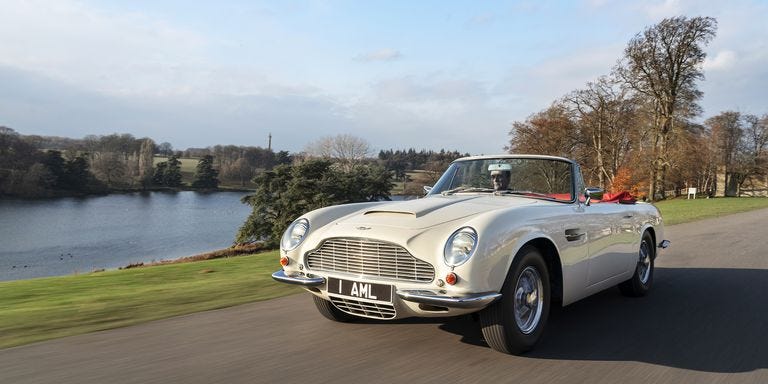
The idea was introduced through the Aston Martin Heritage EV concept, first demonstrated in a 1970 DB6 MkII Volante. Rather than permanently cutting up the car, Aston Martin developed a self-contained electric powertrain “cassette” that fits into the same general space as the original engine and gearbox. In other words, the classic Aston gets a new electric heart without losing its birth certificate.
What Is Aston Martin’s Heritage EV Conversion Kit?
Aston Martin’s Heritage EV conversion is a factory-backed concept created by Aston Martin Works, the company’s historic car division based at Newport Pagnell. That location matters. Newport Pagnell is not just another workshop with a nice sign and a coffee machine. It is deeply connected to Aston Martin’s classic era, the place where many of the brand’s most beloved cars were built by hand.
The conversion centers on a compact electric powertrain package. Aston Martin described it as a cassette, which is a wonderfully British way of making advanced EV engineering sound like something you found next to a mixtape. The unit is enclosed in its own cell, mounts to the original engine and gearbox points, and feeds the car’s electrical systems through dedicated connections.
Inside the cabin, power management is handled through a discreetly installed screen. That detail is important because classic Aston Martin interiors are not places where you want a giant tablet slapped into the dashboard like someone lost a fight with an electronics store. The goal is to modernize the driving experience without turning the cabin into a spaceship.
Why the Reversible Design Is the Genius Part
The most brilliant part of the Aston Martin electric conversion kit is reversibility. Many classic EV conversions are exciting, but they can make purists clutch their tweed jackets in panic because they often involve permanent modifications. Cut metal here, relocate structure there, and suddenly the car’s originality is no longer original. Aston Martin’s solution is more respectful.
Because the EV cassette is designed to use the original mounting points, the original engine and gearbox can theoretically be removed, stored, and reinstalled later. That means an owner can enjoy clean, quiet electric driving today without completely saying goodbye to the straight-six engine that helped make the car special in the first place.
For collectors, this matters enormously. Originality affects value, provenance, and emotional appeal. A classic Aston Martin is not just transportation; it is rolling history with a leather interior. By making the conversion reversible, Aston Martin reduces the fear that electrification will erase the car’s identity. The kit says, “Relax, we are not here to turn your DB6 into a refrigerator with wire wheels.”
The 1970 DB6 MkII Volante: A Perfect Test Case
Aston Martin chose a 1970 DB6 MkII Volante as the proof-of-concept vehicle, and that was not a random selection. The DB6 sits in a sweet spot of brand history. It is closely related to the legendary DB5, but it has its own character, longer wheelbase, improved practicality, and elegant grand-touring presence. The Volante version adds open-air drama, which is usually the technical term for “your hair is now part of the aerodynamics.”
The original DB6 MkII Volante used a 4.0-liter straight-six engine. In period, it delivered the kind of smooth, mechanical performance that made Aston Martin famous: refined, muscular, and expensive-sounding even at idle. Replacing that with an electric powertrain sounds like sacrilege at first. But Aston Martin’s approach was not about creating a drag-racing restomod. It was about preserving the character of a grand tourer while making it usable in a world that is becoming less friendly to vintage emissions.
According to early drive impressions from automotive reviewers, Aston Martin aimed to keep the power, weight, and acceleration broadly in line with the original car rather than creating an overpowered electric monster. That is a very grown-up decision. A DB6 does not need to launch like a roller coaster designed by an angry software engineer. It needs to feel graceful, expensive, and unbothered.
How the EV Cassette Preserves the Classic Driving Experience
A common criticism of electric classic car conversions is that they can remove the soul of the vehicle. That concern is not silly. Old cars are sensory machines. You feel the engine through the pedals, smell warm oil, hear the intake, and notice every mechanical vibration. Take away the engine, and something changes.
But Aston Martin’s Heritage EV concept tries to preserve the broader experience rather than imitate every old sensation. The steering wheel, seating position, view over the hood, cabin materials, body proportions, and suspension character all remain part of the original car’s personality. What changes is the power source.
In practical terms, electric power can make a classic Aston easier to live with. There is instant torque, fewer cold-start worries, less mechanical noise, and no exhaust fumes rolling politely into the cabin at stoplights. The car becomes more relaxed in traffic and potentially more welcome in cities where emissions restrictions could limit older gasoline vehicles.
That is the real cleverness. Aston Martin is not pretending an electric DB6 is exactly the same as a gasoline DB6. It is saying the car can still be meaningful, beautiful, and enjoyable even if the way it moves changes.
Future-Proofing Classic Cars Without Erasing Their Past
The phrase “future-proofing” gets used so often in technology that it sometimes feels like marketing confetti. But in the case of classic cars, it has real meaning. Cities around the world have introduced or considered low-emission zones, congestion charges, and restrictions aimed at older polluting vehicles. Even where classics receive exemptions, the social and regulatory pressure is obvious.
For owners who actually want to drive their cars, not just polish them under museum lighting, that creates a problem. A classic Aston Martin may be welcome at concours lawns and Sunday events, but what about daily city use? What about future urban rules? What about younger collectors who love design but also care about sustainability?
A reversible EV conversion answers those questions without demanding a total cultural surrender. It gives owners a way to keep classic cars active. That is better than letting them become static sculptures. Cars are meant to move. A DB6 locked away forever is beautiful, yes, but it is also a little sad, like a grand piano used only as a shelf for mail.
Why Aston Martin’s Kit Is Different From a Typical Restomod
Restomods can be wonderful. Many companies rebuild classic vehicles with modern brakes, suspension, infotainment, air conditioning, and high-performance engines. Some electric restomod builders go even further, creating fully re-engineered vintage cars with huge battery packs, fast charging, luxury interiors, and performance far beyond the original.
Those builds are impressive, but they are often transformative. The car becomes a reinterpretation rather than a preservation-minded upgrade. Aston Martin’s Heritage EV idea is more conservative and arguably more elegant. It focuses on compatibility, authenticity, and reversibility.
That approach suits Aston Martin. The brand has always been about understated power. Even James Bond’s company car was less “look at me” than most supercars. An electric conversion that hides its cleverness beneath classic bodywork fits that personality perfectly. It is not shouting. It is raising one eyebrow from behind a walnut dashboard.
The Role of the Rapide E and Aston Martin’s EV Strategy
Aston Martin said the Heritage EV concept drew on knowledge from the Rapide E program. The Rapide E was planned as the company’s first all-electric production model, and while Aston Martin’s broader EV strategy has shifted over time, the technical lessons from developing electric powertrains clearly influenced the heritage project.
This connection matters because it separates Aston Martin’s concept from a backyard conversion. EV swaps are not simply a matter of removing an engine and throwing in batteries like luggage. Engineers must consider weight distribution, cooling, control electronics, safety systems, throttle response, braking behavior, electrical integration, and structural compatibility.
Classic cars were never designed around high-voltage battery systems. Packaging an electric drivetrain into a hand-built 1960s grand tourer requires careful engineering. The cassette approach offers a cleaner framework: keep the system self-contained, connect it intelligently, and avoid unnecessary disturbance to the original vehicle.
Performance: Not About Winning Drag Races
One of the smartest decisions behind the Aston Martin electric conversion kit is restraint. Modern EVs can deliver absurd acceleration. That is fun, but it is not always appropriate. A classic Aston Martin chassis, even a beautifully engineered one, was not designed for the instant violence of a modern performance EV.
Keeping performance near the original car’s character helps preserve balance. It also avoids creating a vehicle that feels confused: vintage looks, silent operation, and hypercar acceleration can be entertaining, but it may not feel like an Aston Martin grand tourer anymore.
The best classic EV conversions understand that numbers are not everything. Range, drivability, smoothness, reliability, and sympathetic integration may matter more than 0-60 mph bragging rights. A DB6 should glide, not attack the horizon like it owes money.
What About the Sound?
Yes, the sound is the big emotional trade-off. A vintage Aston Martin straight-six has charm. It breathes, hums, and growls in a way an electric motor does not. For some enthusiasts, removing that engine note is like remastering a jazz record and deleting the trumpet.
But electric silence has its own appeal. In a convertible DB6, the absence of engine noise makes wind, road texture, and cabin atmosphere more noticeable. The car becomes more serene. Instead of a mechanical concert, the experience becomes a quiet glide through the world in one of the prettiest shapes ever put on wheels.
Is that better? Not for everyone. Is it interesting? Absolutely. And because Aston Martin’s concept is reversible, owners are not forced into a permanent answer. That flexibility is what makes the idea so persuasive.
Why Collectors May Actually Like This
Classic car collectors are often portrayed as rigid traditionalists, but the market is more nuanced. Many collectors care deeply about originality, yet they also appreciate usability. A car that starts reliably, handles traffic, and can enter more urban areas may see more real-world enjoyment.
There is also a generational shift underway. Younger collectors may not have the same attachment to carburetors, warm-up rituals, or the smell of unburned fuel. They may admire the design and craftsmanship of classic cars while preferring the convenience of electric power. Aston Martin’s conversion kit gives those buyers a way into heritage ownership without requiring them to become part-time mechanics and full-time optimists.
At the same time, traditionalists can take comfort in the reversible design. The original engine can remain part of the car’s story. The conversion does not have to be a divorce; it can be a temporary arrangement with excellent paperwork.
How This Compares With Other Electric Classic Conversions
Aston Martin is not alone in exploring electric classic cars. Jaguar famously developed the E-Type Zero concept, and specialist companies such as Lunaz, Everrati, and Electrogenic have built businesses around electrifying valuable classics. Some of these conversions are extremely comprehensive, involving bare-metal restorations, upgraded interiors, modern electronics, and battery systems with serious range.
Those companies prove that demand exists. Wealthy collectors are willing to spend serious money to combine vintage style with modern electric usability. Lunaz, for example, has offered electric Aston Martin DB6 conversions with extensive restoration work and modernized driving features. Aston Workshop has also advertised EV conversion options for DB4, DB5, and DB6-era vehicles, showing that the concept has moved beyond a single headline-grabbing prototype.
What makes Aston Martin’s factory-linked idea special is its philosophical neatness. It is not just “make old car electric.” It is “make old car electric in a way that respects why the old car matters.” That distinction is everything.
The Environmental Argument: Helpful, But Not Simple
Electric classic conversions are often marketed as greener alternatives. That can be true in local-use terms because an EV-converted classic produces no tailpipe emissions while driving. In cities, that is a real advantage. Cleaner local air matters, especially in dense areas.
However, the environmental math is not always simple. Batteries require energy and materials to produce. Many classic cars are driven only a few hundred or a few thousand miles per year. If a conversion uses a large new battery pack but the car barely moves, the environmental payback may take a long time.
The strongest sustainability argument may be preservation. Instead of building an entirely new car, an EV conversion reuses an existing vehicle. It extends the useful life of a machine that already exists, while reducing local emissions during operation. That is not a perfect environmental halo, but it is more thoughtful than treating every old vehicle as disposable.
The Biggest Challenges
Despite the cleverness, Aston Martin’s electric conversion kit is not a magic wand. Cost is the first obstacle. High-quality heritage EV conversions are expensive because they require specialist engineering, careful restoration practices, and low-volume craftsmanship. Nobody is doing this in a driveway with a coupon and a heroic amount of electrical tape.
The second challenge is authenticity. Some buyers will never want an electric classic Aston Martin, reversible or not. For them, the engine is not just a component; it is the soul of the car. That view deserves respect.
The third challenge is long-term support. EV systems need diagnostics, software knowledge, battery management, and future service planning. A classic car with modern electronics needs a support network that can keep it healthy decades from now. Aston Martin Works’ involvement is reassuring, but any heritage EV program must prove it can support owners over the long haul.
Why the Idea Still Feels Brilliant
Aston Martin’s Heritage EV concept is clever because it does not try to win every argument. It does not tell purists they are wrong. It does not tell EV fans that old engines are sacred forever. It simply offers an option.
That option is beautifully aligned with the realities of the classic car world. Owners want to preserve value. Cities want cleaner air. Enthusiasts want to keep driving. Automakers want their heritage to remain visible and relevant. A reversible electric conversion sits right in the middle of those needs.
It is also emotionally intelligent. A classic Aston Martin is not a normal car. You do not treat a DB6 like an old appliance. You treat it like a family heirloom that happens to have a speedometer. Aston Martin’s cassette system respects that. It says the future can be installed carefully, and if necessary, uninstalled later.
Experience Section: Living With the Idea of an Electric Classic Aston Martin
Imagine approaching a classic Aston Martin DB6 on a quiet Saturday morning. The long hood catches the light. The chrome glows softly. The leather smells like history, money, and possibly a very polite cigar. Everything about the car suggests ceremony. In a gasoline DB6, the ritual begins with the engine: key, fuel, spark, vibration, and that unmistakable straight-six voice waking up like an aristocrat clearing his throat.
Now imagine the same scene with Aston Martin’s electric conversion. You open the door, settle into the same elegant cabin, and instead of mechanical drama, there is calm. Press the starter, and the car becomes ready without fanfare. No choke, no warm-up, no anxious listening for an idle that sounds a little too lumpy for comfort. The DB6 simply waits for your next move.
At first, that silence might feel strange. A classic car without engine noise can seem like a black-and-white movie with the soundtrack removed. But after a few minutes, a different personality appears. The car feels less like a museum piece and more like a usable companion. It moves smoothly through traffic. It does not grumble at low speeds. It does not punish you for taking it into town. The elegance of the body finally matches the ease of the powertrain.
This is where the experience becomes compelling. A classic Aston Martin has always been about travel with style, not raw aggression. Electric power suits that grand-touring mission better than many people expect. Instant torque makes the car feel effortless. Quiet running highlights the shape, the view, and the atmosphere. You are not wrestling a relic; you are enjoying a classic design with modern manners.
There would still be moments of nostalgia. On an open road, some drivers would miss the old straight-six building revs. They would miss the mechanical conversation between engine, gearbox, and throttle. That is fair. But the reversible nature of Aston Martin’s system softens the emotional blow. The original powertrain can remain stored, documented, and available. The car’s history is not thrown away; it is placed carefully on the shelf.
For real-world ownership, the benefits become easier to appreciate. An electric classic could be used more often because it is less fussy. Short city drives become less stressful. Parking garage fumes disappear. Early morning departures no longer wake the neighborhood, although some neighbors may be disappointed because they enjoyed pretending not to look at your Aston Martin.
The experience also changes how people react to the car. A classic Aston already attracts attention, but an electric one adds curiosity. Some people will love it immediately. Others will ask whether converting it is automotive heresy. That debate is part of the fun. The best cars start conversations, and an EV-converted DB6 would start plenty.
From a driver’s perspective, the greatest pleasure may be psychological. You can enjoy a heritage car without feeling that you are constantly negotiating with the past. You are not trapped between preserving originality and accepting modern reality. Aston Martin’s kit gives the car a second mode of existence. It can be a classic and an EV. It can honor yesterday and still be useful tomorrow.
That is why this conversion concept feels so clever. It is not just about batteries, motors, or emissions. It is about keeping beautiful machines alive in a changing world. It lets an old Aston Martin continue doing what it was built to do: move elegantly, turn heads, and make the person behind the wheel feel unreasonably fortunate.
Conclusion
Aston Martin’s electric conversion kit for classic cars is very clever because it solves a modern problem with unusual sensitivity. It recognizes that classic cars are emotional objects, financial assets, engineering artifacts, and cultural symbols all at once. A careless EV swap can damage that balance. A reversible cassette-style conversion protects it.
The Heritage EV concept does not replace the joy of a gasoline Aston Martin for every enthusiast, and it does not need to. Its purpose is to create another path: one where owners can drive treasured classics in a lower-emission future without permanently erasing their original character. That is smart engineering, smart branding, and, frankly, smart manners.
In the end, the idea works because it respects both sides of the argument. The past gets preserved. The future gets invited in. And the Aston Martin DB6, one of the most graceful grand tourers of its era, gets a new way to keep gliding down the road. Not bad for something called a cassette.

