
Beauty Unlocked
Flying Martha Ornithopter
Jun
The Flying Martha Ornithopter is not the kind of toy that screams for attention with batteries, blinking lights, or a tiny speaker that plays the same heroic tune until everyone in the room considers moving to a cabin. Instead, it wins people over the old-fashioned way: with bamboo, mulberry paper, a rubber band, and the small miracle of flapping wings.
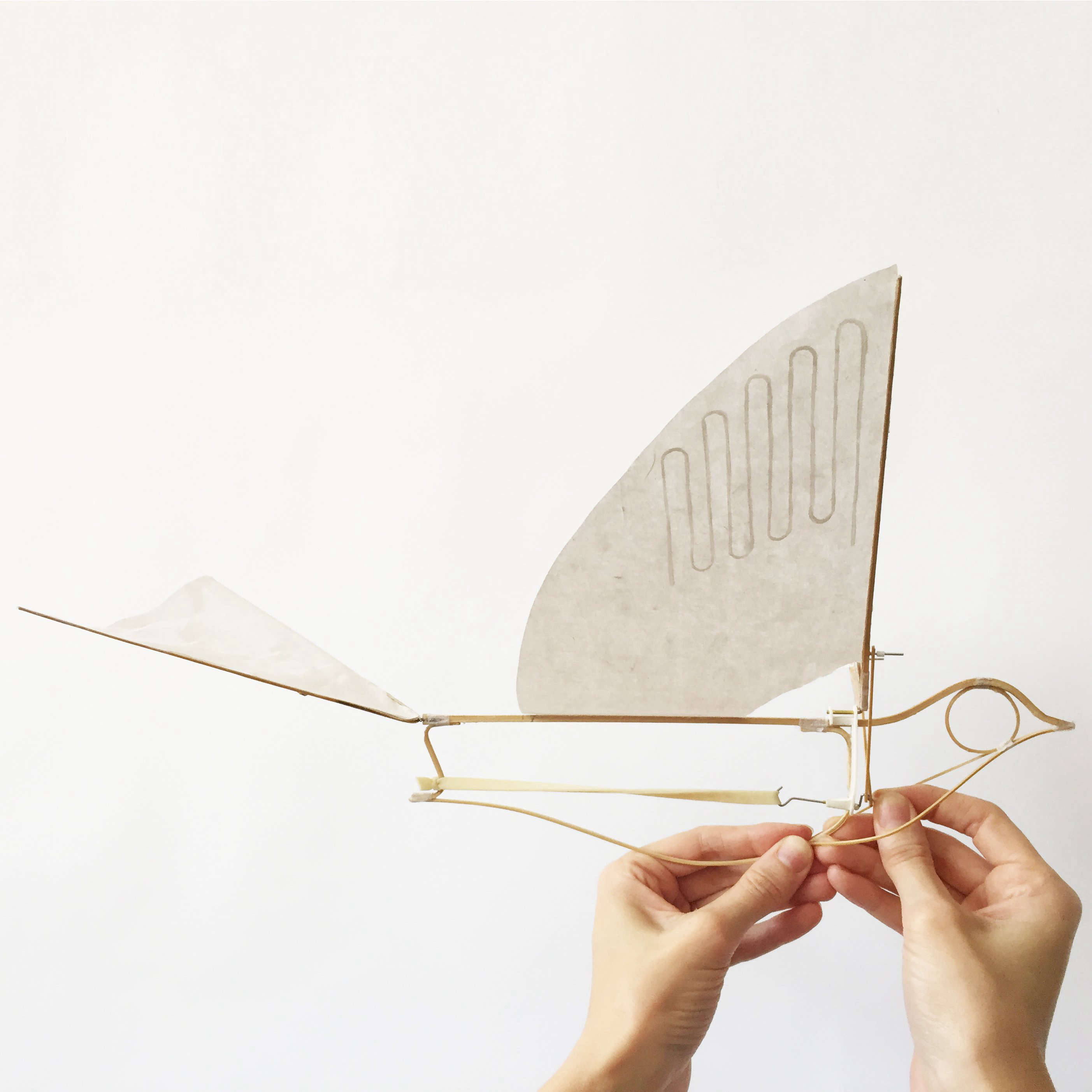
Created by designer Emily Fischer and Haptic Lab, the Flying Martha Ornithopter is a wind-up flying bird modeled in spirit after Martha, the last known passenger pigeon. It is part mechanical toy, part design object, part science lesson, and part quiet conservation tribute. Wind it, release it like a paper airplane, and it flutters forward with a motion that feels closer to birdwatching than toy testing. For a few seconds, the room becomes an aviary, and everyone nearby suddenly becomes an unpaid flight engineer.
This article explores what the Flying Martha Ornithopter is, why it matters, how ornithopters work, what makes its materials special, and why a simple rubber-band-powered bird can say more about invention, extinction, and wonder than many gadgets with charging ports.
What Is the Flying Martha Ornithopter?
An ornithopter is a flying machine that uses flapping wings to produce motion through the air. Unlike a paper airplane that glides or a toy helicopter that spins a rotor, an ornithopter imitates the wingbeat of birds, bats, or insects. The word itself comes from Greek roots meaning “bird” and “wing,” which is a wonderfully elegant way to say, “Yes, we looked at birds and got ideas.”
The Flying Martha Ornithopter is a small mechanical version of that idea. It is powered by a wound rubber band, which stores energy as it twists. When released, that stored energy drives the mechanism, causing the wings to flap. The result is a toy that actually flies, not by magic, not by batteries, and not by politely asking gravity to cooperate, but through clever mechanical design.
Product descriptions of Flying Martha note that the assembled bird measures about 16 inches by 16 inches and is made from bamboo and mulberry paper. It was handmade with kite-making sensibilities, and that matters. Kites, like ornithopters, live or die by weight, balance, tension, and airflow. Add too much material and the bird becomes a decorative pancake. Remove too much structure and the wings lose their rhythm. The charm of Flying Martha is that it sits in the fragile middle, where craft and aerodynamics shake hands.
Why “Martha” Matters
The name Martha is not random. It refers to Martha, the last known passenger pigeon, who died at the Cincinnati Zoo on September 1, 1914. Passenger pigeons were once among the most abundant birds in North America. Their flocks were so large that historical accounts describe them darkening the sky. Then, through overhunting, habitat loss, and the dangerous assumption that abundance means invincibility, they disappeared.
That history gives the Flying Martha Ornithopter its emotional lift. It is not merely a wind-up bird toy; it is a tiny moving memorial. The passenger pigeon’s story is one of the clearest reminders that nature can look limitless right up until it is gone. Naming a flying toy after Martha turns a playful object into a conversation starter. One moment you are winding a rubber band; the next, you are discussing extinction, conservation, industrial hunting, and the strange human talent for noticing beauty after it has vanished.
That may sound heavy for something made of bamboo and paper, but good design often works that way. It sneaks meaning into the room wearing a charming outfit.
The Design: Bamboo, Mulberry Paper, and Mechanical Poetry
The Flying Martha Ornithopter stands out because it avoids the heavy plastic look of many mechanical toys. Bamboo gives the frame strength without unnecessary weight. Mulberry paper provides a light, flexible wing surface that can move with the air instead of fighting it. Together, the materials create a bird that feels closer to a handmade kite than a mass-produced gadget.
Bamboo is a smart material for lightweight flying objects because it is strong, springy, and relatively easy to shape into fine structural pieces. Mulberry paper, often associated with traditional paper crafts and kite making, adds translucency and delicacy. When light passes through the wings, the bird looks less like a toy and more like a sketch that decided to become airborne.
The design also reflects the difficult truth of small aircraft: every gram matters. A rubber-band-powered ornithopter has only a limited amount of stored energy. If the frame is too heavy, the wings may flap dramatically but produce a flight path best described as “enthusiastic falling.” If the wings are too stiff, they cannot flex with the air. If they are too loose, they flutter without control. The Flying Martha Ornithopter succeeds because it respects the tiny negotiations between lift, thrust, drag, and weight.
How the Flying Martha Ornithopter Works
At its simplest, Flying Martha works by converting twisted rubber-band energy into wing motion. When you wind the bird, the rubber band stores potential energy. When released, that energy turns the internal mechanism, which drives the wings up and down. The wings push air, and the bird moves forward.
In flight, every flying object deals with four major forces: lift, weight, thrust, and drag. Lift helps keep the bird up. Weight pulls it down. Thrust moves it forward. Drag resists motion. Airplanes separate these jobs: wings produce lift, engines produce thrust. Ornithopters are more dramatic. Their wings attempt to provide both lift and thrust, which is why flapping-wing flight is elegant, complicated, and occasionally rude to beginners.
The wing motion must be balanced. A good ornithopter wing does not simply slap the air like someone trying to close a stubborn umbrella. It moves with a tuned rhythm. The wingbeat, wing angle, flexibility, and tail position all influence the flight path. On a small toy like Flying Martha, even a tiny tail adjustment can change the route. A gentle bend or twist can help the bird climb, turn, or glide more smoothly.
Why Ornithopters Are Still Fascinating
Humans have been fascinated by flapping-wing flight for centuries. Leonardo da Vinci sketched flying machines inspired by birds. Modern engineers have built radio-controlled ornithopters, robotic flapping-wing drones, and even large experimental machines. Yet the basic idea remains stubbornly enchanting: can a machine fly like a living creature?
Ornithopters are difficult because birds are not simple machines. A bird’s wing changes shape during flight. Feathers separate, twist, and flex. Muscles make constant micro-adjustments. The tail acts like a rudder, brake, stabilizer, and mood ring. Translating all of that into rods, paper, hinges, and elastic energy is not easy. That is why a small ornithopter that flies reliably can feel like a minor engineering victory.
The Flying Martha Ornithopter makes this complexity accessible. It does not require a laboratory, a pilot’s license, or a spreadsheet titled “Wing Failure, Version 7.” It invites ordinary people to experience the principles of flapping flight in their hands. That makes it appealing as a STEM toy, a design collectible, a classroom demonstration, or a gift for someone who appreciates objects with both beauty and brains.
A Toy, a Teaching Tool, and a Conversation Piece
One of the best things about Flying Martha is that it can live in several categories at once. For children, it is a flying toy. For adults, it is a design object. For teachers, it is a hands-on lesson in energy transfer, aerodynamics, and biomimicry. For conservation-minded people, it is a reminder that the passenger pigeon’s disappearance was not ancient history. It happened in the modern age, with trains, newspapers, markets, and people who believed there would always be more birds.
In a classroom, the Flying Martha Ornithopter could be used to explain stored energy, mechanical motion, and flight stability. Students can observe what happens when the rubber band is wound more or less, how launch angle affects flight, and how the tail changes direction. These are not abstract textbook ideas. They are visible in the bird’s movement. If the launch is too steep, Martha may stall. If released too weakly, she may nose down. If the tail is slightly off, she may circle as if looking for better management.
As a decorative object, it has another advantage: it looks good even when it is not flying. Many toys become clutter when not in use. Flying Martha looks like a handmade artifact, especially in a study, nursery, studio, or living room. It suggests curiosity without requiring a neon sign that says “I am whimsical.”
Who Is the Flying Martha Ornithopter For?
For Design Lovers
People who appreciate handmade objects will enjoy the Flying Martha Ornithopter for its material honesty. Bamboo and paper have warmth. They age more gracefully than glossy plastic and bring a sense of human craft to the object.
For Science Fans
Anyone interested in aerodynamics, mechanical toys, or biomimicry will find plenty to admire. The bird demonstrates how a simple power source can create complex motion through a carefully designed linkage system.
For Birders and Conservationists
The Martha connection gives the ornithopter emotional depth. It can open conversations about passenger pigeons, extinction, and modern bird conservation without sounding like a lecture delivered by a very stern park ranger.
For Gift Shoppers
It works especially well as a gift for curious children, nostalgic adults, collectors, engineers, teachers, artists, and anyone who has ever paused to watch birds and thought, “Honestly, they make it look unfairly easy.”
Flying Martha vs. Ordinary Flying Toys
Many flying toys rely on propellers, foam bodies, or electronic motors. Those can be fun, but they often feel like mini aircraft. Flying Martha feels different because it imitates life. Its flapping motion has personality. A propeller toy zips. A paper airplane glides. A drone buzzes like an ambitious mosquito. Flying Martha flutters.
That flutter changes the emotional experience. Watching a flapping-wing toy cross a room feels less mechanical and more theatrical. There is suspense in every wingbeat. Will it climb? Will it curve? Will it make a noble landing or gently introduce itself to a lampshade? The unpredictability is part of the fun.
It also encourages a slower kind of play. You do not just switch it on. You wind it, inspect it, aim it, release it, and learn from the result. The toy rewards patience. That makes it refreshing in an era when many devices are designed to do everything instantly except help us find the one charging cable that has somehow vanished again.
Collectibility and Availability
The Flying Martha Ornithopter has appeared through design shops, curated product platforms, and its original crowdfunding campaign. Some listings have described it as discontinued, which may make existing examples more interesting to collectors. As with many design-led toys, availability can vary, and buyers should check current sellers carefully if they are looking for an original piece.
Because the ornithopter is delicate, condition matters. A complete example with its gift box, instructions, intact wings, straight frame, and functional rubber-band mechanism will naturally be more desirable than one that has survived three closets, a curious cat, and a nephew named Tyler who “just wanted to see how far it could go.”
Care Tips for a Delicate Flying Bird
The Flying Martha Ornithopter should be handled with gentle hands. Bamboo and paper are light for a reason, and that reason is not “survives being sat on.” Store it away from moisture, direct crushing pressure, and overly enthusiastic pets. If displayed, place it somewhere it can be admired without being constantly grabbed.
Before flying, inspect the wings and frame. Look for tears, bends, or loose connections. Wind the rubber band smoothly rather than aggressively. Release it in an open indoor area or calm outdoor setting. Avoid wind, walls, ceiling fans, and any room where breakable decorations are arranged like an obstacle course.
Small adjustments are part of the experience. If the bird dives, check the launch angle and tail position. If it turns sharply, the tail may need a tiny correction. If it struggles to fly, the rubber band may need proper tension, or the wings may need careful inspection. The goal is not perfection on the first flight. The goal is learning the bird’s personality.
Experiences With the Flying Martha Ornithopter: What It Feels Like to Fly One
The first experience with a Flying Martha Ornithopter usually begins with surprise. It looks too delicate to do anything dramatic. The bamboo frame seems almost weightless, the paper wings appear fragile, and the rubber band power source feels charmingly low-tech. Then you wind it, feel the tension build, and suddenly the little bird seems awake. It is a strange and satisfying moment: one second it is an object, the next it feels like a creature waiting for permission.
The best first flight happens in a clear room with soft landing options. A hallway can work if it is wide enough, but a living room with furniture moved aside is better. Outdoors can be wonderful, but only on a calm day. Even a light breeze can bully a small ornithopter. Wind does not care about your design appreciation. Wind is the friend who says, “Trust me,” right before launching your paper bird toward a shrub.
Holding Flying Martha teaches you to be careful. You do not grip it like a baseball. You support it lightly, keeping the wings free. Winding the rubber band becomes a small ritual. Too little winding and the bird makes a polite but unimpressive attempt. Too much, and you may stress the mechanism. The sweet spot is learned through repetition. That is part of the fun: you become a test pilot, mechanic, and proud bird parent in under five minutes.
The release matters. A gentle forward launch, similar to sending off a paper airplane, usually feels right. Throwing it hard is not helpful. The ornithopter already has a job to do; your job is to introduce it to the air, not hurl it into destiny. When released well, the wings begin beating, the body glides forward, and the bird traces a soft, fluttering path. The sound is subtle: a papery whisper, a tiny mechanical pulse, a reminder that quiet toys can still create big reactions.
After a few flights, small patterns appear. A slight tail adjustment can change the turn. A smoother launch can extend the flight. A calmer room improves control. People nearby tend to lean in, because Flying Martha does not behave like a normal toy. It invites observation. Children often focus on the flapping. Adults usually start asking how it works. Someone will inevitably say, “Wait, do it again,” which is the unofficial anthem of every good mechanical toy.
There is also a reflective side to the experience. Because the ornithopter is named after Martha the passenger pigeon, each flight carries a little weight behind the whimsy. Watching a handmade bird cross the room makes the passenger pigeon story feel less like a museum label and more like a lost motion briefly restored. It does not bring the species back, of course. But it does bring attention back, and attention is where conservation often begins.
That is the lasting appeal of the Flying Martha Ornithopter. It is fun, but not empty. It is educational, but not preachy. It is beautiful, but not too precious to fly. It gives people a small experience of wonder, then gently points toward a much larger story about invention, nature, and responsibility. Not bad for a rubber band with wings.
Conclusion
The Flying Martha Ornithopter is more than a wind-up flying bird. It is a graceful blend of mechanical design, traditional materials, aerodynamics, and environmental memory. Its bamboo frame and mulberry paper wings make it feel handmade and alive, while its rubber-band mechanism gives users a direct connection to the principles of flight. Named for Martha, the last passenger pigeon, it turns a few seconds of fluttering motion into a meaningful reminder of what humans can create, what we can lose, and what we should choose to protect.
For collectors, it is a charming design object. For teachers, it is a lively STEM demonstration. For bird lovers, it is a tribute. For anyone with a soft spot for clever toys, it is proof that wonder does not need batteries. Sometimes all it needs is a little twist, a careful launch, and enough open space to let a paper bird remember the sky.
Note: This article is written for web publication in clean HTML and is synthesized from real information about the Flying Martha Ornithopter, ornithopter flight principles, passenger pigeon history, and design-focused product references.

