
Makeup
4 Bodyweight Exercises
Jun
Some workouts require dumbbells, machines, bands, benches, apps, subscriptions, and the confidence to walk into a gym without accidentally sitting backward on a piece of equipment. Bodyweight training is refreshingly different. You already own the main tool: your body. It came pre-installed, does not need Wi-Fi, and rarely asks for firmware updates.
These 4 bodyweight exercises can help you build strength, improve balance, increase mobility, and create a simple full-body workout almost anywhere. Whether you are training in your living room, a hotel room, a garage, a park, or a suspiciously small apartment hallway, the right bodyweight routine can challenge your muscles without requiring a single piece of fitness equipment.
The four moves below are simple but not “easy” in the boring sense. They train major movement patterns: squatting, pushing, lunging, and stabilizing. Together, they target the legs, hips, glutes, chest, shoulders, arms, core, and back-supporting muscles. Think of them as the four dependable friends of home fitness: they show up, they do the work, and they do not judge your workout playlist.
Why Bodyweight Exercises Work
Bodyweight exercises use your own mass as resistance. Instead of moving a dumbbell or loading a machine, you control your body through space. That control is the magic. A good push-up is not just a chest exercise; it is also a core stability test, a shoulder-control drill, and a reminder that gravity has a very consistent personality.
Bodyweight training is useful because it is accessible, scalable, and efficient. Beginners can modify exercises by changing body angle, range of motion, speed, or support. Advanced exercisers can make the same movements harder by adding tempo, pauses, single-leg variations, explosive power, or shorter rest periods. This means a squat can be friendly enough for a beginner and spicy enough for someone who thought they were “in pretty good shape.”
For general fitness, adults are commonly encouraged to include muscle-strengthening activity at least two days per week, targeting major muscle groups. Bodyweight exercises fit neatly into that recommendation because they can train several muscle groups at once. They also pair well with walking, running, cycling, swimming, dancing, or chasing a toddler who has discovered permanent markers.
The 4 Best Bodyweight Exercises for a Simple Full-Body Workout
The following four exercises create a practical foundation for strength, endurance, mobility, and core control. You can perform them as a short circuit, add them to a warm-up, or use them as a complete workout when time and equipment are limited.
1. Bodyweight Squat
The bodyweight squat is one of the most important functional exercises you can learn. Every time you sit down, stand up, pick something from a low shelf, or hover awkwardly over a questionable public restroom seat, you are using a squat pattern. Training it well can improve lower-body strength and make everyday movement feel smoother.
Squats primarily target the quadriceps, glutes, hamstrings, hips, calves, and core. They also train coordination because your ankles, knees, hips, and torso must work together. When done with control, squats help build strength in a way that transfers directly to daily life.
How to Do a Bodyweight Squat
- Stand with your feet about shoulder-width apart.
- Point your toes slightly outward if that feels natural for your hips.
- Brace your core as if someone is about to poke your stomach.
- Push your hips back and bend your knees.
- Lower until your thighs are roughly parallel to the floor, or as low as you can with good form.
- Keep your chest lifted and your heels grounded.
- Drive through your feet to stand tall again.
Common Squat Mistakes
A common mistake is letting the knees collapse inward. Imagine your knees gently tracking in the same direction as your toes. Another issue is rising onto the toes, which usually means the hips are not moving back enough or the ankles need more mobility. Do not force depth at the cost of form. A controlled half squat beats a wobbly full squat that looks like a folding lawn chair in a windstorm.
Make It Easier or Harder
To make squats easier, sit back to a chair or bench and stand up again. This gives you a target and builds confidence. To make them harder, slow the lowering phase to three seconds, pause at the bottom, or try jump squats if your joints tolerate impact and your downstairs neighbors are emotionally prepared.
2. Push-Up
The push-up is a classic bodyweight exercise for the chest, shoulders, triceps, and core. It is simple in theory: lower yourself, push yourself back up, repeat. In practice, it is a full-body strength move pretending to be an upper-body exercise. Your abs, glutes, and legs help keep your body aligned from head to heels.
Push-ups are valuable because they train the pushing muscles used in daily activities, such as pushing a heavy door, getting up from the floor, or moving furniture when you suddenly decide your living room needs “better energy.” They also require no equipment and can be adjusted for nearly any fitness level.
How to Do a Push-Up
- Start in a high plank position with your hands slightly wider than shoulder-width.
- Keep your body in a straight line from head to heels.
- Brace your core and squeeze your glutes lightly.
- Bend your elbows and lower your chest toward the floor.
- Keep your elbows at a comfortable angle, not flared straight out like chicken wings.
- Press through your hands to return to the starting position.
Common Push-Up Mistakes
The most common push-up mistake is sagging at the hips. If your hips arrive at the floor before your chest, your core has quietly resigned from the exercise. Another mistake is craning the neck forward. Keep your gaze slightly ahead of your hands and your neck long. Also avoid rushing. Fast, sloppy push-ups mostly train your ability to avoid doing good push-ups.
Make It Easier or Harder
For beginners, incline push-ups are often better than dropping immediately to the knees. Place your hands on a sturdy table, bench, countertop, or wall. The higher your hands, the easier the exercise becomes. As you improve, lower the surface. To make push-ups harder, slow the tempo, pause near the bottom, elevate your feet, or try close-grip push-ups for more triceps emphasis.
3. Reverse Lunge
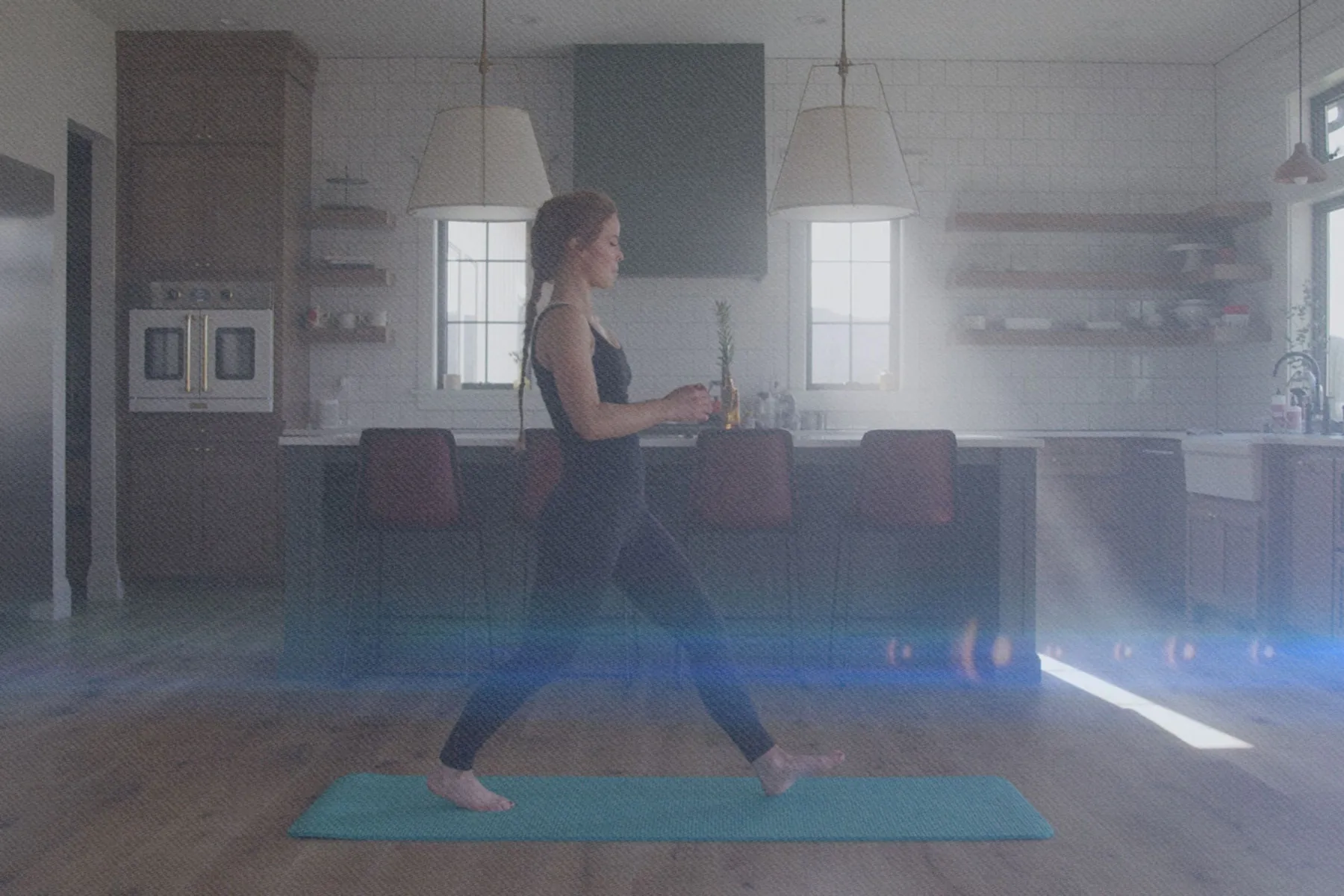
The reverse lunge trains the glutes, quadriceps, hamstrings, calves, hips, and core. Unlike a regular forward lunge, stepping backward can feel friendlier on the knees for many people because it often makes it easier to control the front leg. It also challenges balance, which is important for athletic performance and everyday stability.
Single-leg exercises like reverse lunges help reduce strength imbalances between sides. Most people have one leg that acts like the responsible adult and another leg that behaves like it just joined the meeting. Lunges give both sides a chance to work independently.
How to Do a Reverse Lunge
- Stand tall with your feet hip-width apart.
- Brace your core and keep your chest lifted.
- Step one foot backward and lower your back knee toward the floor.
- Keep your front knee tracking over the middle of your front foot.
- Press through the front foot to return to standing.
- Repeat on the other side.
Common Reverse Lunge Mistakes
A common mistake is taking too short of a step, which can crowd the front knee and make the movement feel awkward. Another mistake is leaning far forward or letting the torso collapse. Think tall chest, steady core, and controlled movement. Your goal is not to drop dramatically like a medieval knight taking a vow. It is to build strength with control.
Make It Easier or Harder
To make reverse lunges easier, hold onto a wall, chair, or countertop for balance. You can also reduce the depth until strength improves. To make them harder, slow down the lowering phase, add a knee drive at the top, perform alternating jump lunges if appropriate, or use a longer pause at the bottom.
4. Plank
The plank may look like nothing is happening, but your muscles strongly disagree. This core exercise trains the abdominals, obliques, glutes, shoulders, and stabilizing muscles around the spine. A good plank teaches your body to resist movement, which is a major job of the core. Your core does not exist only to create visible abs; it helps protect your spine, transfer force, and keep you from folding like a taco during daily tasks.
Planks are especially useful because they build endurance and alignment. They can help support better posture and improve control during squats, lunges, push-ups, and other strength exercises.
How to Do a Forearm Plank
- Start on the floor with your forearms under your shoulders.
- Step your feet back so your body forms a straight line from head to heels.
- Brace your core and squeeze your glutes lightly.
- Keep your neck neutral and look at the floor.
- Hold the position while breathing steadily.
Common Plank Mistakes
The biggest plank mistake is letting the hips sag. That turns the exercise into a lower-back complaint form. Another common issue is lifting the hips too high, which makes the plank easier and turns you into a human tent. Aim for a straight line. Keep your ribs tucked, glutes active, and breathing calm. If you can hold a plank for three minutes but your form disappears after thirty seconds, your useful set ended at thirty seconds.
Make It Easier or Harder
To make planks easier, place your knees on the floor or use an incline with your forearms on a bench. To make them harder, try plank shoulder taps, long-lever planks, side planks, or slow mountain climbers. The goal is not to suffer heroically; it is to maintain excellent tension and control.
How to Turn These 4 Bodyweight Exercises Into a Workout
You can perform these exercises as a simple circuit. Move from one exercise to the next, rest, and repeat. This structure keeps the workout efficient and helps raise your heart rate while training strength.
Beginner Bodyweight Workout
- Bodyweight squat: 8 to 12 reps
- Incline push-up: 6 to 10 reps
- Reverse lunge: 6 to 8 reps per side
- Forearm plank: 15 to 30 seconds
- Rest: 60 to 90 seconds
- Repeat: 2 to 3 rounds
Intermediate Bodyweight Workout
- Bodyweight squat: 15 to 20 reps
- Push-up: 8 to 15 reps
- Reverse lunge: 10 to 12 reps per side
- Forearm plank: 30 to 45 seconds
- Rest: 45 to 60 seconds
- Repeat: 3 to 4 rounds
Advanced Bodyweight Workout
- Tempo squat: 12 reps with a 3-second lower
- Push-up with pause: 8 to 12 reps
- Reverse lunge with knee drive: 10 reps per side
- Plank shoulder tap: 20 total taps
- Rest: 30 to 45 seconds
- Repeat: 4 to 5 rounds
Warm Up Before You Begin
A warm-up prepares your joints, muscles, and nervous system for movement. You do not need a dramatic cinematic montage. Five minutes can be enough for a short bodyweight workout.
Try marching in place, arm circles, hip circles, gentle squats, step-back lunges, and easy plank walkouts. The goal is to raise your body temperature and practice the movement patterns before asking your muscles to work harder.
How Often Should You Do These Exercises?
For many people, two to three bodyweight strength sessions per week is a realistic starting point. Leave at least one recovery day between harder sessions if your muscles feel sore or your performance drops. Recovery is not laziness. Recovery is where your body adapts, repairs, and prepares to do better next time.
You can also use these four exercises in small “movement snacks.” For example, do one round during a work break, after a walk, or while waiting for laundry. A few focused minutes can help you build consistency, and consistency is the secret sauce most fitness plans forget to season properly.
Progression: How to Keep Getting Stronger
Your body adapts to repeated challenges. That is good news, but it also means you need progression. If the same routine feels easy forever, it may become more of a warm-up than a workout. You can progress bodyweight exercises without buying equipment.
- Add reps: Increase repetitions gradually while keeping form clean.
- Add rounds: Move from two rounds to three or four.
- Slow the tempo: Lower slowly to increase time under tension.
- Add pauses: Pause at the hardest part of the movement.
- Reduce rest: Shorter rest increases conditioning demand.
- Try harder variations: Move from incline push-ups to floor push-ups, or from basic planks to shoulder taps.
The best progression is the one you can repeat safely. More difficult is not always better. Better is better. If your form falls apart, the exercise is too hard for that moment.
Safety Tips for Bodyweight Training
Bodyweight workouts are generally approachable, but good technique matters. Move with control, breathe steadily, and stop if you feel sharp pain, dizziness, chest pain, or unusual shortness of breath. Muscle effort is normal. Pain that feels sudden, stabbing, or joint-focused is not something to “motivate” your way through.
If you are new to exercise, returning after a long break, pregnant, recovering from injury, or managing a medical condition, consider checking with a healthcare professional or qualified fitness professional before starting. Your body is not a group project, but expert guidance can save you from avoidable mistakes.
Experience Section: What Training With These 4 Bodyweight Exercises Really Feels Like
The first experience many people have with bodyweight exercises is surprise. On paper, four movements sound almost too simple. Squats, push-ups, reverse lunges, and planks do not look dramatic. There are no clanging weights, no treadmill dashboard blinking like a spaceship, and no intimidating machine with seventeen adjustment knobs. Then the second round begins, and suddenly your legs send a formal message: “We would like to renegotiate the terms of this workout.”
That is the beauty of these exercises. They meet you exactly where you are. A beginner might start with chair squats, wall push-ups, assisted lunges, and knee planks. At that stage, the biggest victory is not sweating through the carpet; it is learning control. You discover how your knees track, how your shoulders feel, how your core supports your spine, and how much balance is involved in stepping backward without wobbling like a shopping cart with one bad wheel.
After a couple of weeks, the experience changes. The same movements begin to feel more familiar. Squats become smoother. Push-ups stop feeling like a personal insult. Reverse lunges become less wobbly. Planks become less about counting every painful second and more about holding steady while breathing like a calm, responsible adult. This is when confidence starts to build. Not loud, mirror-flexing confidence, but practical confidence: the feeling that your body is becoming more capable.
Another common experience is noticing small improvements outside workouts. Stairs may feel easier. Getting up from the floor may require less dramatic sound effects. Carrying groceries may feel less like an Olympic event. Your posture may improve because your core and hips are contributing more. These changes are not always flashy, but they matter. Fitness is not only about looking athletic; it is about making daily life feel less physically expensive.
There is also a mental shift. Because these four bodyweight exercises require so little setup, they remove many excuses. You do not need to commute, reserve a machine, find matching socks, or wait for someone to finish texting on the bench you wanted. You can begin in five minutes. That simplicity builds consistency, and consistency builds results. A short workout done three times per week usually beats an elaborate plan that exists only in your notes app under the title “Monday, Definitely.”
Of course, some days will feel better than others. Sleep, stress, food, hydration, and mood all influence performance. One day push-ups feel powerful; another day they feel like gravity hired a lawyer. That is normal. The goal is not perfection. The goal is to keep showing up, adjust when needed, and respect clean form. Bodyweight training teaches patience because progress is earned rep by rep, hold by hold, and round by round.
The best experience comes when you stop treating these exercises as punishment and start seeing them as practice. You are practicing strength. You are practicing balance. You are practicing control. You are practicing the useful skill of keeping promises to yourself. And yes, you are also practicing how to get off the floor gracefully after a plank, which may be the most underrated fitness skill of all.
Conclusion
The best workout is not always the most complicated one. These 4 bodyweight exercises prove that a simple routine can train your whole body, support better movement, and fit into a busy schedule. The bodyweight squat builds lower-body strength. The push-up trains the chest, shoulders, arms, and core. The reverse lunge improves balance and single-leg control. The plank develops core stability that supports nearly everything else you do.
Start where you are, use modifications when needed, and progress gradually. Keep your movements controlled, your breathing steady, and your expectations realistic. You do not need a perfect gym, a perfect schedule, or a perfect outfit. You need a little space, a little effort, and the willingness to begin. Your body provides the equipment. Gravity provides the resistance. The rest is up to you.

